|
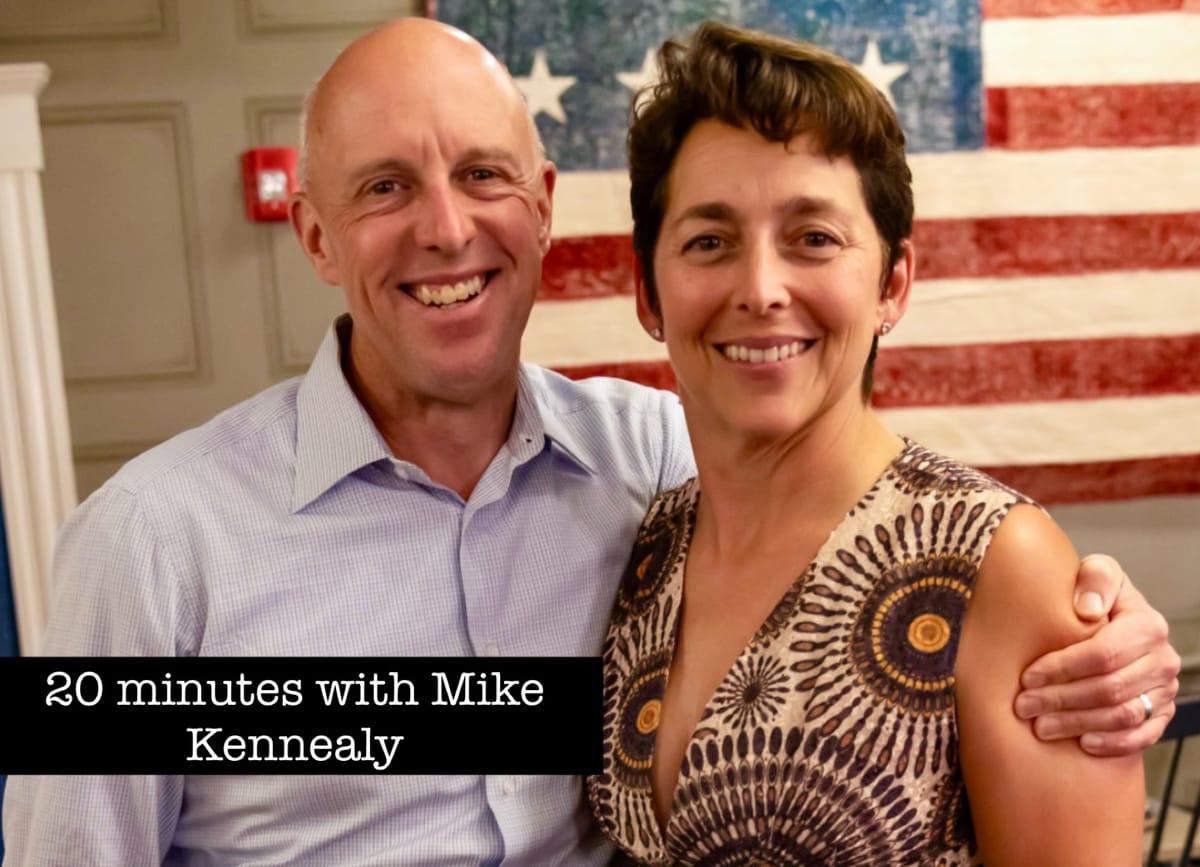
Mike Kennealy, a Republican candidate for governor of Massachusetts, has entered the 2026 gubernatorial race, contending that the state has reached a turning point. After years working across both the public and private sectors, Kennealy said he decided to run because he believes the state “could (simply) be doing so much better.” Drawing on experience in private equity, education reform, nonprofit leadership, and state government, the former cabinet secretary under Governor Charlie Baker has built his campaign around a belief that Massachusetts is underperforming despite its advantages. “I really feel like I can make a difference, that I’m the best person right now to be governor of the state,” he said. “If I didn’t feel that way, I shouldn’t be running.” The Lexington resident points to a career that spans business, nonprofit work, education, and government as the foundation of his candidacy. “I had a chance to work across all those sectors, met a lot of people around the state, dealt with a lot of issues and challenges and opportunities,” he said. Before entering politics, Kennealy worked in private equity. He later transitioned into public service, including work in Lawrence Public Schools and in the Baker administration. That breadth of experience, he argues, has given him a clear understanding of both the private economy and government operations. “I got to see the job up close, being one of nine cabinet secretaries,” he said. “You learn a lot in doing that.” During his time in state government, Kennealy said Massachusetts created 230,000 private sector jobs. He highlights several initiatives he considers key accomplishments from that period. Among them was the Housing Choice Initiative, which he describes as a major reform aimed at increasing housing production by lowering the local approval threshold for certain projects. “We looked at Massachusetts and said, 'Look, we’re in a housing crisis,'” he said. “Housing prices are high because we lack supply.” Kennealy describes housing as an ongoing threat to the commonwealth that needs fixing. “You’ve got to work with a very broad range of people,” he said. “It’s a deeply collaborative approach.” Kennealy argues that high costs increasingly squeeze Massachusetts residents and businesses. “When I think about affordability, I think about housing, energy, and taxes,” he said. Massachusetts ranks among the most expensive states in those areas, he noted. Housing costs, in particular, reflect a long-term supply shortage. “The reason why housing is so expensive is we haven’t produced nearly enough of it over the last 30 years,” he said. Kennealy has criticized policies he believes discourage development, including debates over rent control and building regulations that increase construction costs. “That’s a huge policy mistake,” he said of signals that could deter investment in housing. Energy costs are another concern. Kennealy said the state needs a broader approach to energy policy, including new technologies and increased supply. “We need a lot more supply of energy,” he said, pointing to options such as “small modular nuclear” and emerging fusion technologies. Taxes are the third major factor in affordability, he said. Kennealy argues that the state should hold the line on new taxes and instead focus on controlling spending. “We’re not going to raise taxes on anybody at any time, for any reason, in any amount,” he said. Kennealy also says rebuilding trust in government institutions will require greater transparency and accountability, pointing to public records access as one example. “The governor’s office is not subject to the public records laws,” he said. As governor, Kennealy said his office would voluntarily comply with those requirements. “My office will be subject to public records laws,” he said. Kennealy also supports efforts to audit the state legislature following a ballot question in which voters supported expanded oversight. “You have to listen to the people,” he said. “Seventy-two percent of the people voted for it.” During his time in state government, Kennealy said his office routinely handled public records requests and audits. “That’s just the way it should work,” he said. “I never viewed that as an impediment to getting the people’s business done.” Kennealy often describes the governor’s role as both managerial and collaborative. “You’re the CEO of a $60 billion enterprise,” he said of the executive branch. That responsibility includes building strong teams, setting measurable goals, and ensuring agencies operate effectively. But governing also requires cooperation with a wide network of stakeholders across the state. “Anybody that simply says, ‘I’m going to come in and run the government like a business,’ that’s part of it,” he said. “But when you try to get done the most important housing policy reforms in 50 years… you’ve got to work with a lot of people.” For Kennealy, leadership means balancing operational management with coalition building. “You’re running the government, but also you’re leading the state,” he said. During his time working under the Baker administration, Kennealy said the state identified several industries with major workforce needs, including healthcare, information technology, advanced manufacturing, the trades, and life sciences. “We had vocational high schools and community colleges working closely in alignment with employers,” he said. The approach was regional, connecting local training programs with businesses in each part of the state. “You have to do that with urgency and at scale,” he said. Kennealy argues that expanding access to technical and vocational education should be a priority. “We’ve spent years debating the admissions policy for vocational high schools,” he said. “That’s the wrong debate.” Instead, he said the focus should be on expanding programs so “anybody who wants to go can go.” Despite the demands of campaigning, Kennealy says he stays grounded through family, faith, and routine. His wife, Trisha Pérez Kennealy, is the successful business owner of the Inn at Hastings Park – an upscale hotel in Lexington – and they have raised three children together. “For me it’s always been faith and family,” he said. “My faith matters to me a lot, and my family means everything to me…I’ve been married for 27 years.” Kennealy stated that although his children are now adults, which has changed family life, their time together remains important. He maintains daily habits he considers essential, including prayer, exercise, and spending 1-on-1 time with his wife. “The non-negotiables in my day are my sleep, my fitness, church on Sunday, and prayer every day,” he said. Those routines help sustain him during the demands of a statewide campaign. “We’ve been in this process now for ten and a half months,” he said. “It’s a heck of a lot of work. The good news is, I love doing it.” If elected, Kennealy said his first actions in office would focus on accountability, fiscal discipline, and setting a clear policy direction. On day one, he said he would make the governor’s office subject to public records laws and push for legislative audits. Beyond those measures, he hopes to establish a new tone in state government. “We’re here to work for the people, not the other way around,” he said. He also plans to examine the state budget using what he calls a “zero-based” approach, building spending priorities from the ground up rather than automatically increasing existing line items. “We’re going to stop doing that,” he said. Kennealy believes Massachusetts faces structural challenges if government spending continues to grow while economic growth slows. “We are dead last in job growth,” he said. “At some point you will have real structural problems with that budget.” For him, the campaign ultimately comes back to a broader motivation: public service. “It is about a true commitment to service,” he said. “A true belief that what I bring to the table is the right background, experience, and ideas… to make a difference.”
|