Lumina Foundation is working to increase the share of adults in the U.S. labor force with college degrees or other credentials of value leading to economic prosperity.
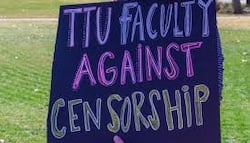
When Texas Senate Bill 37 was approved last year, faculty groups had one reason to feel cautiously relieved. While early versions of the bill had set sharp restrictions on how faculty could teach about race and gender across the general-education curriculum, those rules, after aggressive lobbying, had been removed during the final, closed-door negotiating sessions.
But recently, Texas board members and administrators have reinserted strikingly similar requirements.
While California has made gains in expanding access to college, the state remains well short of the 70 percent postsecondary attainment target set by Governor Gavin Newsom for 2030, says a new report from Complete College America and the Campaign for College Opportunity.
The attainment goal is both a higher education benchmark and a workforce and economic imperative, according to the report, which outlines several reforms for improvement—from transfer improvements to credit recognition.
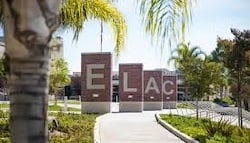
After working more than 50 years in higher education, including stints as president of Los Angeles Mission College and Moreno Valley College, Monte Perez was enjoying retirement in 2024. That’s when he received a call from Francisco Rodriguez, then the chancellor of the Los Angeles Community College District.
Rodriguez wanted to know if Perez, 78, would be willing to step in as the interim president of East Los Angeles College, the district’s largest college. Perez agreed, believing he could provide stability and reassurance during a time of uncertainty amid the Trump administration’s attacks on higher education and fears among undocumented students of deportation.
Imagine that you’ve arrived at college, eager to start your studies, only to find that you can’t enroll in courses required for your major. Some students don’t have to imagine that scenario. It’s all too real.
So-called college course shutouts are not isolated cases, and they are increasingly recognized as a barrier that can drag out the time it takes to earn a degree. That raises students’ tuition costs and possibly drives them to a different course of study, experts say.
Scott Galloway is one of higher education’s most acerbic critics. He’s a New York University marketing professor and co-host of the popular podcast, Pivot. He's also a man of some nuanced contradictions. He’s deeply skeptical of highly selective universities but committed to his son attending one. He is living proof of higher education’s capacity to increase social mobility. But he’s pessimistic about how much colleges can really change the lives of students.
In this interview, Galloway talks about the universities that are getting it wrong and the ones that are getting it right.
At a recent Achieving the Dream conference, facilitators challenged a dominant narrative surrounding artificial intelligence that faster and easier learning is inherently better. AI excels at producing statistically probable answers quickly, they said. Learning, by contrast, is inherently messy. Meaning emerges through interpretation, disagreement, revision, and context.
Throughout the event, educators returned again and again to a deeper concern of not whether students can use AI, but whether they can critically think, judge, and decide in a world increasingly shaped by it.




.jpg?width=500&upscale=true&name=istockphoto-1502958560-612x612%20(1).jpg)