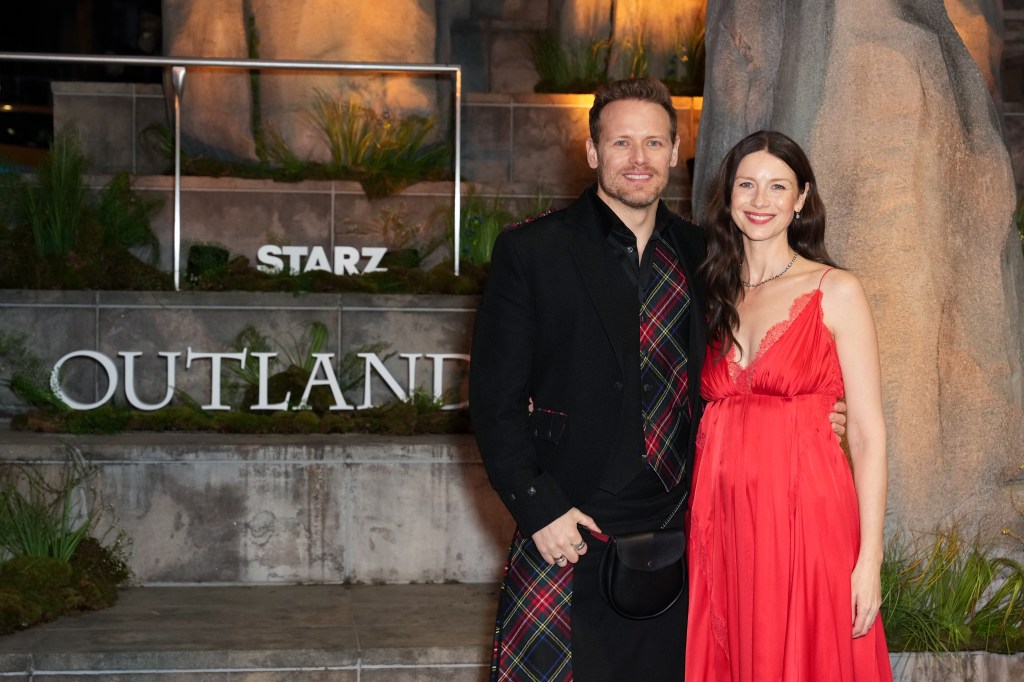
For fans of
Outlander, the show’s final series, which began on Friday, is the much-anticipated climax of a viewing experience that has spanned 13 years and eight seasons. For Starz, the company behind the historical fantasy drama, the end of the show presents a complex business challenge: How does a network maintain its revenue and relevance when its most popular series is no more?
“That’s a great question,” says Alison Hoffman, president of Starz Networks. “We’ve been trying to drive engagement in the
Outlander fan base over time with lots of our other shows.”
For those unfamiliar,
Outlander is based on a series of bestselling novels by author Diana Gabaldon and follows a British World War II nurse as she travels back in time through different historical periods (1740s Scotland plays a central role). Against a rollicking love story between its two protagonists, Claire (Caitríona Balfe) and Jamie (Sam Heughan), the show broaches themes of war, grief, sexual violence, and the meaning of family. It has been a huge driver of female viewership for Starz, a fact clearly on display when I attended the series’ New York City premiere last week: Rows and rows of women, some dressed in homemade period costumes, packed a movie theater at Lincoln Center. Their emotional investment in the series reminded me of my days as a One Direction groupie.
“Our strategy is to be the destination for women and underrepresented audiences,” says Hoffman. ”We have a very strong pipeline for women.” She namechecks Starz original series including
Power (a modern day thriller that revolves around New York’s Black and Latino communities),
The Royal Collection (period dramas, often with female protagonists) and an upcoming adaptation of
All Fours, Miranda July’s zany novel about a woman’s midlife awakening. And there is
Blood of My Blood, an
Outlander prequel that premiered last year in a bid to keep the show’s fans from cancelling their subscriptions after the finale airs. It has brought a “new and younger” audience to the network, Hoffman says.
Starz launched in 1994 as a premium cable channel that was positioned as a competitor to the likes of Showtime and
HBO Max. Over time, it has evolved into a mid-sized network that encompasses both a TV channel and an app that showcase acquired movies and a slate of original series. Acquired by Lionsgate in 2016, the company was spun off last May. Recent earnings show its revenue in decline (
7.3% for the first nine months of 2025 year-on-year). However, in a world of streaming juggernauts, its focus on shows that appeal to women and Black and Latino viewers, groups historically underrepresented in mainstream TV drama, makes it an important niche player. “From a business strategy perspective, we sit on top of the basic streamers,” says Hoffman. “We’ve partnered with
Amazon,
Hulu,
Apple because we’re a premium offering that is meant to be enjoyed alongside your basic television service.”
“Back when we launched
Outlander, most of the premium TV landscape was focused on men,” she continues. “We won the show in a competitive process…and we said, ‘here is something we can do that nobody else really has their eye on.’” Hoffman believes that
Outlander’s longevity and cultural impact (
the show is linked to a rise in Scottish tourism) proves that the Starz model still works. “That [
Outlander] audience has carried through time and even as the industry has changed, it’s been a constant for us,” she says. “The business case is there.”
Ellie Austinellie.austin@fortune.comThe Most Powerful Women Daily newsletter is Fortune’
s daily briefing for and about the women leading the business world. Today’s edition was curated by Emma Hinchliffe. Subscribe here.