|



Give any AI agent access to Google search with SerpApi (Sponsored)
 |
Agents are smarter when they can search the web - but with SerpApi, you don’t need to reinvent the wheel. SerpApi gives your AI applications clean, structured web data from major search engines and marketplaces, so your agents can research, verify, and answer with confidence.
Access real-time data with a simple API.
The AI open-source ecosystem has entered an extraordinary growth phase.
GitHub’s Octoverse 2025 report revealed that over 4.3 million AI-related repositories now exist on the platform, a 178% year-over-year jump in LLM-focused projects alone. In this environment, a select group of repositories has emerged as clear frontrunners, each amassing tens or even hundreds of thousands of stars by offering developers the tools to build autonomous agents, deploy models locally, and streamline AI-powered workflows.
Let’s look at the most impactful AI repositories trending on GitHub right now, covering what they do, why they matter, and how they fit into the broader AI landscape.
OpenClaw
OpenClaw is the breakout star of 2026 and arguably the fastest-growing open-source project in GitHub history.
Created by PSPDFKit founder Peter Steinberger, it surged from 9,000 to over 60,000 stars in just a few days after going viral in late January 2026, and has since blown past 210,000 stars. The project was originally named Clawdbot, then Moltbot, and finally settled on OpenClaw.
At its core, OpenClaw is a personal AI assistant that runs entirely on your own devices. It operates as a local gateway connecting AI models to over 50 integrations, including WhatsApp, Telegram, Slack, Discord, Signal, and iMessage. Unlike cloud-based assistants, your data never leaves your machine. The assistant is always on, capable of browsing the web, filling out forms, running shell commands, writing and executing code, and controlling smart home devices. What sets it apart from other AI tools is its ability to write its own new skills, effectively extending its own capabilities without manual intervention.
OpenClaw has found use across developer workflow automation, personal productivity management, web scraping, browser automation, and proactive scheduling. On February 14, 2026, Steinberger announced he would be joining OpenAI, and the project would transition to an open-source foundation. Security researchers have raised valid concerns about the broad permissions the agent requires to function, and the skill repository still lacks rigorous vetting for malicious submissions, so users should be mindful of these risks when configuring their instances.
n8n
n8n is an open-source workflow automation platform that combines a visual, no-code interface with the flexibility of custom code, now enhanced with native AI capabilities. It has over 400 integrations and a self-hosted, fair-code license. This gives technical teams full control over their automation pipelines and data.
The platform stands out due to its AI-native approach. Users can incorporate large language models directly into their workflows via LangChain integration. They can build custom AI agent automations alongside traditional API calls, data transformations, and conditional logic. This bridges the gap between conventional business automation tools and cutting-edge AI agent workflows. For enterprises with strict data governance requirements, the self-hosting option is particularly valuable.
Common applications include AI-driven email triage, automated content pipelines, customer support agent flows, data enrichment workflows, and multi-step AI processing chains.
Ollama
In a landscape dominated by cloud API subscriptions, Ollama took the opposite approach. It is a lightweight framework written in Go for running and managing large language models entirely on your own hardware. No data is sent to external services, and the entire experience is designed to work offline.
Ollama provides simple commands to download, run, and serve models locally, supporting Llama, Mistral, Gemma, DeepSeek, and a growing list of others. It includes desktop apps for macOS and Windows, which means even non-developers can get started with local AI. Its partnerships to support open-weight models from major research labs drove a massive surge of interest.
The project has become the backbone of the local AI movement, enabling developers to experiment with and deploy LLMs in privacy-critical or cost-sensitive environments. It pairs quite well with tools like Open WebUI to create a fully self-hosted alternative to commercial AI chat products.
Unblocked: Context that saves you time and tokens (Sponsored)
 |
AI coding tools are fast, capable, and completely context-blind. Even with rules, skills, and MCP connections, they generate code that misses your conventions, ignores past decisions, and breaks patterns. You end up paying for that gap in rework and tokens.
Unblocked changes the economics.
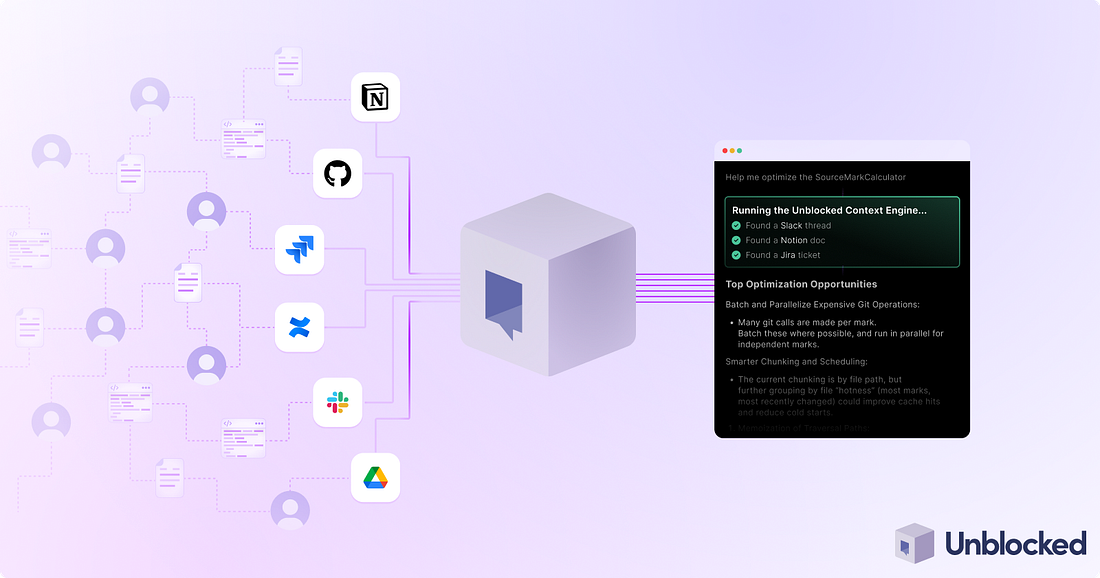
It builds organizational context from your code, PR history, conversations, docs, and runtime signals. It maps relationships across systems, reconciles conflicting information, respects permissions, and surfaces what matters for the task at hand. Instead of guessing, agents operate with the same understanding as experienced engineers.
You can:
Generate plans, code, and reviews that reflect how your system actually works
Reduce costly retrieval loops and tool calls by providing better context up front
Spend less time correcting outputs for code that should have been right in the first place