What matters in U.S. and global markets today

Get full access to Reuters.com for just $1/week. Subscribe now.


Morning Bid U.S.

Morning Bid U.S.

A Reuters Open Interest newsletter

What matters in U.S. and global markets today


By Mike Dolan, Editor-at-Large for Finance and Markets

Both energy and stock markets appear to be in a holding pattern after the wild swings earlier this week as they look for any evidence that oil and gas supplies might be freed up in the Middle East.

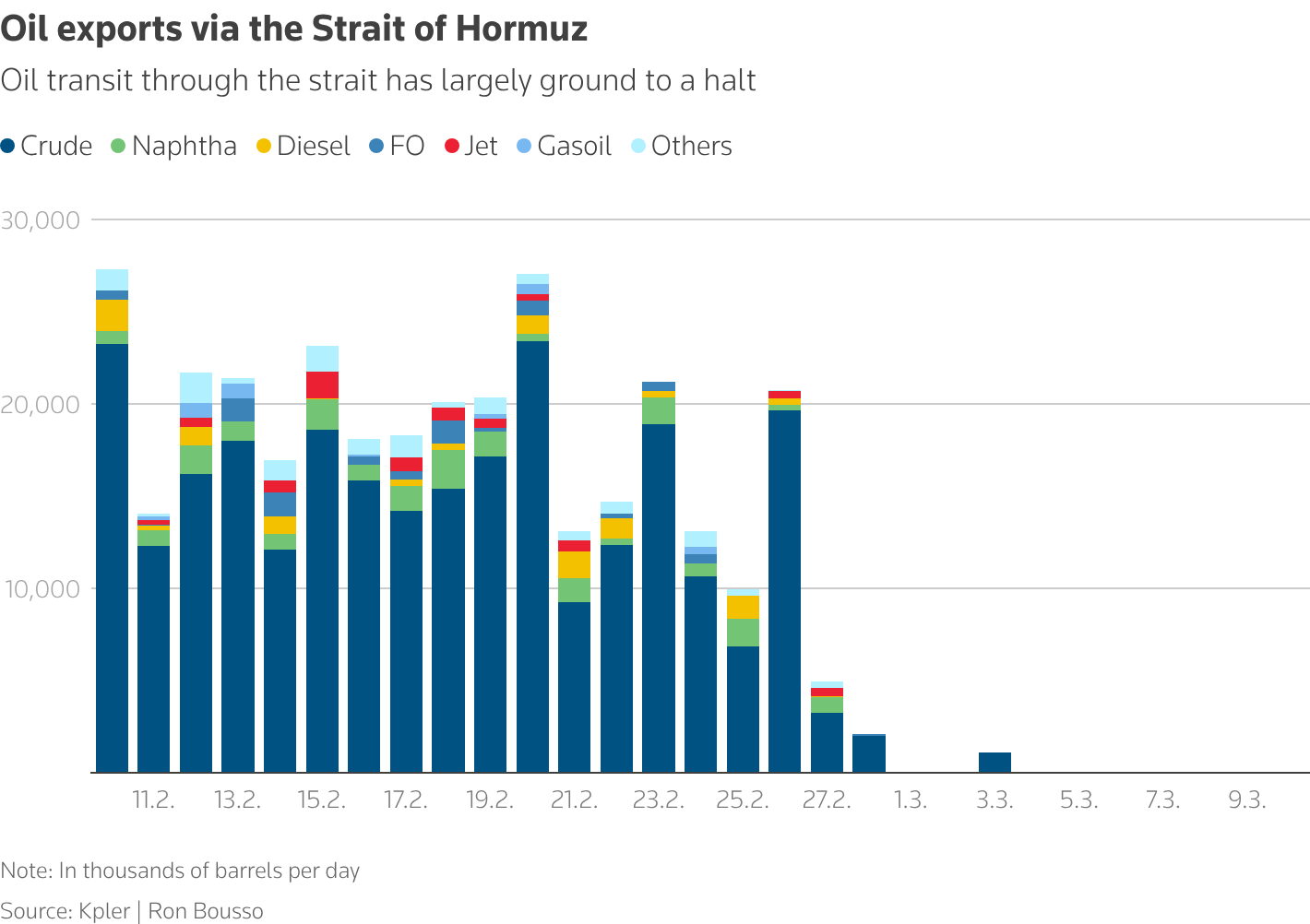
For now, there are few signs on the ground to back up President Trump’s view that the war will be over very soon, with Tuesday seeing intense bombardments, shipping still blocked in the Strait of Hormuz, and Saudi Aramco’s CEO warning of “catastrophic consequences” for the oil market if conflict drags on.

I’ll get into that and more below.

But first, check out my latest column on why an Iran oil shock could prove politically toxic in the U.S. even if GDP escapes largely unscathed.

And listen to today's episode of the Morning Bid daily podcast, where I discuss oil-shock inflation fears and look ahead to today's big macro release - inflation data for the leadup to the crisis.

Subscribe to hear Reuters journalists discuss the biggest news in markets and finance seven days a week.


Data refreshes every time you open this email. For more U.S. market news, click here. Please send any feedback to morningbid@thomsonreuters.com.


Today's Market Minute

  • Oil prices rebounded on Wednesday as markets doubted whether the International Energy Agency's reported plan for a record release of oil reserves could offset potential supply shocks from the U.S.-Israeli conflict with Iran.
  • Elon Musk's rocket and satellite maker SpaceX is leaning toward listing its shares ‌on the Nasdaq for what could rank as the biggest initial public offering of all time.
  • Surging diesel prices are threatening to slow global economic activity as the war in the Middle East pressures supplies, traders and analysts said.
  • The economic risks of the world’s oil and gas dependence have been laid bare twice in four years, undermining U.S. President Donald Trump’s fossil fuel push, writes ROI Energy Columnist Ron Bousso.
  • Parallels are beginning to emerge between the tremors now rippling through private credit and those in U.S. subprime housing before the financial crisis, writes ROI Markets Columnist Jamie McGeever.
 

From panic to patience

Oil prices initially dropped below $90 per barrel on Wednesday on reports that the International Energy Agency had proposed the largest release of oil reserves in its history - more than double the size of the 182 million barrels released after the Ukraine invasion in 2022.

Oil then staged a rebound, however, as traders digested the proposal. Goldman Sachs estimated a release the size of that in 2022 would offset 12 days of an estimated 15.4 million barrel per day export disruption in the Gulf.

As prices seesaw, though, it will be hoped that Monday's panic surge in crude markets to nearly $120 per barrel has set the parameters for prices - at least until the duration of the Iran conflict becomes clearer.

Wall Street was mixed on Tuesday as the intense bombardments in the Middle East - and further Iranian threats of a comprehensive oil blockade - dampened earlier hopes for a short-lived conflict. All major indexes closed largely flat.

Global shares steadied somewhat on Wednesday as Japan’s Nikkei gained 1.7% and South Korea’s KOSPI rose by 1.75%. European stocks opened lower, however, while U.S. stock futures held steady ahead of the bell.

Meantime, the dollar rebounded after slipping early on Wednesday, holding onto some of the early-week gains it recently shed as traders looked for signs of a quick conclusion to the war.

Later today, traders will get a read on where U.S. CPI was in February, just before the Iran attacks started late in the month. More important, though, will be the release on Friday of February PCE data, the Fed’s favoured measure of inflation. Core inflation measured by the latter was likely already running above 3% before the oil spike.

Elsewhere, Oracle’s shares surged 8% in extended trading after its latest results, which saw it predict boosted revenue estimates well into 2027 on the AI data center boom, helping to reassure investors about the massive scale of its capex. The results also serve as a reminder of the enduring AI theme in equities beyond the day-to-day energy market ructions.

Ongoing angst about private credit funds and the quality of the loans contained within them is also rising, however. JPMorgan Chase has marked down ‌the value of certain loans held by private credit groups and is tightening its lending to the sector, the FT reported on Wednesday


The dangerous politics of US oil-driven redistribution

U.S. stock market indexes have weathered this month's oil shock well so far because investors expect only a glancing overall GDP hit from higher energy costs. But that resilience masks a potentially toxic shift of income from households to "Big Energy" - and packs big risks in an election year.

With uncertainty still rife about the extent and length of the Iran war, sharp and volatile spikes in energy prices have left oil and natural gas costs looking structurally higher over the coming year. Worries about food prices are creeping in too, as fertilizer ‌shipments are also being snagged in the Middle East Gulf region.


Graphics are produced by Reuters.

Read the full column