| | In today’s edition: Truck drivers pick up the shipping slack, Ukraine sends military advisers to the͏ ͏ ͏ ͏ ͏ ͏ |
| |  Abu Dhabi Abu Dhabi |  Kyiv Kyiv | Washington DC |
 | Gulf |  |
| |
|
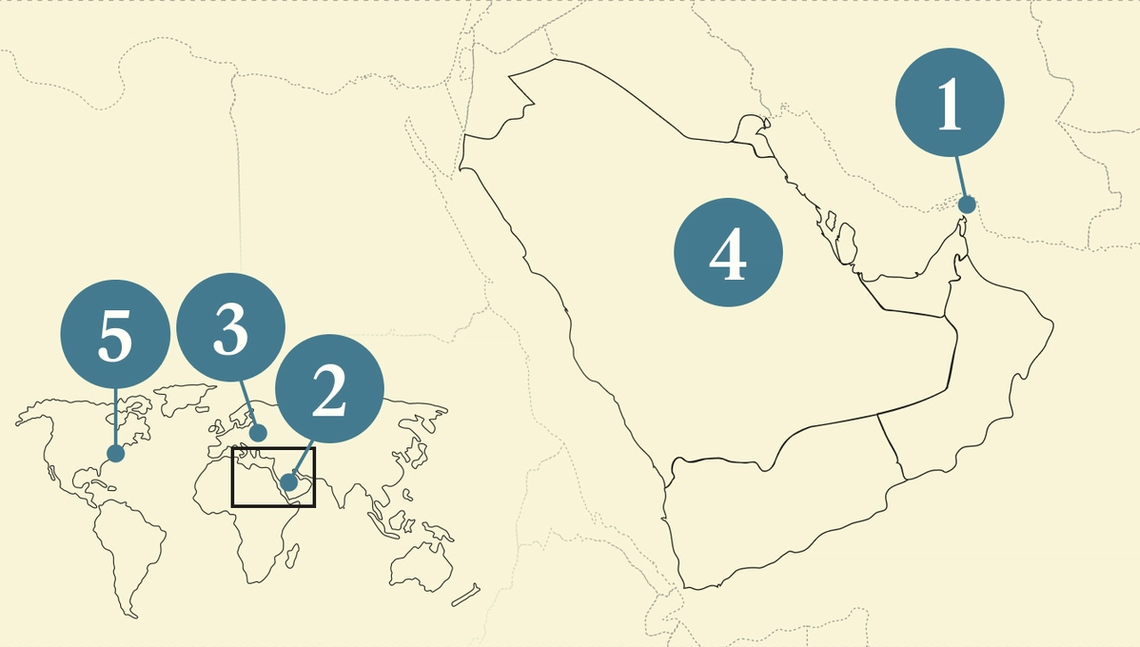 - The state of Hormuz
- Gulf calls up the trucks
- Drones 101 with Ukraine
- Saudi-US Africa fund
- What past oil shocks tell us
 Aramco’s AI push is the hidden takeaway from its annual results. |
|
No quick fixes for Hormuz |
 US Navy ships during a photo exercise in the Arabian Sea in February. US Navy/Mass Communication Specialist 1st Class Jesse Monford/Handout via Reuters. US Navy ships during a photo exercise in the Arabian Sea in February. US Navy/Mass Communication Specialist 1st Class Jesse Monford/Handout via Reuters.The prospects for a resumption of Gulf oil exports look distant, absent a major diplomatic or military breakthrough, after Iran reportedly started laying mines in the Strait of Hormuz. The US has struck Iranian mine-laying vessels, but the US Navy has refused to escort merchant shipping because of the risk of Iranian fire, Reuters reported. Within the region, energy majors are scaling back operations and oil facilities continue to be hit by Iran, including the Ruwais Industrial Complex in Abu Dhabi. The knock-on effects are being seen worldwide, from US airlines facing a sharp hike in fuel costs to Asian refineries cutting exports so they can prioritize domestic customers. The G7 club of industrialized nations has discussed opening strategic oil reserves to keep prices down, but that still leaves Gulf states grappling with an economic crisis they have long feared, didn’t initiate, and which the US is unable to resolve. A military solution does not look close given the weapons Tehran still has at its disposal: Martin Sampson of the International Institute for Strategic Studies pointed to Iran’s barely used cruise missile arsenal, small patrol boats that can harass much larger vessels, and cyber warfare capabilities. — Dominic Dudley |
|
Trucks are the Gulf’s logistics stopgap |
 MSC Group’s inland route map. Courtesy of MSC Group. MSC Group’s inland route map. Courtesy of MSC Group.With the Strait of Hormuz shut, logistics operators are coming up with alternatives to keep trade moving. Shipping giants including Cosco, Hapag-Lloyd, Maersk, and MSC have halted new voyages into the Gulf, leaving some of the busiest ports in the world idle, with billions of dollars worth of trade disrupted. In one workaround, Abu Dhabi Ports and Dubai-based DP World are offering land routes to move containers from the UAE’s eastern ports of Fujairah and Khorfakkan on the Gulf of Oman to Jebel Ali and Khalifa Port for customs clearance. Oman also stands to benefit as an alternate trade hub: Its ports of Salalah, Sohar, and, to a lesser extent, Duqm, are emerging as safe nodes to bring in goods. Gulf countries import most of their food and manufactured products, and rely on open shipping lanes to export — in addition to hydrocarbons — aluminum, fertilizers, and other goods. Routes from Saudi Arabia’s Red Sea ports offer another overland option to the Gulf’s major cities. |
|
Drone experts in from Ukraine |
 Ukrainian Presidential Press Service/Handout via Reuters Ukrainian Presidential Press Service/Handout via ReutersKyiv has dispatched teams of military experts to Qatar, Saudi Arabia, and the UAE as Iran’s Shahed drones continue to strike the region. Ukraine President Volodymyr Zelenskyy said Gulf nations should trade the expensive missiles they’re using to shoot them down for much cheaper Ukrainian alternatives, honed from more than four years of combatting the one-way autonomous systems that Tehran has supplied to Russia. Ukraine has indicated it’s ready to provide drone interceptors to the Gulf, but has also noted that more Patriot missiles were used in the Middle East in three days than Ukraine has used since Russia invaded in 2022. Kyiv has long sought to obtain more Patriot batteries to defend against Russian attacks. The missiles are in short supply, and using them to shoot down inexpensive Iranian drones is akin to “using a bazooka to kill a fly,” The New York Times reported. |
|
US-Saudi venture eyes African minerals |
 A US-based investment firm and a Saudi conglomerate plan to raise a “multibillion-dollar” fund to invest in critical minerals in Africa, the firm’s leaders told Semafor. Cove Capital and Tariq Abdel Hadi Abdullah Alqahtani & Sons (AHQ) will formally launch the fundraising in June, targeting sovereign wealth funds, institutional investors, and governments. They will seek investments in cobalt, copper, lithium, and rare earth minerals. The tie-up between the two firms follows an agreement by the US and Saudi governments in November to cooperate on critical minerals supplies, a key issue for the Trump administration that wants to reduce dependence on China for materials crucial for the high-tech economy and some military equipment. It’s the latest sign of Gulf countries’ interest in African mining projects, which fit into wider efforts to diversify their economies and position themselves as crucial allies to Western nations looking for alternatives to Chinese metals and minerals. AHQ is also planning to develop processing facilities in Saudi Arabia. — Matthew Martin |
|
View: Past oil shocks have little to teach us |
 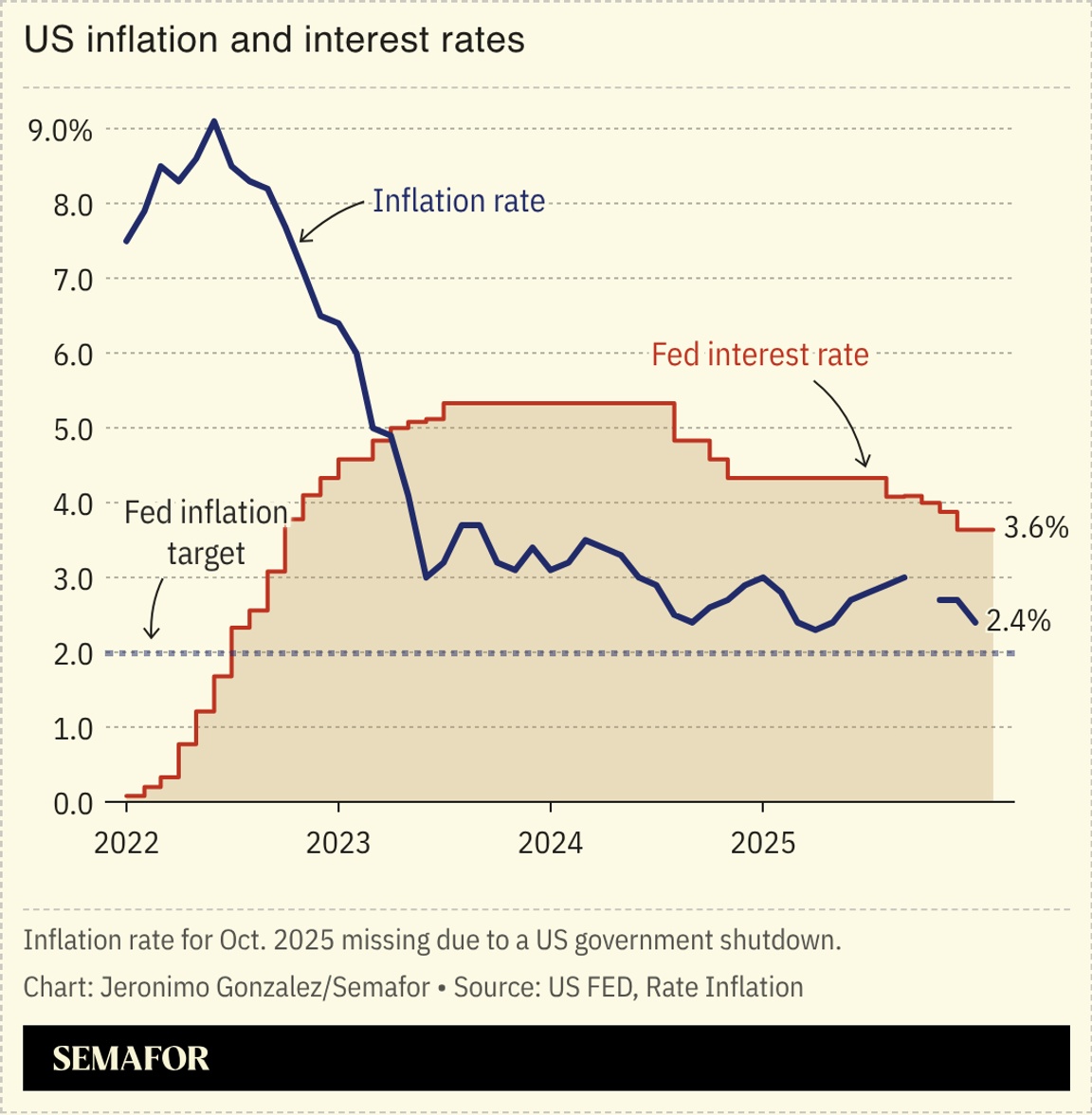 For all the talk of how resilient the US economy has become to energy shocks, betting that it can absorb weeks of costlier oil is fraught with risks for President Donald Trump, and even more so for US allies, Alaa Shahine Salha, a senior executive at Saudi Research & Media Group, writes in a column for Semafor. Understanding past oil shocks is important, but relying on them too heavily can encourage the wrong conclusion: that we are either headed for a 1979-style crisis or that the economic consequences will be negligible. The world is at least far less reliant on oil today: The global economy has a more diverse mix of energy sources, while the US has shifted from being the world’s biggest crude importer to a net exporter of energy. When it comes to inflation, the starting point is also much lower than at the time of the 2022 shock following Russia’s invasion of Ukraine. But stripping out the geoeconomic nuance risks creating a false sense of security.
|
|
 Bilt Rewards launched in 2019 with a simple idea. If you can get credit-card rewards for buying a round of drinks, why can’t you get them for paying your rent? After a shambolic and short-lived partnership with Wells Fargo, the company is back with bigger ambitions: To be the platform powering 12% of the economy — housing services — plus a big chunk of what people spend on dining, workouts, health care, and other local services. On this week’s episode of Compound Interest, co-hosts Liz Hoffman and Rohan Goswami sit down with Bilt CEO Ankur Jain to unpack its Amex-Shopify-Square ambitions — and why every company wants to be a membership club. |
|
 - AGBI: The security-for-energy bargain between the US and the Gulf states “is now looking extremely fragile,” according to columnist Frank Kane, who details how the West and Russia stand to gain from the unfolding crisis.
- Bloomberg: A look at what Western countries like Australia, France, the UK, and the US have sent to their Gulf allies to help them defend themselves against Iran.
- Council on Foreign Relations: How drone warfare and Iran’s influence on the rise of high-volume, low-cost weaponry has ushered in a new era of conflict.
- Financial Times: An analysis of the ways the rapidly expanding Middle East conflict could unfold, from the possibility of US-Iran negotiations to what Israel wants from its offensive in Lebanon.
- Foreign Policy: In contrast to residents of the Gulf and US citizens, Israelis are upbeat about war with Iran.
- Vox: Our own Mohammed Sergie, Semafor Gulf editor, talks about what’s at stake with the Strait of Hormuz closure on the podcast Today, Explained.
|
|
Wael Mahdi is an independent commentator specializing in OPEC and Saudi Arabia’s economy, and co-author of OPEC in a Shale Oil World: Where to Next? 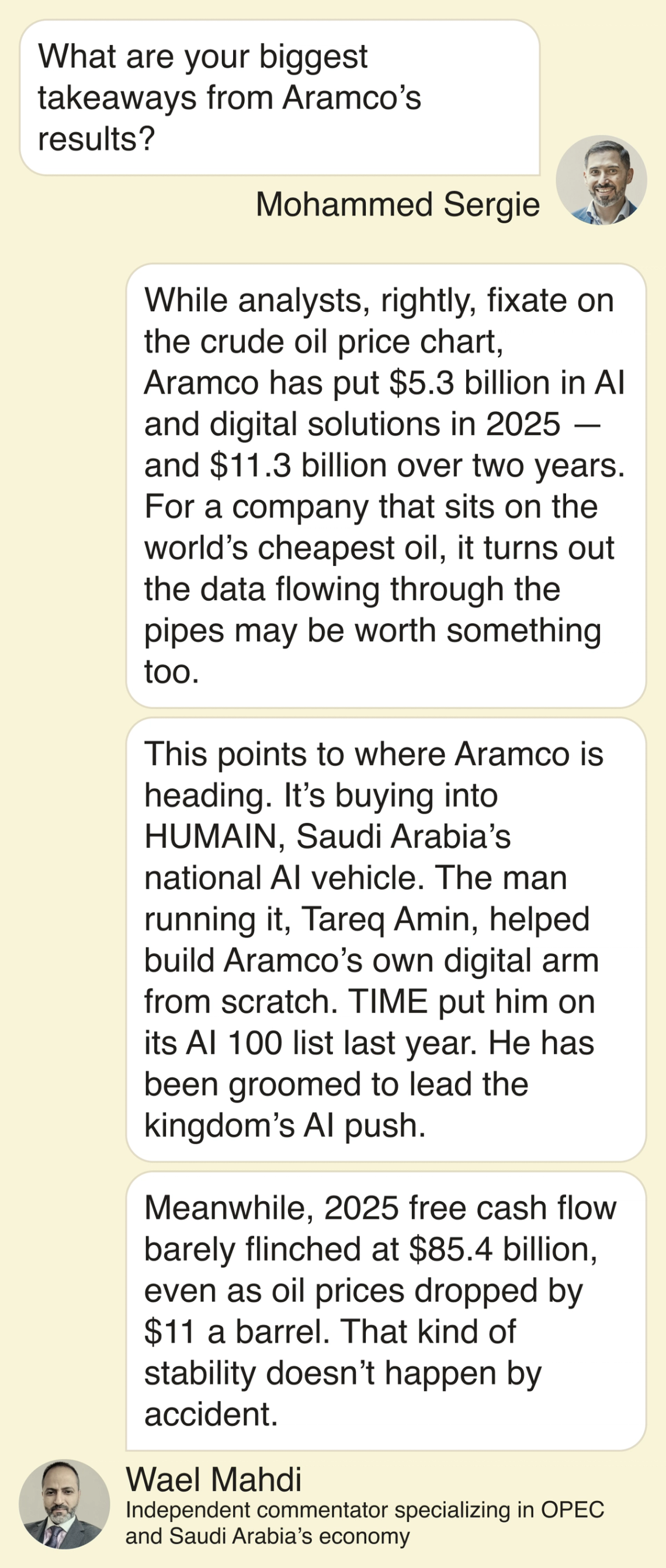 |
|
Starting tomorrow, Semafor Gulf will arrive in your inbox Monday through Thursday. We’ll still send special editions for major developments on other days — as we have with the extraordinary events unfolding in the Gulf right now. |
|
|


