|
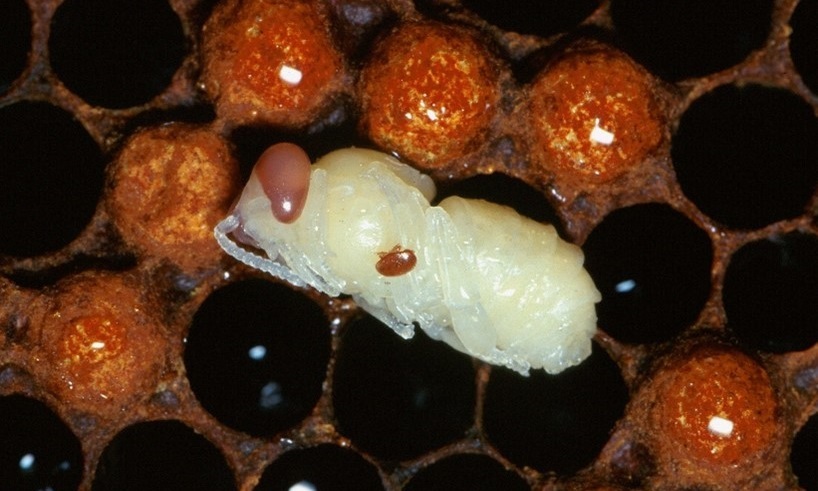
Visible as a dark, oval shape, an adult female Varroa mite feeds on the midsection of a developing worker bee. (USDA photo by Scott Bauer)
New Pesticides Could Better Control Mite Disease in Honey Bees
The Varroa mite (Varroa destructor) is a parasite of the honey bee (Apis mellifera L.) and is considered one of the species’ most serious threats, inflicting more damage and higher economic costs than all other bee keeping diseases. Varroa mites harbor numerous viruses and feed on honey bee adults and pupae, causing weakened immune systems, decreased body weight, and a shortened lifespan. The external wounds caused by repeated feeding can become infected with bacteria, fungi, and viruses.
ARS researchers at the Bee Research Lab tested numerous pesticides for the chemical control of Varroa mites and screened 40 compounds of samples in the lab (and three in the field). Learn more...
The Agricultural Research Service is the U.S. Department of Agriculture's chief scientific in-house research agency. Daily, ARS focuses on solutions to agricultural problems affecting America. Each dollar invested in agricultural research results in $20 of economic impact.
|