| | The Iran war shatters supply chains and drives inflation concerns, climate change accelerates, and a͏ ͏ ͏ ͏ ͏ ͏ |
| |  Muscat Muscat | Buenos Aires |  Beijing Beijing |
 | Flagship |  |
| |
|
The World Today | 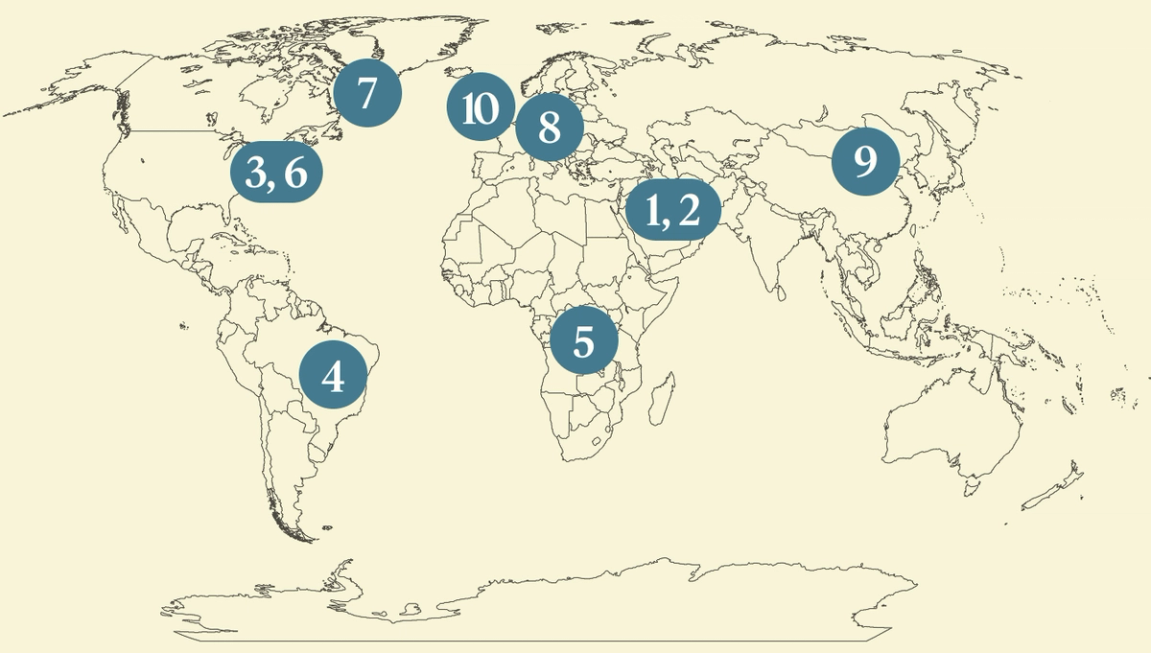 - Oil prices back above $100
- Global supply chains risk
- Inflation concerns mount
- Iran war’s LatAm winners…
- …and African losers
- Trump eyes new tariffs
- Climate change speeds up
- BioNTech founders quit
- China’s new ethnicity rule
- Art sales’ uneasy revival
 An ‘essential’ book on how geopolitical shocks drive inflation. |
|
Oil prices rise above $100 again |
|
Iran war risks global tipping point |
 Stringer/File Photo/Reuters Stringer/File Photo/ReutersIran essentially shutting the Strait of Hormuz could become a tipping point for the global economy, hitting a broad range of sectors, experts warned. More than 20% of the world’s oil output traversed through the waterway before the start of the war. But many other raw materials, including a large share of the global aluminum supply, are shipped through the key chokepoint. Meanwhile firms spanning from petrochemicals to electronics are forecasting that the threat to global supply chains could upend their businesses, suggesting the global commercial impact could extend well beyond energy: An Apple and Nvidia supplier warned of an impact on component supplies, while a Taiwanese chip firm told Nikkei that the situation was “very critical.” |
|
War spurs global inflation fears |
 Annabelle Gordon/Reuters Annabelle Gordon/ReutersThe war in Iran is driving global inflation concerns as energy costs spiral. Analysts told CNBC that eurozone inflation could rise 0.6 percentage points to 2.5% even if energy supply normalizes within four weeks, while inflation could hit 3% in the US and UK. Bond yields rose and fears of rising interest rates led UK lenders to withdraw 500 mortgage deals in the last two days. The 2022 energy shock, when inflation hit 9%, is fresh in European policymakers’ minds, although a full-blown crisis could yet be averted: The post-pandemic global economy was “ripe for inflation,” an ING economist said in an investor note, with high government spending and fractured supply chains. Those things are “less true” today. |
|
LatAm oil exporters boosted by war |
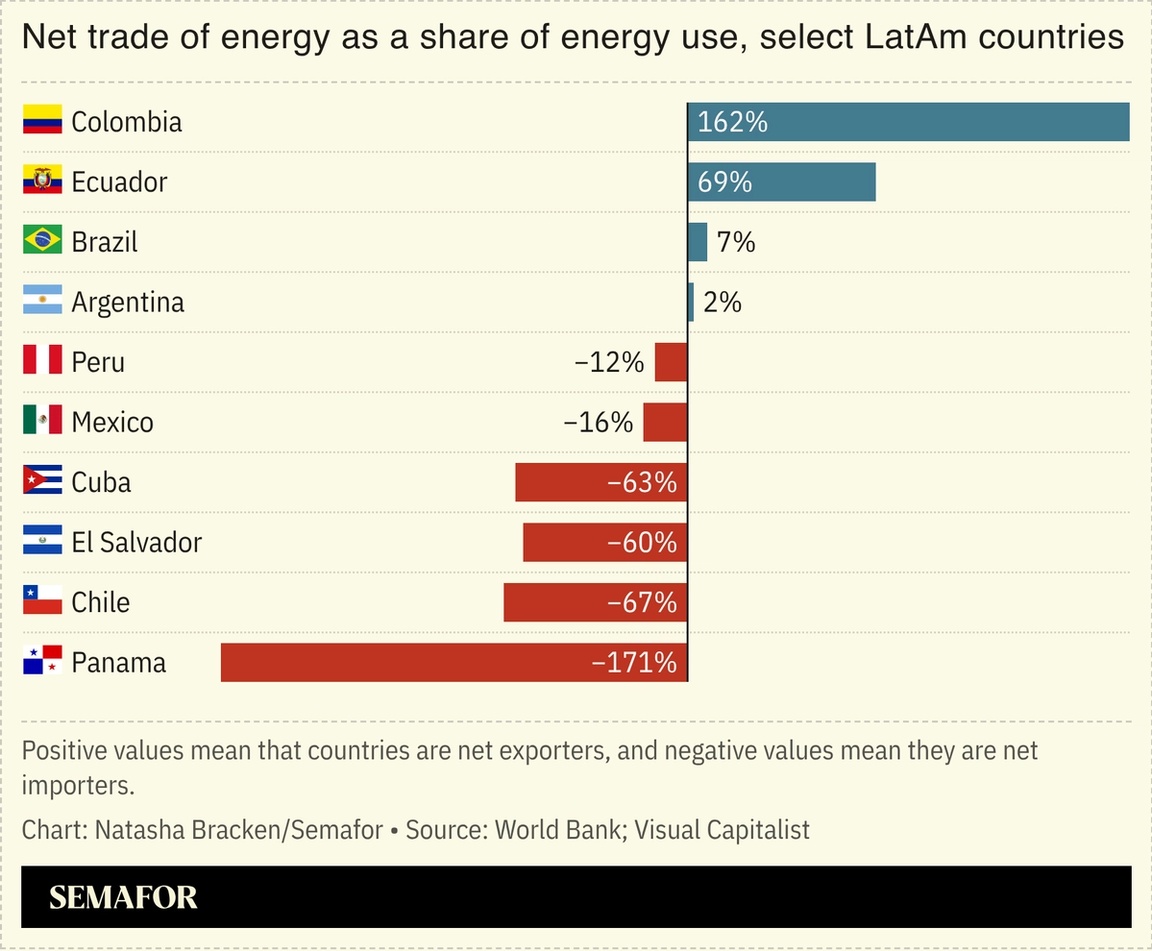 The war in Iran is lifting the fortunes of oil producers in Latin America who aren’t vulnerable to the Strait of Hormuz closure. Net energy exporters such as Argentina, Brazil, and Guyana stand to benefit from rising oil and gas prices, and a recent Goldman Sachs report suggesting that persistently higher prices could translate to regional economic growth. Agricultural exporters including Argentina and Uruguay could be boosted as well as the price of foodstuffs increase globally, while investment in Latin America could further drive a hard currency windfall. However, energy importers like Chile and Mexico may see inflation tick up, which could fuel social unrest and force governments to expand subsidies. |
|
War could hit humanitarian aid |
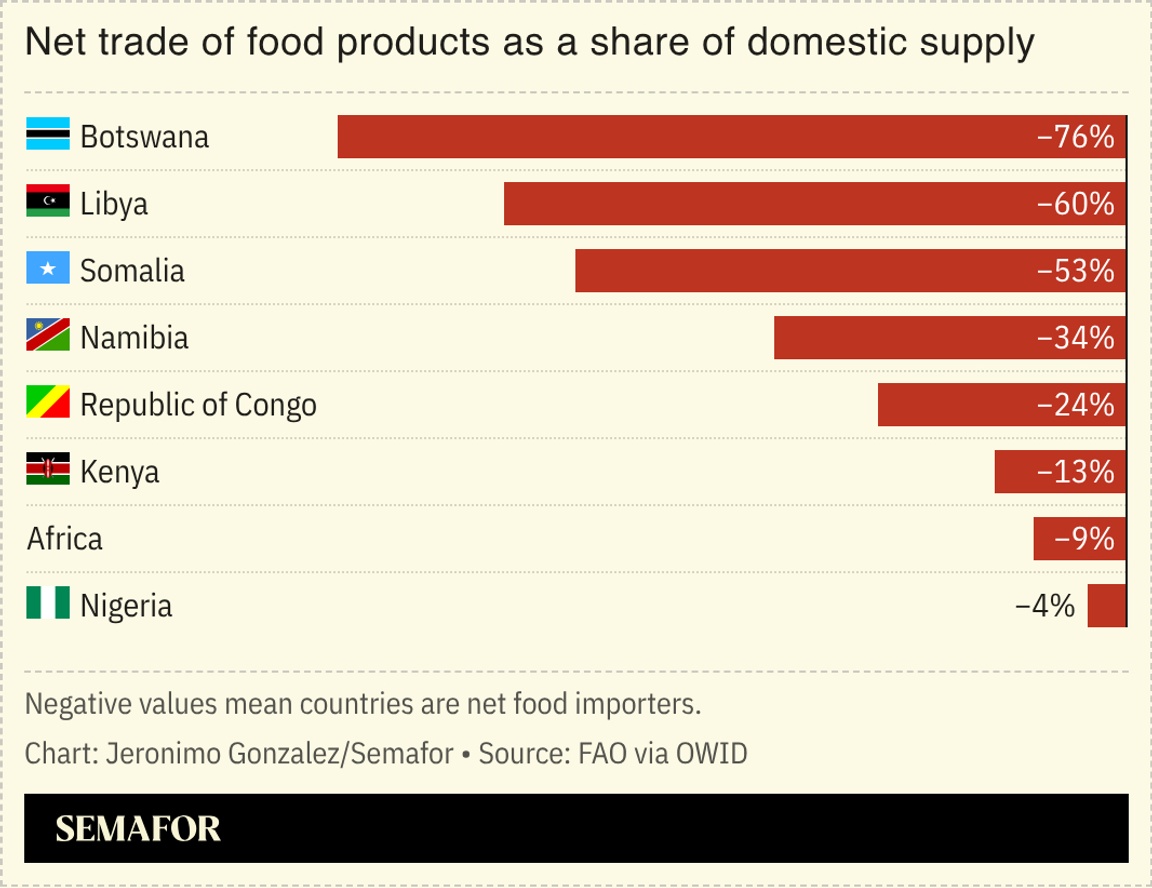 Rising commodity prices and disruptions to global supply chains sparked by the war in Iran threatened the delivery of life-saving aid, the UN argued. The vast majority of African nations are net food and fuel importers, meaning higher prices risk having a disproportionate impact on the continent. And a large share of the world’s humanitarian relief, much of it destined for Africa, travels through the Strait of Hormuz, which Tehran has essentially shut. The impact is compounding the war’s consequences for African nations, many of which have already seen foreign aid collapse in the last year. “This really is a perfect storm of factors right now, and I’m seriously worried,” the UN’s aid chief told Reuters. |
|
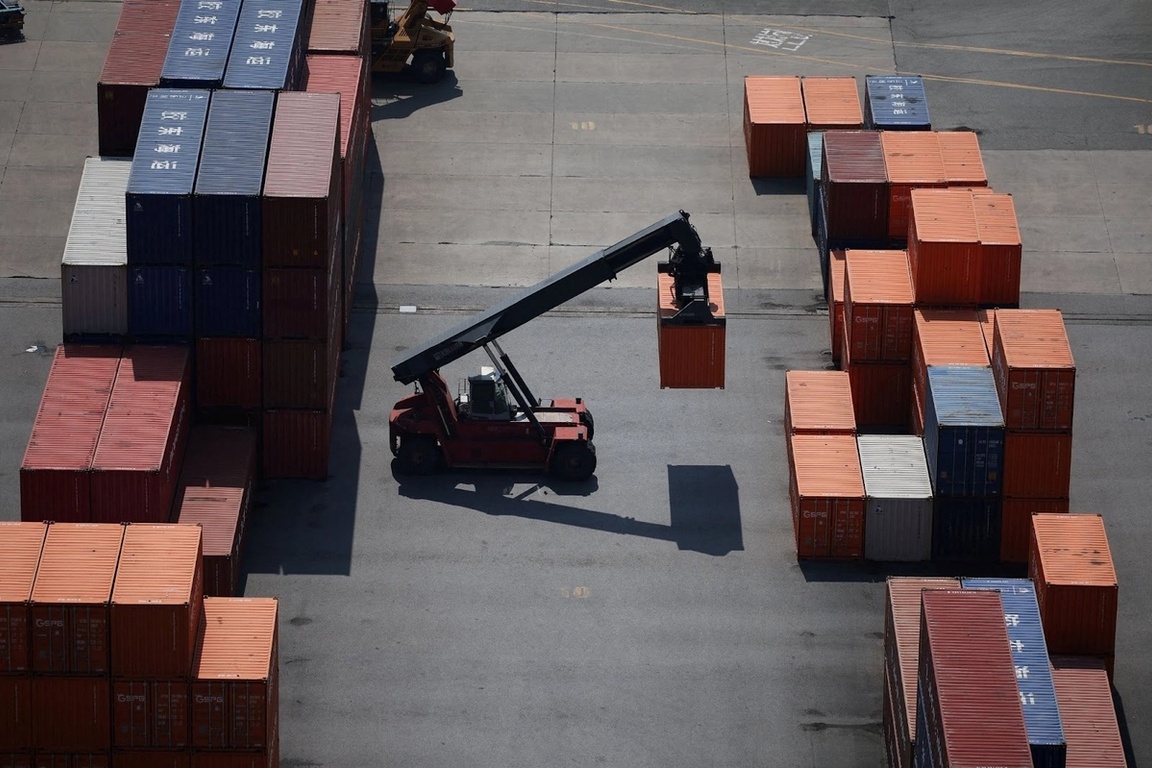 Kim Hong-Ji/File Photo/Reuters Kim Hong-Ji/File Photo/ReutersUS President Donald Trump moved to impose new tariffs in a bid to revive his trade agenda, injecting fresh uncertainty into the global economy. The Trump administration announced new investigations into other countries’ trade practices, a likely precursor to imposing duties on imports, after the US Supreme Court struck down his previous sweeping global duties. The Wall Street Journal said the latest efforts have stronger legal basis than those ones, but will nevertheless face domestic political pushback, particularly in the run-up to midterm elections in which affordability issues are top of the agenda. Other countries, meanwhile, many of which have already signed deals with the US, are likely to be perturbed by a fresh assault on their economies. |
|
Global warming may be accelerating |
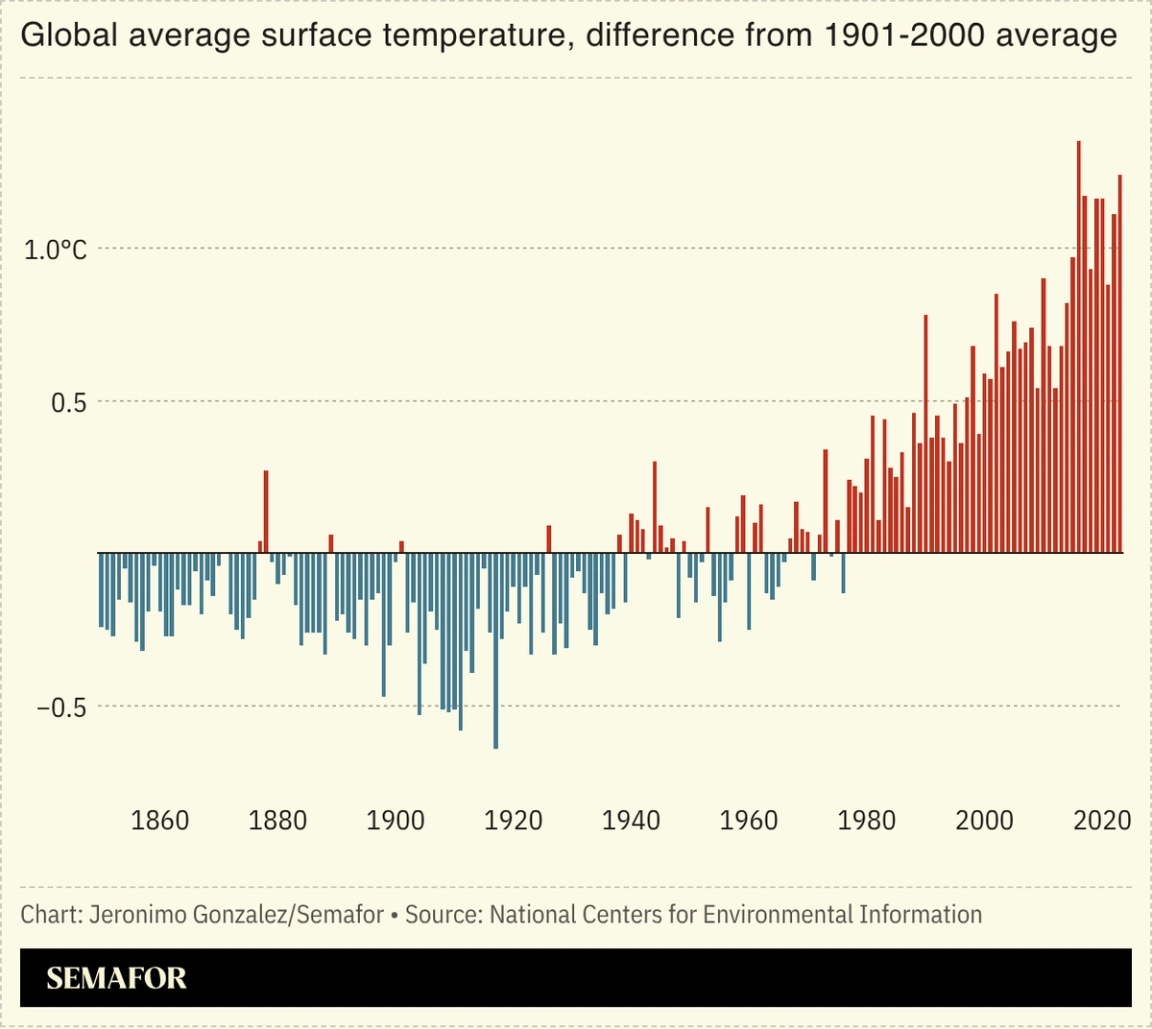 The rate of global warming may be speeding up, mainly due to a reduction in air pollution, and its impacts are being felt both in hot countries and cold. Analysis suggested the Earth is warming at 0.35°C (0.2°F) per decade, up from around 0.2°C in the 1970s. Some scientists dispute the precise number, but told Nature that there had certainly been an acceleration. The perhaps ironic primary cause is regulations on international shipping reducing pollutant particles, which reflected sunlight into space. The number of days per year worldwide that are too hot to engage in ordinary activities has doubled since 1950, separate research found, while Arctic sea ice is at its lowest level on record. |
|
mRNA pioneers to leave BioNTech |
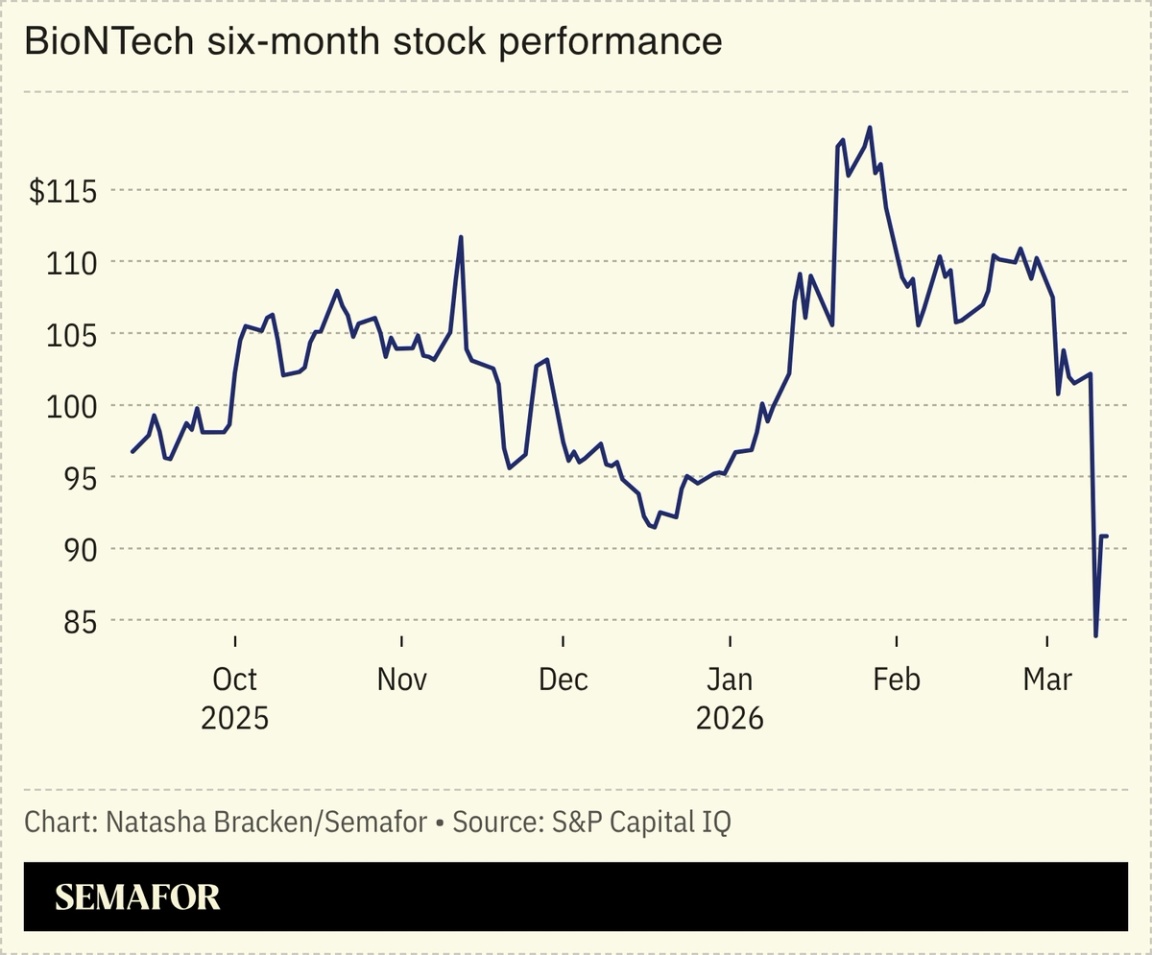 The founders of the pharma firm BioNTech — who helped pioneer COVID-19 vaccines — are leaving the company to focus on research to advance mRNA technology. Uğur Şahin and Özlem Türeci, a Turkish husband-and-wife team, became unlikely celebrities during the pandemic: 366 million doses of BioNTech’s vaccine, developed with Pfizer, were administered in the US alone by 2023. It won the pair many awards and a huge fortune: Forbes estimated that Şahin is worth $3.5 billion, and they retain large shares. But they told Handelsblatt that being managers is “not what we are passionate about.” Their next venture could be lucrative, too, though: mRNA technology has improved since the pandemic and is projected to become a $78 billion industry by 2035. |
|
 Tired of the same business news? The Hustle covers the bold, bizarre, and brilliant from the far corners of business. Every day, more than 1.5 million readers discover daring moonshots and oddball ideas traditional outlets won’t touch. No ads, no fluff, just fresh perspectives in 5 minutes flat. Subscribe today. |
|
China moves to squeeze minorities |
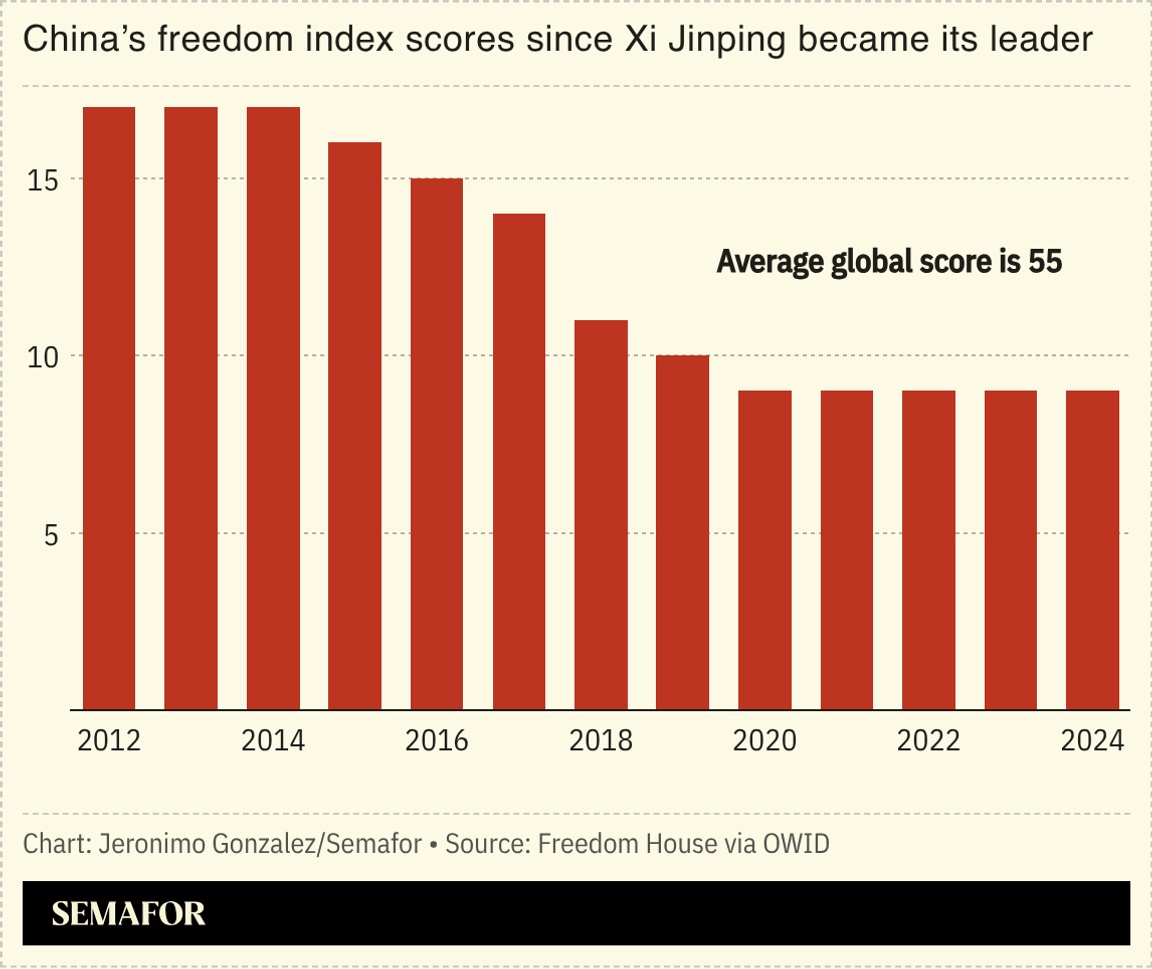 China approved a new set of ethnicity laws that critics say risks further eroding the rights of minorities. Previous laws allowed minority groups to follow their religious practices and teach their languages, albeit under careful state control. But recent outbursts of dissent in some regions including Tibet and Xinjiang prompted Beijing to crack down. Officials have framed the new laws as necessary to promote the unification of the country’s 1.4 billion people, but opponents say the moves would in practice wipe out the language and culture of China’s more than 56 recognized groups. While Beijing embraces the “decorative” value of minorities, the latest move suggests it intends to squash all but the majority Han ethnicity, The Economist argued. |
|
|


