Policy changes, but facts endure. AP delivers accurate, fact-based journalism to keep the world informed in every administration. Support independent reporting today. Donate. |
|
|
In the news today: Outdated intelligence likely led to the United States carrying out a strike on an Iranian school that killed over 165 people, many of them children, AP sources say; the Trump administration kicks off a new tariff strategy; and synthetic drugs are flooding the streets of Cuba. Also, master film photography with AP’s analog camera guide. |
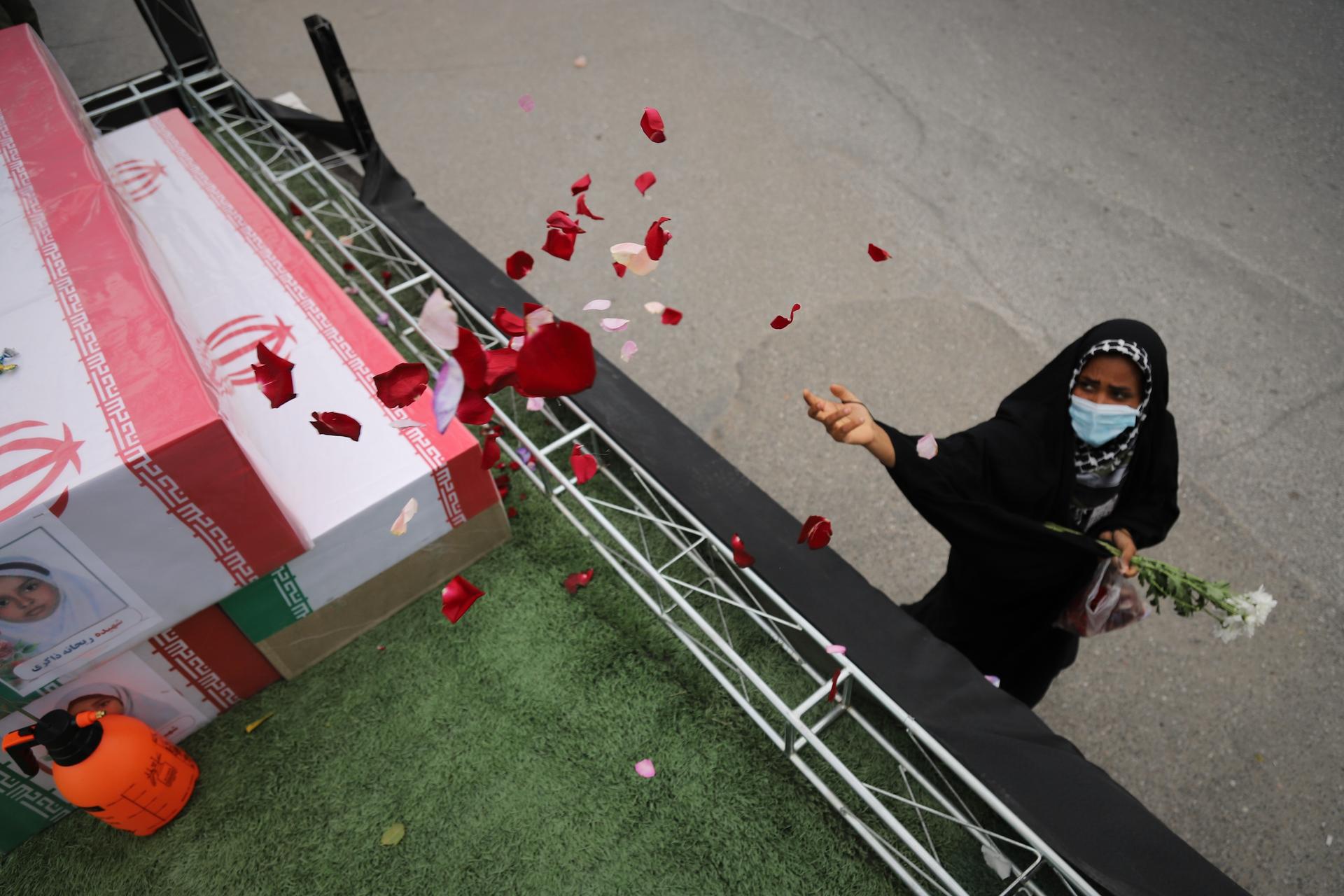
A woman throws rose petals on coffins during a funeral of mostly children killed in a Feb. 28 strike on a girls' elementary school in Minab, Iran, March 3, 2026. (Amirhossein Khorgooei/ISNA via AP) |
Outdated intel likely led US to carry out deadly strike on Iranian elementary school, AP sources say |
Outdated intelligence likely led to the United States carrying out a deadly missile strike on an elementary school in Iran that killed over 165 people, many of them children, in the opening hours of the conflict, according to a U.S. official and a second person briefed on findings of a preliminary U.S military investigation into the incident. Read more.
|
|
|
-
U.S. Central Command relied on target coordinates for the Feb. 28 strike using outdated data provided by the Defense Intelligence Agency, according to the person familiar with the preliminary finding. The agency did not respond to a request for comment. Satellite analysis by the AP shows that the school, as well as other targets struck the same day, had characteristics visible from the air that could have identified them as civilian sites before they were struck.
President Donald Trump initially blamed Iran for the attack, later said he wasn’t certain who was to blame, and then said he would accept the results of the Pentagon’s investigation. Dozens of Democratic senators demanded answers from the Trump administration on Wednesday as a growing body of evidence suggested that the U.S. was likely responsible for the strike.
-
The bombing of the school and its casualties involving children has become a focal point of the war, and if ultimately confirmed to be at the hands of the U.S., would also stand among the highest civilian casualty events caused by American military operations in the last two decades.
|
|
|
Trump administration kicks off new process to try to replace tariffs struck down by Supreme Court |
The Trump administration on Wednesday opened a new trade investigation into manufacturing in foreign countries — an effort that comes after the Supreme Court struck down President Donald Trump’s previous use of tariffs by declaring an economic emergency. Read more. |
|
|
Trump and his team have made clear that they’re seeking to replace the hundreds of billions of dollars in lost revenues by using different laws to establish new tariffs. The administration is starting investigations under Section 301 of the Trade Act of 1974, which could eventually lead to new import taxes.
The government is looking for what it deems to be persistent trade surpluses with the U.S. and policies such as subsidies and the suppression of workers' wages, among other factors. The entities subject to the investigation include China, the European Union, Singapore, Switzerland, Norway, Indonesia, Malaysia, Cambodia, Thailand, South Korea, Vietnam, the self-governing island of Taiwan, Bangladesh, Mexico, Japan and India.
|
|
|
Young Cubans turn to church and state as cheap, synthetic drugs flood the streets |
Drug use was an almost-unknown phenomenon in Cuba until the beginning of this decade. However, a deepening economic crisis, shortages of basic goods and the emergence of low-cost synthetic drugs have combined to transform the landscape. Read more. |
|
|
The primary threat is the “químico,” (chemical) — a potent cocktail of synthetic cannabinoids and hazardous additives, authorities say. At roughly 250 Cuban pesos per hit (50 cents), it costs less than a basic loaf of bread or a can of soda. The U.S. is the primary source of the precursor substances that constitute químico, said Col. Juan Carlos Poey Guerra of Cuba’s Interior Ministry.
Health care in Cuba is state-run and free, so neighborhood family clinics are typically the first to detect signs of drug use. Although the government does not track the number of drug users, Dr. Tania Adriana Peón, head of mental health and addictions at the General Directorate of Health, pointed to emergency room data as a barometer for the trend. In 2024, 467 people sought help or were registered in emergency rooms in Havana. By 2025, that figure nearly doubled to 886.
|
|
|
|