Hello!
We’re sticking with the focus on oil and the conflict in the Middle East following Iran’s statement that the world should be ready for oil at $200 a barrel as its forces hit merchant ships on Wednesday and the International Energy Agency recommended a massive release of strategic reserves to dampen one of the worst oil shocks since the 1970s.
Tuesday’s Sustainable Switch focused on how the conflict slows clean energy efforts. This time, we look at the flip side as analysis from a coalition of six international industry associations urged governments to start implementing renewables action plans to avoid heavy reliance on fossil fuels.
Before we unpack the plan, please see some of the interesting workers’ rights stories on my radar: |
|
|
Floating oil export loading platforms at the Basra Oil Port, Iraq. REUTERS/Mohammed Aty |
Five steps towards a sustainable switch |
The Global Renewables Alliance (GRA) plan argues that repeated energy crises are a structural consequence of reliance on fossil fuels and sets out five immediate policy actions governments should take to reduce exposure to future price shocks and accelerate the shift to renewables. Click here for the full plan on the GRA site.
The plan calls on governments to fast-track emergency permitting, address grid and storage blockers, mobilize finance, move towards electrification, and scale up supply chain plans. I spoke to Bruce Douglas, CEO of the GRA, who said that countries that are currently net importers of fossil fuels are facing the biggest risk from this crisis.
“Without action, they will continue to be dependent on petrostates and will remain exposed to supply risk and volatile global market prices,” said Douglas.
Douglas said that many countries are reliant on direct imports from the Strait of Hormuz, with some developing economies such as Pakistan, Bangladesh and Sri Lanka importing the majority of their crude oil and needing to urgently find alternative supplies in a constrained market.
He also noted that while Western economies face supply chain concentration risks in some clean energy technologies, “their strategic vulnerabilities are far less intense and more manageable than fossil fuel supply disruptions,” he added.
“But let’s be clear – given that 75% of the world’s population live in countries that are net importers of fossil fuels – the vast majority of people on the planet are exposed to these volatile and high fossil fuel prices,” said Douglas. |
|
|
Catastrophic consequences for the market |
Fighting has halted shipments via the world's most important oil artery, the Strait of Hormuz, which handles 20% of global oil and LNG supply, prompting warnings from Saudi oil giant Aramco about looming "catastrophic consequences" for the market.
"Get ready for oil to be $200 a barrel, because the oil price depends on regional security, which you have destabilized," Ebrahim Zolfaqari, spokesperson for Iran's military command, said in comments addressed to Washington. Click here for a Reuters World podcast episode on this topic.
The Paris-based International Energy Agency's (IEA) recommendation on Wednesday for the release of 400 million barrels from global oil reserves – the largest such action in its history – has so far done little to slow the rise in oil prices.
Oil prices, which shot up earlier in the week to nearly $120 a barrel before settling back to around $90, rose nearly 5% on Wednesday amid renewed fears about supply disruption, while Wall Street's main share indexes fell. Click here for our live updates on the Iran war.
With prices at the pumps already surging and U.S. President Donald Trump's Republican Party trailing badly in the polls ahead of midterm elections in November, oil prices have become an increasingly urgent element in the calculations behind the war. “Accelerating the transition to renewable energy is the fastest and most cost competitive solution to long-term energy security, resilience and prosperity,” said Douglas.
“A divide is beginning to emerge between countries that have transformed their permitting, renewables, storage and grids and those that remain locked in fossil fuel systems.” |
Mary Dotson hugs Eastside Community Ministry employee Jevonne Reese, at the food pantry where she volunteers and also relies on in Zanesville, Ohio, U.S. REUTERS/Evelyn Hockstein |
-
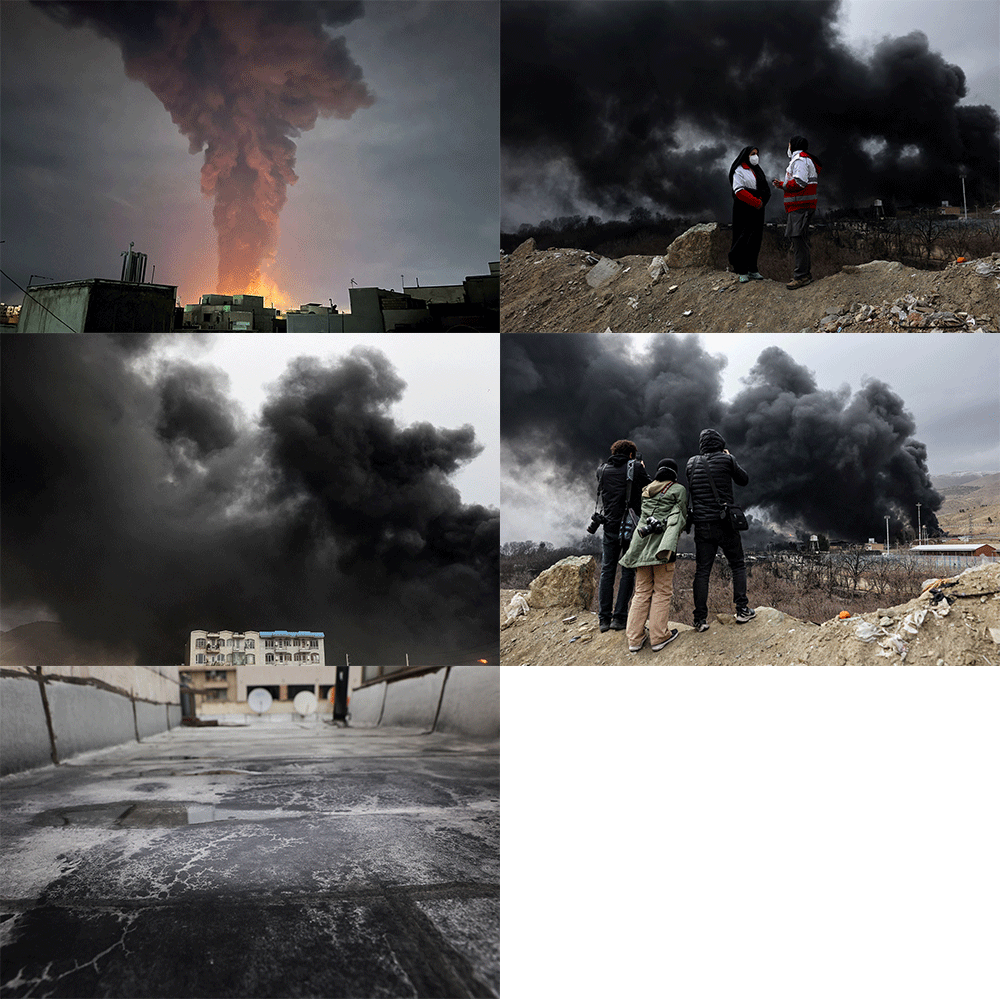
WHO warning on toxic rain: The World Health Organization warned that the "black rain" and toxic compounds in the air in Iran after strikes on oil facilities could cause respiratory problems, and it backed Iran’s advisory urging people to remain indoors.
-
Governance spat over the war: Spain permanently withdrew its ambassador to Israel this week over the European country's opposition to the U.S.-Israeli attacks on Iran. The move marks a further deterioration in diplomatic relations between the two countries, which have been heavily strained since Israel launched its assault on the Gaza Strip in October of 2023.
-
Global humanitarian crisis: The United Nations aid chief warned the conflict in the Middle East is straining humanitarian operations worldwide, disrupting supply chains and slowing the delivery of life‑saving assistance to numerous crisis zones. “We are in a moment of grave peril for the Middle East and, actually I believe, for the wider world,” Tom Fletcher, the U.N. aid chief, told Reuters.
-
Migration focus: Reuters reporters decided to follow a few white South Africans after U.S. President Donald Trump offered “refuge” to those who he said are “being persecuted by the country’s Black majority government” – a claim that Pretoria refutes vehemently. It turns out that thousands of white South Africans are actually planning to return to the African nation after facing crime, higher living costs and political turmoil in America. Click here for the full story.
-
Ethnic minorities in UK boards: Britain's biggest companies have a record number of ethnic minority CEOs and boards with at least one ethnic minority director, and minorities collectively represent a fifth of all directors, statistics from the government-backed Parker Review showed. The sad news is that the report did show that Black directors and senior managers continue to be underrepresented.
|
|
|
With today’s spotlight on the Middle East conflict, we turn to the ‘social’ in ESG, where the United Nations' cultural agency UNESCO said it is deeply concerned about the fate of world heritage sites in Iran and across the region.
Tehran's Golestan palace, often compared to Versailles, and a historic mosque and palace in Isfahan were damaged in the war. UNESCO urged all parties to protect the region's outstanding cultural sites, saying four of Iran's 29 world heritage sites had been damaged since the start of the U.S. and Israeli war with Iran. Click here for the full Reuters video and story.
|
|
|
Sustainable Switch was edited by Alexandra Hudson. |
|
|
|