Welcome back to Buffering, where we’re looking forward to Sunday night’s Oscarcast on ABC, if for no other reason than the return of Conan O’Brien as host. The Academy Awards is also our big story in the newsletter this week: I enlisted the help of my Vulture colleagues Alison Willmore and Nate Jones for a discussion about the state of Hollywood's big night as it winds down its ABC era ahead of a move to YouTube in 2029. We’ve also got news about two Taylor Sheridan shows (Marshals and The Madison) and some contrarian thoughts on Universal’s new approach to releasing movies digitally. Thanks for reading!
|
— Joe Adalian, West Coast editor
|
|
|
Subscribe now to get unlimited access to everything New York, including subscriber-only newsletters, exclusive perks, the New York app, and more. |
|
|
In this edition: Taylor Sheridan, Paramount+, Paramount Skydance, Ben Affleck, Netflix, InterPositive, Live Nation, Ticketmaster, Jeff Shell, Peacock, Universal Pictures, NBCUniversal, Bari Weiss, Phil Rosenthal, CBS, the Oscars, ABC, Hulu, and Conan O’Brien, who “has a bit of the old-fashioned showman in him.”
|
|
|
➽ Saturday Night’s Alright (for The Madison)
|
The Madison, the latest production from Taylor Sheridan, hits Paramount+ this weekend, and it boasts all the usual hallmarks of a series from the prolific Yellowstone creator: Big stars (Michelle Pfeiffer, Kurt Russell), big open spaces (it’s set in Montana), and big emotions (the show’s about a family who moves west after a heartbreaking tragedy). But while the series is Vintage Sheridan in many respects, the streamer is taking a slightly untraditional approach to its rollout. Rather than drop all episodes at once, or over the course of five or six weeks, the show’s six-episode first season will debut in two batches of three episodes each. And instead of debuting on a Friday or Sunday — the most common release days for scripted originals — The Madison will release its episodes over two consecutive Saturdays.
According to a Paramount+ rep, this scheduling is intentional: The Madison — which is not connected to Sheridan’s Yellowstone universe — is a more personal story, one “about grief and family and tearing apart and coming back together,” as the creator himself put it this week at the show’s premiere. As such, the Saturday scheduling is designed to highlight the cinematic qualities and subject matter of The Madison, positioning its release as a pair of date-night events for audiences. While this move certainly isn’t some revolutionary gambit, it’s still a refreshing development: Anything designed to help titles stand out in what is still a glut of streaming releases is a good thing.
Speaking of Sheridan, new ratings numbers show his other new release this month, the CBS procedural Marshals, is off to a massive start. Per Nielsen linear/streaming data, 20.6 million people watched the show’s March 1 premiere within a week of its airing on the network. That’s the biggest broadcast series premiere without the benefit of an NFL lead-in since 2017’s launch of Young Sheldon. Just under half of the Marshals audience (9.5 million viewers) came on March 1, while another 3.7 million caught up via DVR replays, leaving roughly 7.4 million viewers who caught up via Paramount+ or CBS’s own website and app. Not surprisingly, CBS Thursday announced it has already ordered a second season of Marshals. —J.A.
|
|
|
Netflix is now fully in the Ben Affleck business — even his heretofore secret AI company InterPositive — and will be reportedly buying it for something like $600 million, per Bloomberg. It’s one of Netflix’s biggest acquisitions to date, and the streaming service, fresh off losing the bidding war for Warner Bros. (but gaining $2.8 billion in the breakup fee paid by winner Paramount Skydance), undoubtedly aims to beef up its post-production workflows with InterPositive’s AI-powered editing software. —Eric Vilas-Boas
|
|
|
Paramount Skydance president Jeff Shell is being sued by R.J. Cipriani, a professional gambler who claims he provided crisis-PR services to Shell, for $150 million in damages. The details are messy. —Alejandra Gularte (Read the full story.)
|
|
|
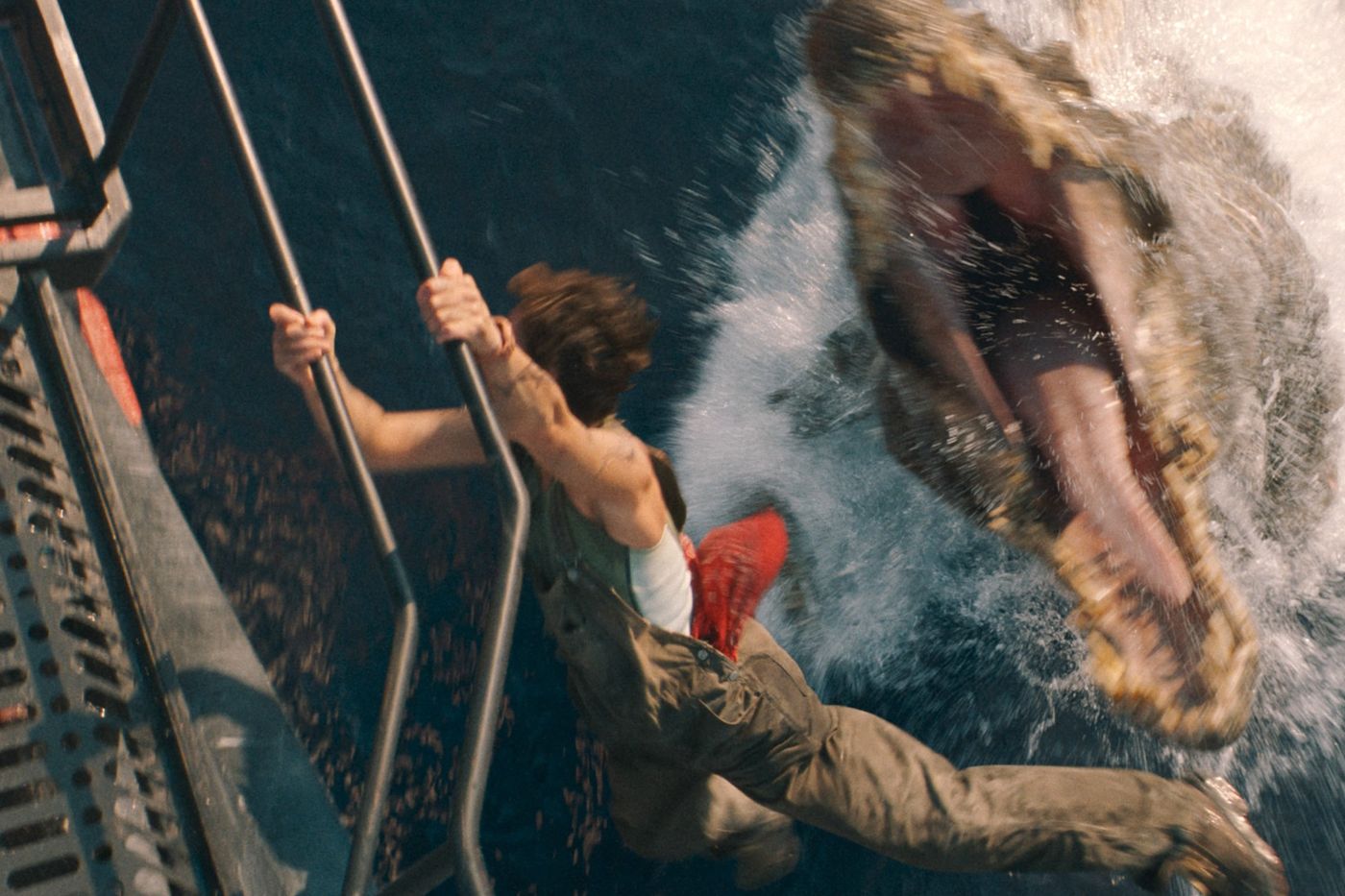
Hint: Universal was already doing exactly that. (Pictured: Jurassic World: Rebirth.) Photo: Universal Pictures/Everett Collection |
Universal Pictures is trying to turn back the clock when it comes to the digital release of its films. Effective immediately, the NBCUniversal-owned studio will keep all of its feature releases exclusive to movie theaters for a minimum of five weekends; in 2027, that exclusive window for multiplexes will be extended to seven weeks. Since 2020, Universal has only promised theater owners an exclusive window of three weekends, which meant that some movies would be available for digital rental as soon as 18 days after they opened on the big screen. But while Universal is making a big deal about how important its new strategy is for The Future of the Movies and keeping theater chains healthy, this news really isn’t as big as it seems. If you take a close look at its releases, you’ll notice pretty much every major Universal movie is already taking much longer than five or seven weeks to get to NBCU’s streaming service ...
|
|
|
What to Expect From the Oscars Telecast And all the things we’d change about it.
|
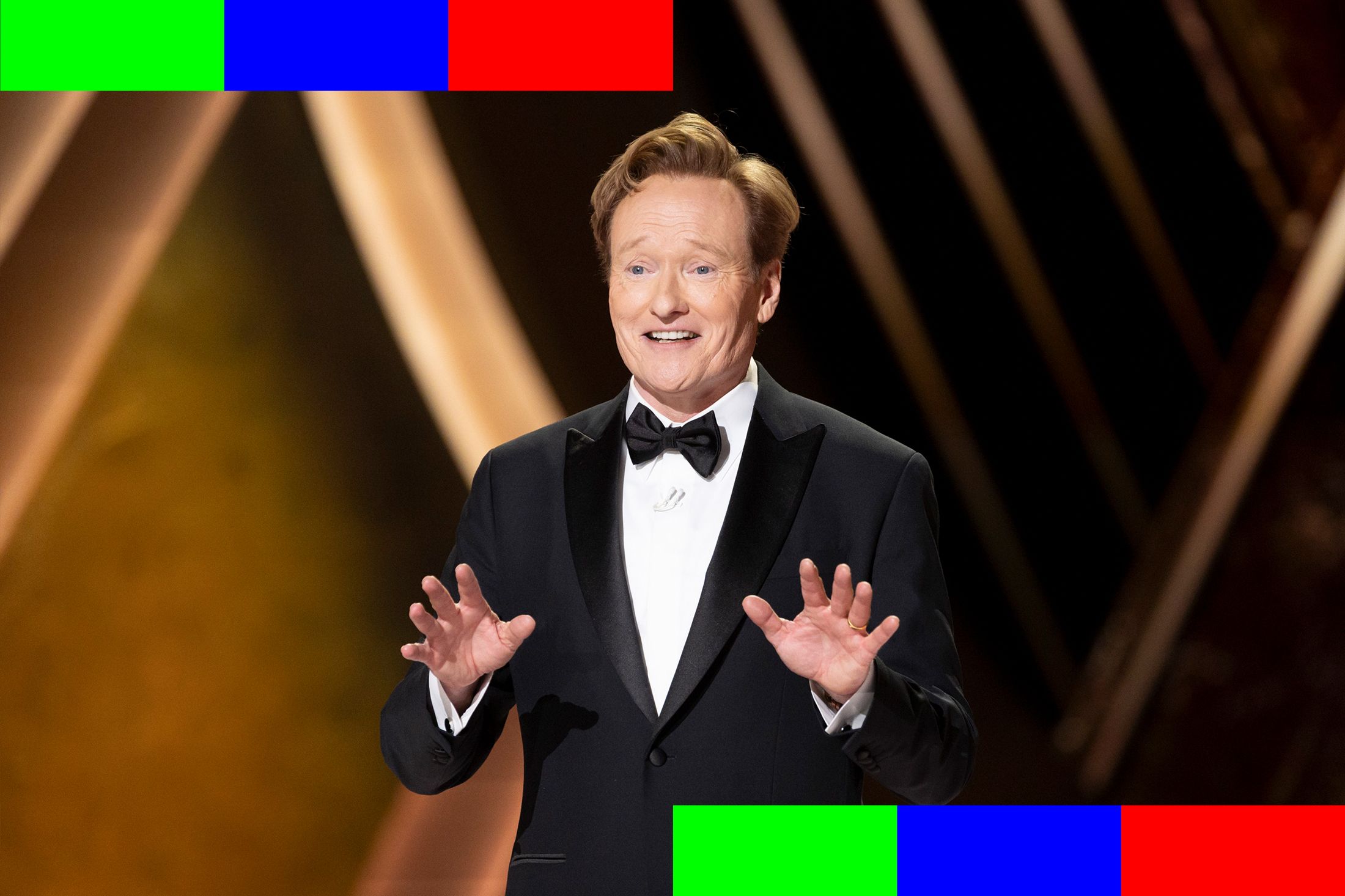
It’s a wonderful week for Oscar, with the 98th Annual Academy Awards set to air on ABC and stream on Hulu this Sunday evening. Conan O’Brien is once again hosting, having won raves for his performance last year. His presence should ensure the telecast at least gets off to a good start, but it’s hardly a guarantee the show will work as a whole. Much will depend on what movies end up winning, what sorts of acceptance speeches get delivered, and whether producers have made the right choices about things like clip packages and musical interludes. To talk about what we should expect Sunday night, I connected with two of my Vulture colleagues intimately familiar with all things Academy Awards: Gold Rush columnist Nate Jones and movie critic Alison Willmore. We discussed the show’s recent history, what we might do to make the event better, and the shock announcement that the Oscars will be leaving network TV and heading to Google-owned YouTube starting in 2029.
|
|
|
Just thinking about the past few years of Oscarcasts, what has been your general reaction? Do they feel like a good showcase for the industry or craft? Or … something else? Getting better, worse, or just treading water? |
Alison Willmore: My general reaction to the Oscars in recent years is that the speeches have tended toward too careful and the ceremony drags in certain stretches. But those are qualities I accept as part and parcel of awards shows! Celebs are going to thank their teams and loved ones regardless of how rote that starts to sound to the viewing public, and they’re going to be overly cautious because fear of social media has sanded the edges off so many famous people. There are also always going to be jokes that don’t land. What really doesn’t work for me, and what leads to an awards-show doom loop, is when fear guides choices about the ceremony itself. The Oscars should not feel apologetic, and they should not veer anywhere near what Nate Bargatze did with his running donation gag at the Emmys. The Oscars are where Hollywood bolsters its own mythology, and I feel like self-deprecation works in its context when it’s applied to the industry, not to the ceremony itself — a thing we viewers care enough about to tune into. These are professional entertainers, and they should not feel abashed about putting on a show.
The best thing from the Oscars in recent memory was, for me, when Lady Gaga and Bradley Cooper performed “Shallow” at the 2019 awards. Not because the song slaps, though obviously it does, or because they did an especially good job of it, but because of the way it was staged: The camera came from the stage, aimed at the audience, and the two of them stood up from their seats as though suddenly dropping into character as they held hands and climbed the stairs to the piano that had just been rolled out. It was pure cinema, the pair of them larger than life and teasing an intimacy that was obviously entirely for our benefit but felt so delicious in the moment anyway. It was unfiltered Hollywood goodness, and I want more of that!
Nate Jones: I think they’ve had some ups and downs. The low point was 2022, the year of the Slap, which took place in an era when they were weirdly resistant to having traditional hosts. That was also the year they pretaped all the craft categories and then edited in abridged versions during the regular broadcast. (I was in the audience that year; it was a strange vibe.) It seemed they had an idea that the way to “fix” the Oscars was to make them less like the Oscars! But they’ve gone away from that recently. Replacing Jimmy Kimmel, who always seemed to take an attitude that the audience didn’t actually care about any of the nominated films, with Conan O’Brien helps since Conan has a bit of the old-fashioned showman in him and has been able to thread the needle of keeping things light without demeaning the movies themselves. And I think they’ve also been helped by the fact that the Academy’s tastes have opened up. You’re now seeing voters embrace big populist hits like Everything Everywhere All at Once, Barbie, and < |
|
|
|