Policy changes, but facts endure. AP delivers accurate, fact-based journalism to keep the world informed in every administration. Support independent reporting today. Donate. |
|
|
By Holly Meyer and David Crary |
| |
|
By Holly Meyer and David Crary |
| |
|
Greetings, World of Faith readers,
This week, we introduce you to two pastors in Springfield, Ohio, who are doing what they can to support worried immigrants in their community. We also look at faith-fueled efforts to block new ways of gambling in Utah and how a new law in China is expected to cement ethnic assimilation. |
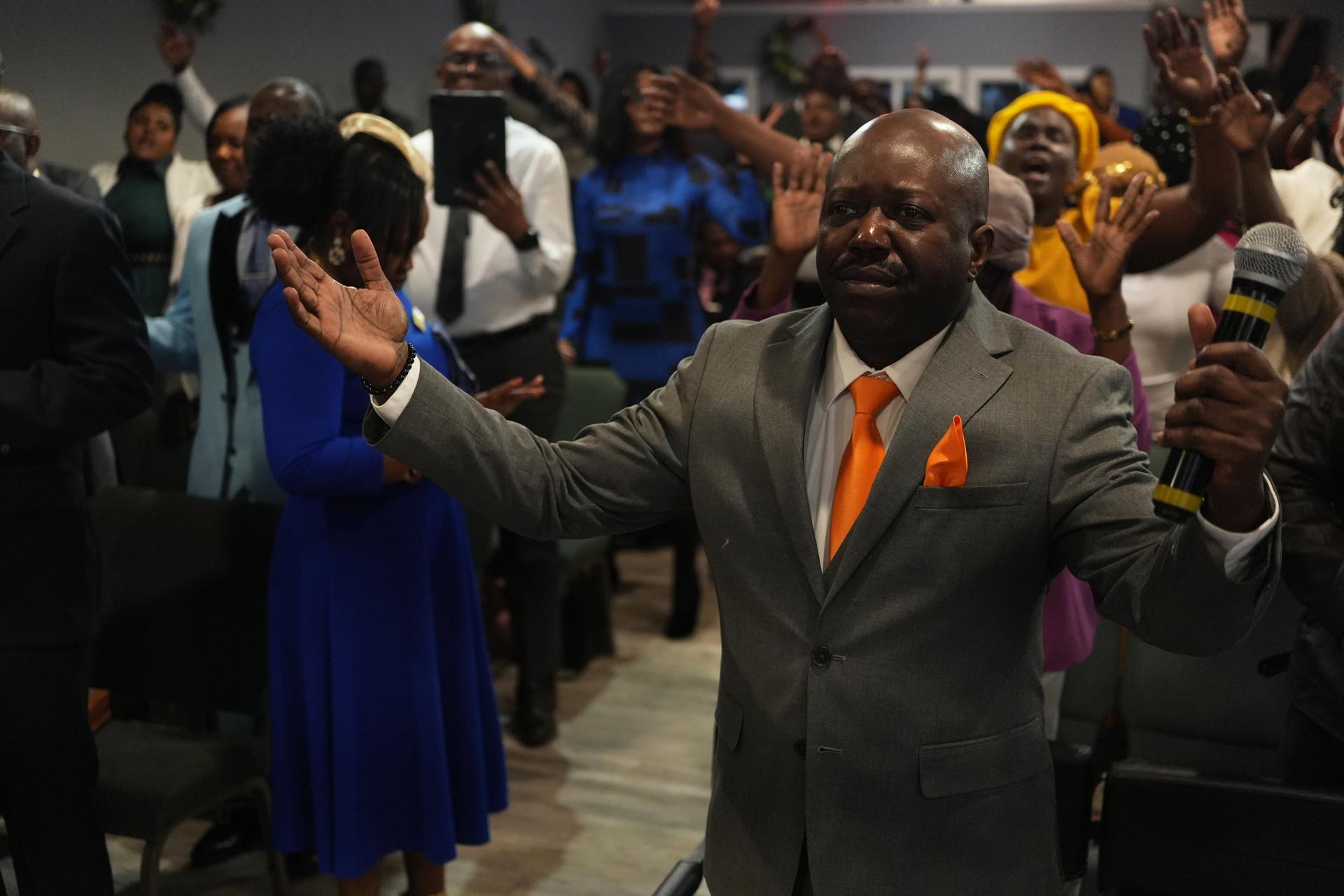
The Rev. Reginald Silencieux, right, leads a worship service at the First Haitian Evangelical Church of Springfield in Ohio. (AP Photo/Luis Andres Henao) |
Two Ohio pastors emerge as faithful allies for Haitian migrants during Trump's crackdown |
One grew up in rural Haiti amid poverty and violence. The other grew up in Michigan as a self-described “blue-collar farm kid." Both became pastors in Springfield, Ohio, sharing a goal inspired by their faith: They are supporting the city’s Haitian migrants who fear deportation under President Donald Trump’s ongoing immigration crackdown. Read more.
|
|
|
Reginald Silencieux, pastor of the First Haitian Evangelical Church, and Carl Ruby, pastor of Central Christian Church, both stood up for Haitians when Trump falsely accused Springfield’s Haitian migrants of eating their neighbors’ cats and dogs in 2024.
The two pastors offered migrants shelter in their churches and invited community members to join in prayer and peaceful protest of the false rumors. They’ve held trainings to document and protest potential immigration enforcement raids, provided legal aid and food, and continued offering worship services in Creole.
And while the pastors also have prayed for Trump, they’ve demanded an extension of the Temporary Protection Status program that has allowed thousands of Haitians to legally arrive in Springfield in recent years, escaping unrest and violence in their homeland.
|
|
|
Utah’s anti-gambling tradition, fueled by religious faith, meets a new challenge: prediction markets |
For more than a century, Utah has kept gambling almost entirely out of the state. There are no casinos, no lotteries, no racetracks that allow bets. It’s a prohibition rooted in the conservative ideals of The Church of Jesus Christ of Latter-day Saints, widely known as the Mormon church. The state is now fighting a new battle to keep gambling outside its borders. It's on the verge of enacting a law intended to undercut prediction markets which allow anyone with a smartphone to wager on the possible outcomes of virtually any sort of event. Read more.
|
|
|
While regulators and other states are still debating whether those markets constitute finance or gambling, Utah has already made up its mind. Gov. Spencer Cox says he will sign the restrictive legislation, putting conservative Utah at odds with the federal government.
Kalshi, one of the major prediction markets, has already sued Utah. The company is backed by the Commodity Futures Trading Commission, the federal agency responsible for regulating financial markets.
President Donald Trump's eldest son is an adviser for Kalshi and Polymarket, another major player in the field. Trump’s social media platform Truth Social is also launching its own cryptocurrency-based prediction market called Truth Predict.
|
|
|
China adopts an ethnic unity law that critics say will cement assimilation |
The country’s ceremonial legislature approved a sweeping law to promote what China is calling “ethnic unity,” a measure that critics say would further erode the rights of some minority groups as authorities cement a push toward assimilation. Academics and observers say the new provision represents a setback for the identity of ethnic minorities because it mandates the use of Mandarin Chinese in compulsory education, among other things. There is concern about impact on the Uyghurs, a Muslim minority group. Read more.
|
|
|
-
Mandarin is already the primary language of instruction in Inner Mongolia, Tibet and Xinjiang — Chinese regions with large ethnic minority populations — but the new law essentially states that minority languages cannot be the primary language of instruction nationwide.
Many countries, including the U.S., pursue similar assimilation policies. China has said its approach is to bring development to ethnic minorities areas. But Maya Wang, deputy Asia director at Human Rights Watch, said the law is not about ensuring equality.
Ethnic Uyghurs have been the target of a long-term campaign of detention, and later incarceration by China. Experts have said they were targeted for their identity and not for actual crimes.
|
|
|
|