|
Andrew Ross Sorkin on the Risk if AI Succeeds, Private Credit, Prediction Markets, and the SpaceX IPO
Could AI lead to mass unemployment, and then cause the market to go bust? The CNBC anchor and New York Times columnist and editor has some ideas.
|

| |||||||||||||||


 |
 |
When Andrew Ross Sorkin released his book on the 1929 stock market crash last year, the prevailing worry was that the debt-reliant AI buildout might end in disaster. Now, six months later, the market is freaking out about AI’s potential to succeed. Every Anthropic blog post seems to cause a mini-meltdown in software stocks and unease about AI’s potential to replace jobs is building fast.
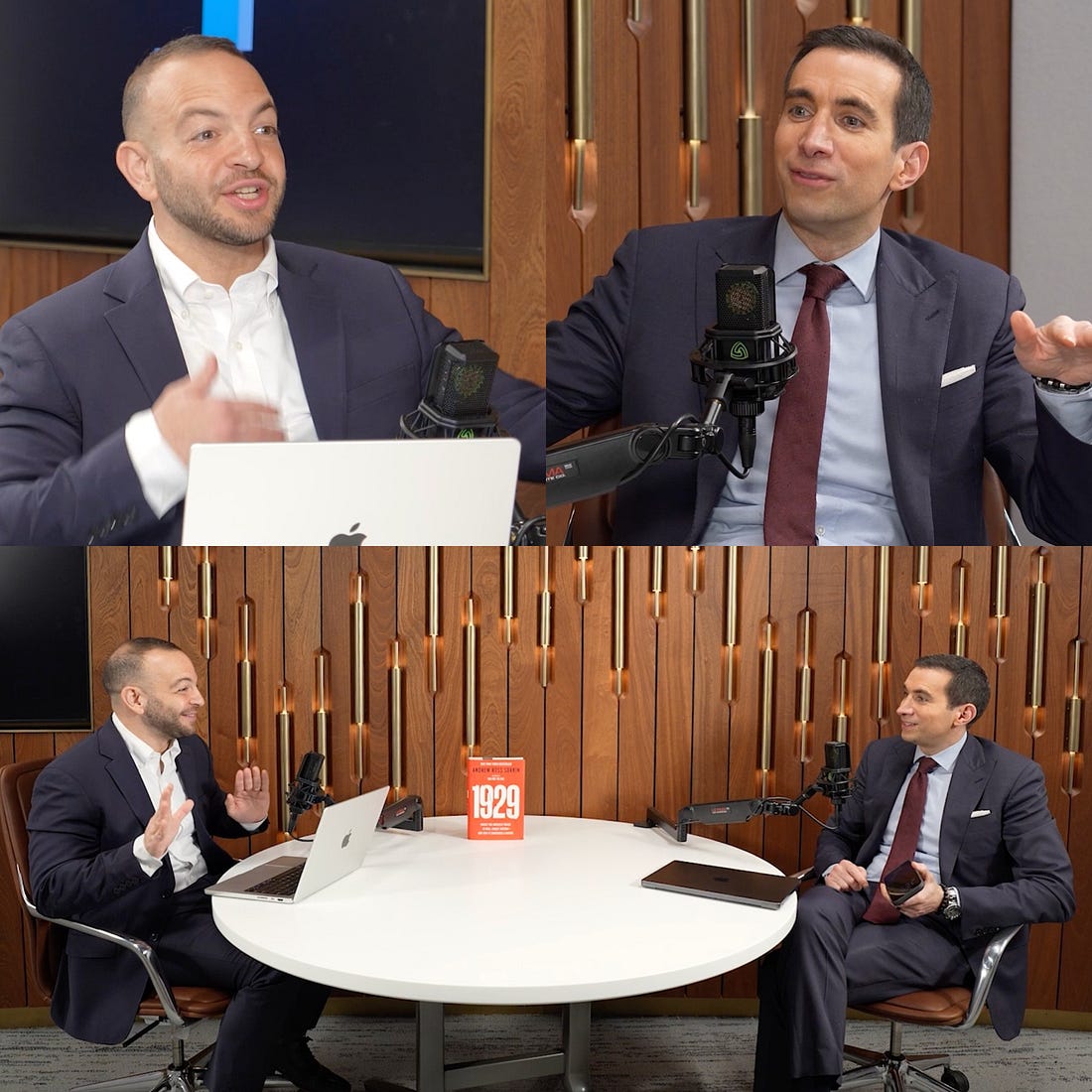
So, this was the right moment to check in with Sorkin, a CNBC anchor and New York Times columnist, about whether today’s set of concerns about AI’s success are warranted, and whether they could hit the market hard if realized. In an hour-long conversation at the New York Stock Exchange this week, we covered the labor and capital side of AI, how the AI bet might impact private credit, prediction markets, the SpaceX IPO, and plenty of other ground.
You can read our full conversation, edited lightly for length and clarity, below. Catch it next Wednesday on Big Technology Podcast, which you can subscribe to on Apple Podcasts, Spotify, or your podcast app of choice.
Alex Kantrowitz: Hi Andrew, Market crashes are typically caused when debt goes bad. So how do you evaluate the current concern that AI works and everything is disrupted?
Andrew Ross Sorkin: I’m often asked, is there a modern day way to get to 1929? And what people are really asking is, is there a modern day way to get to 1932 — which is 25% unemployment in America?
I always think the answer is actually less of a market crash and more AI. If you ever wanted to think about what would this country look like with 25% unemployment, how would you get there? And I think the answer is, potentially, if AI is as successful as I think we all hopefully want it to be — to the extent you believe these valuations are real — all of the math behind it, the only way that really works to some degree, is to create extraordinary productivity. And what does productivity mean? Well, it means a lot of growth at a lot less cost. How do you take out that cost? Well, we’re both looking at each other, and that’s pretty much — we are the cost.
The robot employee is going to be a thing.
It’ll definitely be a thing. My kids talk about it being a thing. I’ve got 15-year-old boys, and we talk about what they’re going to do. But then we talk about, literally, are we going to have a robot in our house in five years from now, and what are all the things that the robot is going to do?
I am skeptical that AI is going to cause this wave of mass unemployment. If it’s able to do the jobs of, let’s say, 20% of the workforce — wouldn’t you anticipate a production boom that would come along with that and help grow the economy?
That, to me, is the question. It’s not, are there more things to do — it’s who’s going to have the money to do those things?
I don’t think that we have to have mass unemployment forever, either. I think it’s possible that there could be a painful transition period. And historically, when we’ve gone through these technological revolutions, there have been painful transition periods. And so if you’re a young person today, doing the job that, frankly, increasingly it appears that a Claude or ChatGPT could even do — whether it’s research or putting together a model or being a paralegal, or name your role — you say to yourself, if you’re running one of these firms that historically hired kids out of college to do that, are you going to still hire those kids to do that? Is there a higher order kind of work that they can do for you now that you can get this work done by the AI? I think these are the real questions.
And then there’s going to be an economic one, which is, tokens are not free. AI is not free. But how much cheaper is it ultimately going to be than a human?
Our conversation continues below…
A MESSAGE FROM OUR SPONSOR
See autonomous AI in action
 |
Feeling forced to choose between AI innovation and control? Discover how
agentic AI can deliver both — completing requests end to end, securely and with enterprise-level governance. The result: faster outcomes, stronger oversight and more capacity for high-impact work. Watch the demo.
When you look at the statistics, though, it’s very interesting — AI is more sophisticated in coding than anything else, but we’re definitely not seeing a wave of layoffs of software engineers now.
You don’t think that in two years from now, just in terms of the magnitude step change in how good the technology is going to be, that it’s not going to get that much better? I agree, if this is the level, I’ll bet with you. But if you believe in the technology improving — which invariably it has to — and by the way, if it doesn’t, then we’re in a whole other different world. Then we’re not talking about what happens in success. We’re talking about what happens in failure, because then we really will have a bubble.
But if it doesn’t improve the way I think the model makers — policymakers, investors — want it to, I just don’t see how we’re going to be sitting around doing our own programming. I just don’t see it. By the way, I write my own articles to