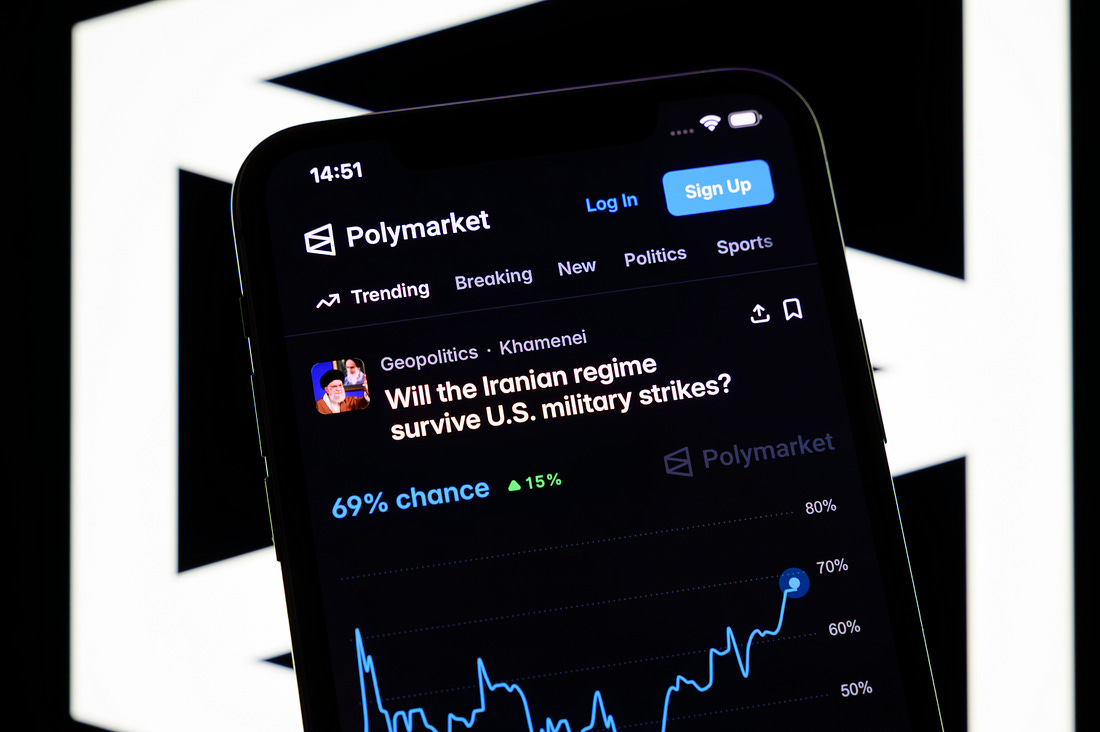
One of the subplots of President Trump’s decision to go to war with Iran was how gamblers seemingly operating with inside information cashed in.
The New York Times reported that on Polymarket, in the hours before Trump’s attack began, “at least 16 accounts that placed bets predicting a strike each ultimately profited by over $100,000 [and] at least 109 accounts made over $10,000. One anonymous wallet that spent over $60,000 on ‘yes’ shares, mostly in the days before the attack, made nearly half a million dollars.”
Mike Levin @mikelevin.org
It appears that a Polymarket account called "Magamyman" made $515,000 in a single day betting on last night's U.S. strike on Iran, with the first trade placed 71 minutes before the news broke publicly.
That wasn’t the first time eyebrows have been raised about large sums being made on bets surrounding the activities of Trump, his administration, and his allies.
To cite just two examples, in January, an anonymous trader made $400,000 on wagers placed hours before the US military’s raid into Venezuela. And last summer, a trader with the handle “ricosuave666” made more than $150,000 wagering “with suspicious accuracy” on Israel’s June 2025 strikes on Iran. (Two Israelis last month were charged in connection with using classified information to make bets on Polymarket.)
To get some 30,000-foot perspective on the growth of prediction markets and the corrosive effect they’re having on politics and society, we connected with Ana Marie Cox, contributing editor at The New Republic and author of a recent piece entitled “Prediction Markets Are Eroding Our Civic Soul.”