|
|
|
|
|
|
|
|
|
|
The Morning Risk Report: Iran Tests U.S. Military Might With a Guerrilla Assault on the Global Economy
|
|
By Richard Vanderford | Dow Jones Risk Journal
|
|
|
|
|
|
|
Good morning. Two weeks in, the war in the Persian Gulf has become an asymmetric contest, pitting the unrivaled conventional military might of the U.S. and Israel against an Iranian government waging a guerrilla fight to block oil shipments and upend the global economy.
Tehran has taken control of the Strait of Hormuz using far less sophisticated weaponry than the U.S. has unleashed and can now choke energy supplies and commercial shipping through the vital waterway. The goal: to drag the U.S. into a war of economic attrition, inflicting pain on America and its allies around the world.
-
Ships struck: Iranian forces have struck at least 16 commercial ships since the war began, sending oil prices above $100 a barrel and prompting predictions of longer-term dislocations as a significant chunk of the world’s oil and natural gas comes off the market.
-
Supply chain impact: The conflict is starting to ripple beyond the energy industry, causing havoc for the complex global supply chains that underpin world trade. Ports around the Indian Ocean are filling up with redirected cargoes. Rates to ship goods from Asia to anywhere near the Middle East have rocketed. Shipping hubs in Asia are running low on fuel. More than 100 ships are stuck in the Gulf.
-
Nuclear issues: If seizing Iran’s nuclear material is the endgame, it could require the deployment of hundreds of troops at one or more sites for days, former U.S. military officers and experts said. Reopening the Strait of Hormuz also won’t be easy.
|
|
|
|
|
Content from our sponsor: Deloitte
|
|
|
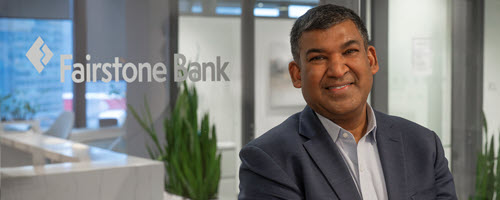
Fairstone CRO: Bank M&A Hinges on Common Sense, Experience
|
|
Vivek Kumar challenges the notion that M&A risk management improves through standardization alone and that contextual judgment determines whether anticipated deal value materializes. Read More
|
|
|
|
|
|
|
|
|
|
|

|
|
Zé Otavio for WSJ
|
|
|
|
|
|
The obscure judge presiding over $166 billion in tariff refunds.
Judge Richard Eaton got his start as a Village Justice for Cooperstown, N.Y., handling petty crimes and small-dollar disputes in the tiny rural region, with a population around 2,000.
His current position—as a judge on the largely overlooked Court of International Trade—seems nearly as obscure. Except he finds himself in a showdown with the Trump administration about how to hand out $166 billion in refunds now that the president’s sweeping global tariffs were ruled illegal.
|
|
|
|
|
U.S. further eases Venezuela sanctions amid fertilizer concerns.
The U.S. is further easing sanctions on Venezuela to allow the export of fertilizer directly to the U.S. amid a supply crunch caused by the effective closure of the Strait of Hormuz, Risk Journal reports.
The Treasury Department on Friday said it would allow U.S. entities to buy Venezuelan petrochemical products, including fertilizer. The department also expanded previous carve-outs for oil-and-gas investments to allow new investments in Venezuela’s petrochemical and electricity sectors, and allow sales of goods and technology to support those sectors’ development.
|
|
|
|
-
A federal judge threw out a pair of subpoenas the Justice Department issued to the Federal Reserve, handing a victory to the central bank and dealing a heavy blow to U.S. Attorney Jeanine Pirro’s criminal investigation into Chair Jerome Powell.
-
Paul Regan pleaded guilty to three felony charges of securities fraud following a series of Wall Street Journal articles in 2024 on the international financier and his mysterious high-yield investment offerings.
|
|
|
|
|
|
|
|
|
|

|
|
President Trump has publicly embraced the idea that China is the world’s only other superpower. Photo: Mark Schiefelbein/AP
|
|
|
|
|
|
For Xi, Iran war reinforces view of U.S. as dangerous superpower.
President Trump’s use of military force in Venezuela and Iran reinforces a view long held in Beijing: The U.S. will use all means necessary to assert American dominance around the world—a posture that threatens China’s core interests.
Trump’s extraordinary military gamble in the Middle East, following fast on the heels of his decapitation of the Maduro government in Venezuela, reinforces Chinese leader Xi Jinping’s longstanding view that the U.S. must be approached with toughness.
But underlying China’s hard-nosed stance is a belief that the U.S. could ultimately weaken itself with such interventions.
|
|
|
|
|
Allies to Trump: We’ll live with tariffs, just don’t make them any higher.
U.S. trading partners are pushing President Trump to stick to previously agreed tariff levels after his administration kicked off probes aimed at replacing the levies struck down by the Supreme Court.
While most countries targeted by Trump are resigned to tariffs, they are also challenging the economic arguments the U.S. used to justify the latest move, previewing a likely legal battle.
|
|
|
|
-
Data breaches, network disruptions and other hacking tactics have joined tanks, missiles and drones as weapons of war, raising the risk of civilian companies being hit.
-
Top executives of major airlines, including Delta Air Lines, American Airlines and Southwest Airlines, are urging Congress to restore funding to the Department of Homeland Security and pass bills guaranteeing that air-traffic controllers and airport security officers get paid during government shutdowns.
-
Consumer sentiment declined to start March, according to the University of Michigan’s monthly survey, one of the first readings on public opinion about the economy since the start of the Iran war.
-
TotalEnergies is shutting down production in several countries as fighting continues in the Middle East.
-
The war in the Middle East is triggering an increasingly bitter dispute in the trans-Atlantic alliance, as the U.S. and its allies diverge over whether the conflict is inadvertently strengthening Russia, which Europe sees as a greater threat than Iran.
|
|
|
|
|
|
|
|
|
The White House published its new cybersecurity strategy last week, which envisages a more prominent role for the private sector in battling hackers. Also, an investigation into how carbon credits were redeemed for a suspended project in the Amazon. Perry Cleveland-Peck hosts.
|
|
|
|
|
|
|
|
|
|
|
|
|
|
|
|
|