| | US allies reject Washington’s pleas for help reopening the Strait of Hormuz, another tanker is hit b͏ ͏ ͏ ͏ ͏ ͏ |
| |  | Flagship |  |
| |
|
The World Today | 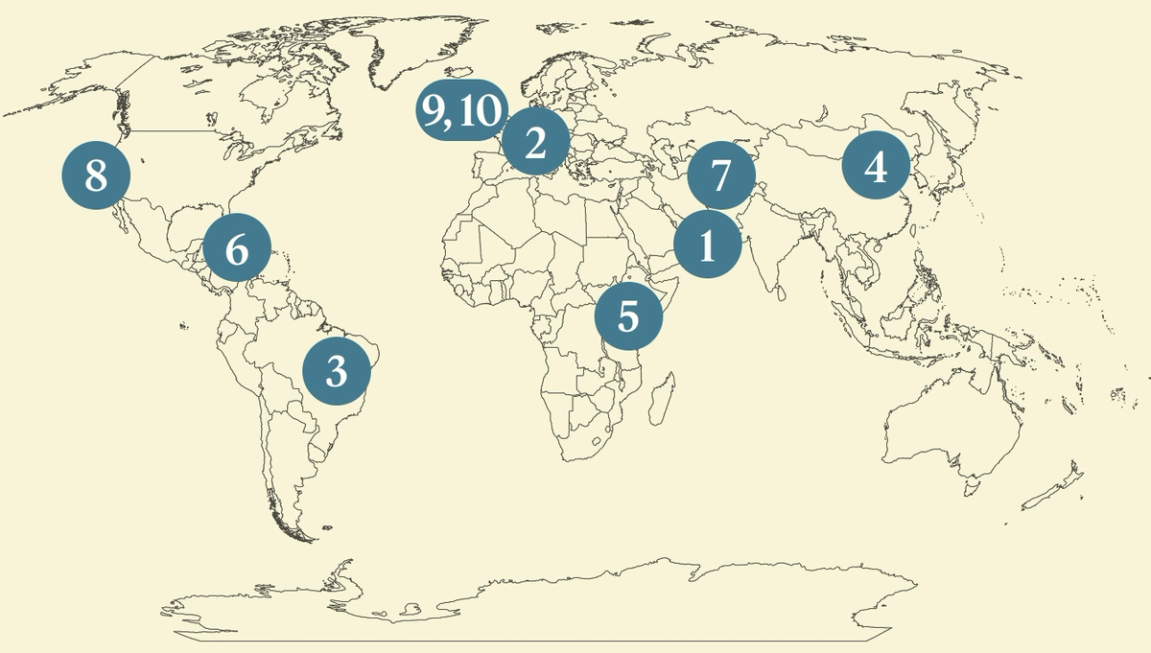 - MidEast oil facilities hit
- US allies stay out of war
- Conflict’s economic impact
- Trump-Xi summit delayed
- Kenya halts Russia deal
- Trump restates Cuba threat
- Kabul health site hit
- Tech firms’ bomb experts
- Ireland’s data center plan
- Irish language’s rise
 A book about the rapid approach of humanity’s numerical peak and subsequent decline. |
|
New attacks on MidEast energy sites |
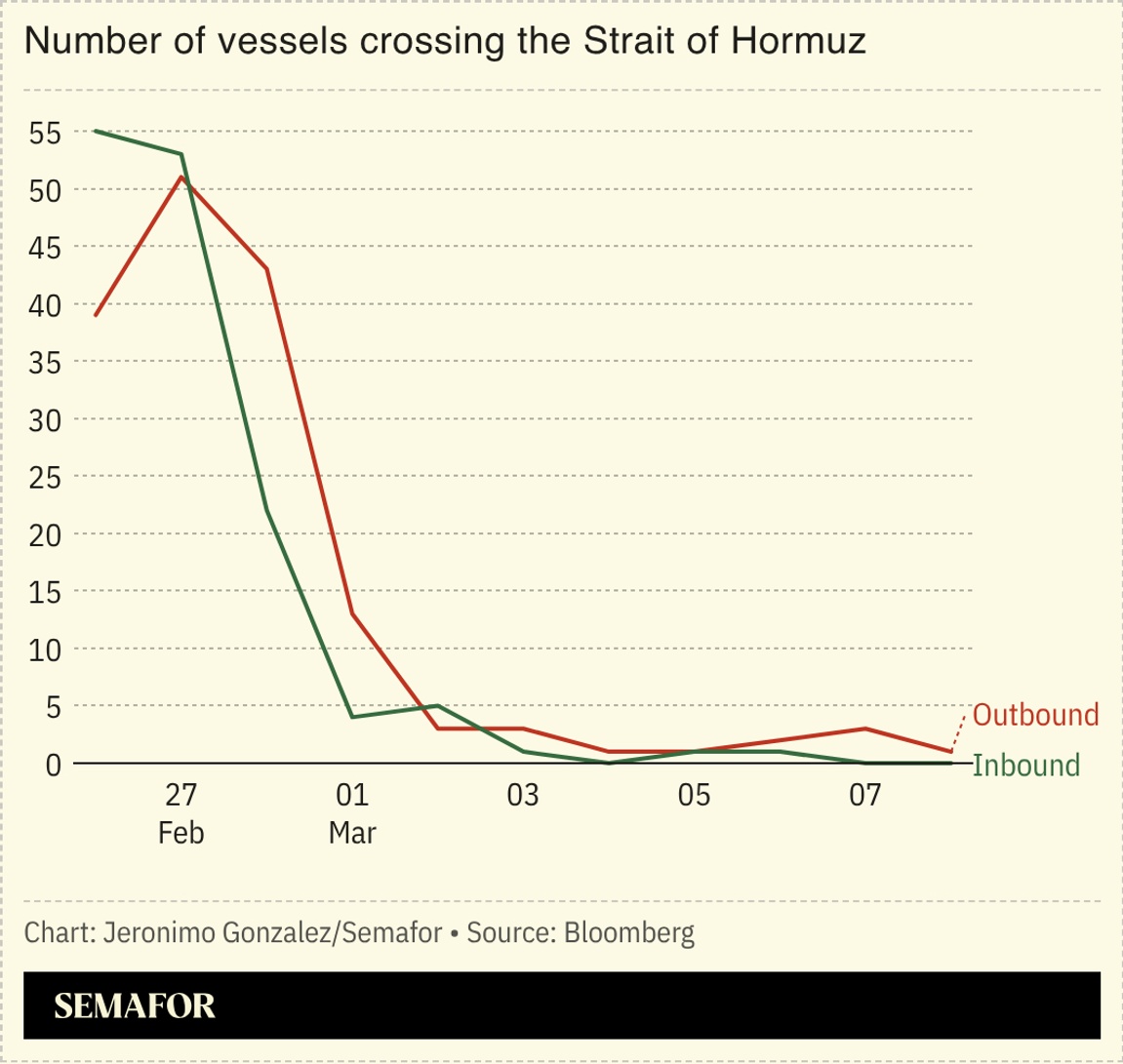 Oil and gas facilities across the Middle East suffered fresh attacks, holding oil prices above $100 a barrel with no end in sight for the Iran war. A UAE gas field suspended operations, a tanker was hit near an Emirati port, and two drones hit an oil field in southern Iraq. Though the Strait of Hormuz remains effectively closed — about 1,100 vessels, including 250 tankers, are stuck — Iran appears to be allowing “a trickle” of ships through, preventing worse global energy price rises, The Wall Street Journal reported. US President Donald Trump wants help escorting ships through the waterway, but the International Maritime Organization warned that would not offer sufficient safety. |
|
US’ Europe allies resist joining war |
 Suzanne Plunkett/Pool/Reuters Suzanne Plunkett/Pool/ReutersThe transatlantic split over the Iran war grew, as more European nations rejected US President Donald Trump’s calls to help reopen the Strait of Hormuz. A meeting of European leaders was “near-unanimous” in opposing Trump’s request, Politico reported; even Washington’s traditionally staunch allies, such as Poland and Britain, show little interest. France said it could send ships, but only after the fighting stops; the EU’s top diplomat said “this is not Europe’s war.” The reluctance stems from Trump’s undermining of “the US-led alliance system… one of the greatest pillars of American world power” with his frequent verbal attacks on friendly nations, the war scholar Phillips O’Brien wrote. It has “finally dawned” on Trump, said O’Brien, that alliances matter. |
|
The wide economic impact of Iran war |
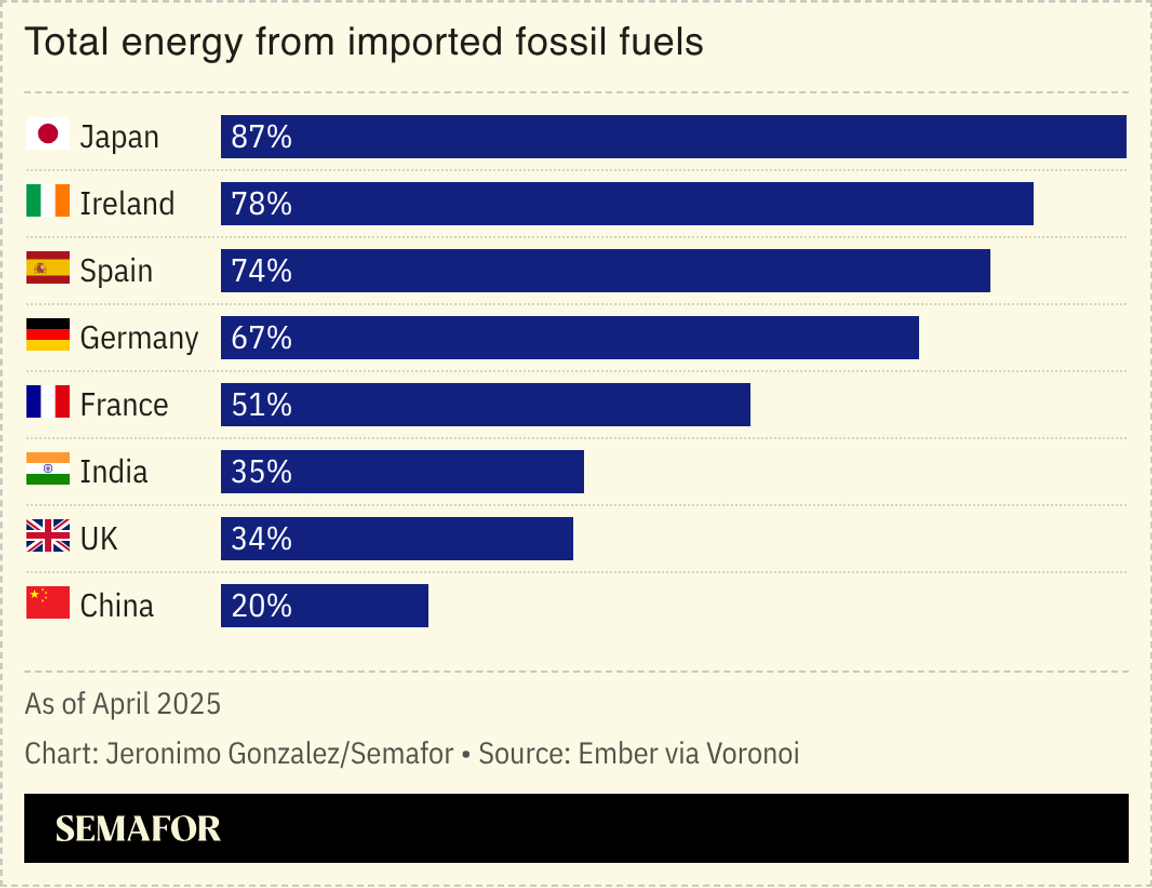 The impact of the war in the Middle East is deepening in economies far beyond the region as energy prices spike, forcing experts to reassess the risk of a global recession. Europe has limited options to bring prices down, The Wall Street Journal reported, and has been hammered by the price shock sparked by the war. In Brazil, higher fuel costs are taking a toll on soybean farmers, leading to a surge in prices and fueling anxiety in China, the world’s biggest soy buyer. Elsewhere, experts have warned of social unrest as pump prices soar, rattling governments in Southeast Asia. Washington may believe it can limit the war’s economic impact, “but much harm has already been done,” The Economist argued. |
|
Trump-Xi summit delayed over war |
 Jonathan Ernst/Reuters Jonathan Ernst/ReutersUS President Donald Trump said he was planning to delay an upcoming Beijing summit with Chinese leader Xi Jinping because of the Iran war, underscoring the global geopolitical impact of the conflict. The pair were to hold the first of four potential meetings this year on March 31, with talks set to focus on trade, defense, and technology. Trump told reporters he wanted the meeting to be postponed by a month so he could remain in Washington to manage the war, and insisted he had a “very good relationship” with Xi. Yet Beijing has rebuffed the White House’s call to help unblock the Strait of Hormuz, a request that invited ridicule from Chinese propaganda outlets and online bloggers. |
|
Kenya says Russia recruitment to stop |
 The Foreign Ministers of Kenya and Russia. Tatyana Makeyeva/Pool via Reuters The Foreign Ministers of Kenya and Russia. Tatyana Makeyeva/Pool via ReutersKenya said Moscow agreed to no longer recruit its citizens to fight in Ukraine. African nations have sought to limit Moscow’s efforts to recruit their nationals following reports that the Kremlin had duped many by promising enticing jobs, only to send them to the front lines. The agreement with Kenya could deliver a further blow to Russia, which has suffered a series of battlefield setbacks in recent weeks. Kyiv’s strikes on Moscow’s energy infrastructure have impeded Russia from benefiting from higher oil prices sparked by the war in Iran, “while its capacity for sustaining hostilities is dwindling” amid cooling economic growth and rising human losses, The Jamestown Foundation argued. |
|
Trump reiterates Cuba threat |
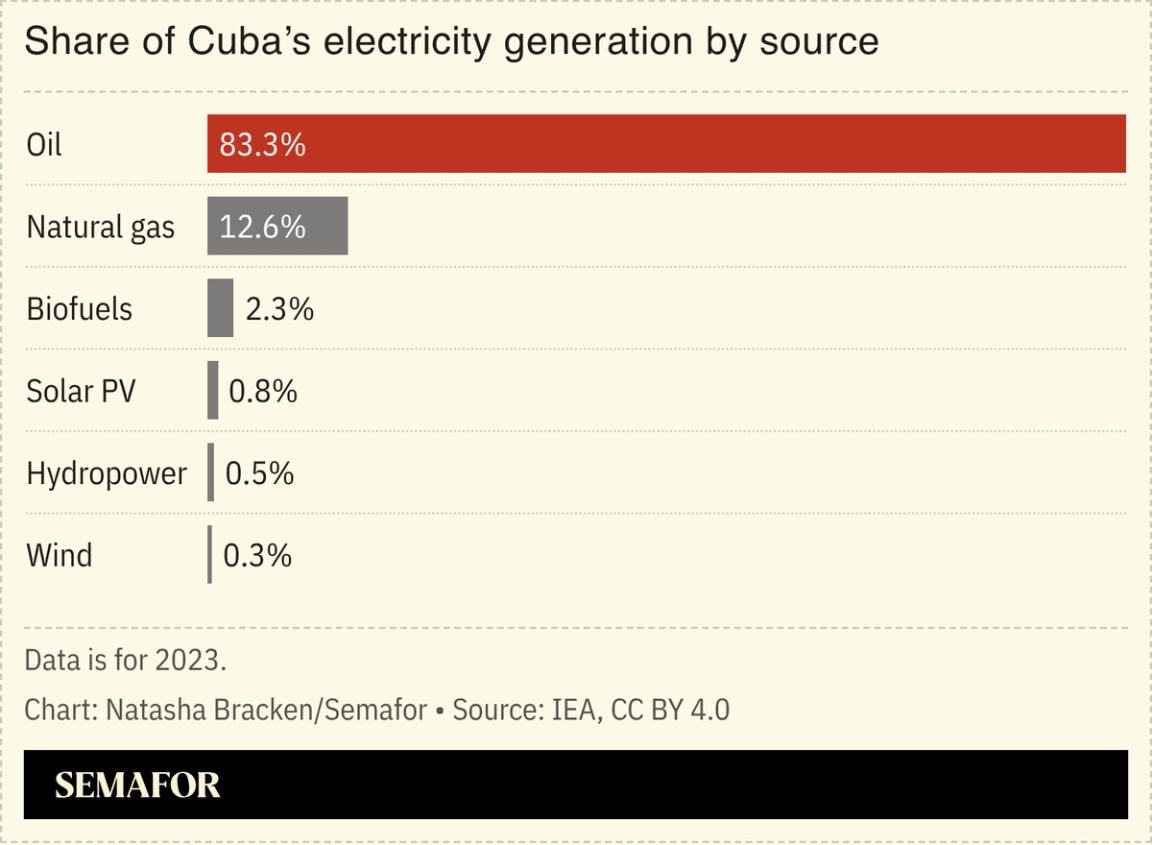 US President Donald Trump said he would soon have “the honor” of taking over Cuba, feeding fears in Havana of a potential intervention. Washington has reportedly told Cuban President Miguel Díaz-Canel that he would have to leave office for negotiations to have any chance of progressing, though Washington hasn’t disclosed any takeover plans. Havana is facing mounting domestic pressure, too. A nationwide blackout sparked by a drop in oil imports after the US tightened its embargo left millions in the dark; a similar but smaller outage set off rare protests last week. The economic situation is so desperate that Cuban officials have encouraged the diaspora — many of whom fled an authoritarian crackdown — to invest in the country. |
|
Afghanistan-Pakistan tensions mount |
 Sayed Hassib/Reuters Sayed Hassib/ReutersAfghanistan accused Pakistan of killing hundreds in an air strike on a Kabul health facility, raising fears that weeks-long hostilities could worsen. Though Islamabad dismissed the strike claim, it nonetheless vowed to continue targeting alleged terrorist groups it accuses Kabul of harboring. While the conflict has been overshadowed by the war in the Middle East, experts say hundreds have likely been killed, warning that an extended conflict could further worsen instability in Afghanistan. The country’s economy is forecast to have contracted by around a quarter since the Taliban took over in 2021, while Western aid cuts have left millions struggling to get by. |
|
 David Ulevitch leads Andreessen Horowitz’s American Dynamism fund, a $1.776 billion pot dedicated to defense, energy, public safety, and other national priorities. This week, Compound Interest co-hosts Liz Hoffman and Rohan Goswami talked with Ulevitch about whether those industries deserve their conservative coding, why venture capital — with its roots in capital-light code — has a right to win in heavy industry, and why he doesn’t want the “moral liability” of deciding how the Pentagon uses the weapons Silicon Valley is building. Listen to the latest Compound Interest now. |
|
Anthropic hires explosives expert |
 Anthropic CEO Dario Amodei. Priyanshu Singh/Reuters Anthropic CEO Dario Amodei. Priyanshu Singh/ReutersMajor AI firms are hiring explosives experts in order to prevent their LLMs from helping users to make dangerous weapons. Anthropic’s “Policy Manager, Chemical Weapons and High-Yield Explosives” hire will help the company train its Claude AI, while rival tech company OpenAI has a similar job, the BBC reported. One of the key AI safety concerns, alongside the AI itself becoming dangerous, is the democratization of deadly technologies: Just as AI has lowered the threshold for users in coding, art, language translation, among other skills, it could make it worryingly easy to build explosives or “dirty” radiological bombs. Anthropic is currently in a row with the US government over the use of its chatbot in war. |
|
Ireland pioneers data center power model |
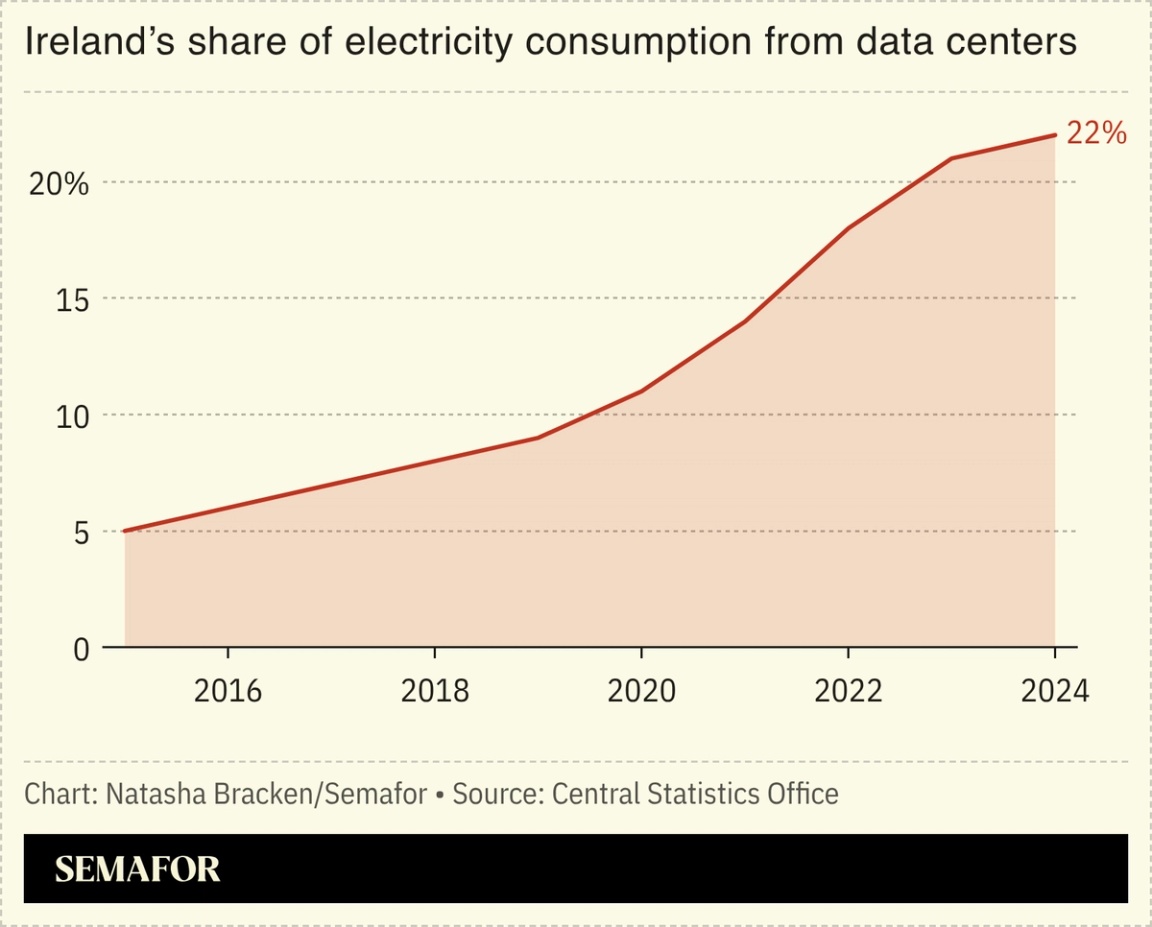 Ireland sought to build on its success in luring US tech companies to its shores by looking for opportunities to construct data centers across the pond. An Irish trade official told Semafor that Dublin’s firms “have a very strong confidence in the US market.” Ireland’s plan to require new data centers to supply their own power could provide a model for other nations keen to boost their tech industries while capping national energy costs, the Financial Times noted: Data centers now consume 20% of Ireland’s total electricity, and the boom led to an effective moratorium on new projects in 2021. Dublin wants to break that, but requires 80% of new centers’ power demand to be met by purpose-built renewable energy. |
|
|


