Thanks for reading The Briefing, our nightly column where we break down the day’s news. If you like what you see, I encourage you to subscribe to our reporting here.
Greetings!
OpenAI has decided the “everything everywhere all at once” strategy isn’t ideal, after all. As we and others reported on Monday night, senior OpenAI executive Fidji Simo told staffers last week that the company needed to “refocus on business customers and cut down on side quests that were becoming a distraction.” (Is that the understatement of the year?) That refocusing has already begun. A couple of weeks ago, we broke news that OpenAI had retreated from its plans to offer shopping directly in the ChatGPT app.
Simo’s comments raised questions about what—among the myriad projects OpenAI has announced or is working on—it might abandon next. (OpenAI CEO Sam Altman was quick to squelch rumors that the company might shutter its hardware operation.) Here’s a question, though: How much will OpenAI’s somewhat chaotic approach to management matter to investors when the company eventually goes public? After all, if you compare OpenAI to an Elon Musk company, Altman seems to be presiding over an oasis of calm!
Tesla is in a constant state of upheaval—with an executive revolving door that spins faster than the top speed of one of Musk’s vehicles—and yet it’s trading at a massive premium to other automakers. At SpaceX, which Musk is preparing to take public this year at a hoped-for valuation of $1.25 trillion, the chaos is increasing. Weeks after merging his xAI startup into SpaceX, Musk has publicly trashed the state of play at the AI startup, tweeting last week that “xAI was not built right first time around, so is being rebuilt from the foundations up.” That followed the departures of most of xAI’s co-founders.
The very act of combining xAI into SpaceX diffused the latter’s focus, of course, adding a social media app and an AI company to its rocket and satellite businesses. Did we also mention that Musk is loudly promoting plans for SpaceX to launch an entirely new—and some say technically unfeasible—business of space-based data centers?
Sure, Musk has a group of investors who’d follow him off a cliff if need be. OpenAI doesn’t have that. But it’s a good bet that when investors think about OpenAI, they’re taking the long view. This is a company at the leading edge of the most transformative technology probably in history. They’re surely not thrilled about the soap opera that makes up its internal dynamics, but they’re probably more concerned about its valuation and near-term lack of profitability, as we reported recently. In the long run, these U-turns on some products may not matter too much.
Should Moskovitz Take Asana Private?
There may be few enterprise software stocks worse hit by fears of AI disruption—the so-called Saas apocalypse—than Asana. Shares of the company, which sells software that helps workers collaborate on projects, have tumbled 50% this year, twice the decline of bigger firms like Salesforce or ServiceNow.
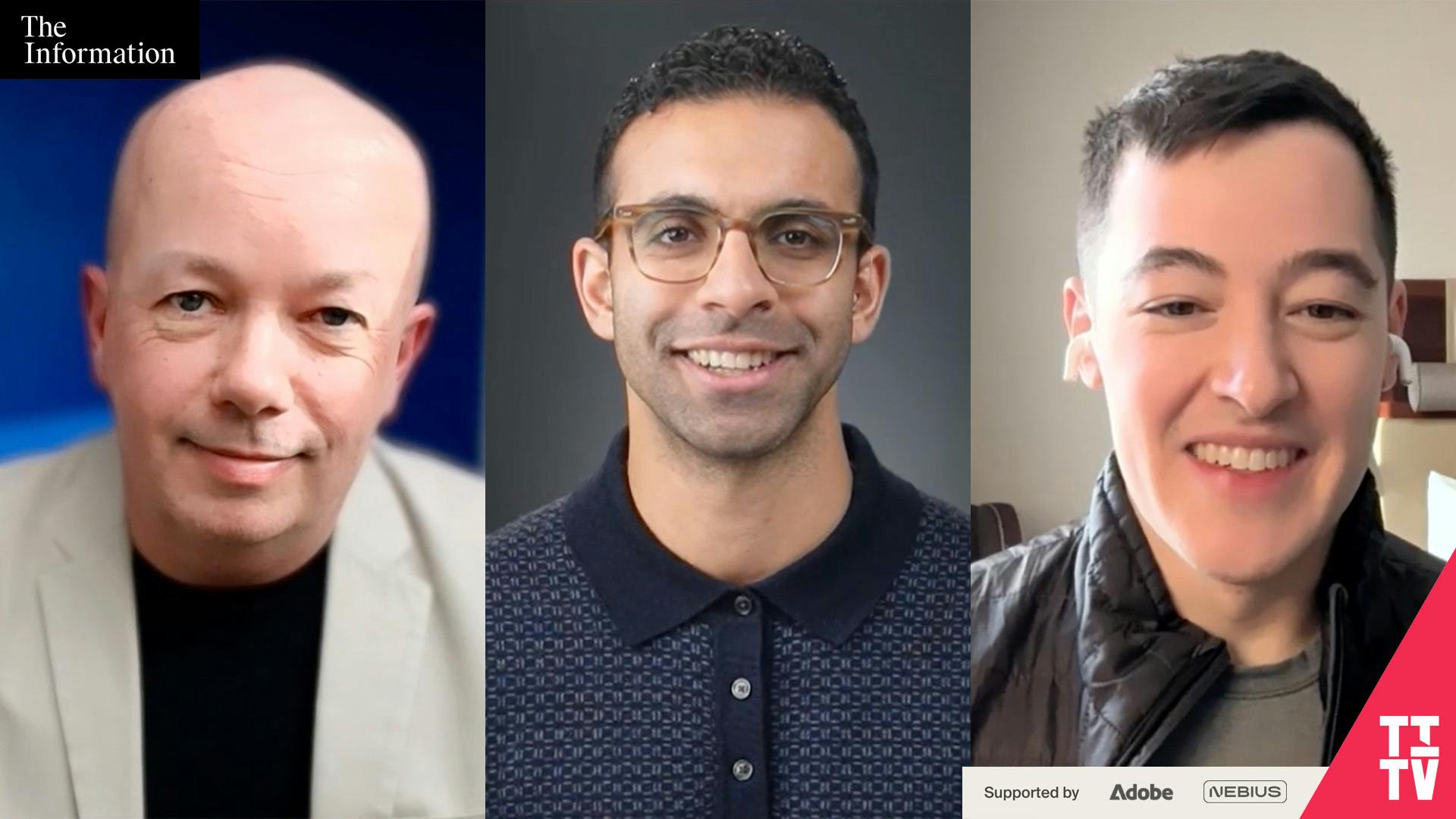
Asana isn’t giving up. It has, for example, introduced an AI agent product, Teammates, that CEO Dan Rogers said on The Information’s TITV today will work alongside humans and help them deal with “coordination-heavy tasks.” Whether this will make Asana less replaceable is a big question. But here’s an idea: Given how skeptical investors are about Asana’s future, why doesn’t the company’s biggest shareholder and co-founder, Facebook co-founder Dustin Moskovitz, take it private?
Moskovitz owns about 54% of the outstanding shares, while his fellow co-founder, Justin Rosenstein, owns another 5% or so. The stock is now trading below $7. Let’s say Moskovitz offered $10 a share, which would be a solid premium to the current price. Assuming Rosenstein kept his shares, the buyout would cost the billionaire about $980 million. And as Asana has around $400 million in cash and investments on its balance sheet, the true cost would be only about $600 million. The company generated $77 million in free cash flow last year, so Moskovitz would make his money back in no time!
Rogers dodged a question about the possibility of going private when my colleague, TITV host Akash Pasricha, asked about it today. Still, the scenario is worth a thought! After all, Moskovitz has steadily increased his holdings in Asana over time, suggesting he’s more of a buyer than a seller of the company.
In Other News
• Microsoft is overhauling its executive ranks to give CEO Satya Nadella more-direct oversight of engineering teams working on its Copilot chatbots, Nadella said in a memo to staff Tuesday.
• Nvidia is in the process of restarting manufacturing for the H200 chips it plans to sell to Chinese customers, its CEO, Jensen Huang, said at a press conference Tuesday.
• Mastercard said it had agreed to buy BVNK, a stablecoin payment startup, for up to $1.8 billion, including $300 million in contingent payments, in its biggest bet that more companies will use the cryptocurrency to move money globally.
• AI startup You.com, valued at $1.5 billion after a funding round in September, is changing its senior leadership as it focuses on helping businesses adopt AI.
Today on The Information’s TITV
Check out today's episode of TITV in which we analyze Nvidia's latest products and unpack the chatter on the ground at GTC.
Recommended Newsletter
Start your day with Applied AI, the newsletter from The Information that uncovers how leading businesses are leveraging AI to automate tasks across the board. Subscribe now for free to get it delivered straight to your inbox twice a week.
Join The Information at the New York Stock Exchange on Monday, April 27, to hear from top executives and investors on how the rapid buildout of AI is reshaping tech, finance, and capital markets
Save the date for The Information’s annual AI Agenda Live in San Francisco, where top AI researchers, founders, investors and executives come together for a day of conversations about the breakthroughs and applications shaping the future of AI.