| | In this edition: Kenya’s expanding electric buses, growing Chinese surveillance, and a gas deal betw͏ ͏ ͏ ͏ ͏ ͏ |
| |  Conakry Conakry |  Kigali Kigali | Addis Ababa |
 | Africa |  |
| |
|
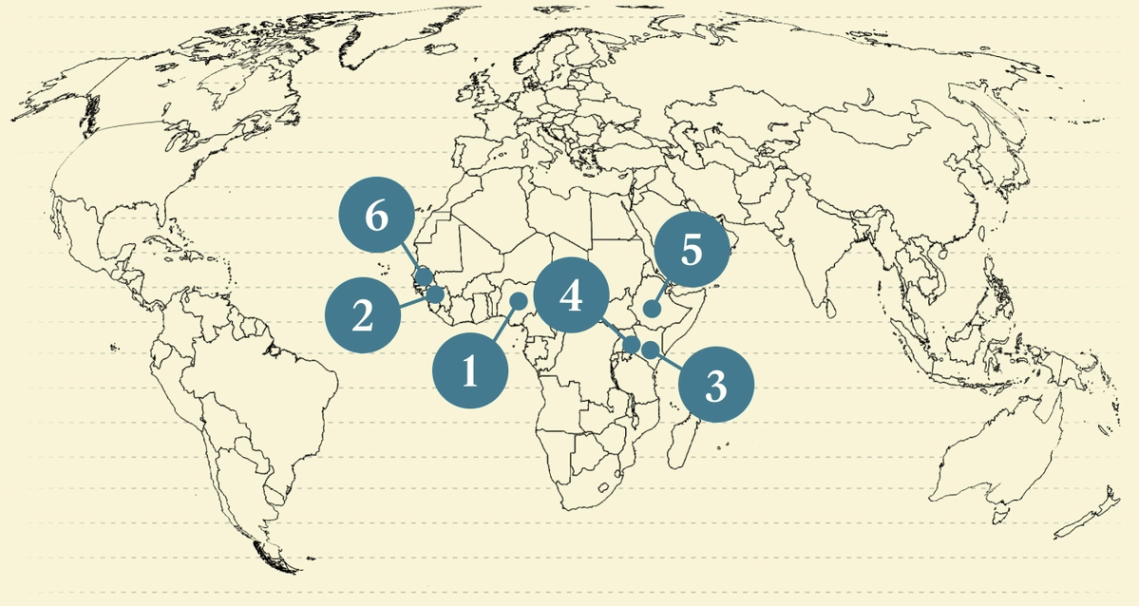 - Tinubu’s economic boost
- Guinea mulls bauxite quota
- Electric bus firm to expand
- Africa buys AI surveillance
- China-Dangote gas deal
- CAF overturns Senegal win
 A Grammy-winning Tuareg band releases its 10th album. |
|
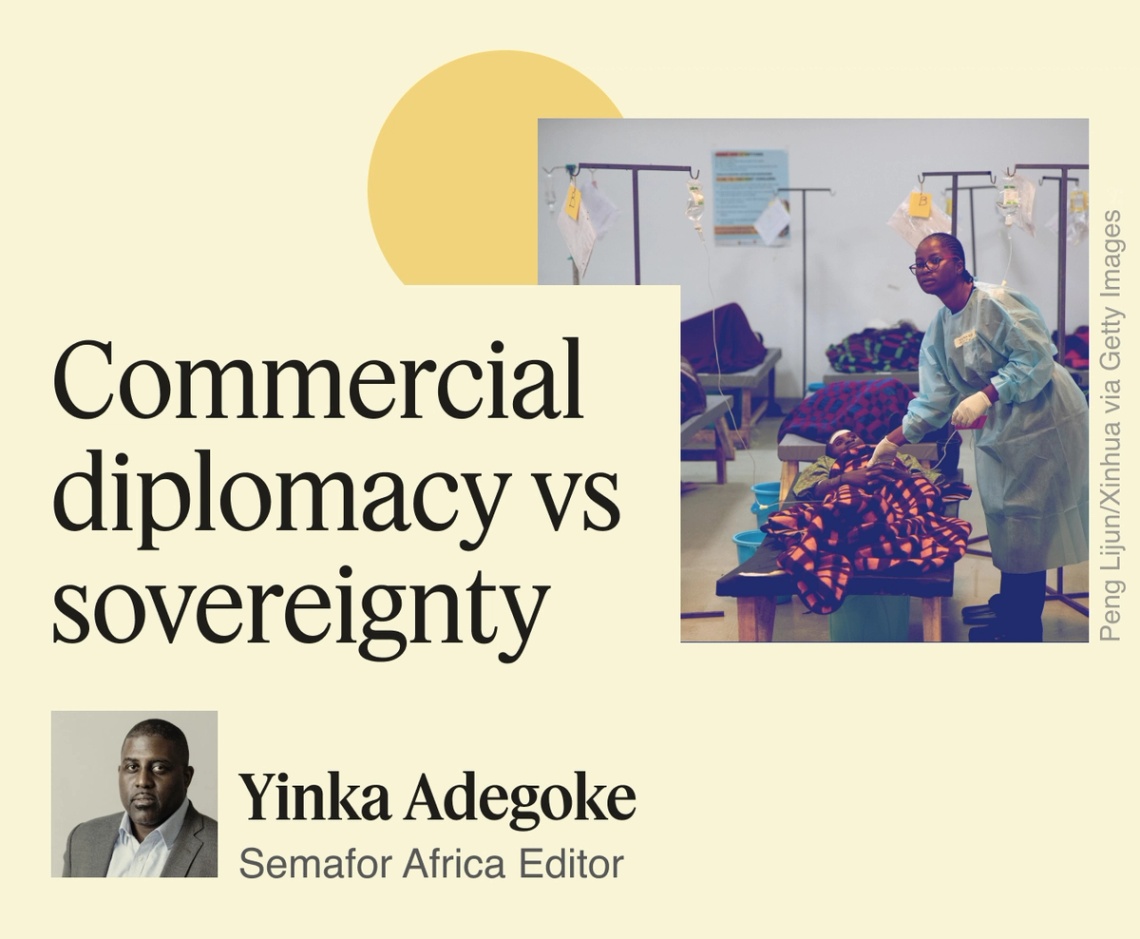 In the year since dismantling USAID, the Trump administration’s nascent Africa policy team has signaled a clear break from the past. The language is consistent — “commercial diplomacy,” “trade not aid” — and so is the intent: to recast a decades-old, often paternalistic relationship on more transactional terms. The shift has drawn predictable backlash, particularly over abrupt cuts to health and humanitarian programs that could put millions at risk. But in private, African officials and business leaders have been more sanguine. Some have even been publicly supportive, arguing that a more transactional framework offers leverage to negotiate for national priorities. Even former US officials have acknowledged the earlier system’s shortcomings. But the new approach is already beset by tensions. Proposed bilateral health and development agreements, intended to replace USAID programs, have sparked pushback from governments and civil society in Kenya, Zambia, and Zimbabwe, questioning whether deals framed as partnerships tilt too far toward US interests. To be sure, the Trump administration is following through on its stated goals, pursuing agreements designed to deliver tangible returns for the US. After a visit to Lusaka in December, a senior State Department official said Zambia had committed to reforms aimed at unlocking substantial US support in exchange for cooperation in mining and improvements to its business climate. However, aid tied explicitly to economic and strategic concessions is precisely what gives some African leaders pause. Zambian officials are now closely reviewing a multibillion-dollar package that could grant the US access to key minerals, such as copper and cobalt, in exchange for health support and citizens’ health data. The stakes are not abstract. Thousands still depend on US-backed health programs. But in countries with long memories of external exploitation, the political risk of appearing to trade sovereignty for aid is acute. As one Zambian official told me: “We want to be sure we’re signing something that is in line with our sovereign values.” They have until May, when the US deadline expires, to decide. |
|
Nigeria looks to bank recapitalization |
 Nigerian President Bola Tinubu. Ton Molina/Getty Images. Nigerian President Bola Tinubu. Ton Molina/Getty Images.Progress on strengthening Nigeria’s banking system, combined with a revenue boost from a global oil price surge driven by the Iran war, is providing an economic filip to President Bola Tinubu ahead of presidential elections next year. Nigerian officials will hope the upbeat message burnishes Tinubu’s credentials as a reformer at home as he begins a state visit to the UK as part of efforts to build a reputation as a statesman abroad. Nigeria’s central bank governor announced this week that 32 banks — the vast majority of Nigeria’s lenders — have completed a recapitalization program aimed at helping them finance large infrastructure projects, expand credit to small businesses, and attract foreign investment. The program is tied to Tinubu’s flagship economic goal of tripling Nigeria’s GDP by 2030. He has also been buffeted by rising oil prices, which in recent days have consistently topped $100 a barrel. S&P analyst Ravi Bhatia, speaking in London, said higher crude prices would likely offset increased fuel purchase costs. Yet, Tinubu’s reelection bid is not without challenges: At least 23 people were killed this week in suspected Boko Haram suicide bombings in Maiduguri, one of the deadliest attacks in years on a city at the epicenter of the jihadist insurgency. — Alexis Akwagyiram |
|
Guinea mulls bauxite quotas |
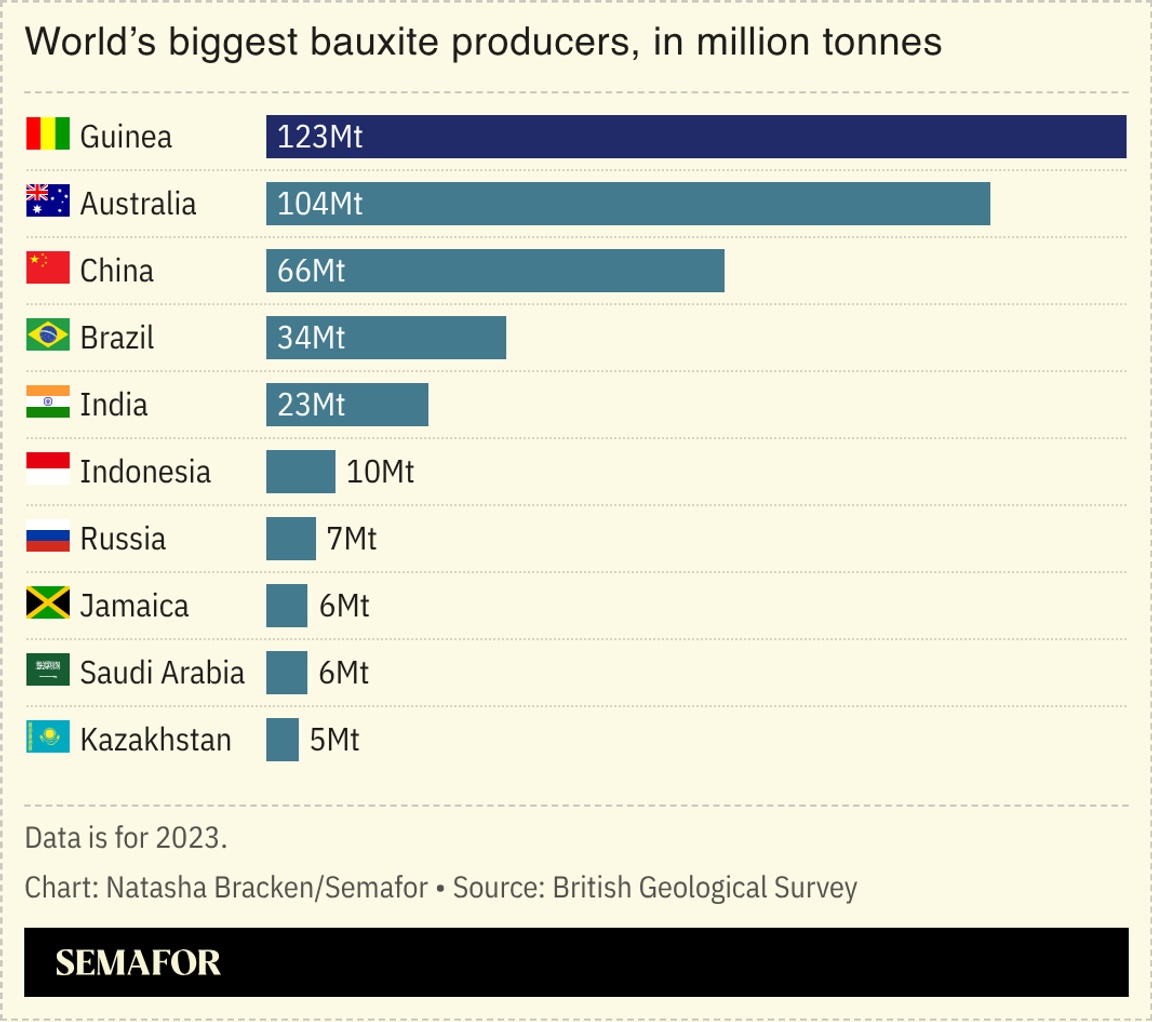 Guinea is mulling the introduction of bauxite export quotas as it tries to protect itself from a slump in prices of the ore used to produce aluminum. The West African country is the world’s top bauxite producer but it has been hit by rising shipping costs and price drops — they have fallen up to 35% from 2025 highs on surprise shutdowns in Guinea itself. If implemented, the move would see Guinea follow in the footsteps of DR Congo and Zimbabwe, countries that have recently limited exports of critical minerals mostly headed to China. Guinea’s plan would also inject further uncertainty into the metals market disrupted by the Middle East war, as the region is a key production hub for aluminum. |
|
Kenya firm to expand electric buses |
| |  | Martin K.N Siele |
| |
 Atulinda Allan/Xinhua via Getty Images Atulinda Allan/Xinhua via Getty ImagesA Kenyan electric bus startup is in talks with fuel retailers to build more charging facilities as it seeks to rapidly extend services beyond Nairobi. The move would be BasiGo’s largest expansion since its 2021 launch, and could provide a template for scaling up sustainable public transport across Africa. BasiGo aims to roll out the new charging sites this year at gas stations along Kenya’s coastline as well as in the country’s center and west, Managing Director Moses Nderitu told Semafor. The company currently has 11 charging stations, 10 of which are in the Nairobi metropolitan area, and more than 100 buses on the roads. The plan would require dozens of new charging stations to cover key routes. Nderitu said the inter-city service, which it began piloting last year, was driven by demand from partner transport companies seeking to cover longer routes but constrained by the lack of charging infrastructure outside Nairobi. The company is also in the “very early stages” of piloting electric light trucks, he said, eyeing the so-called “last-mile” deliveries market. |
|
Chinese firm strikes Ethiopia gas deal |
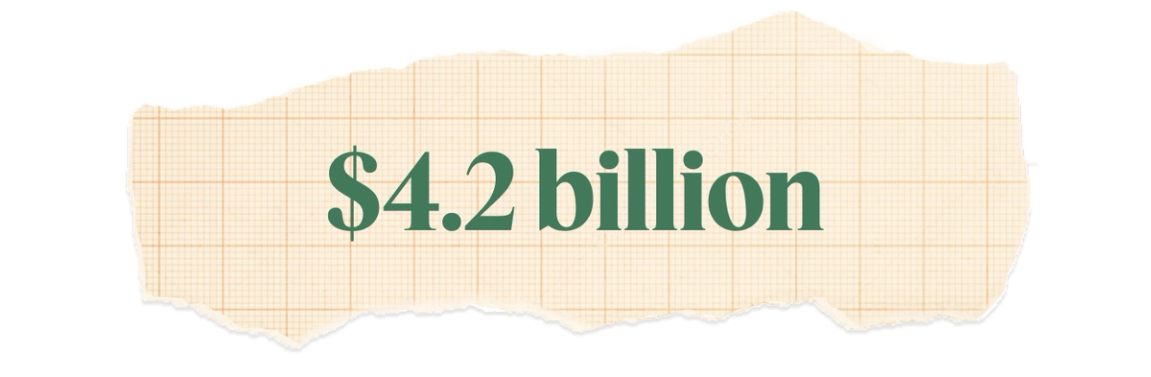 The value of a deal under which Chinese company Golden Concord will supply natural gas to a planned fertilizer plant in Ethiopia operated by Nigeria’s Dangote Group. The Ethiopian government signed a $2.5 billion agreement with Dangote last August to build urea fertilizer plants that will source gas from the country’s reserves, with Dangote the majority shareholder in a 60/40 split. The 25-year deal with Golden Concord involves the supply of gas from Ethiopia’s Calub reserves, according to Dangote. Ethiopia expects the development of the fertilizer complex to boost agricultural production, as conflict and drought in the Horn of Africa region challenge food supplies. For Dangote, the gas deal affirms plans to expand in Ethiopia, where it already operates a unit of its pan-African cement business. |
|
Africa’s rising surveillance spend |
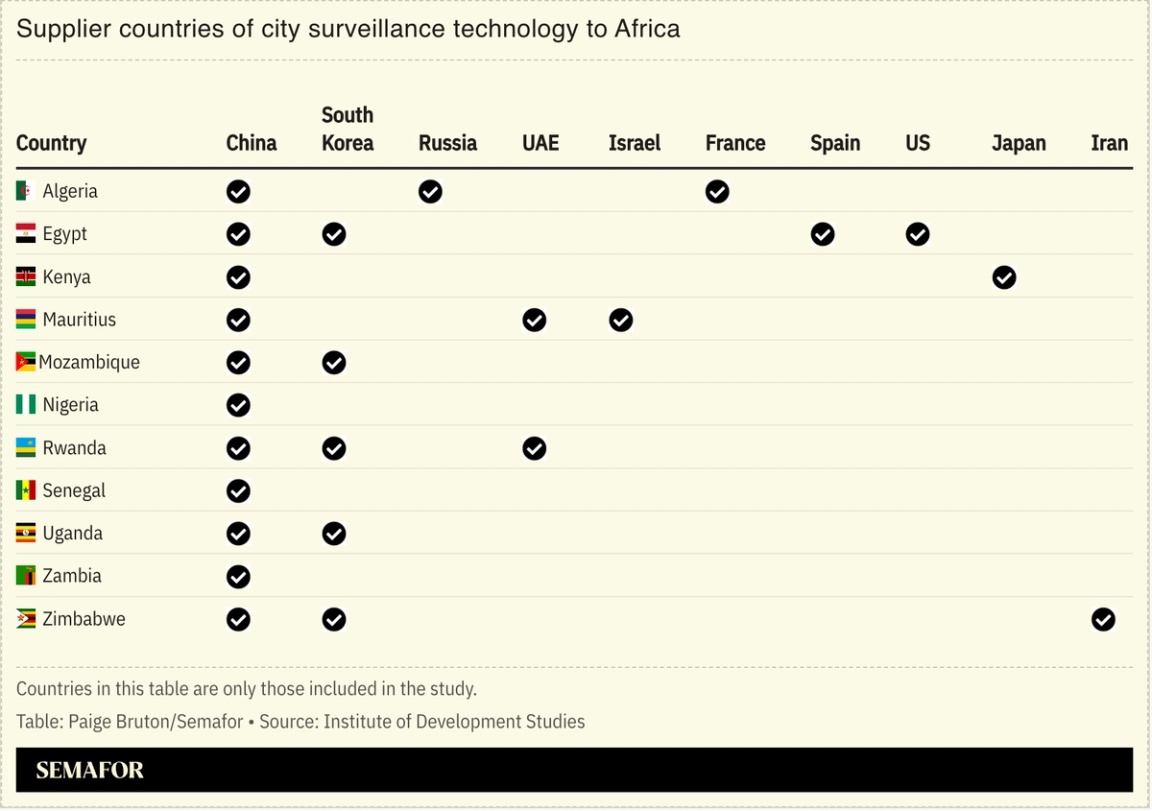 African governments are spending billions of dollars on the “smart” surveillance of public spaces using technology from China, a new report found. More than $2 billion has been spent on facial recognition and car-tracking technologies in 11 countries on the continent — including Kenya, Nigeria, and Rwanda — according to research from the UK-based Institute of Development Studies. It found that Nigeria alone has spent more than $470 million on AI-enabled facial recognition and automatic car number plate recognition, making it Africa’s largest buyer of smart city surveillance technologies. Typically, a Chinese ‘safe city’ surveillance package is financed by soft loans, according to researchers. For example, a loan of $250 million from China Eximbank might be tied to the purchase of surveillance cameras from Hikvision and a command and control center built and serviced by Huawei or ZTE. |
|
CAF overturns Senegal victory |
 Senegal’s team celebrating AFCON. Samah Zidan/Anadolu via Getty Images. Senegal’s team celebrating AFCON. Samah Zidan/Anadolu via Getty Images.Africa’s football governing body stripped Senegal of its title as the winner of the continent’s top men’s competition, awarding the honor to Morocco in an unprecedented move. The Confederation of African Football overturned Senegal’s one-goal victory over tournament hosts Morocco following the latter’s appeal, citing rules that punish a team that abandons an ongoing football match for more than 10 minutes. Senegalese players and officials had walked off the pitch during the Jan. 18 match in protest against a controversial penalty kick awarded against them late in the game. Morocco’s Brahim Diaz missed the kick when the Congolese referee resumed the game with every player on the field, before Senegal won in extra time. Senegal’s football body rejected CAF’s “unacceptable” decision and plans to lodge an appeal at the Court of Arbitration for Sport in Switzerland. Global viewership of AFCON drew 50% more international broadcasts compared to 2023, according to CAF. But the organization’s latest ruling has raised fresh scrutiny about operations under the leadership of South African billionaire Patrice Motsepe, who is speculated to be in the running to become the next president of the country’s African National Congress party. |
|
 Business & Macro
|
|
|


