| | In this edition: discerning the AIPAC signal, Pritzker gets a win, and more Israel polling.͏ ͏ ͏ ͏ ͏ ͏ |
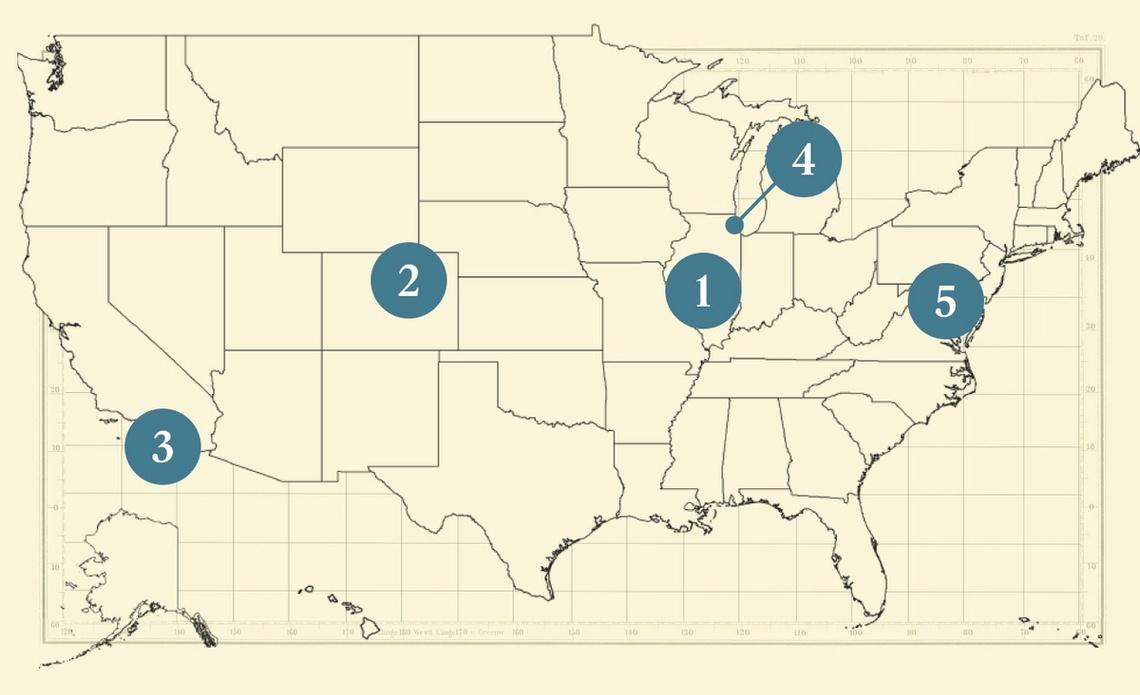
| |  VISTA VISTA |  PALATINE PALATINE | SPRINGFIELD |
 | Americana |  |
| |
|
 - Stratton and the super PACs
- Colorado challenges
- California scheming
- Ad watch
- Poll watch
|
|
 EVANSTON, Ill. — There was a clue that Daniel Biss was about to win his close, hard-fought primary: AIPAC stopped talking about him. The pro-Israel group had hoped to take down Biss, the well-known mayor of Evanston who was running to replace Rep. Jan Schakowsky, with her endorsement. He offered a one-for-one upgrade — an elderly progressive Jewish critic of Israel under Benjamin Netanyahu replaced by a middle-aged progressive Jewish critic of Israel under Benjamin Netanyahu. “I believe in Israel’s right to exist as a Jewish democratic state,” Biss told me after a campaign event last week, “so I think of myself as a progressive Zionist.” AIPAC had beaten candidates like that before. Four years ago, I watched Rep. Haley Stevens, D-Mich., flatten Rep. Andy Levin with the help of AIPAC’s United Democracy Project super PAC. Levin’s identity, as a Jewish liberal who worked with Israel critics, added urgency to the campaign. “Our values spoke very loudly this evening,” Stevens said when she won the primary for the suburban Detroit district. Whose values spoke in Illinois? After funding three different super PACs across the Democratic primaries — UDP, Elect Chicago Women, and the Chicago Progressive Partnership — AIPAC declared victory over two more avowedly pro-Palestinian candidates in the Biss race. It mocked progressives for being unable to win two other seats it invested in. But AIPAC didn’t get into the field to beat them; it jumped in to help state Sen. Laura Fine, a rival progressive whose friendly relationship with the pro-Israel group made her unelectable once Biss brought it up. It couldn’t rescue Melissa Conyers-Ervin in the Loop; the winner in that primary, endorsed by retiring Rep. Danny K. Davis, didn’t seek AIPAC’s support because he didn’t support unconditional US aid to Israel. For more on how the pro-Israel lobby’s election strategy played out, click here. → |
|
|
Pritzker helps protege win IL Senate nom |
 Jim Vondruska/Reuters Jim Vondruska/ReutersIllinois Lt. Gov. Juliana Stratton’s victory in Tuesday’s primary to succeed Sen. Dick Durbin handed a huge victory for Gov. JB Pritzker amid mixed results for big spenders. Stratton badly trailed Rep. Raja Krishnamoorthi for much of the race; Krishnamoorthi went on the air last summer, building name recognition while Stratton struggled to raise money. That changed when Pritzker gave $5 million to a pro-Stratton PAC, which went on the air to slam Krishnamoorthi as Stratton went up with ads featuring the governor. Krishnamoorthi lost Cook County, as expected, but ran even with Stratton in the rest of the state, knocking out his path to victory. It was the most expensive defeat in the life of Fairshake, the crypto industry PAC that has come in to help supportive Democrats and Republicans, and backed two winners in open House seats; Fairshake spent $10 million to boost Krishnamoorthi and Rep. Robin Kelly, whose support in Chicago and among black voters was seen as a wedge against Stratton. The lieutenant governor used that to portray herself as a sort of insurgent candidate against big money, despite the Pritzker assist. “I’m getting individual donors who are supporting my campaign,” said Stratton after a Friday rally with Elizabeth Warren. “Individual disclosed donors,” Warren chimed in. Read some of the backstory, from the ground, right here. → |
|
|
Two well-known incumbents get dinged at party conventions |
 Bethany Baker/Pool via Reuters Bethany Baker/Pool via ReutersSomething funny is happening in Colorado: Two of its well-known Democratic lawmakers, Sen. John Hickenlooper and Rep. Diana DeGette, will face primary challengers who got more support from delegates at local party conventions last week. Chalk this up to the nationwide trend of growing unrest in the Democratic base, though it’s not a dealbreaker in Colorado. Hickenlooper was crushed at delegate conventions six years ago, and went on to win the Democratic primary by 20 points. This time, Hickenlooper was trailing democratic socialist state Sen. Julie Gonzales in local party votes when he dropped out of the convention process (the “state assembly”) to run in the June 30 primary; he was submitting signatures instead of trying to get a delegate endorsement. DeGette lost the local votes to challenger Melat Kiros, who told Semafor that she was “meeting delegates where they are” and wouldn’t “vote for anyone who takes corporate PAC or AIPAC money,” suggesting she would oppose Hakeem Jeffries as Democratic leader or speaker should she win the race. DeGette told Semafor that she was moving ahead. First elected in 1996, she has built a progressive voting record in the House; she last faced a serious challenger in 2018, when Justice Democrats and other progressive groups recruited opponents against dozens of incumbents. Justice Democrats has endorsed Kiros in this race. “Good news: I’m on the ballot,” DeGette said. |
|
California House primary getting uglier for Democrats |
 Mike Blake/Reuters Mike Blake/ReutersDemocrats trying to claim the battleground seat of retiring Rep. Darrell Issa, R-Calif., are getting pulled into an internal battle over alleged racism, my colleague Nicholas Wu scooped this week. Ammar Campa-Najjar, who’s making his fourth attempt to win a House seat, and Vista City Councilmember Corinna Contreras are going after San Diego City Councilmember Marni von Wilpert for a polling memo they say included racist lines of attack. That polling had von Wilpert initially trailing Campa-Najjar but gaining support when voters were read attacks on him for running “three campaigns from four different addresses under two different names.” “I will never apologize for my name or my heritage,” said Campa-Najjar, who has talked about changing his last name to honor his mother. Contreras got in on the fight, slamming the “racist attacks” as “disgraceful.” Dan Rottenstreich, a von Wilpert campaign consultant, told Nick in a statement that Campa-Najjar “has a long, established pattern of changing who he is depending on the campaign — his politics, his district, his stances on abortion and Trump, even his name.” |
|
 Semafor today announced the agenda and a new slate of CEOs and global leaders joining more than 450 top executives at the 2026 Annual Convening of the Semafor World Economy, taking place April 13–17 in Washington, DC. As the definitive live journalism platform on the new economy, the convening will bring together US Cabinet secretaries, central bank governors, finance ministers, and Fortune 500 CEOs for five days of on-stage conversations and in-depth interviews uniting private and public sector leaders to exchange ideas that will shape the future of the world economy. |
|
Anatomy of an AIPAC-backed ad onslaught |
 RyanInEvanston/X RyanInEvanston/XThe Chicago Progressive Partnership raced onto Illinois screens and into mailboxes with messaging aimed at the most left-leaning voters — encouraging them to vote against left-wing candidates. There’s a reason for that: The PAC, created in January, was linked to AIPAC. And its output showed what strategists think will work against the left in safe Democratic seats. “Who is Kat Abughazaleh?” pointed to columns the left-wing journalist turned congressional hopeful wrote at age 16, when she was a young conservative, to portray her as a phony. “Totally Fake” used more current information, that the candidate had taken money from “Republicans” and “members of America’s wealthiest families.” Days before the election, the PAC took another tactic against her, running a digital ad that called another candidate, Bushra Amiwala, the “real deal” and the true progressive choice in the race. Amiwala denounced the ad, which all sides saw as an effort to split the progressive vote. Another AIPAC-related group, Elect Chicago Women, had already gone on air to do that, attacking Evanston Mayor Daniel Biss. Its ad hit Biss over voting for a budget that “cut Medicaid” and being willing to bail out on another term. Other super PAC ads in Illinois have gone after progressive Democrats who didn’t reject money from ICE contractors, or didn’t turn down cash from people who’d donated to Trump. Expect more of this as we move down the primary calendar. |
|
The Democratic base’s decisive break from Israel |
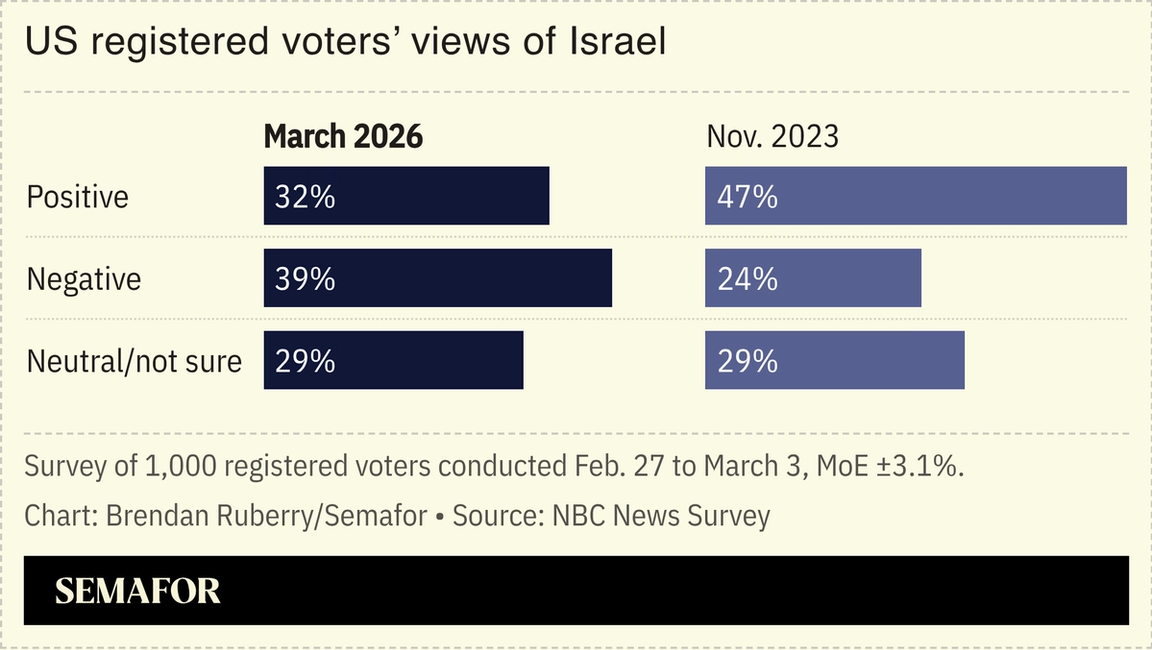 “There is only one pro-Israel party, and it’s the Republican Party,” the Republican Jewish Coalition’s chairman said at the 2024 GOP convention. That’s not true at the top of the Democratic Party, but it now looks to be true at the base. |
|
 The late Brian Doherty did what most reporters dream of doing: He lived an interesting life and wrote well about it. He went to Burning Man and published an ahead-of-the-curve profile. He took on libertarianism and wrote its definitive history. I knew Brian by that point, working with him at Reason, at the exact moment that libertarianism became politically relevant with the presidential candidacy of Ron Paul. (Some people dismissed Radicals for Capitalism, then bought copies to understand the anti-war paleoconservatism suddenly getting huge crowds.) He left essential work behind, and I’ll miss him every day. |
|
 Kylie Cooper/Reuters Kylie Cooper/ReutersLast week, I wrote about many Democrats’ angst over the popularity of new tax-cut plans from ambitious potential 2028 candidates. They worried “slopulism” was catching on in the party — a term applied to ideas that could appeal to voters by sounding egalitarian but do nothing to rebalance the economy or redistribute wealth. Vox’s Eric Levitz beat me to another part of the story: The Senate-passed housing bill and its provision that bars large investors from buying single-family homes. Like “No Tax on Tips,” some Democrats fear that their own wonks talked them out of a winning issue. Levitz reported out his disagreement with that theory, seeing instead a willingness to believe “conspiratorial lies about an ill-defined corporate boogeyman.” |
|
|


