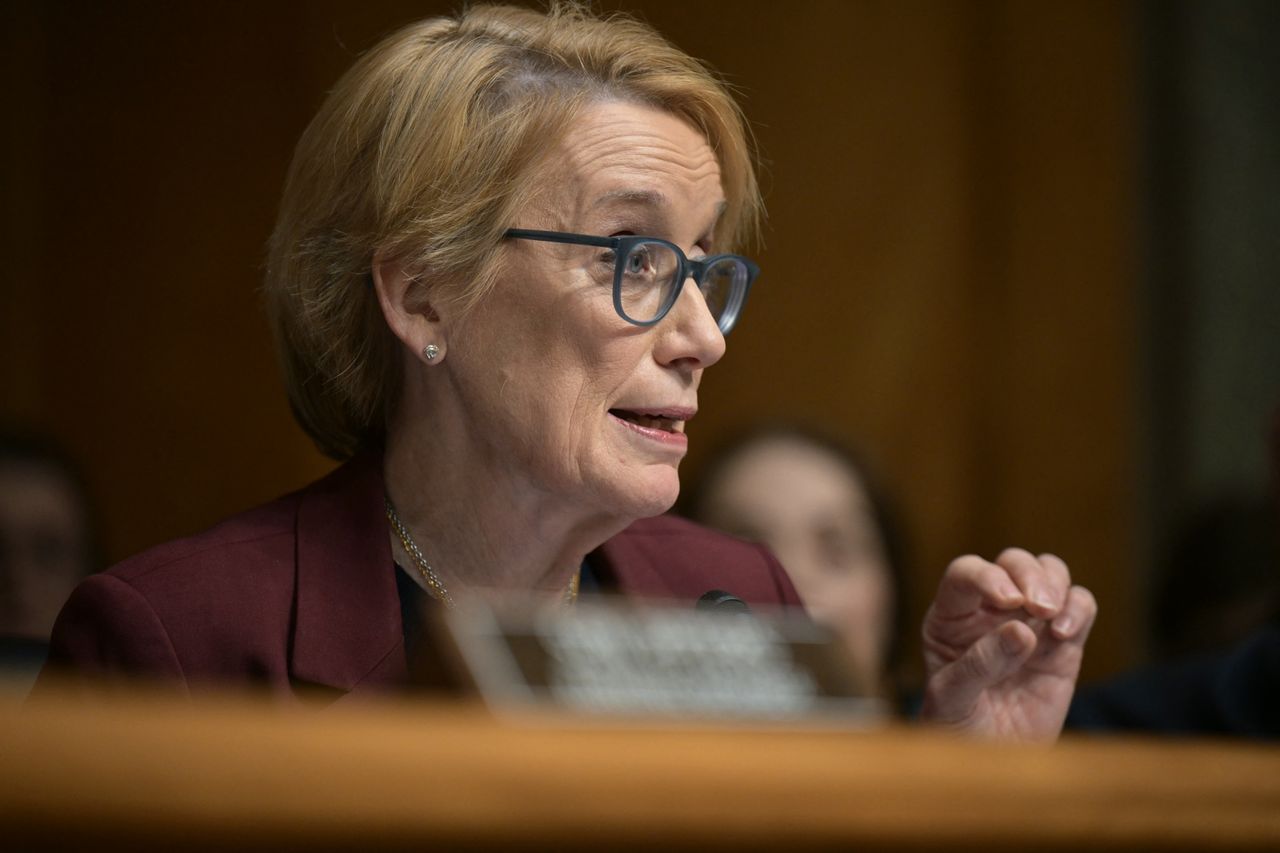
| |  | The Lead Brief | A Biden administration-era law meant to keep drug companies from jacking up the list price of their medications faster than inflation may have worked — but not in the way that lawmakers had intended. Now, Sen. Maggie Hassan (D-New Hampshire), who sits on both Senate panels overseeing the health care system, is accusing pharmaceutical giant GSK of using a loophole in the law to avoid paying hundreds of millions of dollars in fees on its widely used asthma inhaler. “No company should be able to game the system in the way that GSK did,” Hassan said during a briefing. Hassan recently released an investigation detailing how GSK pulled Flovent products from the market and replaced the inhalers with an authorized generic — a near-identical product made by another company in collaboration with the original manufacturer — to sidestep Medicaid rebate obligations tied to price hikes. - As a result of the disruption, the report says, patient costs went up, while insurance coverage and availability went down. Some parents were paying cash — $170 per month — out of pocket for the inhaler.
A spokesperson for GSK said that it made efforts to communicate with patients, providers, insurers, distributors and pharmacies about its plans to discontinue its branded inhaler — and move toward the authorized generic — well before the shift occurred. “GSK has always been and will continue to be strongly committed to ensuring patients, especially children, have access to the medicines they need,” the spokesperson said. - The report says the impact was particularly dire for younger children, who may not be able to use other types of inhalers. The investigation found that emergency room and hospital visits increased for some children following the discontinuation of Flovent, as did worsening symptoms.
- Pediatricians also reported encountering issues, including prior authorization requests from insurers, pharmacy shortages of the authorized generic medication and issues finding an age-appropriate substitute.
Prasco Laboratories, the company that partnered with GSK to make the Flovent copycat, did not respond to a request for comment on Hassan’s report. But this one has a lot of moving parts. Let’s get into it: - A provision of a 2021 law ultimately removed a limit on the total fees that drugmakers owed to Medicaid if they raised the list price of a medication faster than inflation. It went into effect in 2024, the same year GSK discontinued Flovent.
- While the list price of the authorized generic was cheaper than the brand version by about 35 percent, the net cost after rebates to pharmacy benefit managers (PBMs) was still higher.
Very few health plans or patients ever pay a drug’s list price, because it’s designed to be a starting point for negotiations with PBMs and other industry players over rebates and discounts. PBMs decide how medicines will be covered on health plans, and manufacturers can sometimes get preferential treatment on a plan’s drug formulary by providing bigger rebates. - Likely as a result of the smaller rebate from Prasco — which has less leverage than a multinational drug giant such as GSK — many insurance plans did not offer coverage of the generic, or they introduced prior authorization barriers. A survey of providers cited in the report found that 87 percent of pediatricians reported experiencing prior authorization requests from insurers about the generic, which can delay care.
Hassan’s report, a result of a years-long investigation, doesn’t address the insurer aspect, but it does cite large PBMs saying that utilization of the inhalers dropped severely following GSK’s move to discontinue Flovent following decades on the market. |


_tstmp_1756933376-1920-1080.png)