| | Oil prices jumped to more than $116 a barrel on Thursday after Iran targeted the world’s largest LNG͏ ͏ ͏ ͏ ͏ ͏ |
| |  | Energy |  |
| |
|
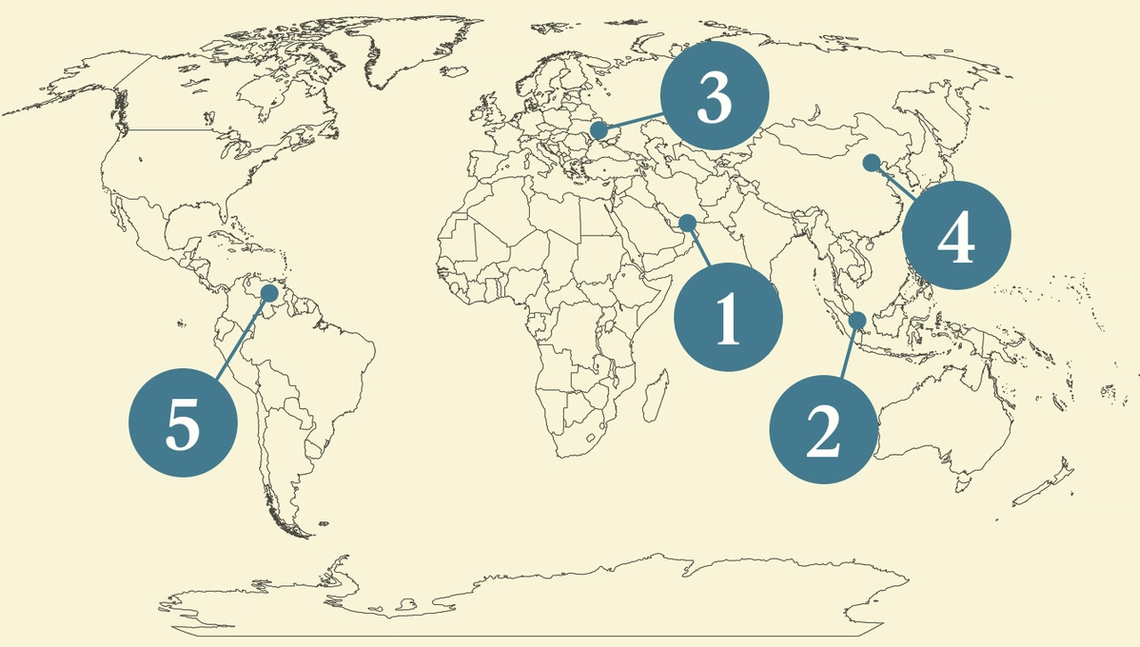 - Oil jumps again
- Alt fuels ride high
- Kyiv’s sanctions worries
- Clean investment triples
- Open door in Caracas
 Asia pivots back to coal, Egypt dims the lights, and Cuba turns to Chinese solar. |
|
 During the biggest disruption to energy markets in modern history, what’s a Hilton full of oil bosses to do? We’ll find out next week in Houston, in what industry guru Dan Yergin promised me will be a “very intense” CERAWeek conference. The world’s top oil and gas confab is usually pretty intense as it is — less walking than COP, more suits and ties, a nice little spread of afternoon treats in the press room, the occasional rodeo, and what amounts to several days of speed-dating with sources (although this year, I’ve heard from comms folks at a few big players that execs are too busy putting out fires to make time for the lowly press). But unlike most years, where multiple issues are at play, next week will be dominated by the war in the Middle East, and what it means for global energy. A few things will be top of mind for me: - What was Trump prepared for? Administration officials have stressed that oil market disruption was anticipated in the Iran campaign, and ample backup plans laid that out. Richard Goldberg, a fellow at the Foundation for Defense of Democracies, who previously worked on energy issues in Trump’s National Security Council, told me this week that a lot of planning around oil contingencies took place prior to the bombing campaign against Iranian nuclear facilities last year, which “has put the administration in a position to act faster now than it otherwise would have.” Yet, the muted market reaction to the responses rolled out so far, the poor reaction by European allies to measures like rolling back sanctions on Russia, and the mass firing of career energy diplomats, suggest a more helter-skelter approach to dealing with an oil and gas crisis that could be much larger and longer-lasting than the White House anticipated.
- How is the oil and gas industry responding? This will be a bumper quarter for oil and gas shareholders, who have always learned to stick it out through the doldrums for spikey periods like this. But execs — some of whom will meet with Vice President JD Vance today — with a slightly longer perspective look at this moment and see mainly chaos, not profit. Ultimately, the crisis will translate to substantive changes in how oil producers and the myriad companies that serve them allocate capital, it’s just not yet clear how. Unless prices remain high “for months,” Rystad Energy analysts said in a note today, US shale is unlikely to drill more. But midstream — the unglamorous world of pipelines, storage tanks, and port facilities — could be a less obvious winner, as countries reprioritize maximum flexibility of supply chains.
- What does the conflict mean for the global energy transition? It’s clear that in principle, extreme fossil fuel market volatility is a powerful argument for nonfossil energy. Even today, the world economy is much less reliant on oil, in terms of barrels consumed per unit of GDP, than it was during the embargoes of the 1970s; if it wasn’t, the current situation would be far worse. I’m watching for signs of this principle in action: New deals, new technologies that suddenly look more attractive, new policies to accelerate investment, a new role for or attitude toward the Middle East in general.
If you’ll be in Houston next week, let me know and we can try to link up! Also, please welcome the excellent climate and energy journalist Chloé Farand, who will be helping us with this briefing next week. |
|
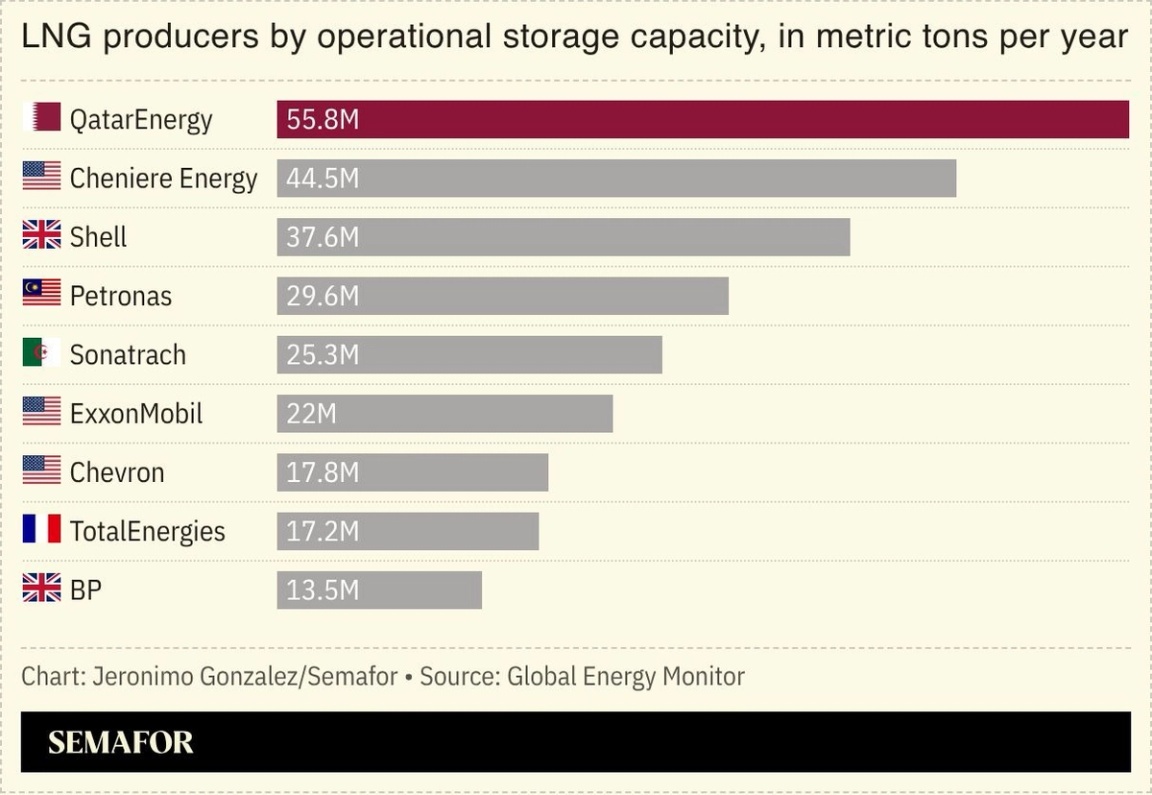 Oil prices jumped to more than $116 a barrel on Thursday after Iran targeted the world’s largest LNG plant in Qatar in retaliation for Israeli strikes at its main gas field — a major escalation of the war in the Middle East. Iranian missiles hit Qatar’s Ras Laffan Industrial City, which provides about a fifth of global LNG supplies, causing “extensive damage”, QatarEnergy said. Tehran also targeted a refinery in Saudi Arabia, forced the UAE to shut gas facilities, and set off fires at two Kuwaiti refineries. Qatar, which had sought to distance itself from the conflict, said the escalation is “pushing the region toward the brink” and expelled Iranian diplomats. The attack follows air strikes on infrastructure at Iran’s South Pars offshore gas field, the country’s biggest gas source and site of the world’s largest gas deposits, which it shares with Qatar. European gas prices jumped 35% on Thursday to double their pre-war levels, as the market braces for prolonged disruptions to LNG supplies. — Chloé Farand |
|
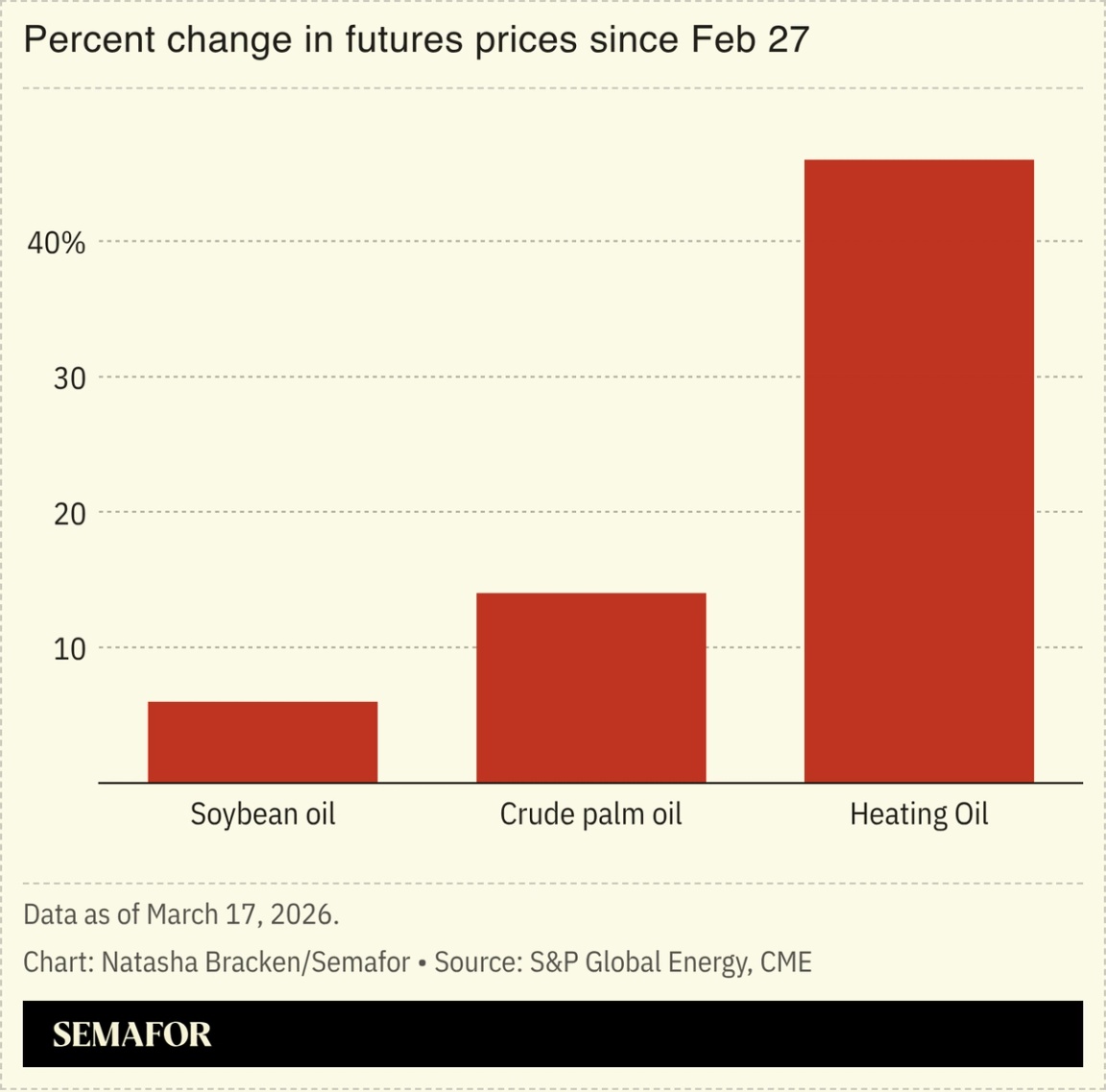 As the Iran war sends oil and gas prices surging, the case for alternative fuels is getting stronger. Rising oil costs have narrowed the premium for biodiesel feedstocks over traditional, fossil alternatives, improving biofuel production margins. “This helps reduce reliance on policy-driven support mechanisms and could lead to additional biofuel production,” said Jack Larimer, a principal analyst at S&P Global Energy. Many current biofuel mandates trace their origins to the 1970s energy shock, while the US Energy Independence and Security Act followed a 2007-08 price spike, said Dr Timothy Deehan, a senior oil analyst at LSEG. Indonesia is now weighing a revival of its stalled B50 biodiesel mix programme, India is on track to accelerate its ethanol blending push, and the Environmental Protection Agency’s decision on US renewable fuel obligations is expected by month’s end. Sustainable aviation fuel has similarly gained momentum as the price gap with conventional fuel has narrowed. But the effect may be temporary. “Oil prices inevitably go down again, and historically this effect is not material to driving long-term investment into sustainable fuel,” said Conor Madigan, CEO at Aether Fuels, a sustainable fuels technology company. But oil shocks still serve as a reminder of the risks inherent to fossil fuel dependency, which can ultimately serve the alternative fuels industry by encouraging diversified energy supplies, he said: “With such geopolitical conflicts unfortunately becoming more commonplace, this effect is starting to have an impact.” — Natasha Bracken |
|
 Yoruk Isik/File Photo/Reuters Yoruk Isik/File Photo/ReutersUkraine’s top sanctions adviser is worried the mountain of restrictions piled against Russia’s oil and gas industry since 2022 is close to crumbling under the weight of soaring global oil prices. Vladyslav Vlasiuk, commissioner for sanctions policy in the office of Ukrainian President Volodymyr Zelenskyy, told Semafor that the Trump administration’s decision last week to waive sanctions on some Russian oil tankers came as a surprise and wasn’t coordinated with G7 allies, as previous sanctions moves typically have been. Vlasiuk said he applauded the administration’s earlier sanctions on Lukoil and Rosneft, and has been impressed by the recent interdiction of shadow tankers near Venezuela. But following the Iran campaign, “all of a sudden, [the US] is just taking a decision which is quite contrary to what they previously did.” New sanctions from the European Union, meanwhile, are being held up by Hungarian Prime Minister Viktor Orbán’s outrage at the slow pace of repairs on the Druzhba oil pipeline. One potentially positive outcome of this situation for Ukraine, Vlasiuk said, is that it could strengthen Middle Eastern countries’ resolve to impose sanctions on trade in Russian military and “dual-use” equipment. But if oil prices get close to $150 per barrel, “nobody has said what the plan is. We’ll start hearing a lot of voices in favor of getting Russian oil back to the market.” |
|
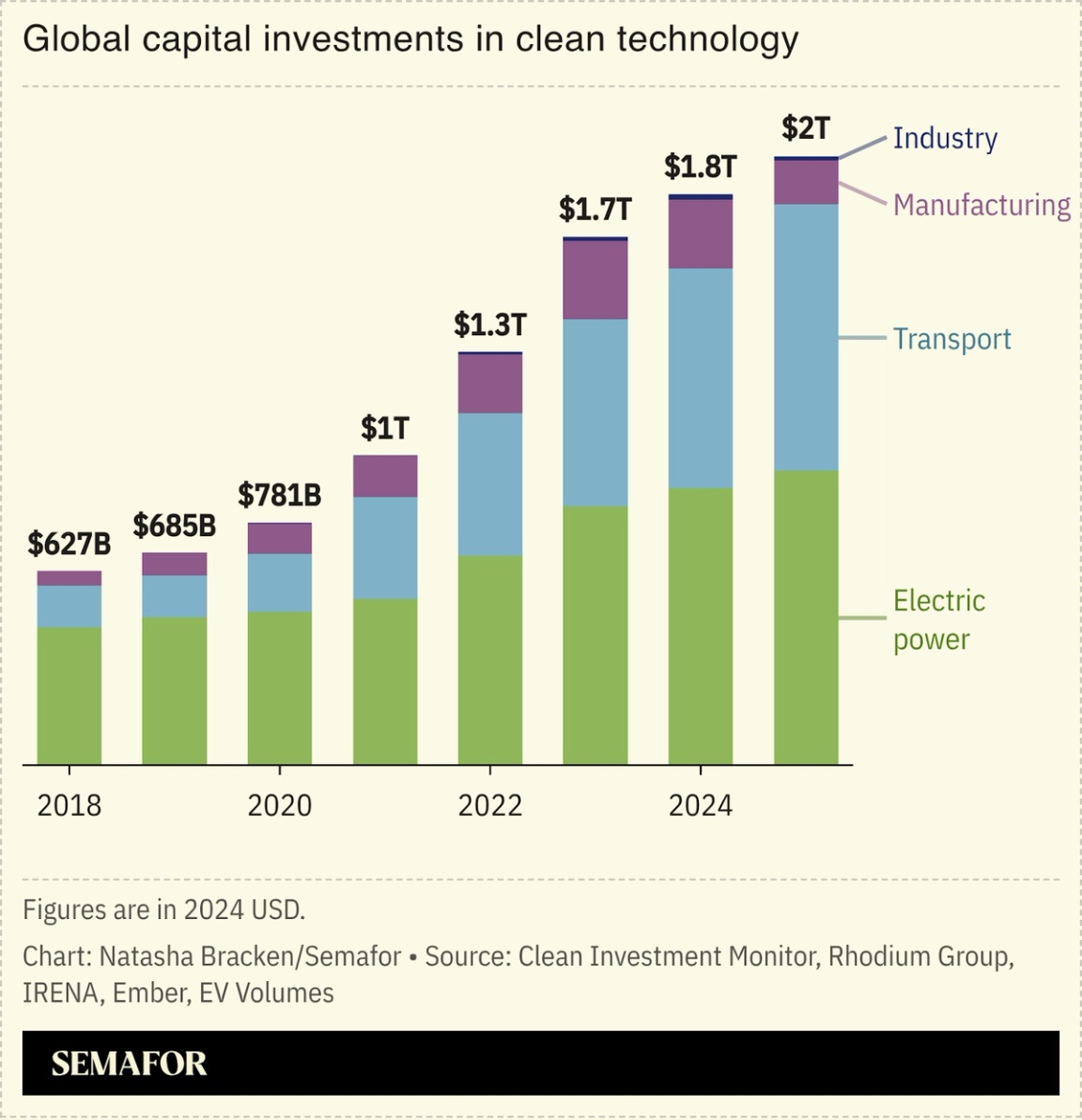 Global investment in clean technology tripled over the past seven years, hitting record levels last year, though growth slowed significantly. Investment grew just 7% in 2025, down from 23% in 2023, with all three leading regions — the EU, the US, and China — pulling back, Rhodium’s Clean Investment Monitor found. The slowdown is a result of fading government subsidies that had accelerated manufacturing growth in the late 2010s and early 2020s. Global clean tech manufacturing investments peaked in 2023 and have since fallen more than 40%, driven largely by China, where they dropped 70% from their 2023 peak. Elsewhere, however, manufacturing investments have remained flat or risen, with predictions that India could have the largest manufacturing capacity in batteries, solar, and wind outside China and the US by 2030. Meanwhile, global investment in deployment of clean electric power and transport is still growing, hitting record highs last year on the back of solar and EVs. — Natasha Bracken |
|
 Semafor has announced the agenda and a new slate of CEOs and global leaders joining more than 450 top executives at this year’s Semafor World Economy, taking place from Apr. 13 to 17 in Washington, DC. As the definitive live journalism platform on the new economy, the gathering will bring together US Cabinet secretaries, central bank governors, finance ministers, and Fortune 500 CEOs for five days of on-stage conversations and in-depth interviews uniting private and public sector leaders to exchange ideas that will shape the future of the world economy. |
|
 Leonardo Fernandez Viloria/File Photo/Reuters Leonardo Fernandez Viloria/File Photo/ReutersWashington will allow US companies to do business with Venezuela’s state-owned oil company, a move aimed at boosting production in the country as prices soar due to the war in Iran. Oil output in Venezuela — which has the world’s biggest stated crude reserves — has jumped since the US ousted former leader Nicolás Maduro and replaced him with a Washington-friendly figure. The economic gains have not translated into better living conditions for most Venezuelans: Annual inflation accelerated to 600% last month and the bolivar continued to depreciate. And it may take time for oil wealth to trickle down, especially since the new sanctions waiver requires payments to PDVSA to flow through US-controlled accounts. Meanwhile, higher crude exports from Venezuela are a win for US refineries, which doubled their imports in the past week. |
|
 New Energy- The Trump administration is exploring a new approach to halt offshore wind development – drafting settlement agreements that would compensate TotalEnergies nearly $1 billion to cancel leases for two wind farms off the US states of New York and North Carolina.
- Meanwhile, two offshore wind farms that were victims of US President Donald Trump’s assault on wind energy, are getting close to providing clean energy for the east coast.
- On the other side of the world, China announced that in January and February, the country’s production of wind turbines and lithium batteries for energy storage rose 28.7% and 84%, respectively.
- Solar panels from China are helping Cuba stave off blackouts amid a US-enforced fuel blockade.
 Norlys Perez/Reuters Norlys Perez/ReutersFossil FuelsFinance- In the US, Democrats are proposing legislation to restore clean energy tax credits revoked under Trump’s One Big Beautiful Bill Act and to block executive orders curbing renewable energy projects.
- Over in the UK, the government is expected to cut climate finance to developing countries again by about 14% to roughly £2bn a year amid pressure to ramp up defense spending.
Politics & Policy |
|
|


