| | In today’s edition: Trust between Gulf states and Iran is beyond repair, energy plants take a poundi͏ ͏ ͏ ͏ ͏ ͏ |
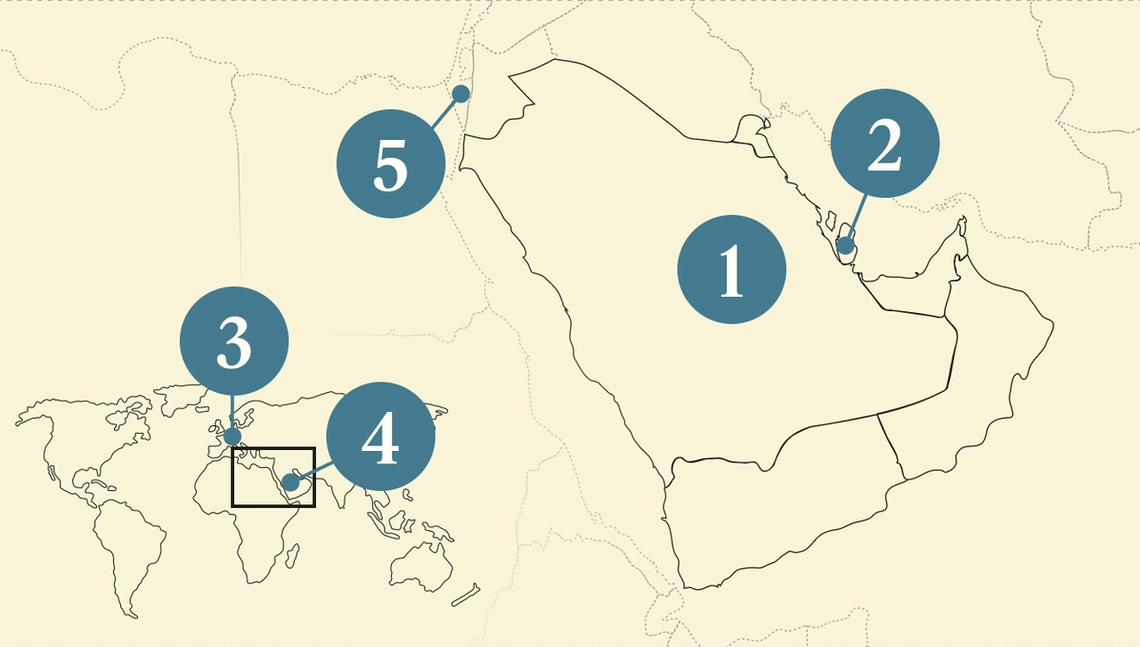
| |  Riyadh Riyadh |  Ras Laffan Ras Laffan | Tel Aviv |
 | Gulf |  |
| |
|
 - Gulf patience running thin
- Energy in the crosshairs
- Data centers to Europe?
- Banks prep for capital flight
- Deeper Israel defense ties
 Iran demands compensation from… the UAE! |
|
 There’s a cadence to Ramadan in the Gulf, centered on family, business relationships, charity, and, for many, piety. When Ramadan began, seemingly forever ago, my biggest dread was balancing these obligations. But there are more terrifying things than a packed schedule. This Ramadan will be remembered for the war: air strike alerts, the limits on gathering in mosques, and the canceled iftars. It will also be remembered for heroism. The counterfactual of how Gulf states would have fared through more than two weeks of constant bombardment with Iranian missiles and drones without their highly effective air defenses is unimaginable to most in the Gulf. But the booms of intercepts that now punctuate days in Gulf cities will undoubtedly leave an imprint on those living through this period. So far, the death toll in the Gulf has been relatively low — low enough to know most or all of the names of those killed in Iranian strikes. In the UAE, the six victims were from Bangladesh, Nepal, Pakistan, and Palestine. On March 7, Muzaffar Ali Ghulam, 27, was killed in his car in Barsha, Dubai. A domestic worker and driver, his story is familiar to anyone who speaks to the men and women who make life in the Gulf so comfortable for others. A father of three young children, he supported his family in Pakistan, visiting once every two years because that’s what he could afford. He never met his one-year-old. Now he’s dead. As Ramadan comes to a close tonight, I hope those celebrating Eid can find a way to enjoy it. |
|
Saudi touts ‘capabilities’ in Iran warning |
 Mohammed Benmansour/Reuters Mohammed Benmansour/ReutersGulf patience is not unlimited. This was the main takeaway from an overnight press briefing by Saudi Foreign Minister Prince Faisal bin Farhan, after he hosted his counterparts from the Gulf and the wider region in Riyadh. The kingdom was under fire as they met, with the loud booms of intercepts heard near the hotel where they were meeting. While the Gulf’s defense-first policy stands, the minister condemned Iran’s attacks on energy facilities, ports, airports, and cities, accusing Tehran of intentionally striking civilians. Iran’s targeting “is something that was premeditated, preplanned, preorganised and well thought out,” Prince Faisal said. He warned Tehran to “recalculate quickly,” but added he was “doubtful they have that wisdom.” The kingdom and its partners have “very significant capabilities,” he said, without elaborating on what measures Saudi could take. Riyadh is aiming for de-escalation through diplomatic pressure. With what little trust that was built with Tehran over the past few years “shattered,” Prince Faisal had a dour assessment of what the relationship will look like after the war. If Iran doesn’t stop immediately, he said, there “will be almost nothing that can reestablish that trust.” — Manal Albarakati |
|
Energy strikes herald new phase of war |
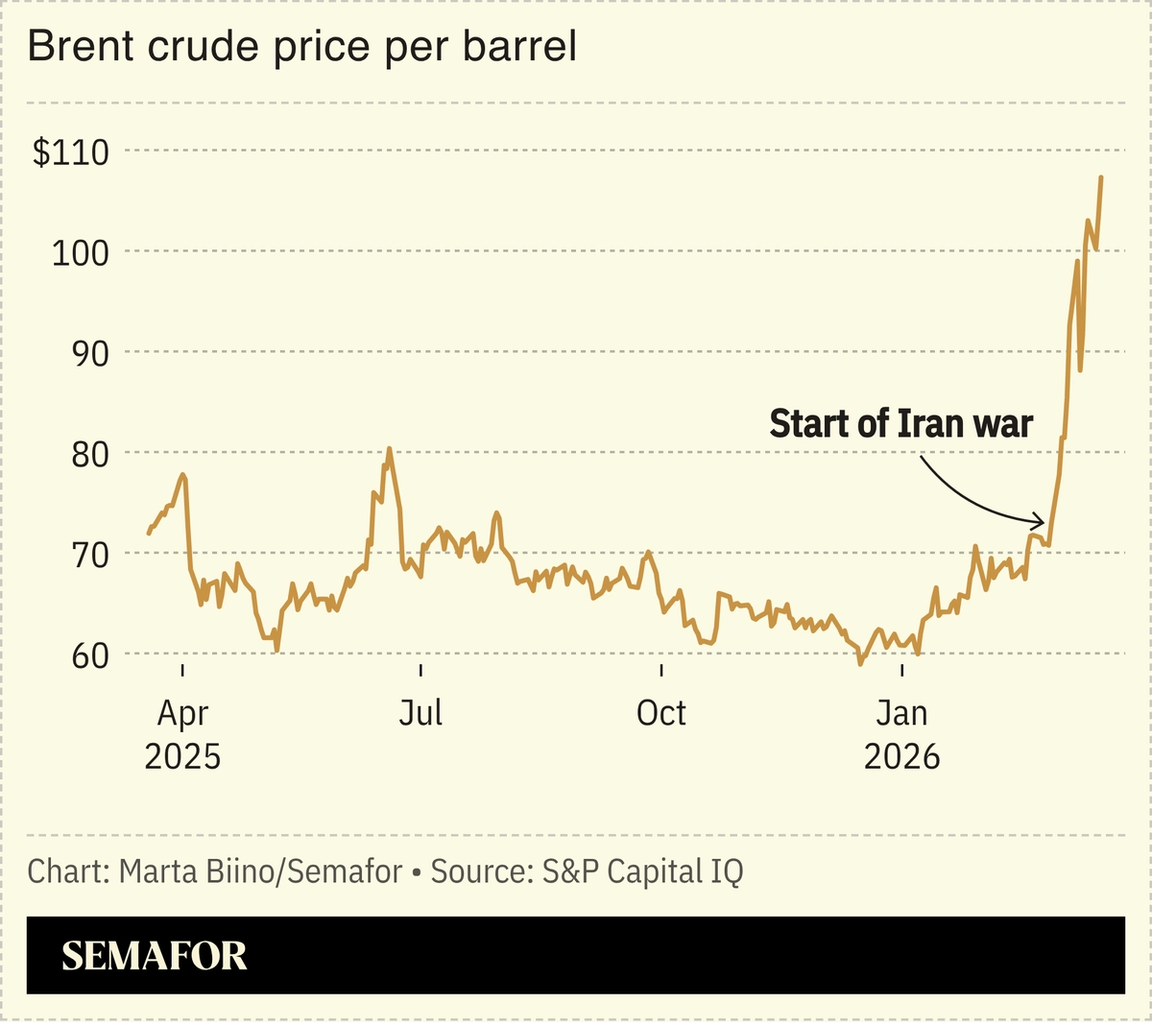 The war has entered a dangerous new phase as both sides target key elements of energy infrastructure, with likely consequences for short-term prices and post-conflict supplies. On Wednesday, Israel hit facilities serving Iran’s giant South Pars gas field. Tehran responded by targeting its neighbor’s oil and gas assets — the most serious move being missile attacks on Qatar’s Ras Laffan Industrial City. QatarEnergy said the strikes caused “extensive damage” to the site, which hosts the world’s largest LNG facility. Analysts at Wood Mackenzie said the attack “fundamentally alters the global gas market outlook.” Iran also targeted a refinery on Saudi Arabia’s west coast, two refineries in Kuwait, and the Habshan gas facility in the UAE. US President Donald Trump vowed that Israel would not attack South Pars again, but also said the US would “massively blow up the entirety of the South Pars Gas Field” if Iran attacked Qatar. Weeks of bombing have failed to cower Tehran; it is doubtful further threats from the White House will lead to a different outcome. — Dominic Dudley |
|
Data center investors recalibrate risk appetite |
 A view of construction progress at the Stargate UAE data center in Abu Dhabi in late 2025. Courtesy of Emirates News Agency-WAM. A view of construction progress at the Stargate UAE data center in Abu Dhabi in late 2025. Courtesy of Emirates News Agency-WAM.Iranian drone strikes on data centers in Bahrain and the UAE set a worrying precedent for the region, which hopes to become a hub for computing power. But rather than prompting investors to abandon the region, a more nuanced reality is emerging. Europe stands to gain, as businesses store data across more locations, but the UAE — the Middle East’s AI leader — will continue to be active, even if it has to look beyond its own backyard for data center sites. Abu Dhabi’s G42, the Gulf’s biggest AI enterprise, already has operations in roughly 30 countries, from the UK to India. It has also built up four times the computing capacity in the US compared to the UAE. Of the 233 data centers in the Gulf, only a handful have been affected by the conflict so far, but the war has “underscored the interaction between geopolitical risk and digital infrastructure,” said one industry executive. — Kelsey Warner |
|
Gulf banks well insulated, for now |
 The amount that could be withdrawn from Gulf banks by local residents in a worst-case scenario, according to S&P Global Ratings. Regional banks have about $312 billion in cash or at central banks to cover such outflows, but may be forced to cash out some investments to maintain liquidity. The ratings agency noted there haven’t been any major withdrawals of foreign or local funding yet, but warned that if the war persists, “there could be some flight to quality between banks within the same systems, as well as external or local funding outflows.” Bahrain and Qatar are at risk of a shortfall if depositors take flight, but both are insulated. A lot of Bahraini banks’ debt is with regional creditors, who will have an interest in avoiding “broader regional contagion,” and the potential amounts appear manageable in Doha, according to S&P. Loans going bad is another risk. S&P noted that a 50% surge in troubled loans across the region’s top 45 banks would result in losses equivalent to more than half their annual net income. |
|
View: Gulf-Israel defense ties could deepen |
  Violeta Santos Moura/Reuters Violeta Santos Moura/ReutersThe Abraham Accords enabled tourism, commercial dealmaking, and military cooperation with Israel that would have been unthinkable beforehand — and war with Iran may help expand them, Judah Taub, managing partner of Israeli early-stage investor Hetz Ventures, writes in a column for Semafor. “Shared security threats provide the incentive to integrate,” he wrote, pointing to the potential for the Gulf’s capital and plentiful energy to be paired with Israeli technology expertise. “The question is whether leaders and capital allocators recognize that they are … laying the foundation for a new regional economy,” he added. For that to happen, Israel will have to contend with the fact that it is now “widely viewed as being a major source of insecurity and instability in the Middle East,” according to a Washington-based analyst. Others take a different view about the war’s impact on relations though: Anwar Gargash, diplomatic adviser to UAE President Sheikh Mohamed bin Zayed, suggests Iran’s attacks on the Gulf states could strengthen rather than diminish Israel’s role in the region. |
|
 Semafor has announced the agenda and a new slate of CEOs and global leaders joining more than 450 top executives at the 2026 Annual Convening of Semafor World Economy, taking place April 13–17 in Washington, DC. As the definitive live journalism platform on the new economy, the convening will bring together US Cabinet secretaries, central bank governors, finance ministers, and Fortune 500 CEOs for five days of onstage conversations and in-depth interviews uniting private and public sector leaders to exchange ideas that will shape the future of the world economy. |
|
 - Carnegie Endowment: Europe and the Arab Gulf have much to gain if they forge a new partnership to protect their economies, energy supplies, and territorial integrity at a time when the US is a destabilizing actor.
- Council on Foreign Relations: A conversation with Anwar Gargash, diplomatic adviser to the UAE president, about the implications of the war for the region, and the diplomatic and security challenges now facing Gulf states.
- The Economist: Oman’s foreign minister Badr Albusaidi says the US has lost control of its foreign policy, but asks: What can America’s friends do to extricate the superpower from its unwanted entanglement?
- Financial Times: It is up to the US to fix the problem it created in the Strait of Hormuz. It may threaten not to rescue its NATO allies in the future if they don’t help, “but the sad truth is that very few of its allies expect it to do so in any case,” writes Martin Wolf.
- Foreign Affairs: Tehran has become a direct threat to Gulf national security, a transformation that may presage more military confrontation, economic uncertainty, and less space for regional cooperation.
- The National: Why haven’t Yemen’s Houthis joined the war? Some reasons include self-preservation, strategic patience, and domestic challenges.
- New Lines: The lesson Iran has taken from Syria is that it must crush its domestic opposition. Hence, a TV presenter said dissidents will be pursued, and the national police chief said his forces will confront protesters with their “fingers on the trigger,” writes Holly Dagres of the Washington Institute for Near East Policy.
- WSJ: Israel is hunting down the Islamic Republic’s leaders using intelligence from local assets and ordinary Iranians, including a recent tip that the leader of the Basij militia was hiding out in a tent in a wooded area in Tehran.
|
|
|


