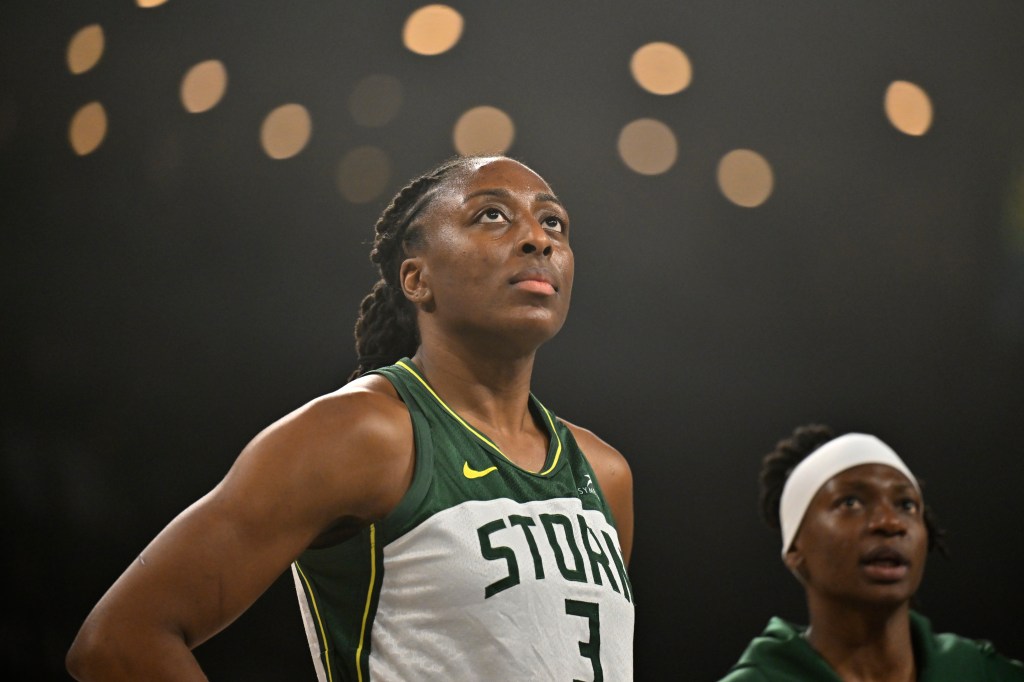
They did it. The WNBA
reached a deal with its players this week after months—years—of speculation as to whether the athletes powering the rise of women’s basketball would ever be properly compensated for their work.
After several missed deadlines and marathon talks that stretched late into the night, a verbal agreement was finally struck at 2 a.m. Wednesday. The
reported numbers (not yet confirmed by the league) are striking. A supermax salary of $1.4 million for veterans. Twenty percent of gross team and league revenue going to the players over the lifetime of the deal. An average salary around $600,000, up from $120,000. A minimum salary around $300,000—up from just $66,079 last season. For arguably the first time, all of the WNBA’s players—not just the biggest stars—will be paid like the professional athletes they are.
The WNBA’s 30th season will start
without delay in May, commissioner Cathy Engelbert confirmed. That’s what both sides wanted—to play basketball. And to continue to capitalize on the momentum of the sport and its growing fandom, not suffer from the effects of a lockout.
What did it take to get here? Three decades of ups and downs, financial highs and lows, and some truly existential moments where it seemed as if the league might not make it to 30, as I outlined
in a 2024 Fortune feature that went in depth on the sport’s pivotal transition. That context is important to understanding why this CBA negotiation seemed to be so fraught; it’s understandable that the league wouldn’t want to agree to anything it thought could put it back on shaky financial footing, only a few years into the WNBA’s breakthrough era.
Reflecting on what this new contract means, I keep coming back to a theme I heard over and over from those at the center of the women’s basketball world: this is all normal. A labor negotiation will always be tense. There will always be leaks and drama. Women’s sports is no different, and placing expectations for greater decorum on it is a way of holding back the game’s growth. “We shouldn’t be held to a different standard because we’re women,” legendary South Carolina coach Dawn Staley
told me a few months ago.
Now, the WNBA can be an unencumbered example of how women’s sports can mature into true mainstream popularity. The WNBA can be proud of being the oldest continuously operating women’s sports league in the U.S., without having to answer for why newer leagues are able to better compensate athletes. The best thing for the league is that fans can now focus on being fans. Instead of chanting, “
pay the players,” they can cheer for them. Ultimately, shedding a reputation for underpaying its players will power the growth of the league.
As Seattle Storm guard Lexie Brown
put it, “And that’s how you stand on business.”
Emma Hinchliffeemma.hinchliffe@fortune.comThe Most Powerful Women Daily newsletter is Fortune’
s daily briefing for and about the women leading the business world. Subscribe here.