| | In this edition, AI compute scarcity is increasing the price of hardware, and California state Sen. ͏ ͏ ͏ ͏ ͏ ͏ |
| |  | Technology |  |
| |
|
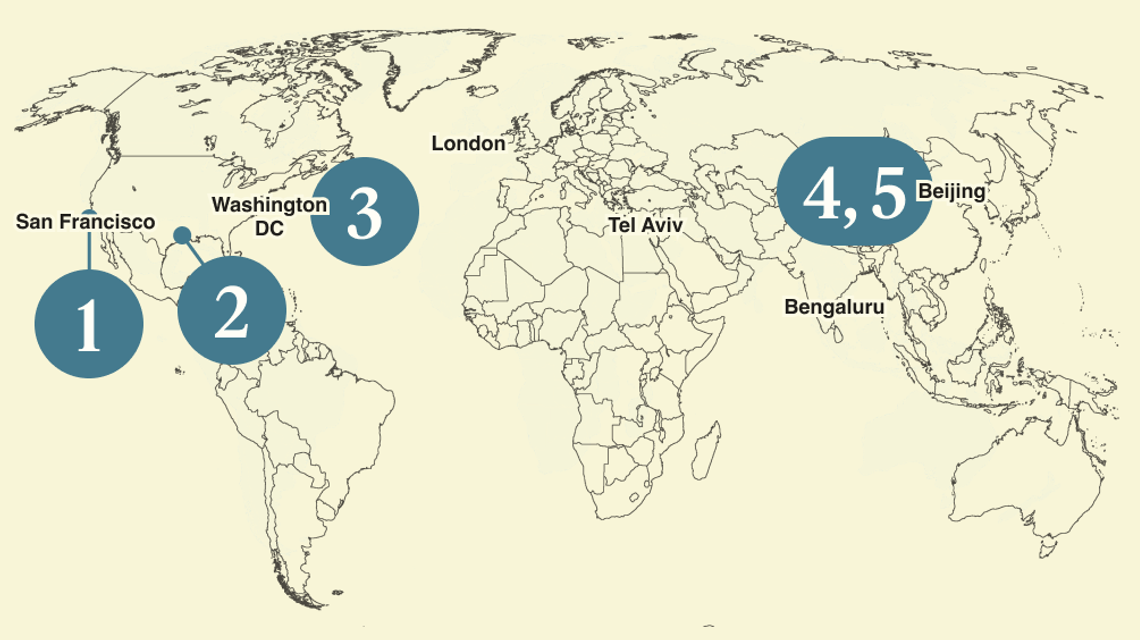 - Sen. Wiener is BASED
- Cyber threats to the grid
- Data centers > offices
- US robotics firms want action
- Quantum for the robots
 AI is making everything expensive, and a hobbyist vibe-coded an unbounded version of the video game Civilization. |
|
 AI companies are rushing to avoid being seen as driving up the cost of electricity — perhaps the biggest immediate political threat to their business, for all the more apocalyptic warnings. But the affordability backlash is on the brink of exploding in another sector of the economy, where the AI boom is already raising the price of consumer electronics. Take the SanDisk 4-terabyte SSD, a popular device for photographers. It used to cost $500. Now, because AI data centers have created a memory shortage, it goes for $1,200. Demand for compute power is only increasing, and many of the products that go into building massive compute factories, like chips, memory, and copper, can’t just be ramped up overnight, or even in a matter of years. Meanwhile, AI companies are competing fiercely to lock up components years into the future, willing to pay insanely high premiums. And still, there isn’t enough compute to go around, as evidenced by OpenAI’s decision to shut down video generation tool Sora Tuesday, mainly to free up compute resources. The sense of an affordability crisis has become central to US politics in an age of inflation. The focus so far has been on eggs, rent, and electric bills, which President Donald Trump promised in the State of the Union will be kept safe from AI pressures. But politicians and technologists alike might want to start worrying about AI’s impact on the price of your smartphone, your PlayStation, and your car. The entire economy and global supply chain is being reoriented right now around a single commodity — the token — and most people are only vaguely aware it is happening, or how it will affect their lives. |
|
California Sen. Wiener on a new AI bill |
| |  | Reed Albergotti |
| |
 Semafor/YouTube Semafor/YouTubeCalifornia state Sen. Scott Wiener is no stranger to tangling with Silicon Valley. He has built a reputation on introducing aggressive legislation aimed at reining in the industry’s biggest players. Last year, he helped push through a bill that regulates the state’s AI companies, in an effort to protect against catastrophic risk from AI models. The tech industry largely opposed it, arguing it was unnecessary and could slow down innovation. But his latest effort, the BASED Act — aimed at stopping trillion-dollar tech monopolies from stifling smaller competitors — has some tech players like YC’s Garry Tan backing him. Anticompetitive behavior by big tech companies, while good for 401(k)s, can stifle innovation. I spoke with Wiener about his new coalition, the battle against Big Tech, and what exactly it means to be “BASED.” Watch the full interview here. |
|
Cyber threats ‘lying in wait’ |
 Carlos Barria/Reuters Carlos Barria/ReutersThe US electricity grid is increasingly vulnerable to cyberattacks, a senior US energy official told Semafor’s Tim McDonnell. As the grid expands to keep up with the AI race, “you have a growing surface of attack on which our adversaries can target us,” said Alexander Fitzsimmons, the acting undersecretary of energy. “The threat landscape is certainly escalating and intensifying.” So far, the US has managed to avoid a large-scale breach of the grid by hackers, thanks to proactive efforts by utilities and government agencies to thwart intrusions. But what’s more concerning, Fitzsimmons said, is the likelihood that hackers have already penetrated the IT networks of critical infrastructure and are simply lying in wait “to hold it at risk for a time and place of their choosing.” Fitzsimmons said he’s particularly concerned about grids that serve key military installations within the US, which in some cases are managed by small municipal utilities in rural areas “where you have one person working on IT, and they’re expected to secure their network against foreign adversaries.” The Department of Energy is working to share more threat intelligence with utilities and help them test out grid hardware for security weaknesses, he said, as well as coordinating with allies on the issue. |
|
Data center construction overtakes offices |
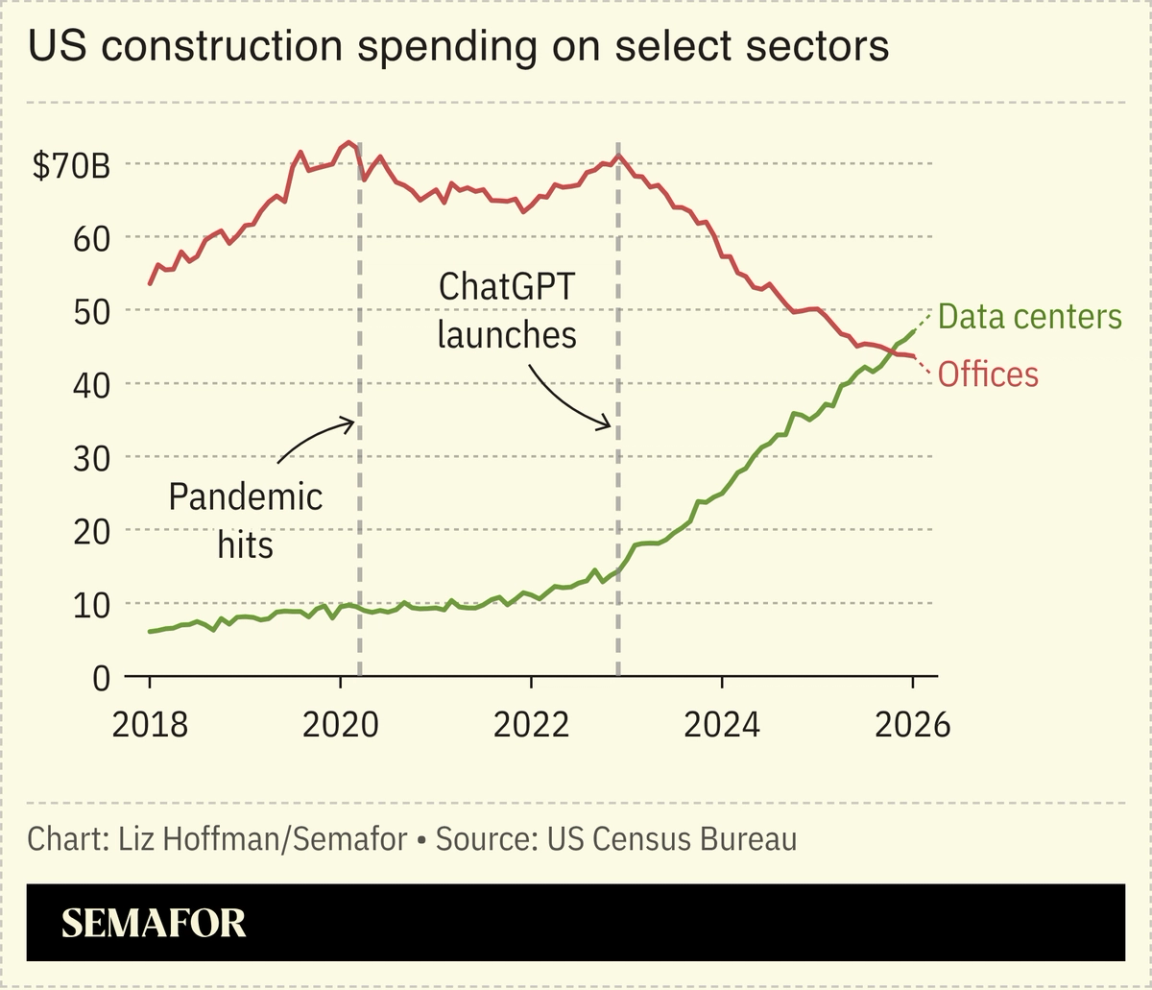 The US is now spending more on data centers than office buildings. New data from the Census Bureau, which began breaking out data-center construction in 2024, casts the financial rush into AI infrastructure in a slightly less alarming light: As Federal Reserve Chair Jerome Powell noted last week, the US has fewer workers, and so might not need as many cubicles. But it’s a potentially leading, and grim, indicator of an economy that’s growing healthily enough but increasingly devoid of workers. (Hat tip to Substacker Joey Politano for this data find.) — Liz Hoffman |
|
 This April, Howard Lutnick, US Secretary of Commerce, will join global leaders at Semafor World Economy — the largest gathering of top CEOs and officials in the United States — to sit down with Semafor editors for conversations on the forces shaping world markets, emerging technologies, and geopolitics. See the full lineup of speakers, including Global Advisory Board members, Fortune 500 CEOs, and officials from the US and across the G20. |
|
US robotic firms push for action on China |
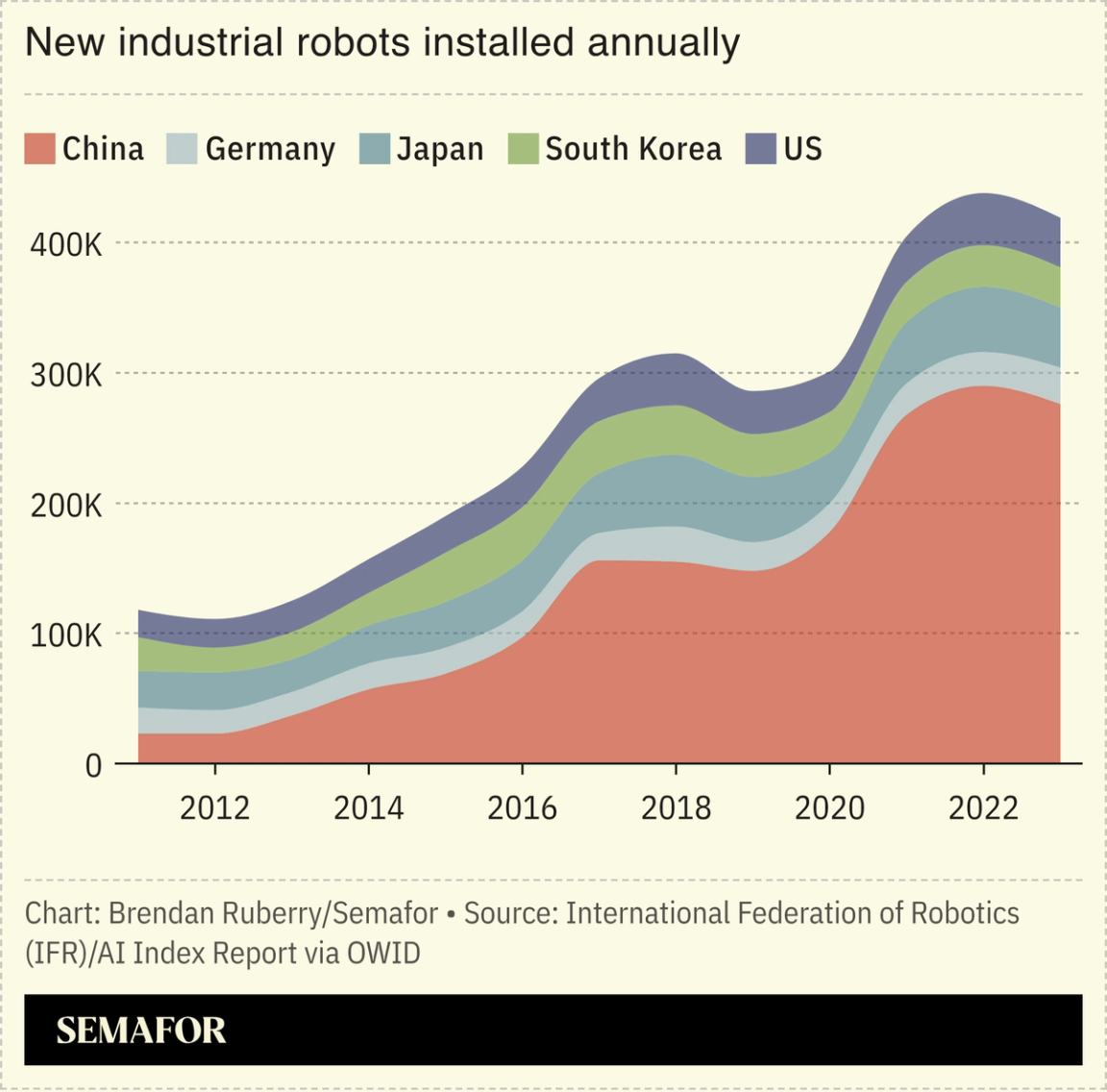 US robotics firms have urged the White House to draft a national robotics strategy in order to counter China, but executives said they don’t expect any major policy pushes until Trump’s now-delayed meeting with Chinese leader Xi Jinping in Beijing. Chinese humanoids are not yet in a position to kill the American robotics industry, but US executives are making a case to Washington that China could pose a threat down the road, citing national security and a need to protect domestic manufacturing, they told Semafor’s J.D. Capelouto. Some are pressing for tariffs or a ban on Chinese imports; one US bot maker pointed to Chinese dominance of the drone industry as a warning to policymakers. |
|
How quantum can help robots, and national security |
 Courtesy of IonQ/Joey Pfeifer/Semafor Courtesy of IonQ/Joey Pfeifer/SemaforQuantum could make a better GPS for robots — just one of the many ways it’s poised to change businesses, says Niccolo de Masi, the CEO of quantum company IonQ. “Quantum mechanics is the world’s most successful physical theory because it produces the most accurate predictions,” de Masi told Semafor’s Andrew Edgecliffe-Johnson. “Since the Space Age, we have found those predictions are ever more important for unlocking the next leg up in the scientific revolution.” A more accurate GPS — thanks to quantum technology — could be in the cards in the next few years, and it won’t just be helpful for everyday uses like self-driving cars, but also for national security applications. China has been investing heavily in quantum, and its advantage in the field could result in a $10 trillion economic hit if it manages to break the encryption that protects much of the world’s data, de Masi said. The rivalry between the two superpowers is “the Manhattan Project of our era, and it’s existential if China gets the bomb before we do,” he added. |
|
 Join the 1% who won’t sleep on the future. Mindstream is the human-first AI newsletter that prioritizes clarity over complexity and progress over perfection — so you can make smarter moves, lead calmer conversations, and keep your team a step ahead, today. Subscribe for free today. |
|
 @jamie247/X @jamie247/XA hobbyist vibe-coded a version of video game Civilization with unbounded, AI-generated dialogue. AI-powered non-player characters in games seem an obvious AI use case, but so few studios have done it. The obstacles are significant, a developer noted in 2024: LLMs can still hallucinate or say inappropriate things — like the Chinese-made soft toys that insist Taiwan is inalienable. Developers also lose control of characters’ voices and plot roles; when a role-playing game did try it, users found the dialogue disconnected and flat. Cloud-based models are also expensive and slow to run. That will likely change in time, but a more lasting problem is that many gamers dislike the use of AI, and those games which have used it have seen significant backlash. |
|
|


