In partnership with |  |
|
|
|
Happy Thursday N2K reader! |
This week’s world-famous news haiku competition™ is about how JP Morgan is monitoring its junior bankers’ working hours with tech. Send me your entry — to haiku at cheddar dot com — by noon ET today, for consideration by your Cheddar peers. |
And now for some news you really N2K! |
Matt Davis — Need2Know Chedditor |
|
News You Need2Know |
|
|
What’s the stock market up to, eh?* |
$SPX ( ▲ 0.54% ) $DJI ( ▲ 0.66% ) $NDX ( ▲ 0.77% ) |
|
Companies mentioned in today’s newsletter |
$META ( ▲ 0.33% ) $GOOGL ( ▲ 0.17% ) $COXCF ( 0.0% ) $SONY ( ▼ 0.15% ) |
|
Jury finds Meta, YouTube liable for teen addiction |
 | Image credit: Wally Skalij/Getty Images |
|
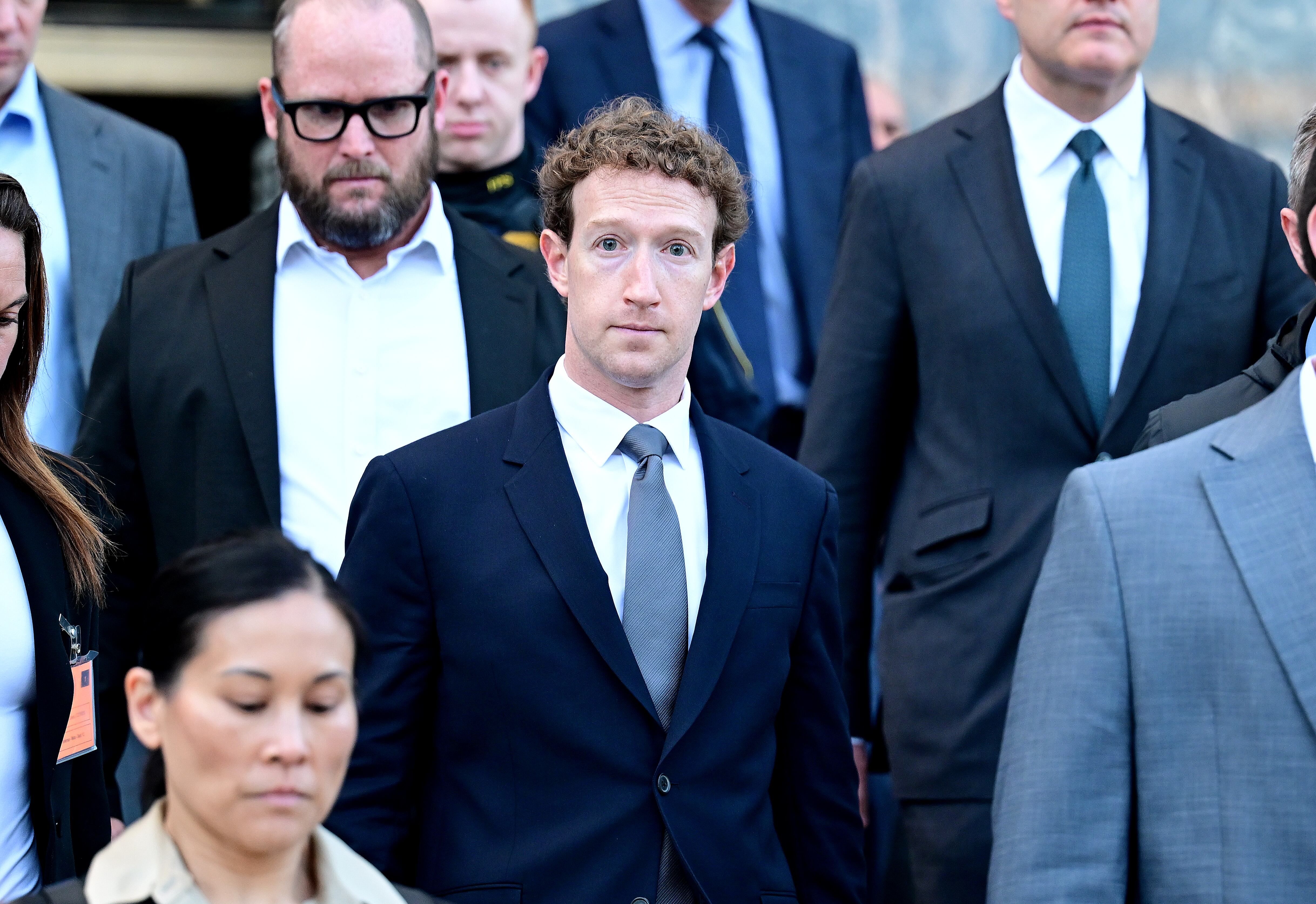
A California jury ruled that Meta $META ( ▲ 0.33% ) and YouTube $GOOGL ( ▲ 0.17% ) harmed a young user through addictive app design features, marking a potential turning point for the tech industry. |
The jury ordered $3 million in compensatory damages — with Meta responsible for 70% — after finding that features like infinite scroll and algorithmic recommendations led to anxiety and depression in plaintiff “K.G.M.,” now 20 years old. The jury will next consider punitive damages. |
Kinda makes me want to sue them, too, come to think of it. |
"This is the first time in history a jury has heard testimony by executives and seen internal documents that we believe prove these companies chose profits over children," said Joseph VanZandt, one of K.G.M.'s attorneys. |
Legal experts see the verdict as groundbreaking. "This is a breakthrough because it validates a new theory that platform design can be a defective product," noted Kimberly Pallen, a litigation partner at Withers. |
Meta stated it "respectfully disagrees with the verdict" and is "evaluating legal options." YouTube did not respond to comment requests. TikTok and Snap settled before trial. |
The case echoes the Big Tobacco lawsuits of the 1990s. Clay Calvert of the American Enterprise Institute told the New York Times: "If there are a series of verdicts for plaintiffs, it will force the defendants to reconsider how they design social media platforms." |
With thousands more lawsuits pending, it’s quite exciting, really. |
|
|
Song of the Day: Lizzo, ‘Don’t Make Me Love U’ |
 | Don’t Make Me Love U |
|
|
Here’s a great track from Lizzo’s new album, blending '80s synth-rock and soul with personal themes of growth and boundaries. While critics have praised its anthemic quality and powerful vocals, Lizzo says the song is about trying to get un-cancelled after a few of her dancers sued her for fat-shaming and sexual harassmemt, allegations she vehemently denies. her fickle “relationship with the public.” “Don't build this false sense of security and community if you're just gonna throw me away,” she told Kelly Clarkson recently. “It's so toxic. So tonight, you either love me or leave me, because I'm not wasting my time; no more trying to gain nobody's approval." Especially not those backup dancers. |
|
SCOTUS sides with Cox Communications over Sony in music piracy clash |
 | The Supreme Court. Image Credit: Getty Images |
|
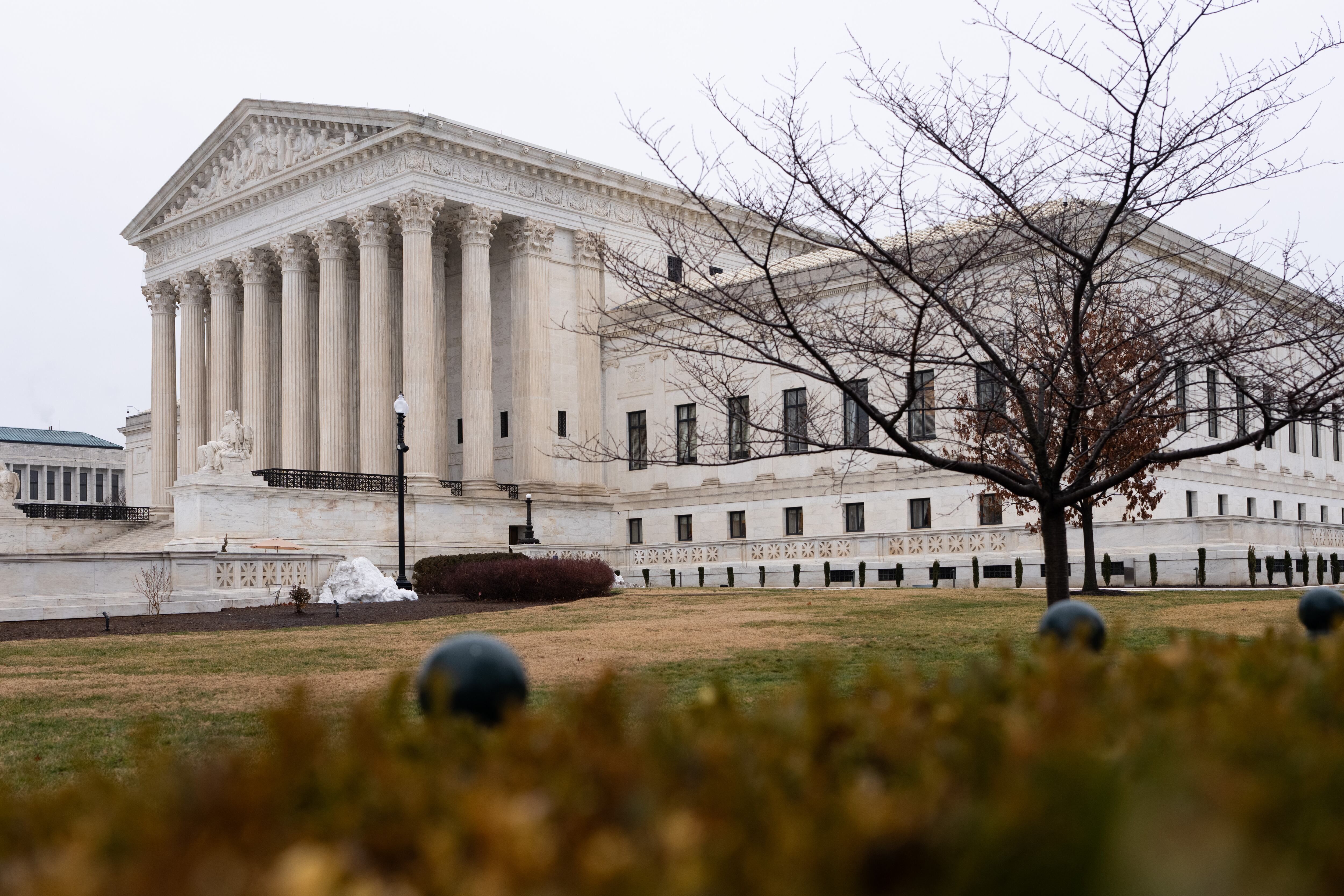
The Supreme Court ruled Wednesday that internet providers cannot be held liable simply for knowing their customers pirate music. The unanimous decision resolves Cox Communications' $COXCF ( 0.0% ) long-running battle with music labels including $SONY ( ▼ 0.15% ) who sued in 2018, seeking over $1 billion in damages. The labels argued Cox should have terminated subscribers repeatedly flagged for illegally downloading copyrighted songs. |
Justice Clarence Thomas, writing for the court, established that providers are liable "only if it intended that the provided service be used for infringement" and "actively encourages infringement." Simply providing service "with knowledge that it will be used by some to infringe copyrights" isn't enough. |
Cox celebrated the ruling. "This opinion affirms that internet service providers are not copyright police and should not be held liable for the actions of their customers," the company said, calling it a "decisive victory" for Americans who "depend on reliable internet service." |
However, Justice Sonia Sotomayor, joined by Justice Jackson, wrote separately with concerns. She warned the decision means companies "no longer face any realistic probability" of liability "regardless of whether they take steps to address infringement on their networks." |
The case had alarmed free speech advocates worried about chilling effects if providers faced massive penalties for user behavior — potentially forcing disconnection of hospitals and universities over individual violations. |
|
|
Why is Open AI shutting down Sora? |
|
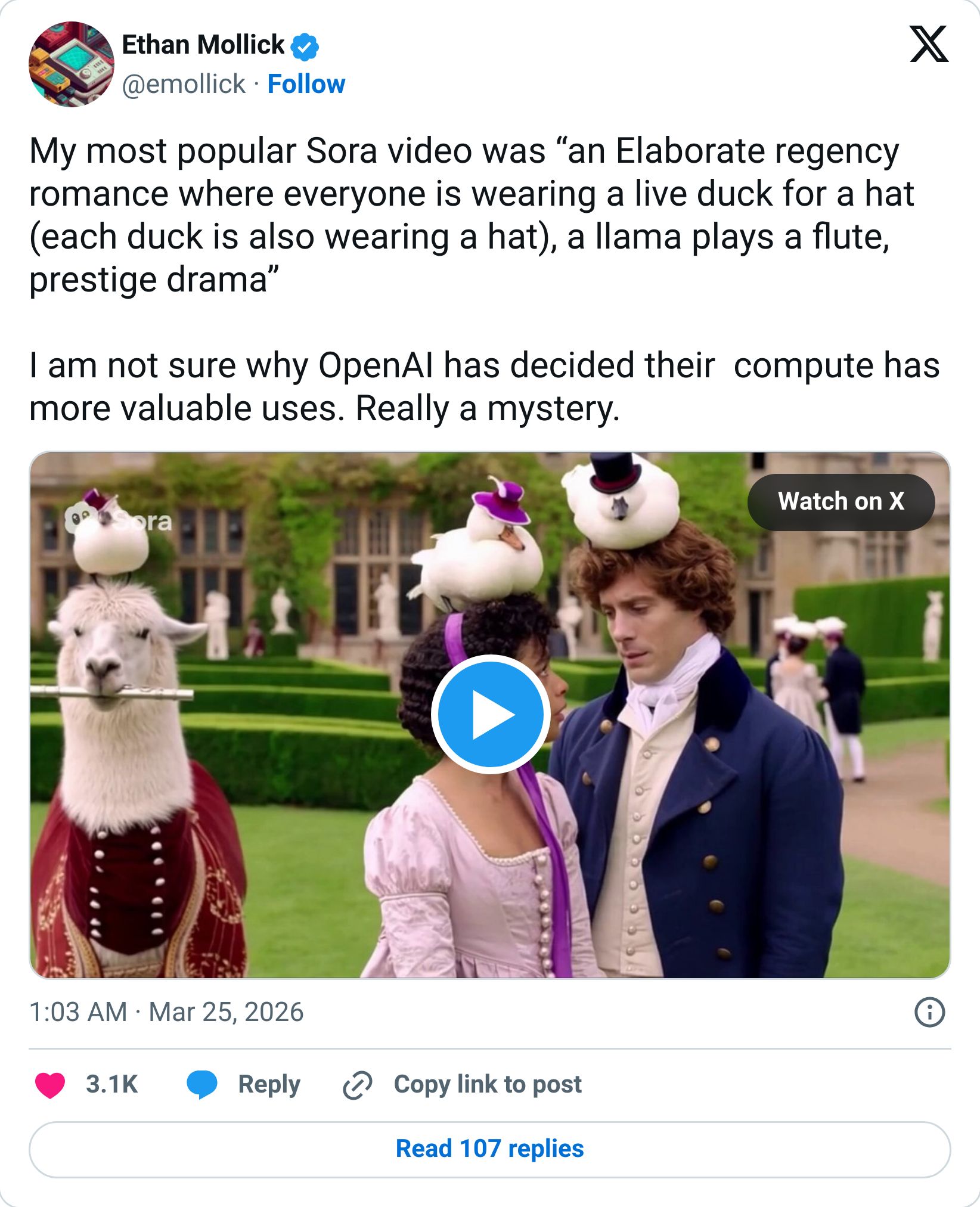
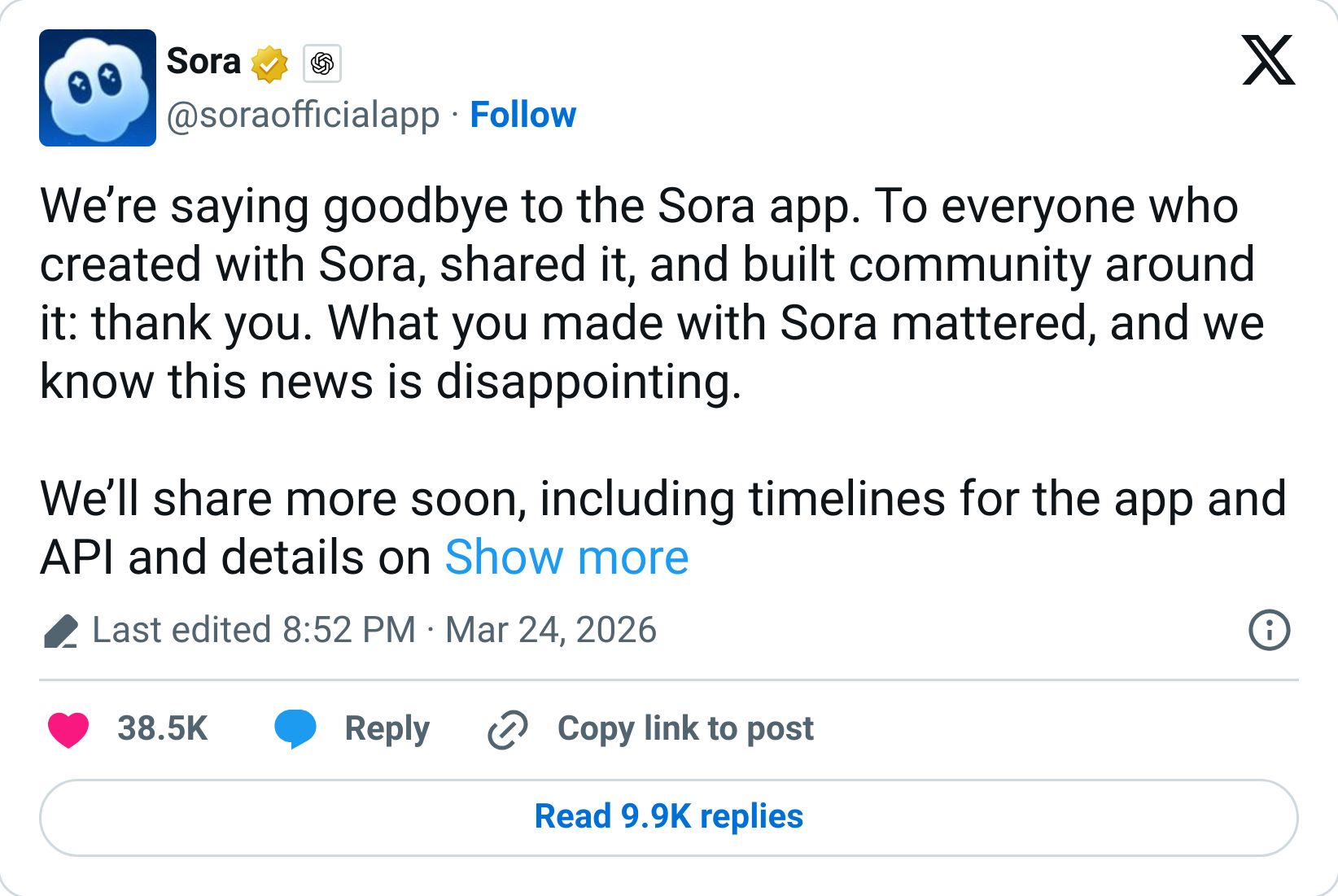
Just two years after dazzling the world with high-quality AI video generation, OpenAI has pulled the plug on Sora. Three months after securing a landmark $1 billion Disney $DIS ( ▼ 0.46% ) deal, the tool is gone. It's all about the money, apparently. |
Creating AI-generated video is exponentially more expensive than processing text queries. While OpenAI projects tripling its $13 billion revenue from last year, the company plans to spend over $100 billion in the next four years. Something had to give. |
|
"We're saying goodbye to Sora," the team wrote on social media. "What you made with Sora mattered, and we know this news is disappointing." |
Evidently it didn’t matter that much, though, eh? The abruptness was striking; OpenAI published a blog post about safely creating Sora content just a day before announcing its closure. |
Competition to be profitable in the AI space is heating up. Anthropic's revenue is growing faster thanks to corporate adoption. Google $GOOGL ( ▲ 0.17% ) remains committed to its rival tool, Nano Banana (which your Chedditor loves, for obvious reasons), with deep pockets backing Gemini's rapid advancement. Meta just introduced an ambitious executive compensation plan tied to reaching a $9-trillion market value, betting heavily on AI's future. With a potential IPO looming, OpenAI is prioritizing “resource preservation,” which I thought was an oxymoron in the AI space. Sora joins other discontinued projects like ChatGPT's direct shopping feature nobody used. |
Disney, meanwhile, says it will "continue to engage with AI platforms," just not this one, for obvious reasons. |
|
|
|