|
 |
No corporate overlords. No false equivalencies. No B.S.
Upgrade to paid to support independent accountability journalism.


 |
As corporate profits surge, American workers are taking home a record-low percentage of the proceeds from their work. In the third quarter of 2025, the “labor share” of Gross Domestic Product in the U.S. decreased to 53.8%, according to data from the Bureau of Labor Statistics. This was the lowest level seen since the Bureau began recording labor share in 1947.
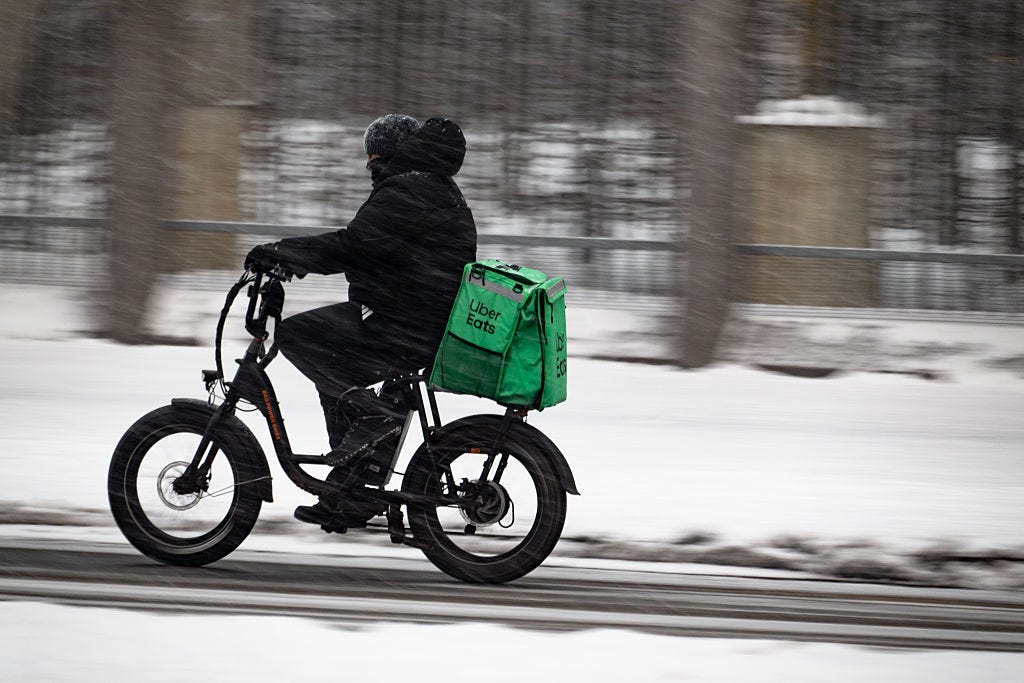
One likely factor: the rise of algorithmic pay. In recent years, major companies have begun to use artificial intelligence (AI) algorithms to set wages for some workers. The practice has become particularly common among rideshare and delivery companies like Uber and DoorDash.
According to 2023 research by Veena Dubal, companies collect data on each worker, including where they live, what hours they normally work, and what their typical earnings target is, and “use that data to personalize and differentiate wages for workers in ways unknown to them.” Dubal found that algorithms may offer a lower rate to a worker more likely to accept jobs, or someone who will keep working until they hit a daily target. One driver told Dubal he suspects the algorithm delayed offering him rides after he was one trip away from earning a $100 bonus. Studies have also found that workers for delivery platforms are often offered different wages for the exact same job. Uber disputed the findings of Dubal’s research.
Fundamentally, using algorithms to determine pay erodes worker power. When wages are determined by an algorithm, workers have no one to ask for a raise. A 2025 report from Human Rights Watch highlighted that AI algorithms can lead to pay discrimination, with workers offered the “lowest rate each is likely to accept.”
A study by researchers at the University of Oxford found that driver pay dropped significantly when Uber introduced dynamic pay, finding that “82% of longer serving Uber drivers are now earning less per hour than they did before dynamic pay and pricing was introduced.” Using data from the Oxford study, Worker Info Exchange estimated that algorithmic pay resulted in “a $8.7 billion global loss of income for Uber drivers globally in the 12 months to March 31, 2025.”
Rideshare and delivery app workers often earn well below the minimum wage, according to a study from the U.C. Berkeley Labor Center.
While using algorithms to determine pay was first popular among delivery platforms, it is now expanding to other industries, including customer service and health care, according to a report by the Washington Center for Equitable Growth.
The states fighting algorithmic pay
Several states have introduced legislation to protect workers from having their wages determined by AI using data unrelated to their job.
California has come the closest to shielding workers from AI determining their pay. Last year, state legislators passed SB 7, the “No Robo Bosses Act,” which would have required employers to notify employees before using AI to make any consequential decisions about the employee’s compensation, promotion, scheduling, discipline, or firing. It would also have allowed employees to appeal any such decisions made by AI.
However, California Governor Gavin Newsom vetoed SB 7 in October 2025, saying it was “unfocused” and “overly broad.”
Now, California is considering a similar bill that would protect gig workers and other employees from discrimination by AI. It would prohibit algorithmic pay decisions, unless the employer can “clearly demonstrate that any differences in compensation for substantially similar or comparable work assignments are based upon cost differentials in performing the tasks involved, or that the data was directly related to the tasks that the worker was hired to perform.”
In other words, employers could still use AI to determine wages, but only data directly related to how employees perform their jobs. Several other states — including Illinois, Maryland, New York, and Georgia — are eyeing similar laws.
A few states — Colorado, Texas, and Illinois — have already passed bills that provide workers with limited protections.
The Texas Responsible AI Governance Act, for example, prohibits employers from using AI to intentionally discriminate against an employee based on a protected class, like race or gender. It is difficult for workers to seek redress under this law, however, because they would have to prove that their employer knew that their AI model was factoring data on protected classes into its decision-making and continued to deploy the algorithm anyway. This would be very difficult given that AI executives and researchers openly admit that they don’t yet understand exactly how AI determines its output. Employees may report their employer to the Texas attorney general if they believe they experienced discrimination by AI, but they do not have the right to sue.
Texas’s AI law took effect on January 1, 2026. Colorado’s law was scheduled to go into effect on February 1 and would have provided slightly broader