|
It took nine days for a United States jury to decide the design of Instagram and YouTube is addictive and harms young people’s mental health.
But the verdict in the landmark case, handed down yesterday, will reverberate for years as more countries follow Australia’s lead in trying to restrict young people’s access to social media.
This was Meta’s second big legal defeat in as many days, with a separate jury finding the company concealed information about the risks of child sexual exploitation and the harmful effects of its platforms on children’s mental health.
As tech law expert Rob Nicholls writes, this could be big tech’s big tobacco moment, with thousands more similar cases waiting in the wings. A precedent has been set – and the immense power built over the years by companies such as Meta might be about to crumble.
|
|
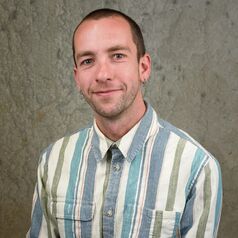
Drew Rooke
Deputy Science + Technology Editor
|
|

Rob Nicholls, University of Sydney
The case was the first of its kind. But it won’t be the last.
|

Michelle Grattan, University of Canberra
The Albanese government faces problems on several fronts as the Iran War drags on.
|

Mark Melatos, University of Sydney
Reducing the rate of compulsory super is also unlikely to help with housing affordability.
|

Alison Fogarty, Deakin University; Grace McMahon, Murdoch Children's Research Institute; Monique Seymour, Deakin University
Research on a group of Australian preschoolers found more than 40% met the criteria for an anxiety disorder.
|

Sian Tomkinson, Edith Cowan University
Why gamers are comparing Nvidia’s DLSS-5 graphics tool to a Snapchat beauty filter.
|

Brent Keogh, University of Technology Sydney
The new track from US country singer Jelly Roll, Mexican singer Carín León and Canadian producer Cirkut feels like a cheap bourbon hangover.
|

Elspeth Tilley, Te Kunenga ki Pūrehuroa – Massey University
Media rituals based on reporting numbers and trends help us talk about complex issues using simple measures of progress or decline.
|

Olga Oleinikova, University of Technology Sydney; Medea Badashvili, Tbilisi State University ; Polina Vlasenko, University of Oxford
Many Ukrainian women have become surrogates to support their families. But many in Georgia struggle with a loosely regulated industry.
|
Politics + Society
|
-
Susan Baidawi, Monash University
Children are allegedly being recruited by criminal gangs in Australia. Authorities should look to the UK for possible answers.
|
|
Health + Medicine
|
-
Jessica Biesiekierski, The University of Melbourne; Lauren Manning, La Trobe University
The effectiveness of IBS diets isn’t just about food – it’s also determined by how the gut and brain work together.
-
Margaret Murray, Swinburne University of Technology
Cheap, quick and simple, this dish overcomes many barriers young people say stop them cooking at home. But what about the nutritional content?
|
|
Business + Economy
|
-
Rand Low, Bond University
It’s famously the asset investors flock to in a financial storm. But over the past few months, the gold price has been on a roller coaster ride – and now plummeted.
-
Jane Kelsey, University of Auckland, Waipapa Taumata Rau
Changes to fundamental World Trade Organization rules are being driven by the US and EU. This week’s meeting in Cameroon could see developing nations lose out.
|
|
Environment + Energy
|
-
Katherine M. Robertson, The University of Melbourne; Holly Kirk, Curtin University; Jacinta Humphrey; Sarah Bekessy, The University of Melbourne; RMIT University
For many citydwellers, parks offer vital outdoor space. They may also be home to harmful pathogens.
-
Kimberley Reis, Griffith University
This shock to our food system is not the first and won’t be the last. A focus on band-aid solutions that prop up the current system undermines long-term resilience.
|
|
Science + Technology
|
-
James L. Flexner, University of Sydney
The results reveal new patterns in how Pacific societies shaped their built environment after European contact.
-
Amanda George, University of Canberra; Jeroen van Boxtel, University of Canberra; Marjan Aslan, University of Canberra; Ram Subramanian, University of Canberra
Roads and cars have safety benchmarks. But once a driver gets a licence, they don’t get objective feedback about their road use.
|
|
Books + Ideas
|
-
Nick Haslam, The University of Melbourne
In A World Appears, Michael Pollan wonders if the search for consciousness might be a socially (and scientifically) acceptable proxy for the search for the soul.
-
Jen Webb, University of Canberra
Debra Adelaide’s new book, When I Am Sixty-Four, is a complex, devastating and often funny love letter to her friend, the late Gabrielle Carey.
|
|
|
|
|
The great divide
“The fact that public schools are struggling to provide basic services and educational equipment to students while private schools have income in the millions, private swimming pools, concert halls, and grounds more like those attached to palaces rather than schools is a shocking indictment of Australia’s grotesquely unequal schooling system. The fact that the government adds to this inequality by providing extraordinary amounts of funding to already staggeringly wealthy schools is simply incomprehensible. If there are to be wealthy private schools, they should be taxed say 1% of their income that would go to funding public schools.”
Gavin Oakes, West Melbourne
Why caution matters
“Thank you for the recent article on cannabis. It is very encouraging that caution is being expressed. There has been so much hype about its wonder cures with little evidence. I have worked with young people for 54 years and very often, I've had to deal with the sad outcomes of cannabis use.”
Dr Robert Rawson
Not yours to control
"I am sickened by the West and its colonial mentality, that it has the right to do whatever it likes to whoever it likes, whose only right is to lie down and die."
Beverley Dight
We'd love to hear from you. You can email us with your thoughts on our stories and each day we'll publish an edited selection.
|
| |
|
|
|
|
| |
| |

|
| |
| |
| |
|
|


