Thanks for reading The Briefing, our nightly column where we break down the day’s news. If you like what you see, I encourage you to subscribe to our reporting here.
Greetings!
It was a brutal day on Wall Street—particularly for shares of Meta Platforms, Reddit and Snap. While the Nasdaq dropped 2.4%, shares of the social media firms plunged between 8% and 10% as the implications of Wednesday’s verdict in the social media addiction lawsuit sank in. That verdict, which found Meta and Google’s YouTube liable for negligence, didn’t concern either Snap or Reddit, mind you. Snap had settled before the trial and Reddit was never involved.
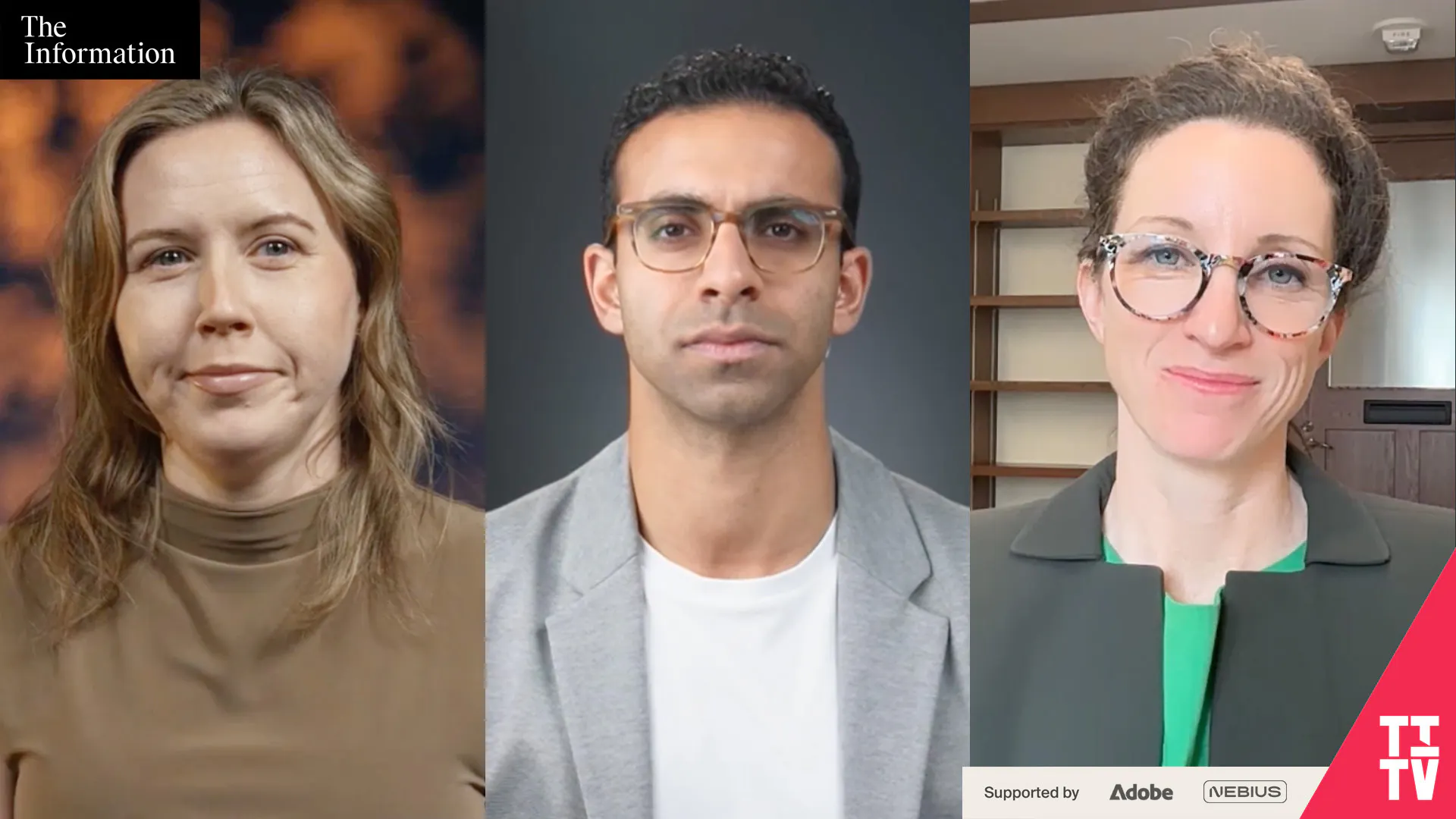
But investors seem to be more worried about what the legal precedent means for small internet firms. “This is a hugely consequential decision, not just for these two companies involved, but for social media more generally,” said Jennifer Huddleston, senior fellow in tech policy at the Cato Institute, on The Information’s TITV.
The decision ripped away the immunity internet firms have long enjoyed for liability over what people post on their platforms. That creates a worrisome overhang for investors looking at the sector. If anyone can sue internet firms for what they see on their sites, where will it end? (And AI firms are not immune).
Most immediately, Meta, YouTube and Snap have to deal with the thousands of other addiction cases lined up behind the one decided on Wednesday. As we’ve reported, the first case was expected to set a benchmark for a potential global settlement of all the cases. Still, this is likely to be a long process. You can bet the tech firms will appeal—and there is a chance they’ll do better in an appeals court.
As Rosenblatt Securities analyst Barton Crockett argued in a report on Thursday, it is “very much possible” that the tech firms would get the case either overturned or narrowed on appeal. Appeals courts will be “probably friendlier to the social media companies,” particularly when it comes to whether Section 230 should be a defense, he said.
In the meantime, these stocks may get dinged for the potential liability. It’s not ideal for shareholders in Meta, which is already out of favor on Wall Street, thanks to its massive spending on AI. Following Thursday’s sell-off, Meta shares are down 17% for the year, the second-worst performance of major tech names after Microsoft (which is a victim of the software as a service apocalypse and AI spending concerns). Google, whose shares fell 3.4% on Thursday, isn’t getting hit as hard because YouTube isn’t as central to its business as social media is to Meta or Snap.
Meta has the money to defend itself from years of litigation—$80 billion in cash and investments at Dec. 31—particularly if it cuts back on its AI investments. Smaller firms have fewer resources. Take Snap, owner of Snapchat. In addition to the addiction cases, it faces other legal issues. On Wednesday, for instance, the European Commission said it was investigating whether Snapchat was complying with legal requirements for keeping children safe online.
Snap isn’t a tiny company, but it doesn’t have anywhere near the resources of a Meta. It had just $2.9 billion in cash and investments as of Dec. 31 and generated $656 million in cash from operations, before capital expenditures, last year.
Snap’s future was already clouded by slow ad revenue growth and shrinking user numbers in North America. Its stock closed on Thursday at its lowest ever price of $4.01, giving it a market capitalization of just $6.8 billion. Snap chief Evan Spiegel may soon regret staying independent.
Meta Puts Down El Paso Roots
Speaking of Meta’s AI spending, the social media giant revealed today that it was increasing its investment in an El Paso, Texas, data center from $1.5 billion—announced last October—to more than $10 billion.
It’s not entirely clear why Meta’s investment has skyrocketed, although originally the company had described the facility as having the “the ability to scale” to 1 gigawatt, which is roughly the equivalent of the energy needed to power a small- to medium-size city. On Thursday, Meta said the facility “will grow” to 1 gigawatt.
In Other News
• OpenAI has surpassed $100 million in annualized revenue from its ChatGPT ads business, six weeks after announcing the pilot, according to a spokesperson.
• OpenAI has put on indefinite hold its plans to allow the ChatGPT chatbot to generate erotica, according to a report from the Financial Times.
• Aligned Data Centers, the developer a consortium including BlackRock and Abu Dhabi’s MGX is purchasing, raised $2.6 billion in debt to help it build more AI computing facilities in the U.S.
• Gadi Hutt, a director of product and customer engineering in Amazon’s server-chip design unit, Annapurna Labs, has left the company.
• Apple is opening the door for other AI assistants to integrate directly with its Siri assistant, Bloomberg reported. The change is coming alongside the company’s overhaul of Siri, which it plans to announce in June at this year’s Worldwide Developers Conference, the news outlet reported.
• Elon Musk’s X laid off its chief marketing officer and more than 20 other staff in non-engineering roles in recent weeks, the Wall Street Journal reported. The company has also brought in Jon Shulkin, a longtime Musk investor and ally, to work as chief revenue officer as the site tries to boost revenue, the Journal reported.
Today on The Information’s TITV
Check out today’s episode of TITV in which we unpack the social media safety verdict with two legal experts.
Recommended Newsletter
Start your day with Applied AI, the newsletter from The Information that uncovers how leading businesses are leveraging AI to automate tasks across the board. Subscribe now for free to get it delivered straight to your inbox twice a week.
Join The Information at the New York Stock Exchange on Monday, April 27, to hear from top executives and investors on how the rapid buildout of AI is reshaping tech, finance, and capital markets
Save the date for The Information’s annual AI Agenda Live in San Francisco, where top AI researchers, founders, investors and executives come together for a day of conversations about the breakthroughs and applications shaping the future of AI.