| | Trump threatens to take Iran’s oil and uranium, analysts warn the worst of the oil price rises are y͏ ͏ ͏ ͏ ͏ ͏ |
| |  | Flagship |  |
| |
|
The World Today | 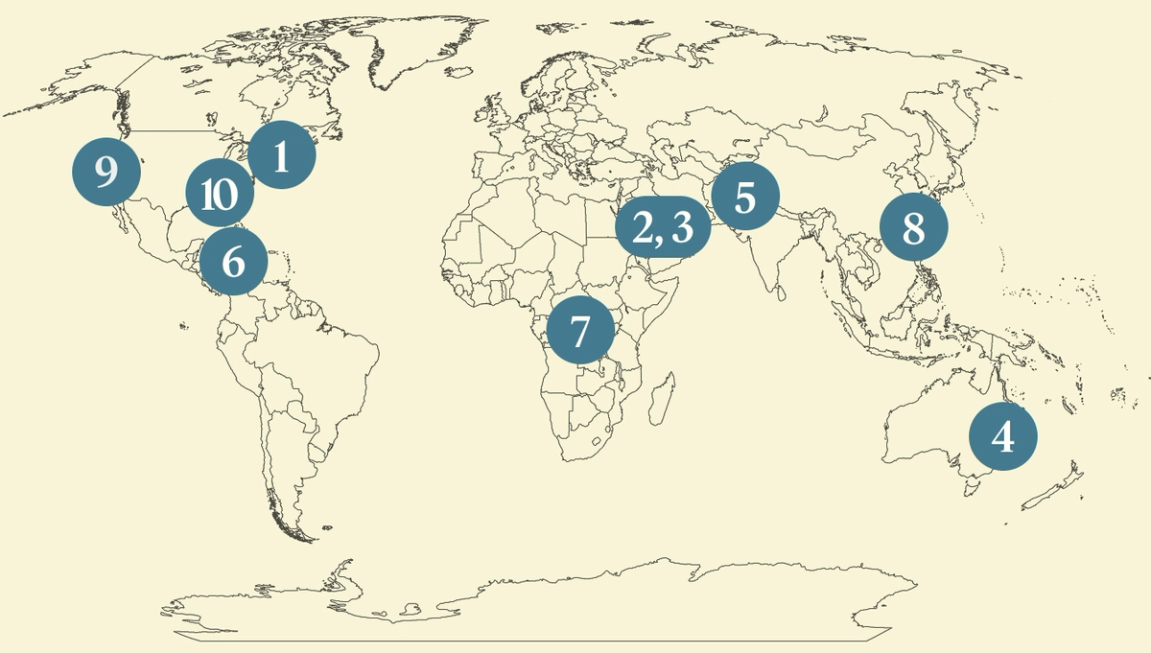 - Trump’s Iran threat
- Oil impacts to worsen
- War expansion warning
- Iran war fuels coal rush
- Pakistan’s diplomatic role
- US allows oil into Cuba
- China, DRC mining deal
- The other China summit
- AI-proof journalism
- Moon mission gets ready
 The London Review of Substacks, and a ‘double-edged feat’ from Nigerian filmmaker Akinola Davies Jr. |
|
Trump’s contradictory signals |
|
Markets restrained on war’s impact |
 Sodiq Adelakun/File Photo/Reuters Sodiq Adelakun/File Photo/ReutersOil prices surged on renewed fears of the Iran war’s expansion — yet markets are still understating the impact the conflict will have on energy, analysts said. Brent crude, the international benchmark, hit $116 after a record monthly increase, but is still below previous crisis heights. The stranglehold on the Strait of Hormuz has been partially offset by a Saudi pipeline to the Red Sea, but that is now at capacity, Bloomberg reported, and the route itself is at risk. Analysts warned that further price rises will hit consumer demand, and that the war could trigger a bond market slowdown and a wider economic slump. G7 ministers are holding emergency talks today on how to limit the fallout. |
|
Warnings over war’s expansion |
 Houthi forces. Khaled Abdullah/Reuters Houthi forces. Khaled Abdullah/ReutersMissile attacks by Yemen’s Houthis against Israel over the weekend underscored how the war is likely to further escalate before any near-term truce is reached, analysts warned. The head of a Washington, DC, think tank noted that the group’s entry into the conflict was just one of a number of ways the war could metastasize, ranging from Gulf Arab states responding to Iran’s attacks, Israel expanding its offensive in Lebanon, or direct strikes on regional power infrastructure — all “wholly apart from the potential engagement of US ground forces.” A leading energy expert added that Iran’s decentralized decision-making made “escalation less coordinated, but not less likely,” warning: “What we are now seeing is not simply a war continuing, but a war expanding.” |
|
Mideast conflict fuels coal rush |
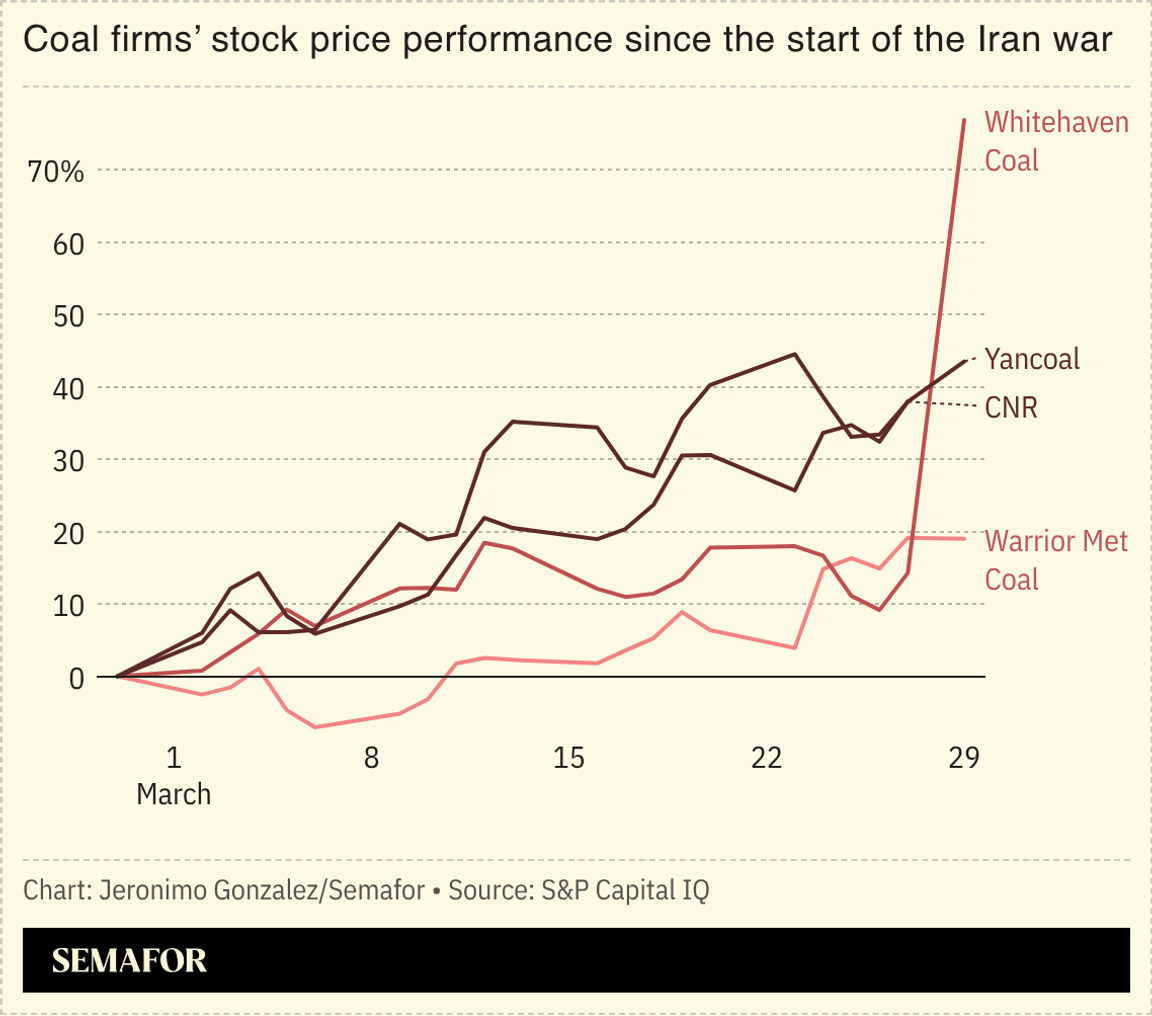 Iran’s closure of the Strait of Hormuz is driving a return to coal — the dirtiest of the fossil fuels — with many countries rushing to secure supplies. Shares of Yancoal, one of Australia’s biggest coal producers, have surged by 40% since the start of the war, while Pennsylvania-based Core Natural Resources is up 30%. Japan and South Korea — both heavily reliant on energy imports from the Middle East — have lifted restrictions on older, less efficient coal-burning plants as they look to meet energy demand, Nikkei reported. Experts warn that once a coal plant is brought back online, shutting it down could be politically unfeasible, raising fears of soaring carbon emissions. |
|
 This April, global CEOs, officials, and industry leaders will join Semafor World Economy — the largest convening of its kind in the United States — to sit down with Semafor editors for conversations on the forces shaping global markets, emerging technologies, and geopolitics. See the full lineup of speakers, including Global Advisory Board members, Fortune 500 CEOs, and officials from the US and across the G20. |
|
Pakistan’s unlikely peace role |
 Saudi Arabia’s foreign minister and Pakistan’s prime minister. Pakistan Ministry of Foreign Affairs/Handout via Reuters Saudi Arabia’s foreign minister and Pakistan’s prime minister. Pakistan Ministry of Foreign Affairs/Handout via ReutersPakistan is assuming a surprisingly key diplomatic role in pushing Iran and the US toward ending their war. Islamabad was isolated by Washington following its role harboring Osama bin Laden, but Pakistan is now out of the wilderness. A recent US peace proposal reached Tehran via a Pakistani-facilitated back channel, and the country is hosting the Egyptian, Saudi, and Turkish foreign ministers today for talks on the Iran war. The country has cultivated relations with Trump, The Wall Street Journal reported, offering deals on critical minerals and cryptocurrency to the president’s inner circle and winning his favor; it is a far cry from Trump’s first term, when he accused Pakistan of repaying aid with “nothing but lies & deceit.” |
|
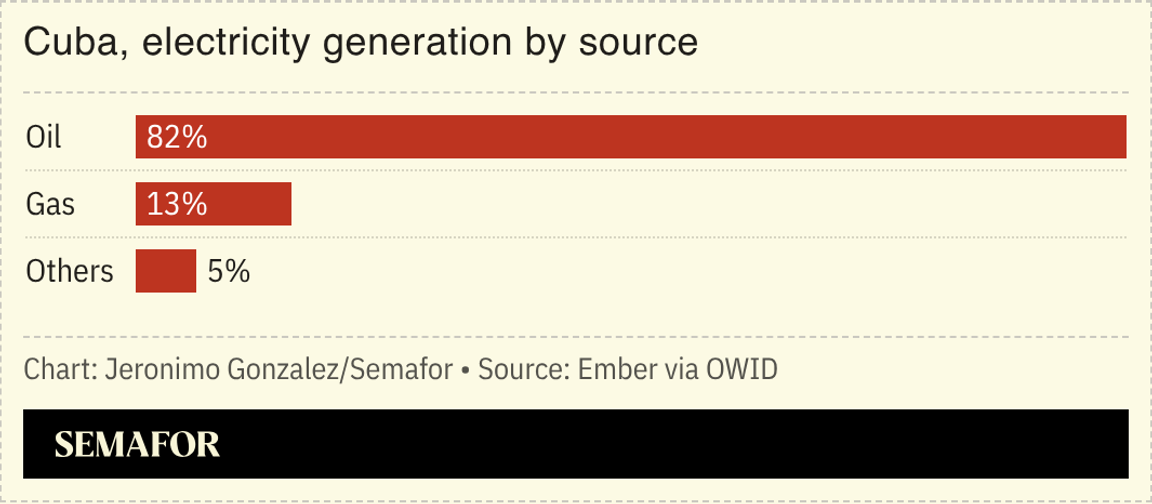 US President Donald Trump reversed course on blocking oil shipments to Cuba, allowing a Russian tanker to reach the crisis-hit island nation. Havana has not received any oil — from which it generates the vast majority of its electricity — in the three months since the US captured Venezuela’s former president; the US blocked shipments from the country, which had been Cuba’s main supplier. The crunch has shut down much of Cuba’s economy, while doctors there say patients are dying amid repeated blackouts. Regardless, Trump has vowed to see through his plans to oust the country’s communist regime, raising the specter of an attack: “I built this great military… and Cuba is next,” he said. |
|
China, DRC sign new mining deal |
 Hereward Holland/Reuters Hereward Holland/ReutersChina and the Democratic Republic of Congo reached a new mining agreement, as Beijing and Washington jostled for control of Africa’s key mineral resources. The US reached its own deal with Kinshasa last year, which could be far larger than the new agreement with China. Still, Beijing retains structural advantages, Semafor Africa’s editor wrote: China remains the DRC’s biggest creditor by a wide margin, while Chinese firms already dominate mineral production in the African nation, including for key resources like cobalt and copper. Elsewhere, rising international demand for resources has strengthened the hand of African countries, with many pushing for greater control of the more valuable segments of the mineral supply chain. |
|
 The latest episode of The Europeans takes a deep dive into Europe’s most closely watched elections this year: Hungary’s parliamentary vote on April 12. Is Viktor Orbán’s 16-year authoritarian rule finally crumbling? The podcast investigates how political upstart and Orbán’s main threat Péter Magyar has even gotten this far in mounting a viable challenge. Listen now. |
|
Taiwan opposition to visit China |
 Cheng Li-wun. Ann Wang/Reuters Cheng Li-wun. Ann Wang/ReutersThe leader of Taiwan’s opposition Kuomintang party will visit China just before Beijing hosts US President Donald Trump for a high-stakes summit where the future of the self-ruled island is expected to be discussed. Cheng Li-wun has long advocated for closer ties between Taipei and Beijing, and has opposed the Taiwanese government’s plans to boost defense spending, proposals advocated by Trump. Though some analysts believe that China may be weighing an invasion of Taiwan — which it claims as its own — the mainland’s calculus appears to have shifted recently: “Beijing wants to make resistance feel so costly and so tiring that, eventually, Taipei and Washington simply give up,” The Wall Street Journal’s chief China correspondent wrote. |
|
|


