Starting your week with what's really important — News and Views on the world of golf from a Canadian.
Season 6 of Monday Morning Golf |
|
|
Quiet please, I'm putting in the yard |
| |
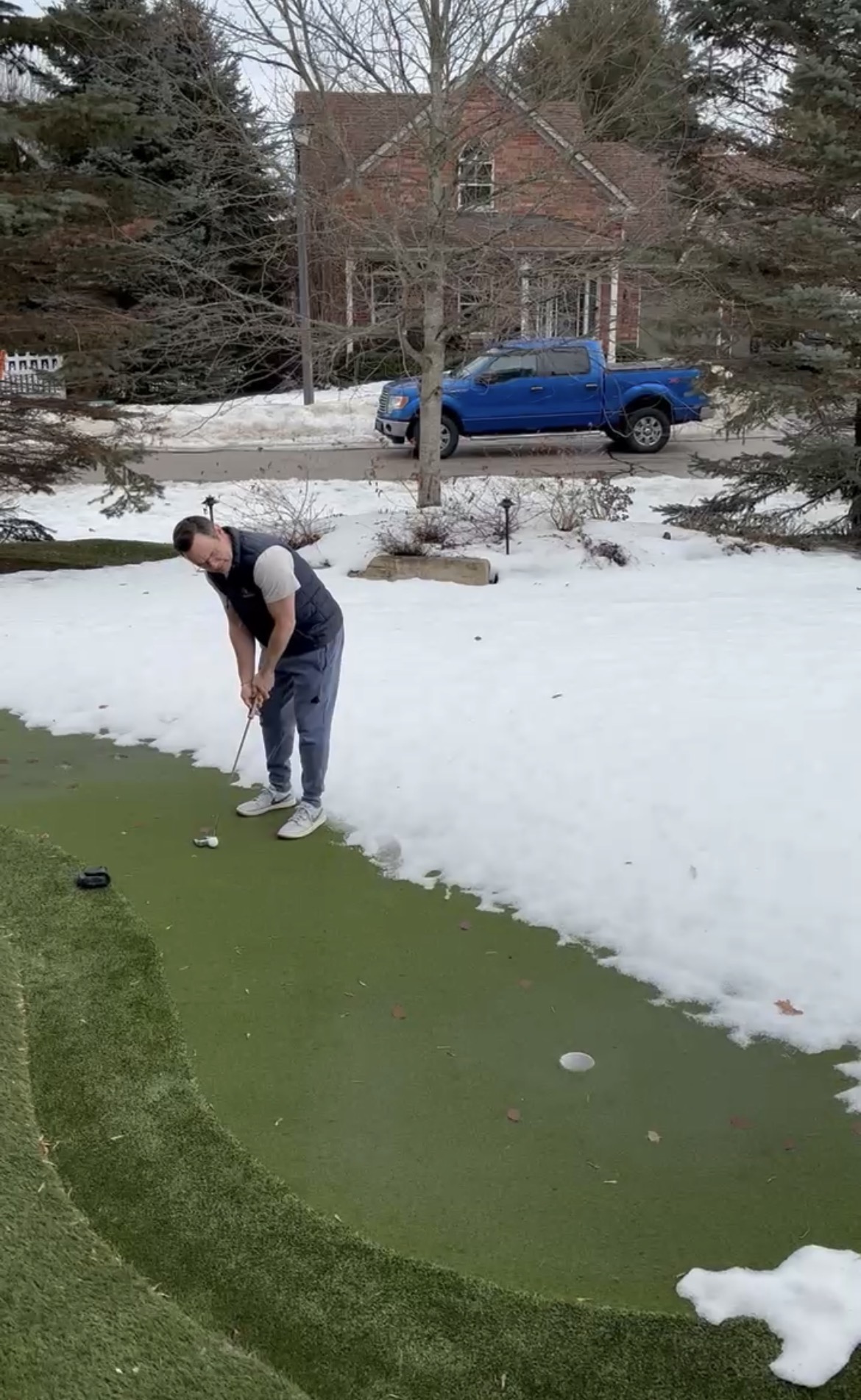
The snow had finally melted enough to provide a sliver of green in a sea of white, so I immediately grabbed the putter waiting at the back door and ran out to roll some putts.
Let's back this story up a bit.
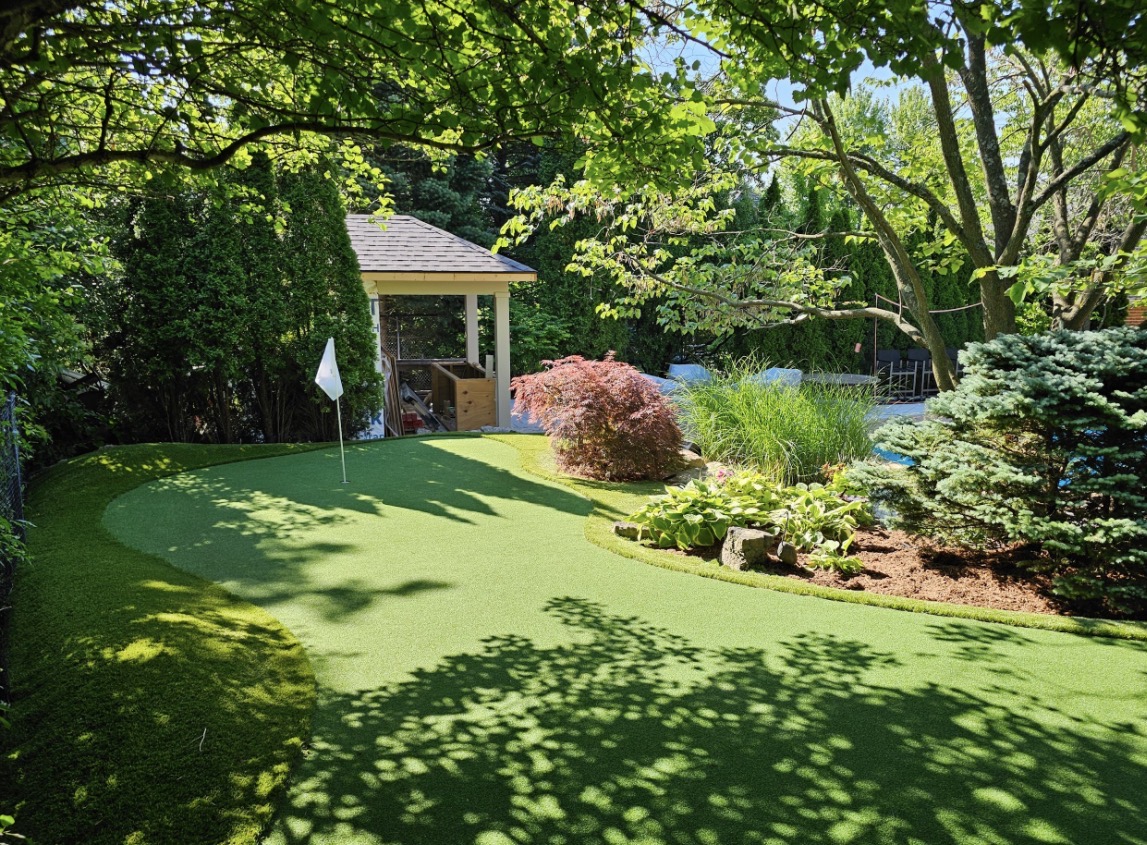
It all started late last summer when my wife told me that I should see the kitchen in the house for sale just three doors down from ours. I knew the house in question, not for the beautiful island and the fancy backsplash, I knew it for the putting green in the backyard. We do not live in a neighbourhood where you'd expect to see a golf green, so it kind of stood out.
"Yes," I said, maintaining a calm, cool and collected measure to my voice. "We. Should. Go. Look. At. That. Kitchen."
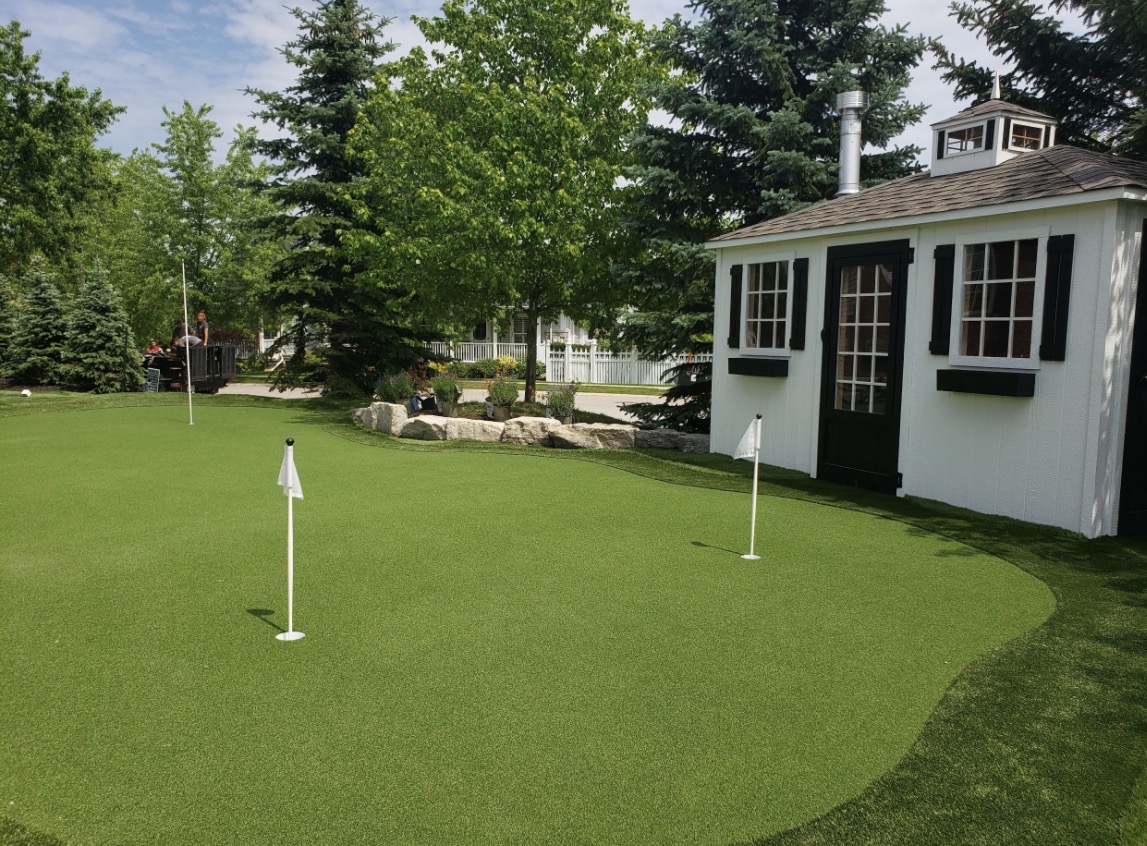
Six months of cleaning, purging, stressing and buying and selling in a wild real estate market later, we are the proud owners of a backyard putting green with four holes and two small bunkers.
And, yes, a new kitchen.
After moving on a -30 day in early February, the wait for spring has been rather painful. But that's been the story for every golfer as this particularly brutal winter refuses to go gently. I'm no groundhog, but hopefully it's safe to say we've made it and it won't be long before we are fighting for tee times and negotiating handicaps on the first tee.
With the entire backyard putting green now revealed I mentioned to my wife that I should look into what spring maintenance needs to go into this beautiful new toy. She directed me to a box full of papers that the previous homeowners had left behind that might offer a clue as to the name and phone number of the installers. It was good advice, except unneccesary because years ago when the green was being built I just happened to jot down the name and number of the company off the side of their truck. You know, for research.
My phone call to Greenside Turf was answered enthusiastically by the owner Jeremy Stunt, who instantly remembered every detail, and apparently knows my new backyard better than me.
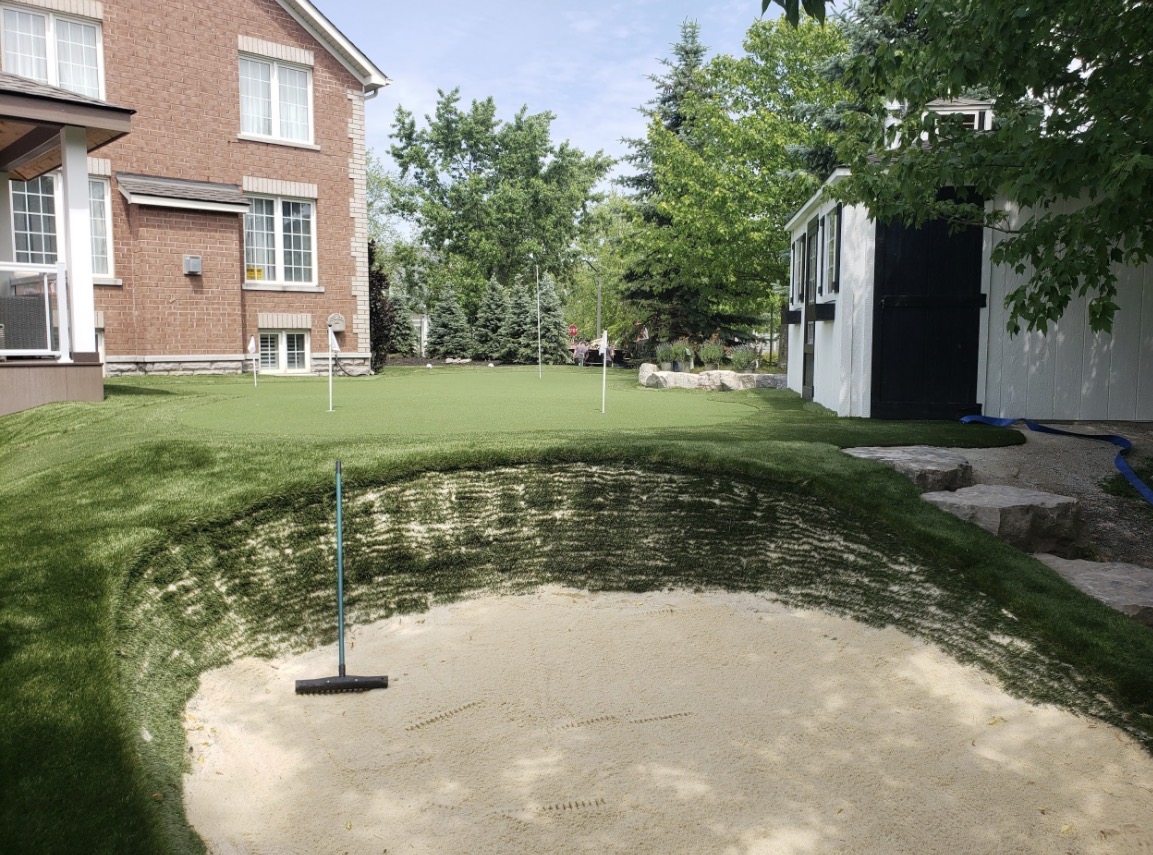
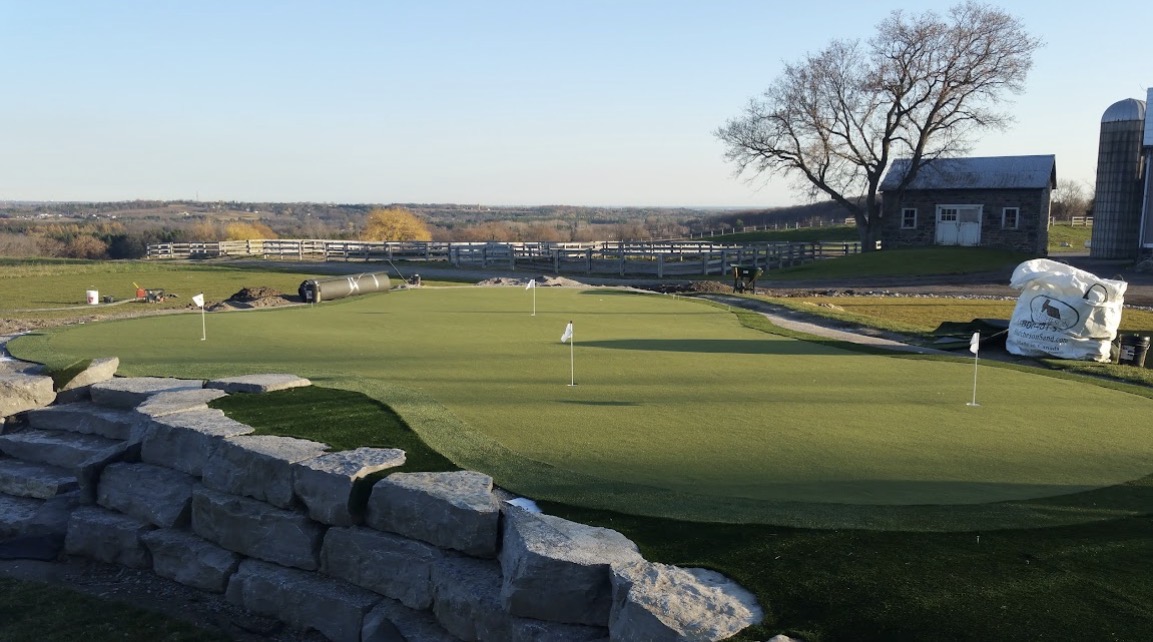
"You're one of my few with a sod-stacked bunker," he said. "We needed to figure out the elevation. From a build standpoint, I'm like, 'What am I gonna do? You can't just build a retaining wall on a putting green.' So the answer was a bunker wall." |
Stunt's voice and energy instantly reminded me of numerous conversations with passionate characters in the golf industry. Never at a loss for words, and with one story spilling instantly into the next, he would fit right in on a bar stool at the 19th hole of any golf club.
"It's a toy that you don't need, but yeah, you want one," he said of his greens. "It's for a niche market, but if you build them right, they will last."
His company Greenside Turf does a wide assortment of projects big and small, most frequently installing turf yards for people looking to permanently park their lawnmower. But it's clear that creating golf greens is his favourite.
"Most of the clients I have are parents, so it's for them and their kids. That's kind of the big one. Then you have the hardcore golfer, you know, that wants to practice. Then there's the guy that just wants to look out in his backyard and look cool. One interesting client is the father that gets to babysit at the same time. So we say, 'Okay, let's put in a bunker, but let's put in beach sand.' He gets the best of both worlds, his baby can play sand castles, he's got this green, and even his wife's happy."
Stunt's journey to this unique profession is quite interesting.
His grandfather Rudy Pilous was head coach of the Chicago Blackhawks and won a Stanley Cup in 1961, bringing the family from Canada to the United States.
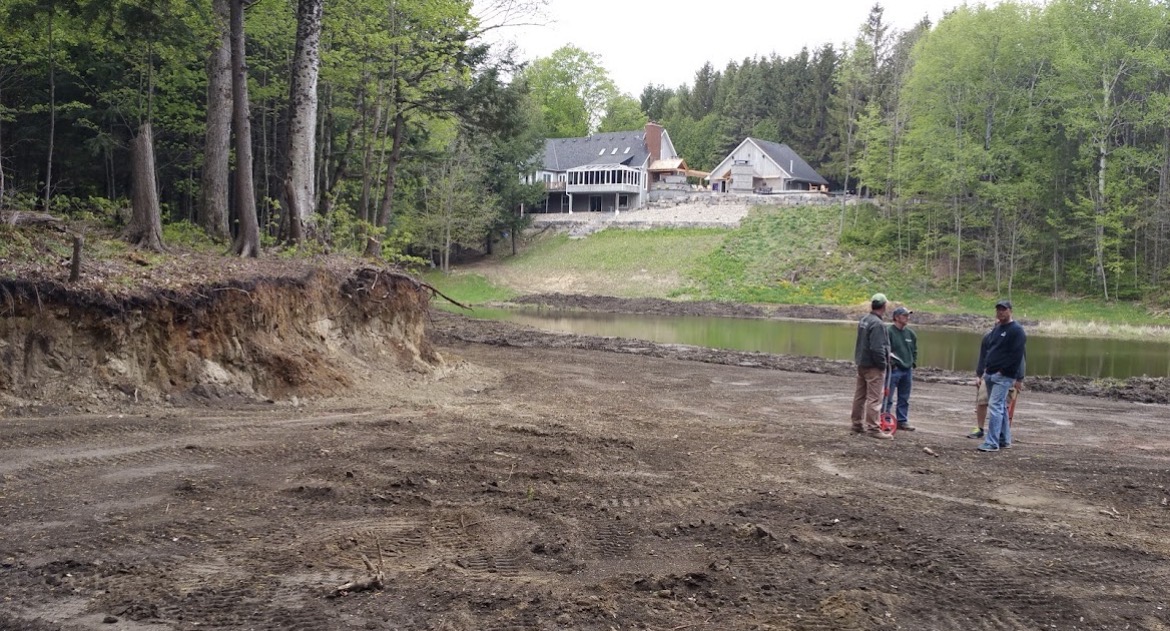
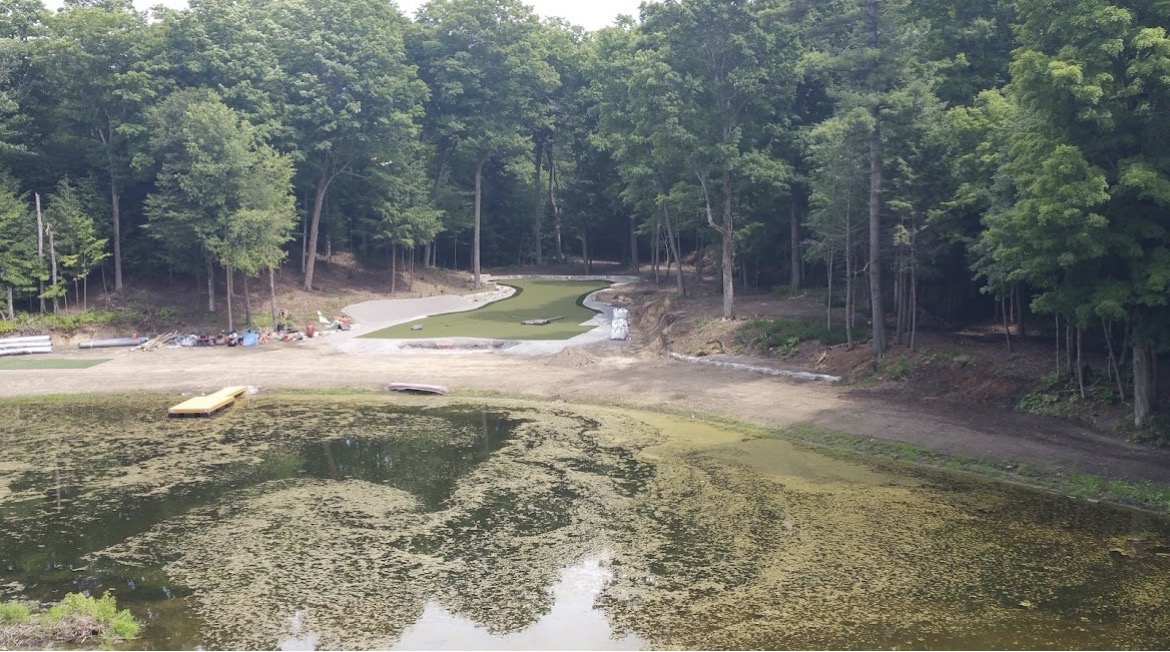
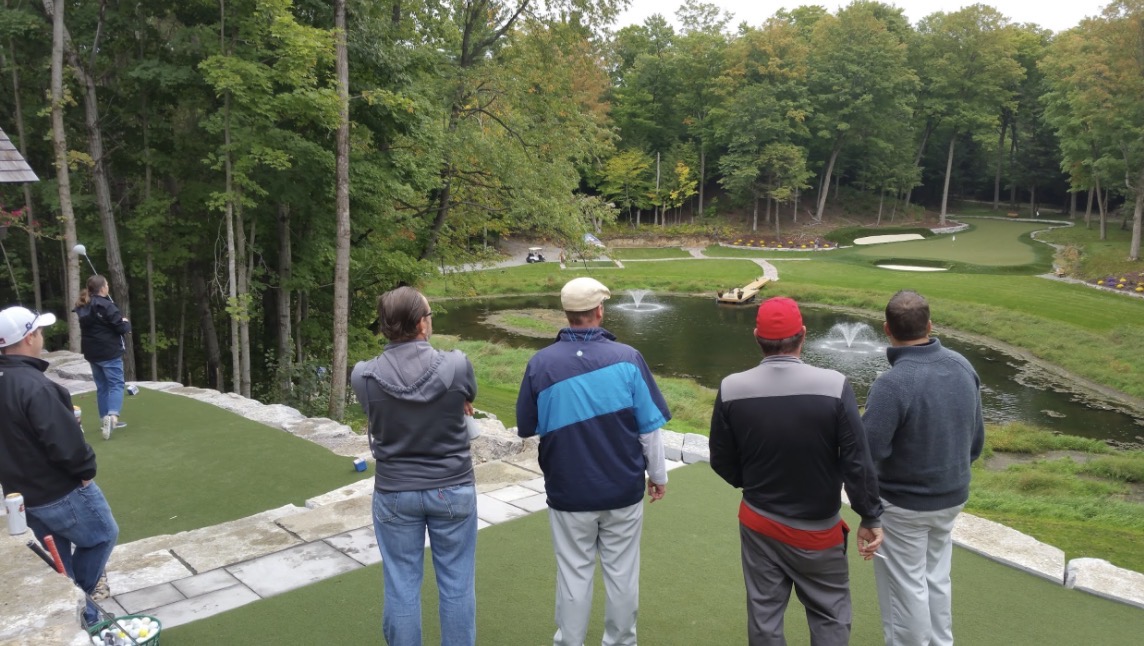
As a teenager, Stunt traded hockey for golf when his family moved to a Wellington, Florida golf community that was home to Fred Couples and a number of other PGA Tour pros. He got into landscaping there and eventually began building golf courses, including working for legendary course designer Tom Fazio. When the housing market crashed in 2008, Stunt came home to Canada where he began making backyard paradises for golf nuts. His extensive background building courses means there is no project too big for him to tackle. While we're speaking on the phone, he sends me photos of all sorts of projects, including a 30,000 square-foot green complex cut through trees and allowing for full shots over a pond from a tee box that he built near the customer's back door.
"He said, 'I'm tired of fishing out balls from the woods.' He would hire a kid to go pick up the balls he hit from his yard with a canoe in his pond." Stunt said.
So they built a golf hole instead. |
"There's different turf you can use. There's cross-stitch turf where there's no uniform direction to the material. Our turf is a nylon, propylene, polyurethane turf. We have a long ball turf, that can receive a shot from 150 yards. Then there's a mid-range turf that'll receive a shot from 60 yards out. And then there's your putting surface that can also receive close chips from like 30 yards."
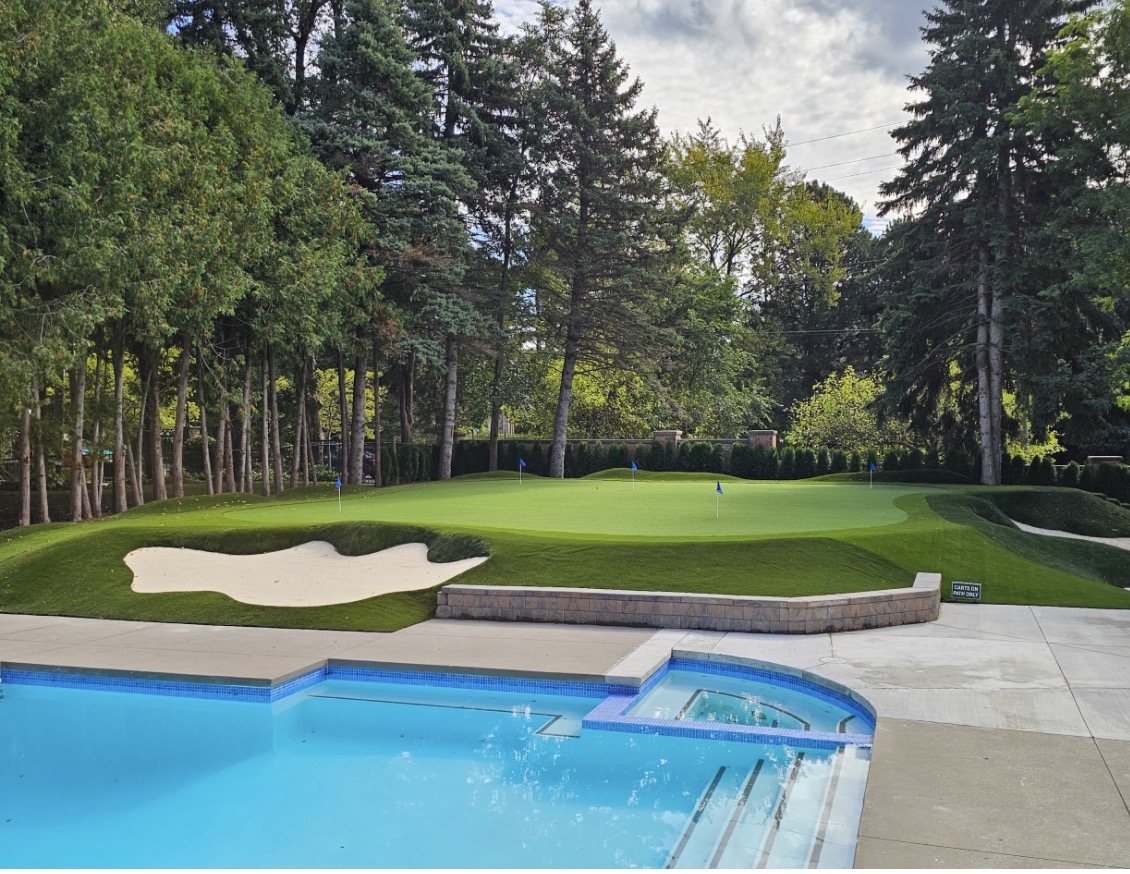
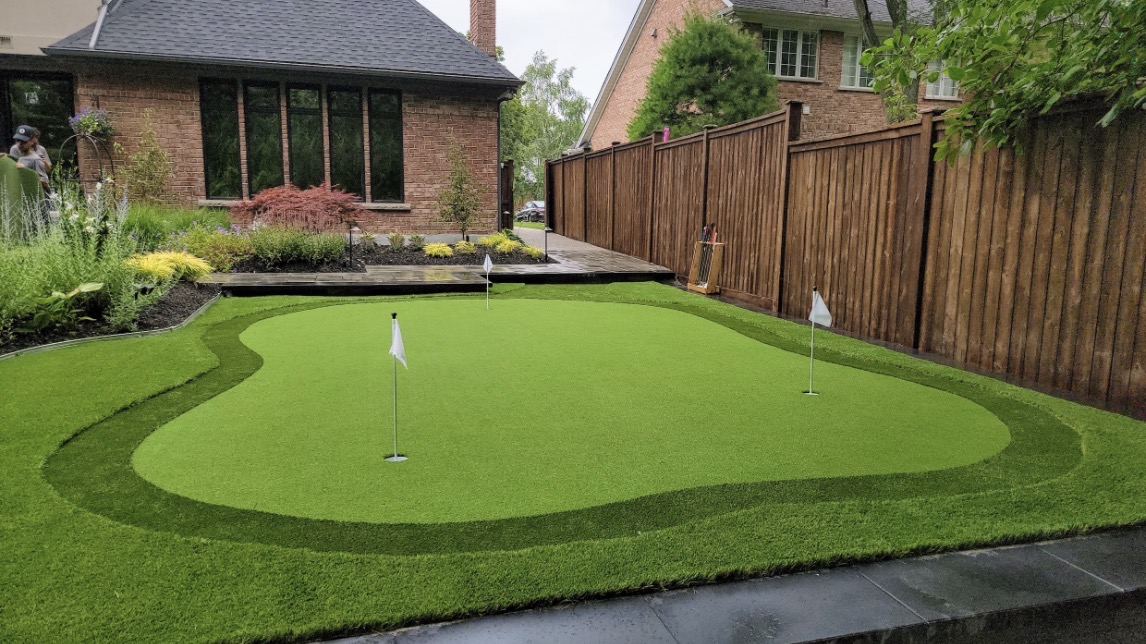
Stunt says his history building golf courses has shaped the way he tackles his backyard work, making sure that each project looks like a real golf course, not just an outdoor putting mat. He always tries to include a bunker and his project prices begin in the $20,000 range and can go up to whatever the client has in his imagination.
"Here in Canada, there is nobody that builds them like I do," Stunt said. "Some people just roll out some turf and run. They don't give the creative touch to make it look like a real green. I give it some contour, and breaks, and tiers, you know, make it look like a green, so when people walk out to a backyard, they say, 'Wow, that's so cool.' "
The green speeds usually start at around ten on the stimpmeter out of the box and slow down to nine-and-a-half once Stunt adds sand or the newer ceramic bearing infill between the blades of turf. That sand adds enough weight to hold the turf to the ground firmly and it also acts to keep the fibers spread so the ball rolls true over the tips of the turf grass.
"The more you play on it, the faster your green gets," he said. "After three years, if you play on it a lot, and with the weight of snow, it'll start speeding up to ten-and-a-half. After five years, you'll be at 11 and you'll call me and say, 'Jeremy, I'm putting on USGA greens here. I need you to slow them down.' So I come with a whacker packer, a plate compactor. And it vibrates all the sand back up to the top. Then I hand broom all that back in, and now you're back down to a ten."
Canadian winters require some adjustments to the process compared to building greens in warmer climates where the ground isn't moving due to upheaval from frost.
"I think just building them right, you know, with a proper foundation to make them last," Stunt said of the difference. "It needs some love."
By the end of our conversation I was glancing both out the window and over at my putter. The same putter I've recently been told needs to find a home somewhere other than the new kitchen.
Golfers are known to be a day-dreaming group, but I'll admit moving into a house with a putting green was never on my bingo card. I love almost everything about golf. I love the challenge. I love the camaraderie. I love being outside. I love the sound of a crisp iron. I love smashing drives on the range. I even like playing golf alone in the rain.
It dawned on me that there is only one thing I've never much enjoyed.
Putting practice.
|
|
|
See you next week from The Masters! |
|
|
|