| | The Iran war’s threat to Gulf nations’ water supplies, fears over European inflation, and French mas͏ ͏ ͏ ͏ ͏ ͏ |
| |  Kuwait City Kuwait City |  Nairobi Nairobi | Parma |
 | Flagship |  |
| |
|
The World Today | 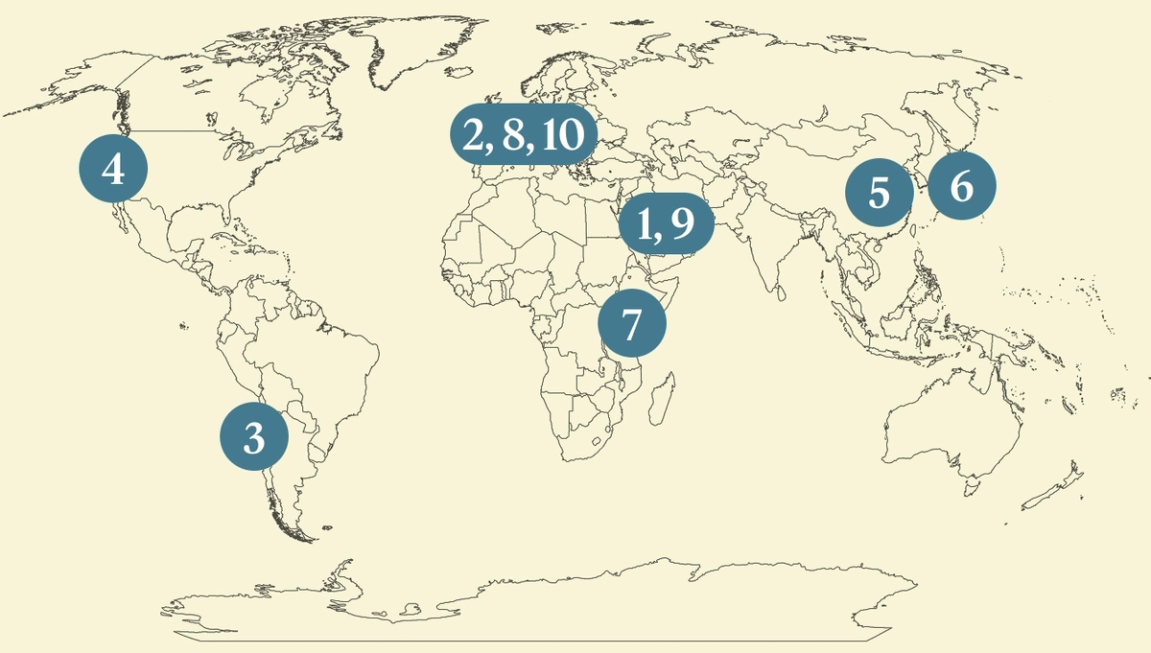 - Mideast war water impacts
- Europe inflation fears
- War squeezes Trump allies
- World energy shortage hits
- Oil price boosts EV demand
- West looks to East Asia
- Kenya-China rail revived
- Berlin to deport Syrians
- Gulf heritage sites hit
- French masterworks stolen
 A ‘thoughtful’ book about a wolf’s 1,200-mile journey from Slovenia to the Italian Alps. |
|
US, Iran expand Mideast targets |
 Kharg Island. Planet Labs PBC/Handout via Reuters Kharg Island. Planet Labs PBC/Handout via ReutersUS President Donald Trump threatened Iran’s water infrastructure while Tehran struck a Kuwaiti desalination plant and fully laden oil tanker off the Arab nation’s coast, further expanding the war beyond military targets. Gulf nations are highly reliant on desalination for fresh water, and damage to the region’s hundreds of plants could render its major cities unlivable, The Associated Press reported; attacks by any side could constitute war crimes. The tensions came as both sides continued their strikes against one another, with Iran reporting explosions nationwide, while Israel and Dubai said they intercepted Iranian attacks. Still, oil prices fell and stocks rose following a Wall Street Journal report that Trump was mulling a swift end to the conflict. |
|
Inflation fears mount in Europe |
|
US’ LatAm allies squeezed by war |
 Argentina’s Javier Milei and Chile’s José Antonio Kast. Pablo Sanhueza/Reuters Argentina’s Javier Milei and Chile’s José Antonio Kast. Pablo Sanhueza/ReutersWashington’s right-wing allies in Latin America are struggling to defend US President Donald Trump’s war in Iran, as higher fuel costs squeeze their economies. The energy shock comes at a time when regional economies — already grappling with yawning budget deficits — can ill afford subsidies to soften the impact, leaving many Trump-aligned leaders few better options than “asking their people to grin and bear price increases,” Bloomberg reported. Chile, which gets around two-thirds of its energy from imported fossil fuels, has hiked petrol prices by more than 50%, eroding the popularity of recently elected rightist president José Antonio Kast. The energy spike has sent a shudder across the region, where “fuel price hikes often topple governments,” an expert said. |
|
Rising energy costs hit consumers |
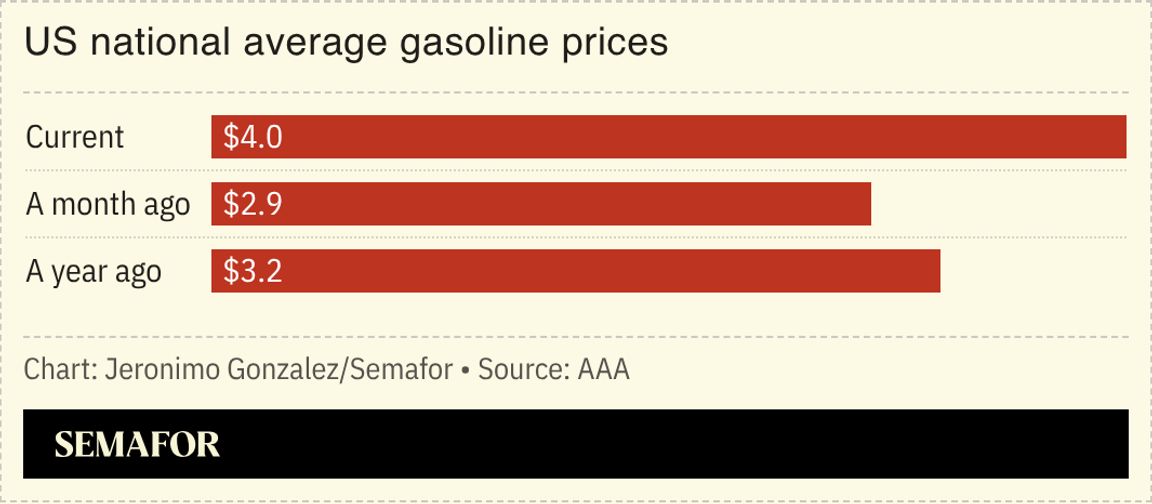 Energy constraints caused by the war in Iran began to hit global consumers. The EU energy chief told Europeans to consider traveling less; several Asian countries have issued similar requests, and Seoul is weighing imposing driving restrictions. Jet fuel shortages led South Korean airlines to consider limiting flight numbers. The last shipment of Middle Eastern jet fuel will reach Britain this week, and the airline industry warned of shortages if the war continues: Europe gets 40% of its jet fuel via the Strait of Hormuz, and prices have doubled since the war. The impacts are widespread: In the US, gas hit $4 a gallon for the first time since 2022, while fuel shortages are hitting petrol stations across Africa. |
|
Iran war fuels EV interest |
 Willy Kurniawan/File Photo/Reuters Willy Kurniawan/File Photo/ReutersThe Iran war is driving increased interest in EV purchases, buoying the prospects of Chinese behemoth BYD. The electric carmaker last week reported its first decline in annual profit since 2022, but worries over rising gasoline prices has boosted its business. Searches for used BYD vehicles were up nearly fivefold year-on-year in the UK, while its chairman told analysts that the surging cost of energy would push the company’s sales to “another level.” It now projects annual overseas sales to hit 1.5 million this year, 15% higher than its earlier forecast. In one advert in Europe, the firm notes: “Fuel prices change, your plans don’t. Save money with a BYD.” |
|
China, Kenya revive stalled railway |
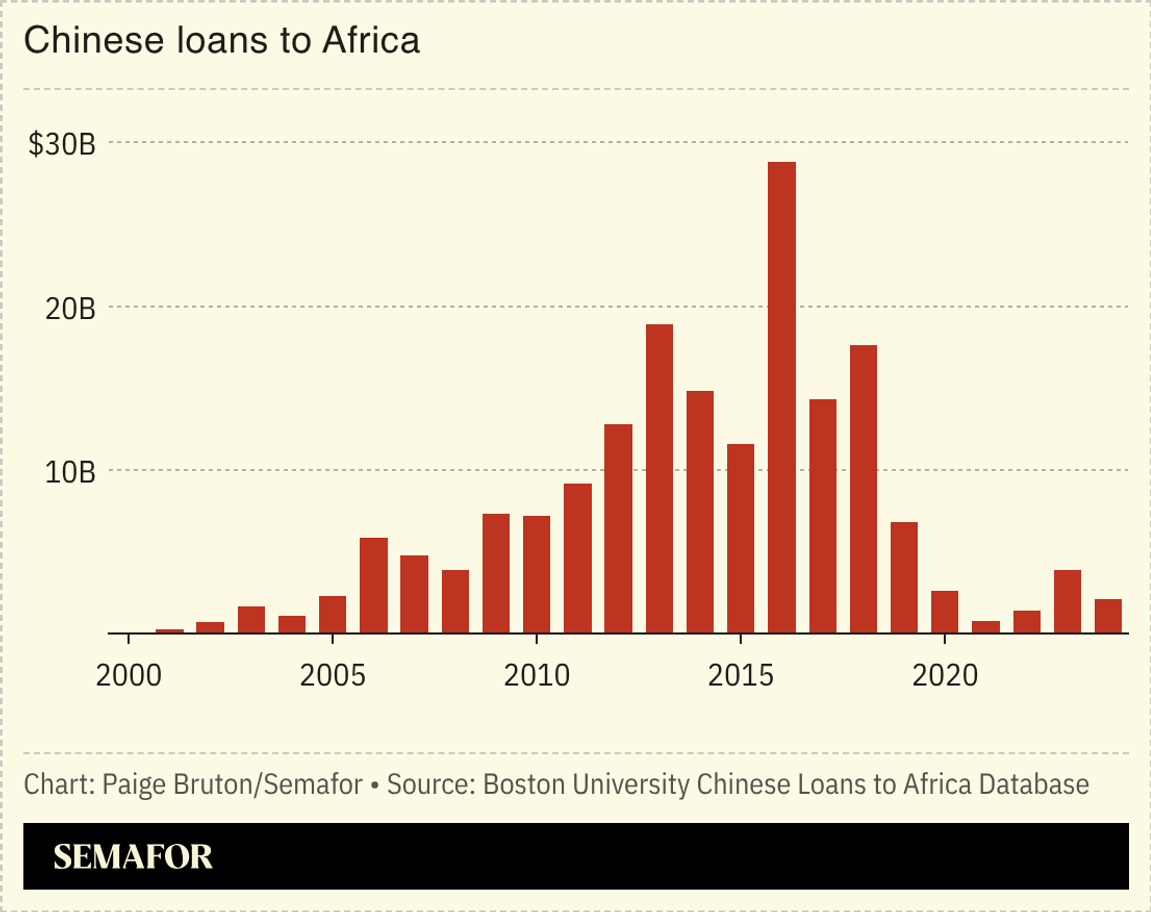 Beijing and Nairobi agreed to resume construction of a stalled railway project that had become a symbol of the dangers of overreliance on Chinese financing. Construction of the $5.5 billion Kenya Standard Gauge Railway — which Kenya’s president called the country’s “most consequential” project — was halted in 2020 after experts questioned its commercial viability. Critics had pointed to it as an example of the apparent risks of relying on Chinese financing to build out infrastructure projects, though the extent of this being an issue is hotly debated among experts. Under the new agreement, Nairobi’s debt will be converted to yuan, and the final payment will be delayed until 2040, the South China Morning Post reported. |
|
West eyes East Asia allies |
 Thibault Camus/Pool via Reuters Thibault Camus/Pool via ReutersWestern politicians sought to shore up ties in East Asia in the face of Chinese threats. French President Emmanuel Macron arrived in Tokyo for a state visit where he is expected to seek Japan’s support for correcting “global economic imbalances” that benefit China in particular, a key issue ahead of June’s G7 meeting in France. He heads to Seoul next; a recent trip to Beijing yielded little in the way of breakthroughs, experts said. Separately, a bipartisan group of US senators visited Taipei to push for a new $40 billion defense spending package to strengthen the self-ruled island — which Beijing claims as a renegade province — amid recent Chinese incursions into its air defense identification zone. |
|
 Can tiny homes — and tiny-home mortgages — solve the housing crisis? America needs millions more homes. Private-equity firms, red-tape nightmares, and homebuilders’ profit motive are all to blame. One startup, an offshoot of Airbnb, has a solution: Fully built, crane-plopped tiny homes in your backyard. On this week’s episode of Compound Interest, presented by Amazon Business, Liz and Rohan dive into how Samara is trying to redefine what housing looks like, and whether it’s the start of a new asset class for Wall Street. Listen to the latest episode of Compound Interest now. |
|
Berlin urges Syrian refugees to leave |
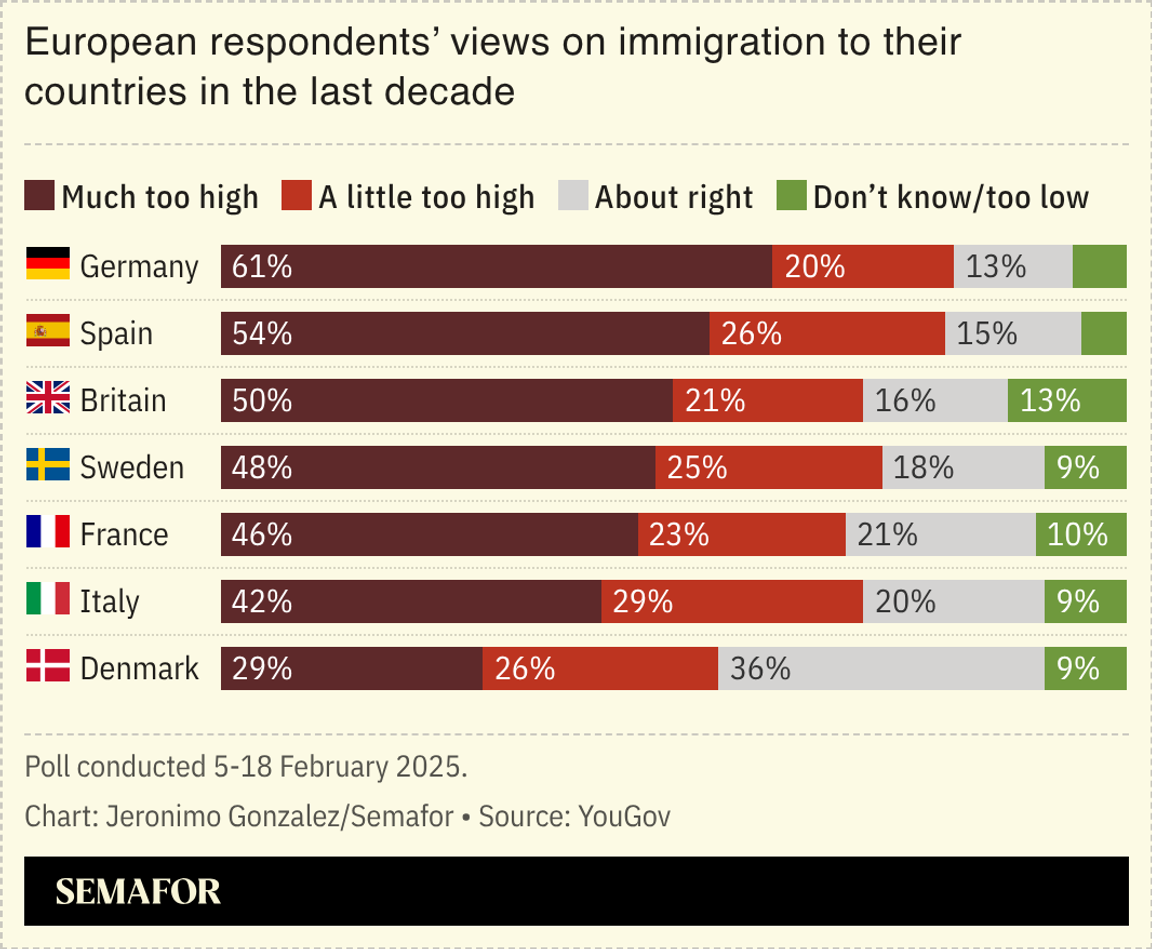 German Chancellor Friedrich Merz said 80% of the more than one million Syrians living in his country should return home, marking Berlin’s latest anti-immigration move as it seeks to ward off the rise of the far right. The decision was welcomed by Syria’s president on a visit to Germany, arguing that the return would allow hundreds of thousands of Syrians “to contribute to the reconstruction of their homeland,” AFP reported. Since becoming chancellor last year, Merz has tightened Germany’s immigration policies in a bid to stave off parties running on anti-migration platforms, a move mirrored across much of Western Europe: The EU Parliament last week approved measures allowing deportation of irregular immigrants to so-called “return hubs” outside the bloc. |
|
Gulf heritage sites damaged in war |
 The damaged Chehel Sotoun palace. Social Media/via Reuters The damaged Chehel Sotoun palace. Social Media/via ReutersThe war in the Middle East is damaging cultural and religious heritage across the region. Iranian state media said missiles had damaged a Shia site in the country’s northwest; other vulnerable locations, including the Chehel Sotoun Palace in Isfahan and the UNESCO-listed Golestan Palace in Tehran, have reportedly also been hit. Iran’s strikes, meanwhile, have hit Tel Aviv’s White City and Israel’s National Theater. UNESCO said it had given the coordinates of listed World Heritage sites to prevent further damage. The region is home to thousands of archeologically significant sites: Modern-day Iran was the heart of the ancient Persian empire, and the world’s first cities, where writing was developed, arose in what is now Iraq and Syria. |
|
|


