| | In this edition: What’s in a mural, Rahm on 2028, and polling of Jewish American voters.͏ ͏ ͏ ͏ ͏ ͏ |
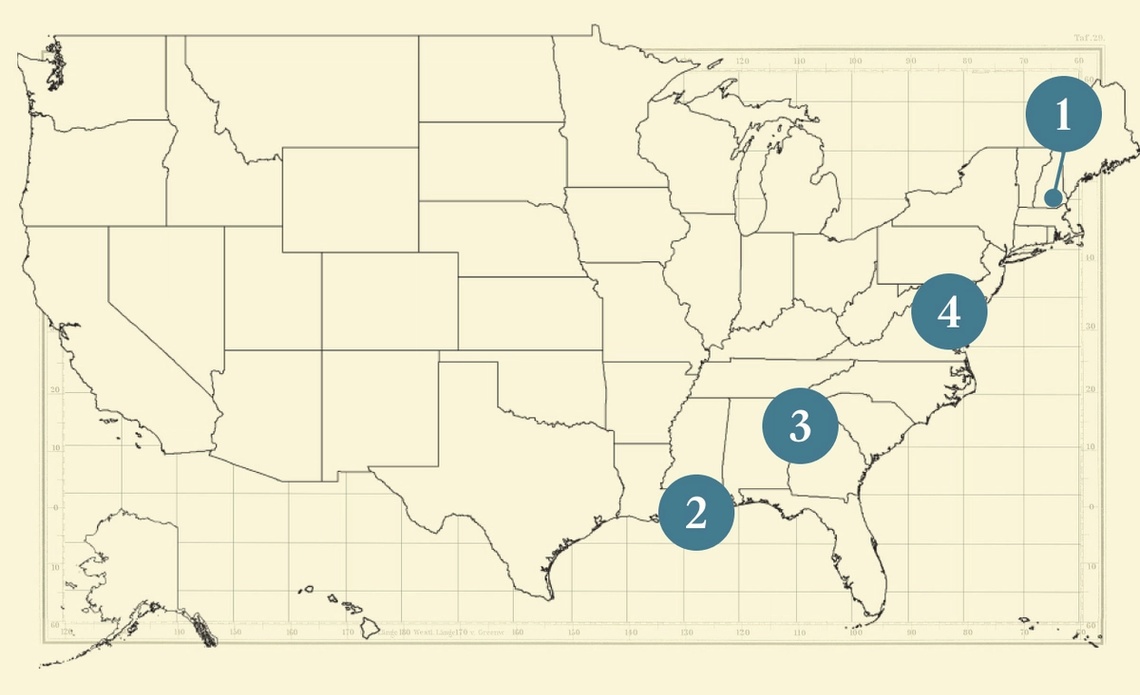
| |  NEW ORLEANS NEW ORLEANS |  ATLANTA ATLANTA | GOFFSTOWN |
 | Americana |  |
| |
|
 - Rahm is unburdened
- DNC’s Gaza challenge
- My friend, Donald
- Jewish American voters, polled
|
|
 The murals went up in Chicago, Washington, Los Angeles, San Francisco, and Fort Lauderdale before Democrats finally took notice. In September, weeks after the fatal stabbing of Ukrainian refugee Iryna Zarutska on a Charlotte light rail train, Elon Musk joined a crowdfunded campaign to paint murals of her in as many cities as possible. Campaign sponsors hoped that anyone unaware of her story — an innocent young woman killed by a man who’d bounced in and out of prison — might see her face, find the security video of her brutal death, and be moved. “Iryna Zarutska did not ask to be a martyr,” read the text on the funding page launched by Eoghan McCabe, the Irish CEO of the AI customer service company Intercom. He gave $500,000, and Musk gave $1 million, with an expected budget of $10,000 per mural. There were few complaints, until a Zarutska mural got prepared outside of The Dark Lady, an LGBTQ bar in Providence, R.I. The Dark Lady’s owners defended the art to critics, calling it apolitical: “We are Democrats. We do not support Donald Trump.” Three days later, Providence Mayor Brett Smiley condemned the mural — which was political, after all. The Dark Lady recanted. The mural would come down. Now conservatives are trying to create a familiar infamy for Smiley and other Democrats who got the mural taken down. Verbal floggings are piling up in Murdoch-owned news outlets and on popular right-leaning X accounts. Conservatives asked: Were Democrats so deranged by an Elon Musk campaign that they’d paint over a tribute to a dead woman? Benny Johnson summed up the point: “Would they had [sic] asked if it was of George Floyd?” No, they wouldn’t have, and Floyd is the right context. The push to elevate Zarutska as a martyr is part of the long backlash to the summer of 2020, after which one online database catalogued thousands of pieces of street art depicting Floyd. President Donald Trump himself has incorrectly sought to portray her death as a consequence of progressive immigration policies; in his State of the Union, Trump memorialized her as having “escaped a brutal war only to be slain by a hardened criminal set free to kill in America,” who had come “through open borders.” That second part wasn’t true. The Black man charged in her murder, DeCarlos Brown, was born in the US. |
|
Rahm picks his pitches to swing at |
 Henry Romero/Reuters Henry Romero/ReutersGOFFSTOWN, N.H. — Rahm Emanuel took the stage at his first New Hampshire town hall, and the land acknowledgement began. “We also want to acknowledge that this land is part of the ancestral homeland of the Abenaki people and the Wabanaki Confederacy, whose connection to this place continues today,” said a member of the St. Anselm College Young Democrats. After his remarks, Semafor asked Emanuel whether that introduction amounted to the sort of “woke” affectation that he was telling Democrats to abandon. He responded that he hadn’t noticed. “I’m happy they did it,” he said. “It doesn’t matter to me.” Though Emanuel, 66, has talked his way into 2028 presidential speculation by challenging his party’s college-town liberalism and pitching paid-for ideas, he doesn’t swing at everything. When some Democrats denounced Twitch streamer Hasan Piker, warning that Piker’s embrace of Cuban communism and criticism of Israel would rub off on their party, Emanuel told Politico that he would go on Piker’s show, and later told Semafor that only reporters were asking. “I think I stand with the people of America,” Emanuel said. “They don’t care, and I don’t care.” |
|
Democrats set to confront their Israel policy divide |
 Eduardo Munoz/Reuters Eduardo Munoz/ReutersThe Democrats’ messy family argument about Israel will continue in New Orleans next week at a DNC meeting where pro-Palestinian party members are seeking debate on resolutions about AIPAC and the war in Iran. Eight months after the party’s summer meeting, where DNC chairman Ken Martin endorsed a working group that would “continue to have the conversation,” there’s been no progress on a shared stance on Israel’s war in Gaza. Allison Minnerly, a Florida DNC member who wrote a resolution last year in favor of a US arms embargo against Israel, has introduced a new resolution that would condemn AIPAC spending in Democratic primaries. Her goal is counteracting “corporate money PACs [that] have concentrated spending in primary races to oppose candidates who have advocated for Palestinian human rights, ceasefire efforts, or changes to US foreign policy.” Minnerly’s last resolution did not pass, leading to Martin’s decision to bring “stakeholders” together to come up with a consensus. Another resolution that could get debated in New Orleans, from California Democrat Joe Salas, would commit the DNC to recognizing “the state of Palestine” and cutting off arms to Israel. A third resolution, from Georgia Democrat Cameron Linden, calls for a diplomatic resolution in Iran and “conditioning US military aid to Israel [on] verifiable compliance with international humanitarian law, protection of civilian populations, and demonstrable steps toward regional de-escalation.” |
|
Georgia’s Jones hugs Trump tight in ads |
 Burt Jones/YouTube Burt Jones/YouTubeSelf-funding candidates have won elections for decades. Trump’s success has given those candidates a mold to work from. That’s what Republican voters have seen in Georgia, where the president’s endorsement of Lt. Gov. Burt Jones in the GOP gubernatorial primary is running up against the wallet of health care CEO Rick Jackson. In the ad “Standing Strong,” Jones calls Jackson a “Never Trumper,” citing his donations to Nikki Haley, Vivek Ramaswamy, and Liz Cheney. In “Ton of Cash,” Jackson puts his spin on an argument Trump made throughout the 2016 campaign: His donations to politicians proved that they could be bought, not that he agreed with them. “Trump wins, over and over and over,” says Jackson, highlighting his $1 million Trump donation — and, by repeating how he won three times, nodding at the president’s continued, unfounded belief that he also won Georgia three times. |
|
Jewish American voters also break against Netanyahu, less so Trump’s war |
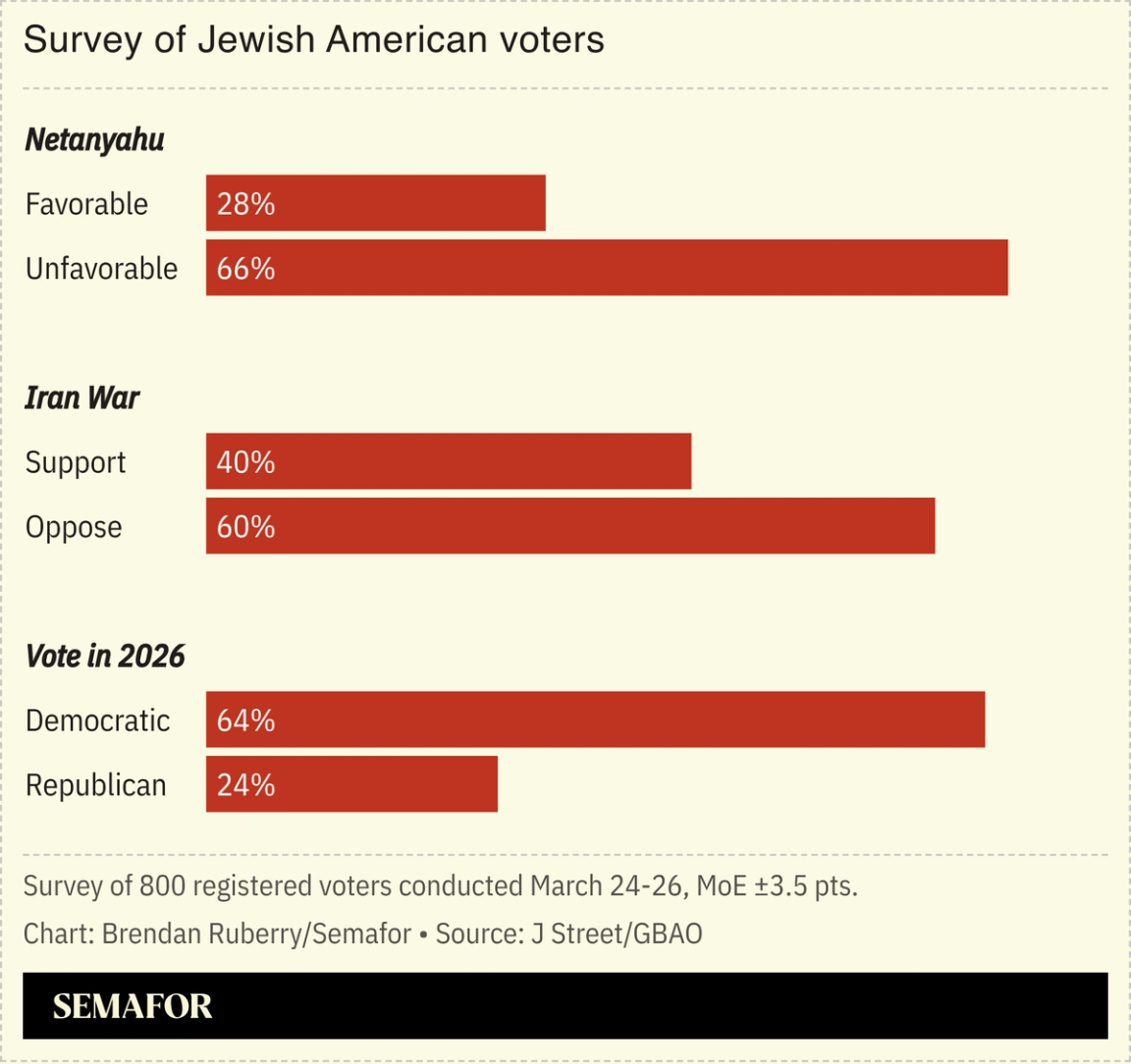 AIPAC is now Superfund-level toxic among Democratic voters, most of whom view the Jewish state negatively and now side with the Palestinians over Israelis. How do Jewish voters — Jewish Democrats in particular — process what’s happening? J Street, a pro-Israel group formed to be a moderate AIPAC alternative, found that they support Israel but oppose most of what it’s doing. Just 30% of Jewish voters, mostly Democrats, say that their sympathies are more with Palestinians than Israelis. Israeli Prime Minister Benjamin Netanyahu is slightly more popular with these voters than Trump, but his favorable rating has fallen since the 2024 election. A critical bloc of these voters support the Iran war but won’t vote Republican. That’s an opinion well-represented in Democratic politics, where some Jewish electeds refuse to support a limit to the war or oppose funding it. Their voices are drowned out lately by anti-Zionists. |
|
 Can tiny homes — and tiny-home mortgages — solve the housing crisis? America needs millions more homes. Private-equity firms, red-tape nightmares, and homebuilders’ profit motive are all to blame. One startup, an offshoot of Airbnb, has a solution: Fully-built, crane-plopped tiny homes in your backyard. On this week’s episode of Compound Interest, presented by Amazon Business, Liz and Rohan dive into how Samara is trying to redefine what housing looks like, and whether it’s the start of a new asset class for Wall Street. |
|
 Kevin Lamarque/Reuters Kevin Lamarque/Reuters“Deliveryism,” the idea that giving tangible benefits to voters will win them over, took a beating during the Biden years. Democrats are still puzzled over why direct payments to parents, student loan forgiveness, and other favors to their coalition didn’t benefit them politically. Republicans now expect voters to reward them for last summer’s party-line tax cut (which they’ve rebranded as “working families tax cuts”). But will they? In The Wall Street Journal, Richard Rubin and Ashlea Ebeling wrote the story I’d been wanting to read, interviewing wealthy blue-state residents who will save tens of thousands of dollars from the tax cuts and will also vote against whichever Republicans land on their ballot. |
|
 Evelyn Hockstein/Reuters Evelyn Hockstein/ReutersEvery Jonathan Martin column is recommended, and I especially liked his report from Indianapolis, about the coming wave of elections that could “affirm [Trump’s] hold on the Republican Party.” It’s full of details about races that are either under-covered or not seen in this context yet, like the gold “Trump approved” stickers on mail going to Indiana Republicans, urging them to unseat senators who refused to eliminate the state’s two Democratic House seats, and the Trump-backed replacement for Louisiana Rep. Julia Letlow who might be dead in the water without him. Trump-endorsed candidates have lost before, but how much do GOP primary voters want to punish or reward their electeds based on MAGA loyalty, a year before the next presidential election starts? This is the guide to the coming answers. |
|
 - six days until Wisconsin’s state supreme court election
- 20 days until Virginia’s referendum on re-drawing congressional districts
- 34 days until primaries in Indiana and Ohio
- 216 days until the midterm elections
|
|
|


