Hello!
The last few newsletters covered a lot of ground on the countries affected by the U.S.-Israeli war on Iran and its effects on the global energy market, including countries that have implemented emergency measures to lessen the impact on costs and on oil and gas supplies. Now, we turn to how specific sectors have been affected from beauty and nightlife to food and drinks.
In fact, this week the heads of the International Energy Agency, International Monetary Fund, and World Bank said they are forming a coordination group to maximize their response to the significant economic and energy impacts of the war in the Middle East.
But before we unpack all that, please note that Sustainable Switch is turning the lights off until April 9 when I’ll be back with all the latest environment, social and governance news. And here are some major human rights stories that are also on my radar: |
|
|
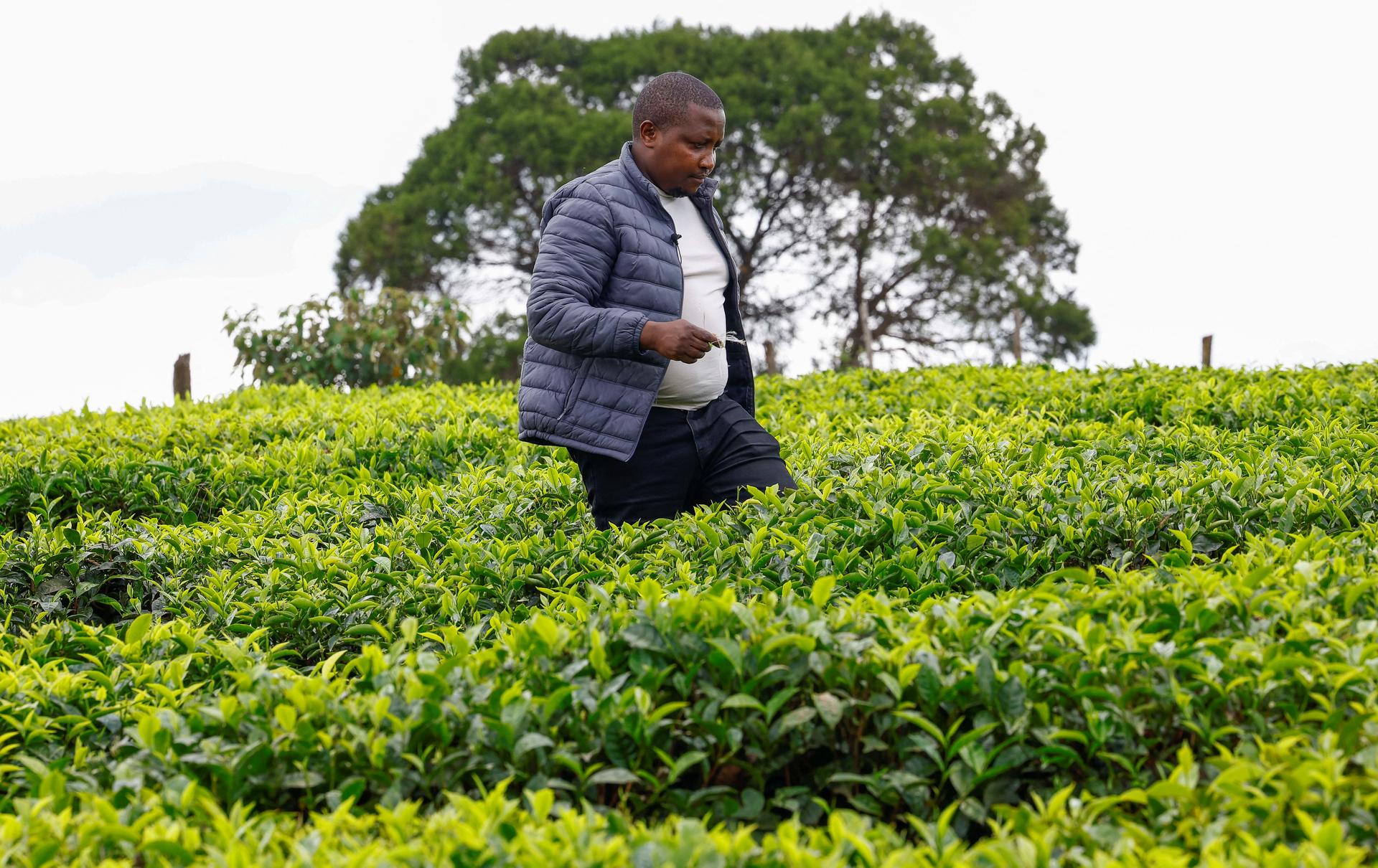
Alex Macharia at his tea plantation after disruptions of tea exports, due to the ongoing U.S.-Israeli conflict with Iran in Limuru, Kiambu County, Kenya. REUTERS/Thomas Mukoya |
The effects on consumer industries |
So, how is the Iran war affecting the beauty industry? Three major pain points have emerged. Firstly, it’s hit the cosmetics supply chain, pushing up the cost of everything from plastic jars and lipstick tubes to transport.
Secondly, cosmetics companies are primarily worried about higher raw material and transport costs due to rising oil prices and disrupted shipping, five industry executives told Reuters.
"We are beginning to see cost increases driven by energy price inflation, compounded by delivery delays," said Simone Dominici, CEO of Italian cosmetics group Kiko, who estimates additional logistics-related costs of about 1.5 million euros ($1.7 million) for the group over the year.
And thirdly, beyond higher costs, the industry could also face softer demand from consumers whose purchasing power is being eroded by inflation, Dominici said. It’s also hitting Egypt’s nightlife scene in its capital, Cairo.
Egypt ordered earlier closures and curbs on public lighting to save electricity after the U.S.-Israeli war on Iran sent energy costs sharply higher and made fuel imports harder to secure. In a country where evenings are central to commerce and social life, the policy is rippling far beyond the power grid.
Prime Minister Mostafa Madbouly said this month that Egypt’s energy import bill had more than doubled since the war began, forcing the government to raise fuel prices, increase public transport fares and slow some state projects to ease pressure on public finances. | |
|
Impacts on food and drink |
Disrupted fertilizer shipments and soaring energy prices from the war in Iran are threatening to create a new food-price surge across vulnerable countries, risking a years-long setback just as many were recovering from successive global shocks.
The Strait of Hormuz, effectively blocked by Tehran, carries some 30% of globally traded fertilisers and Gulf producers are big suppliers of ammonia and urea, according to the U.N. Food and Agriculture Organization.
Bank of America warns that the conflict threatens 65% to 70% of global supplies of urea, and prices are already up 30% to 40%. Farmers in South Africa and many other countries are struggling with a double price blow – fuel and fertilizer costs have shot up because of the U.S.-Israeli war on Iran. Over in Kenya, disruption to shipping routes linked to the Iran war has left about eight million kilograms of tea stuck in warehouses in the port city of Mombasa for weeks, threatening export earnings and farmer incomes, the head of the East Africa Tea Traders Association said.
It’s not just tea being affected. Global brewers operating in India are warning of price increases and supply disruptions as a shortage of gas due to the Iran war drives up the cost of glass bottles and shipping delays hit imports of aluminum needed by can makers. |
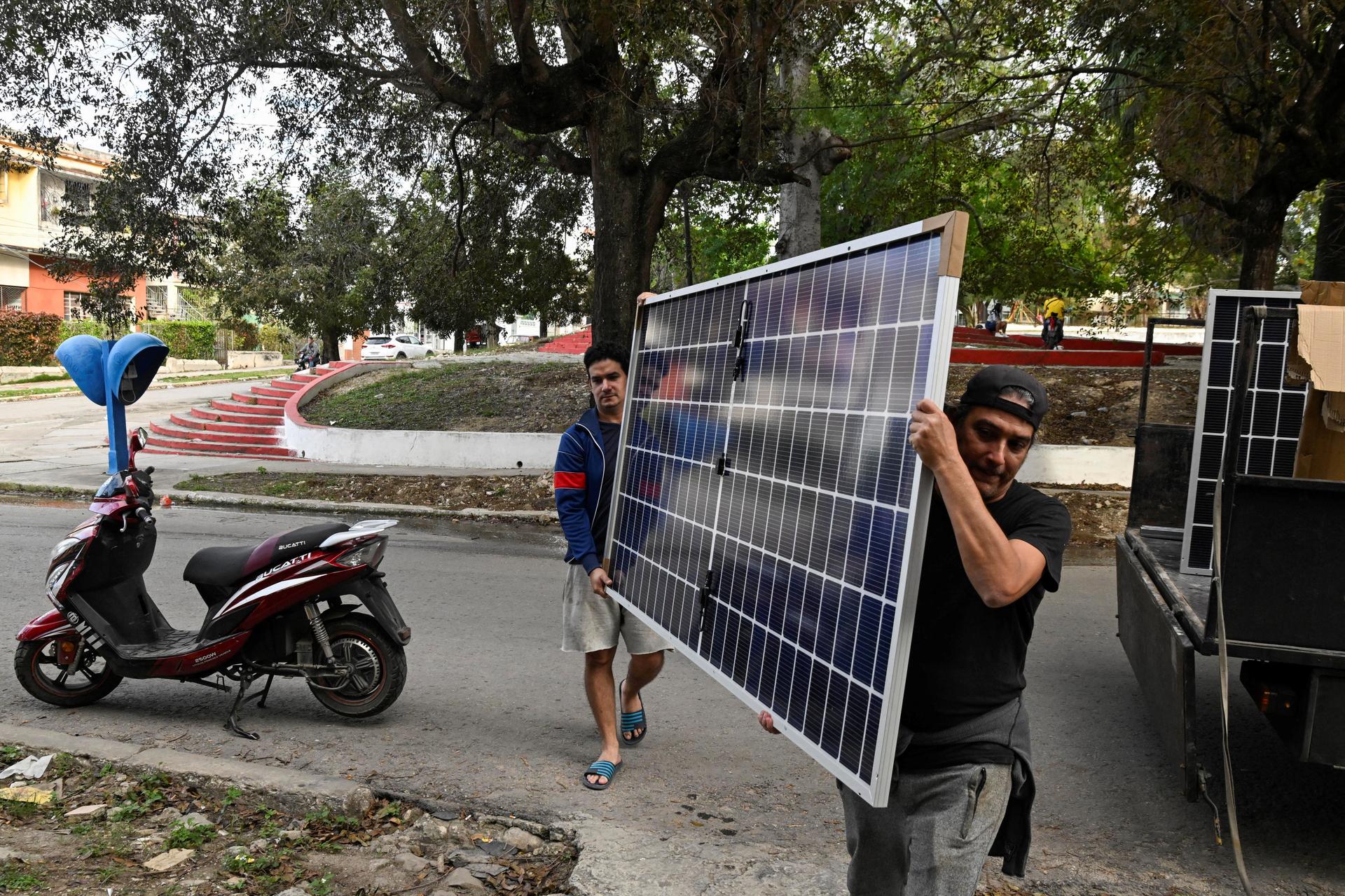
Men carry a recently bought solar panel as Cubans turn to renewables to tackle the ongoing energy crisis exacerbated by fuel shortages, Havana, Cuba. REUTERS/Norlys Perez |
-
Solar increase: Global renewable power capacity reached a record 5,149 gigawatts at the end of 2025 – up 692 GW from 2024 – and made up almost 50% of the world’s electricity capacity last year after a record increase in solar installations, according to data from the International Renewable Energy Agency. Countries with higher renewable capacity have been insulated from the market shock, some analysts say.
-
China’s sustainable switch: Investors are scooping up stocks in China's renewables industry, as they bet on worldwide demand for solar panels, batteries and green energy equipment to reduce dependence on fossil fuels. Paradoxically, China is the world's largest importer of oil that passes through the Strait of Hormuz and also one of the best placed to weather the waterway's closure. Click here for a graphics-led story on how China can survive without the Strait of Hormuz.
-
Brazil renewables issues: Brazil's renewable energy sector is facing severe headwinds, companies told Reuters, with major power generators scaling back operations and cutting jobs due to generation restrictions that the national grid operator imposed on wind and solar plants in 2023. Renewable energy has shielded the country from supply disruptions of fossil fuels used in power generation, such as the war in Iran.
-
EPA lawsuit: Click here to learn more about a coalition of health and environmental groups that sued the U.S. Environmental Protection Agency for repealing federal standards for coal-fired power plants that limited mercury and other harmful air pollutants, noting that the rollbacks put children and vulnerable people at risk.
- Epstein files: Former Berkshire Hathaway chief executive Warren Buffett declined to commit to continuing his annual multibillion-dollar donations to the Gates Foundation, following the recent release of materials about late sex offender Jeffrey Epstein's relationship with the nonprofit and its co-founder Bill Gates.
|
|
|
Less of a ‘conversation’ and more of some key facts from France-based climate tech company Greenly about the carbon emissions emitted during the Iran conflict: “Using established methodologies linking military expenditure to greenhouse gas emissions, Greenly estimates that this corresponds to approximately 1.96 million tonnes of CO2 emitted over the same period (covering the U.S. scope only).
“A significant volume of emissions in a very short time. “This level of emissions, generated in less than a week, highlights the carbon intensity of modern military operations. “To put this into perspective, one day of operations emits around 327,000 tonnes of CO2, which is equivalent to the annual emissions of around 23,000 Americans.
“The first six days had roughly 1.96 million tonnes of CO2, corresponding to the annual footprint of approximately 138,000 Americans.” |
Volunteers chop chicken before cooking a stew for residents of the working-class neighbourhood on the outskirts of Buenos Aires, Argentina. REUTERS/Miguel Lo Bianco |
Today’s spotlight shines a light on efforts to build community in Argentina, as Argentine soccer legend Diego Armando Maradona’s home has opened its doors to feed the disadvantaged.
The house in Villa Fiorito, a poor neighborhood on the outskirts of Buenos Aires, no longer belongs to the family of Maradona, who died in 2020 after a heart attack, but for the last month, its current owner has lent its dirt yard to a group of volunteers who light a grill and cook for neighbors. |
|
|
Sustainable Switch was edited by Jane Merriman. |
|
|
|