| | The price of oil jumps after Donald Trump ramps up threats against Iran, Asia’s refiners feel the pi͏ ͏ ͏ ͏ ͏ ͏ |
| |  ISLAMABAD ISLAMABAD | DALIAN |  TAICHUNG TAICHUNG |
 | Flagship |  |
| |
|
The World Today | 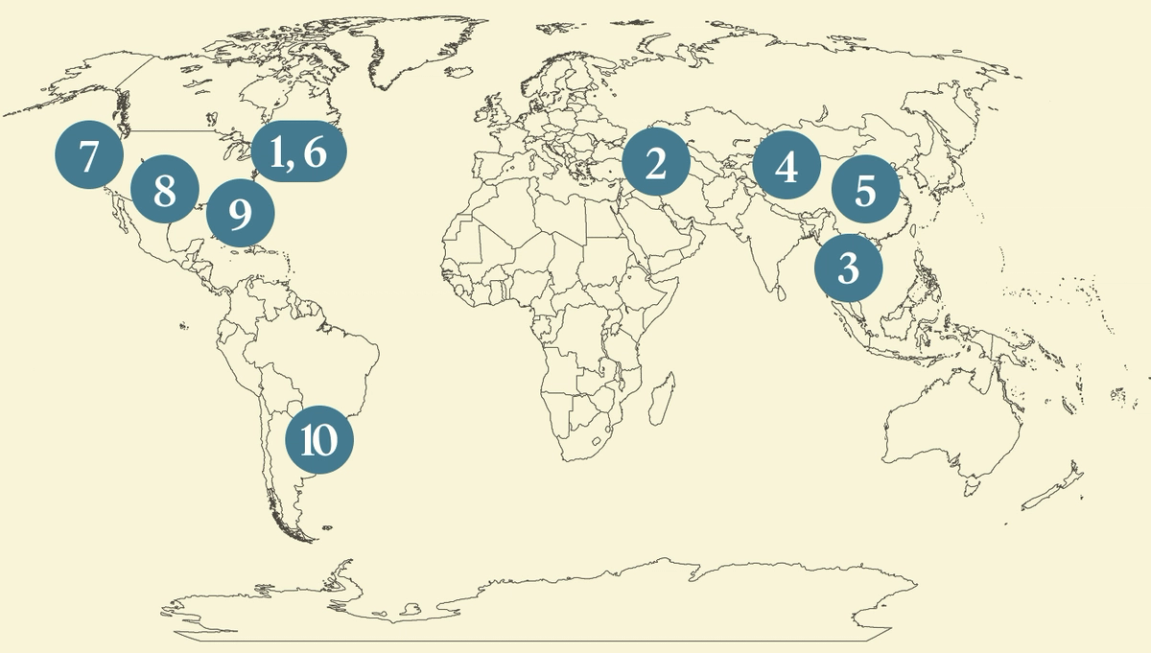 - Oil jumps on Trump speech
- War boosts Iran oil income
- Asia refineries under pressure
- China’s diplomatic overtures
- Tesla’s underwhelming sales
- Trump fires DOJ head
- One year since Liberation Day
- US data center slowdown
- Need for AI modular centers
- UN protects migratory birds
 A nesting doll of translations, and a controversial Chinese soothsayer in our latest Substack Rojak. |
|
US destroys key Iran bridge |
 realDonaldTrump/Truth Social realDonaldTrump/Truth SocialUS President Donald Trump’s renewed threats against Iran failed to drastically change the dynamic of the war or ease the market’s anxious posture. Oil prices jumped after Trump said US forces would hit Iran “extremely hard.” The US on Thursday destroyed Iran’s largest bridge, while Tehran fired more missiles at Israel and the Gulf. Iran’s “tolerance for pain” seems higher than Trump anticipated, and he faces the possibility that after several weeks, “nothing much will have changed,” The New York Times wrote. Trump has also effectively handed off the issue of the Strait of Hormuz to allies. The UK and France are leading a global coalition to discuss making the strait accessible, including encouraging shipowners to resume travel and lowering insurance premiums. |
|
Iran’s oil coffers bolstered by war |
|
Asian oil refiners feel the heat |
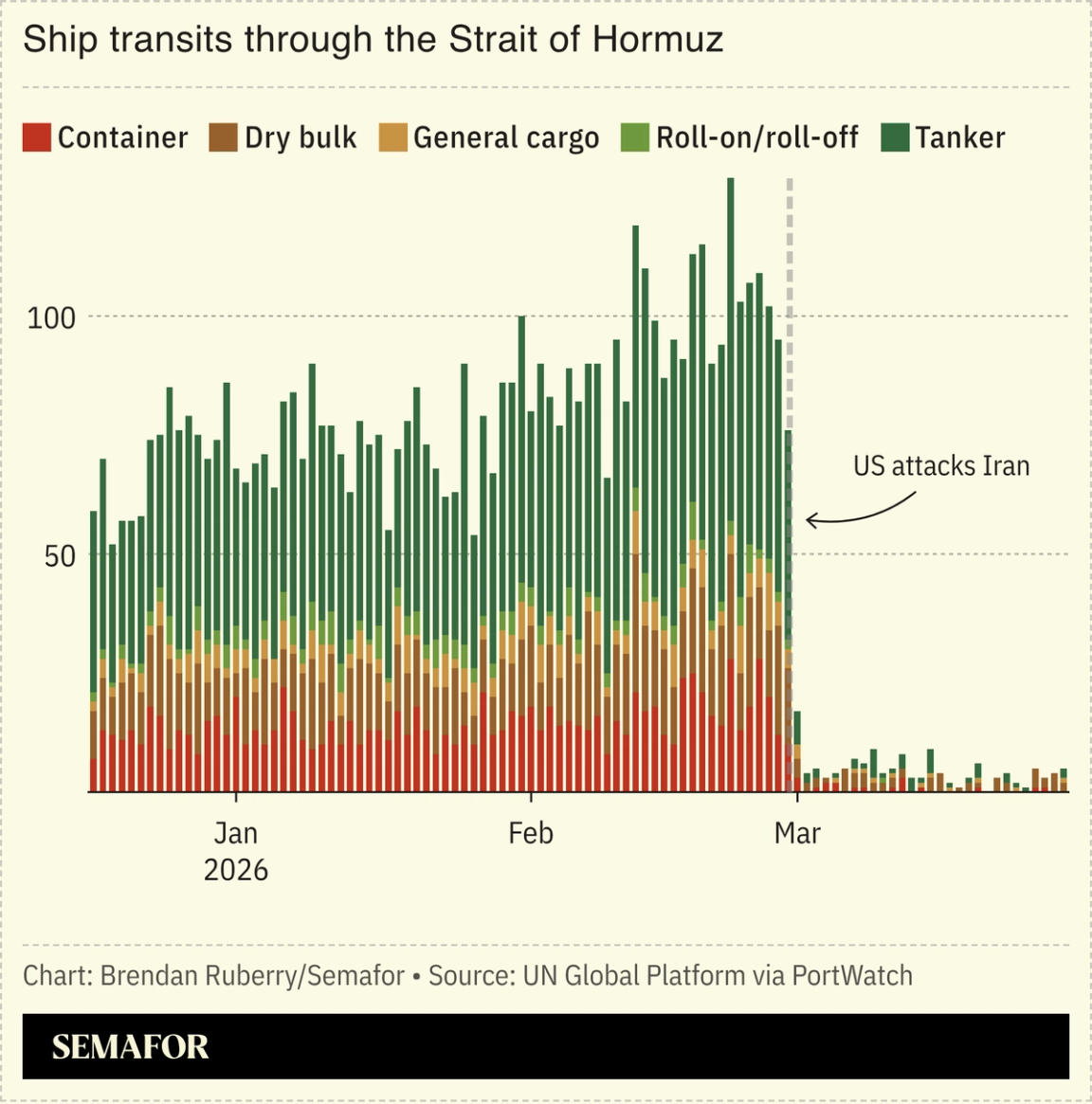 The Iran war is squeezing Asia’s oil refiners. While Tehran has let some Indian-flagged ships carrying LNG through the Strait of Hormuz, many are still stranded, forcing Indian refiners to compete with other nations for Russian crude — at higher prices, The Economist wrote. China told its private refiners, which have long benefited from cheap sanctioned oil, to keep production at 2025 levels, at any cost, Bloomberg reported. And two of Singapore’s refineries, heavily reliant on Middle Eastern crude reserves, have cut output. The region’s challenges will reverberate elsewhere: Singapore supplies 20% of Australia’s refined oil, and Canberra is reportedly considering lowering fuel-quality standards to offset the shortages. |
|
China’s growing diplomatic ambitions |
 Maxim Shemetov/Reuters Maxim Shemetov/ReutersChina on Thursday held talks aimed at ending two global conflicts, a sign of its growing diplomatic ambitions. Beijing mediated negotiations between Pakistan and Afghanistan, neighboring nations that have been fighting since late February. China’s foreign minister also held separate phone calls with his counterparts in Brussels and Berlin, to discuss efforts to achieve a ceasefire in Iran and reopen the Strait of Hormuz. But China’s Middle East peacemaking initiative is merely “a calculated headline grabber, reinforcing Beijing’s image as a responsible power amid US stumbles,” Al-Monitor’s editor-in-chief wrote. China has limited leverage in the region — it has no military footprint, unlike the US — and hasn’t built trust among Gulf powers. “Don’t expect a breakthrough soon.” |
|
Tesla notches narrow sales uptick |
|
Trump fires US attorney general |
 Evelyn Hockstein/Reuters Evelyn Hockstein/ReutersUS President Donald Trump fired Pam Bondi as attorney general on Thursday, marking the second Cabinet shakeup in recent weeks. Trump said that Bondi’s deputy Todd Blanche, who is also the president’s former personal attorney, will assume acting duties, while Bondi transitions to an “important new job in the private sector.” Trump lost confidence in Bondi’s leadership over her handling of the department’s files related to Jeffrey Epstein, leading to her ouster, Semafor’s Shelby Talcott scooped. The move comes nearly a month after Trump fired his head of Homeland Security, Kristi Noem. Some Republican lawmakers want Trump to make personnel changes sooner rather than later, both to minimize election-year distractions and before a possibly strengthened Democratic Congress can obstruct their confirmation. |
|
One year since ‘Liberation Day’ |
|
 Semafor is expanding its presence in the Gulf, accelerating investment in one of the world’s most consequential economic and geopolitical regions. Beginning next week, Semafor Gulf will publish every weekday, alongside expanded reporting and a growing slate of live convenings for regional decision-makers. Since launching in 2024, Semafor Gulf has delivered essential, independent journalism on a region at the center of the global economy and this next phase underscores our ambition to become the leading business and economic news platform of record in the Gulf. |
|
US data center buildout hits hurdles |
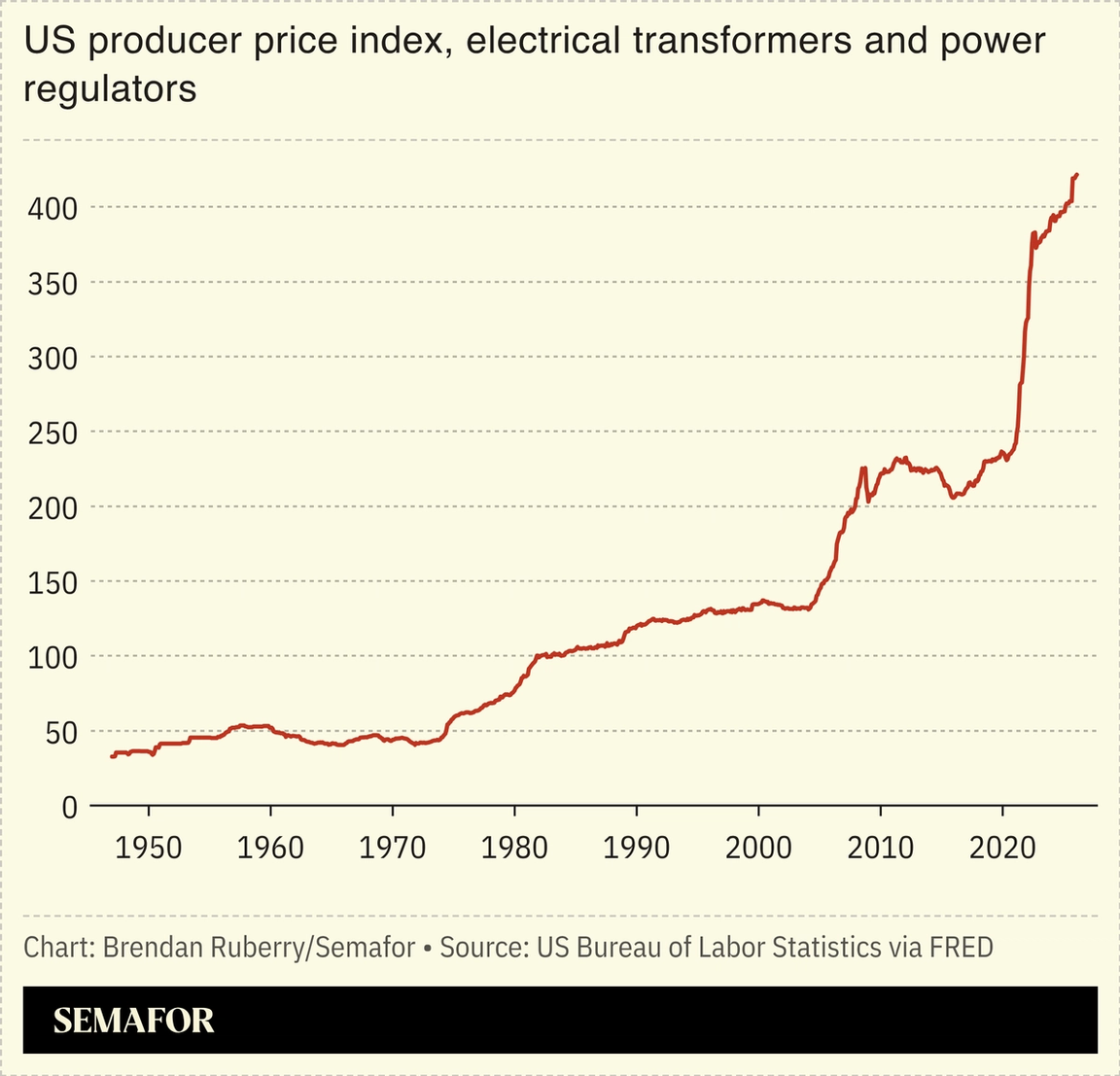 The US’ AI infrastructure buildout is decelerating as the market struggles to keep up with demand. The last quarter of 2025 saw a slowdown in newly added data center capacity, while nearly half of the projects planned for this year are expected to be delayed or canceled, Bloomberg reported. The expansion has been hamstrung by a shortage of electric equipment: Builders have had to rely on largely Chinese imports since American factories aren’t making enough of the components. The US government has had only limited success in trying to reduce its dependence on Chinese devices. Total US imports rose $14 billion in February; about half of that increase can be attributed to AI-related equipment, experts said. |
|
Modular data centers in demand |
The explosion in demand for data centers has led to the rise of prefabricated server farms that can be trucked to the site. Prefab centers are not new — Microsoft experimented with them in 2008. And the principle of cheap prefabrication is familiar to anyone who used a portable classroom in their school days. But tech firms are buying up GPUs in such quantities that their facilities can’t keep up, whether because of slow construction or permitting reasons. Several companies are now offering modular options, housing thousands of processors, and that only require a poured-concrete pad, IEEE Spectrum reported. Manufacturers estimate that the use of modular centers could halve the cost per megawatt. |
|
|


