| | In this edition: South Africa’s record tax collection, Flutterwave granted Nigerian banking license,͏ ͏ ͏ ͏ ͏ ͏ |
| |  Kigali Kigali |  Nairobi Nairobi |  Johannesburg Johannesburg |
 | Africa |  |
| |
|
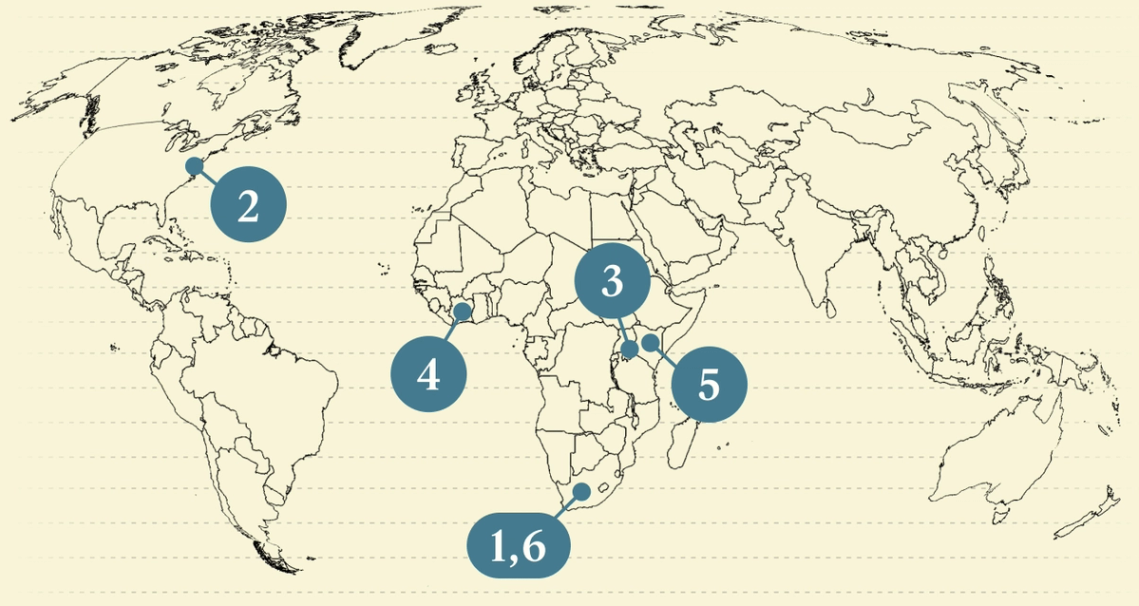 - S. Africa’s record tax haul
- Trump’s Africa vacancy
- Preparing for the AI boom
- Flutterwave’s banking license
- Climate fund is launched
- S. Africa’s water crisis
 A record number of African nations qualify for the World Cup. |
|
S. Africa collects record tax haul |
 Siphiwe Sibeko/Reuters Siphiwe Sibeko/ReutersSouth Africa’s tax authority posted a record 2.01 trillion rand ($117 billion) in collections this fiscal year, an 8.4% rise from a year earlier, giving the government a slim buffer as the continent’s biggest economy grapples with surging oil prices in the wake of the Iran war. It is the first time the South African Revenue Service (SARS) has crossed the 2 trillion rand milestone in its nearly 30-year history, an achievement that outgoing head Edward Kieswetter said was “not an accident” but the outcome of an overhaul in the seven years since he took office. Kieswetter, who is stepping down at the end of month, credited the increased tax revenue to improved compliance. He worked to restructure the tax agency, which was among several institutions mired in inefficiency amid a period of widespread corruption, during the tenure of former President Jacob Zuma. Kieswetter’s successor as tax chief was announced on Thursday. Finance Minister Enoch Godongwana cut fuel levies last week to blunt a “historic” rise in the price of petrol, sacrificing millions of dollars in revenue and raising questions about how long Pretoria can absorb external pressures without reassessing its budget assumptions. — Tiisetso Motsoeneng |
|
Trump set to land top Africa official |
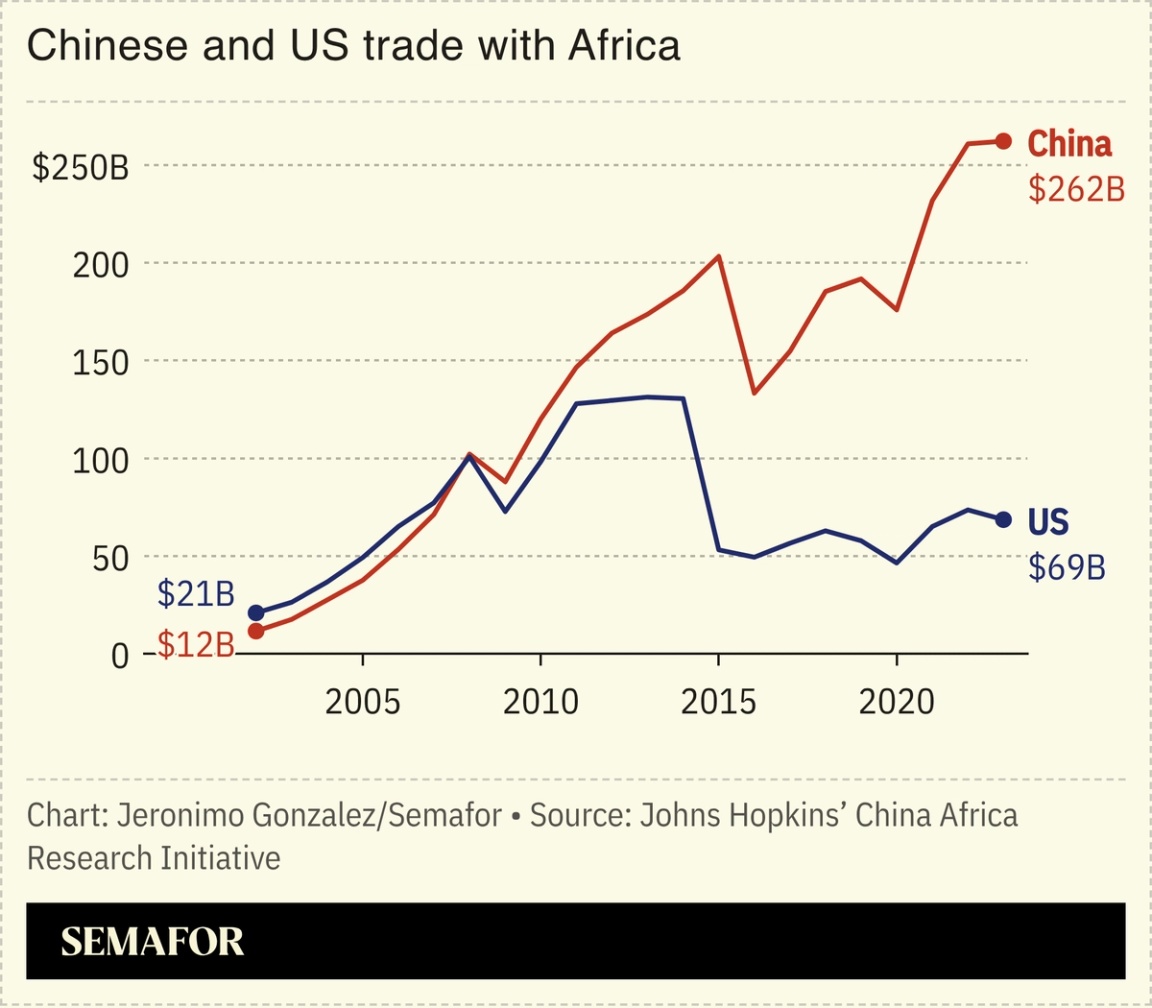 US President Donald Trump is about to get his top Africa official installed at the State Department after a long vacancy. Senate aides told Semafor that the body is expected to vote on Frank Garcia’s confirmation to be Assistant Secretary of State for African Affairs soon after the two-week April recess. The development is significant because of how few US ambassadorships remain unfilled across Africa during a period of uncertainty over trade with the continent and lack of development structures following Trump’s shuttering of USAID. The Senate Foreign Relations Committee voted 16-6 last month to advance Garcia’s nomination, with four Democrats voting in favor of Trump’s pick despite high partisan tensions in Washington. The Navy veteran and longtime Republican congressional aide will replace a succession of interim officials, most recently Nick Checker, a former CIA analyst who has served as senior bureau official. Garcia, during his March 5 nomination hearing, said US Africa policy had “emphasized aid and dependency” for too long and pledged to instead prioritize trade, investment, and protecting “core US national interests.” — Adrian Elimian |
|
Africa needs capital to reap AI boom |
 Yasuyoshi Chiba/AFP via Getty Images Yasuyoshi Chiba/AFP via Getty ImagesAfrican countries should mobilize more capital from domestic markets to adapt to the global shift in economic development sparked by AI, a new UN report said. The AI boom is set to reshape production, consumption, and the way labor markets function. But many African economies that rely on commodity exports are largely unprepared for this data-driven shift, warned the report from the UN Economic Commission for Africa. While the continent’s vast store of natural resources means its nations have leverage to influence the changing landscape, their competitiveness will depend more on an ability to use technology to process knowledge. Only about 1% of the world’s data centers are in Africa, presenting “an economic and sovereignty challenge,” the report said. Scaling up data infrastructure will require a concerted effort towards raising financing. That means carving out more allocation from public budgets, but also mobilizing capital from pension funds, sovereign wealth funds, and blended finance instruments, the report said. — Alexander Onukwue |
|
Flutterwave granted banking license |
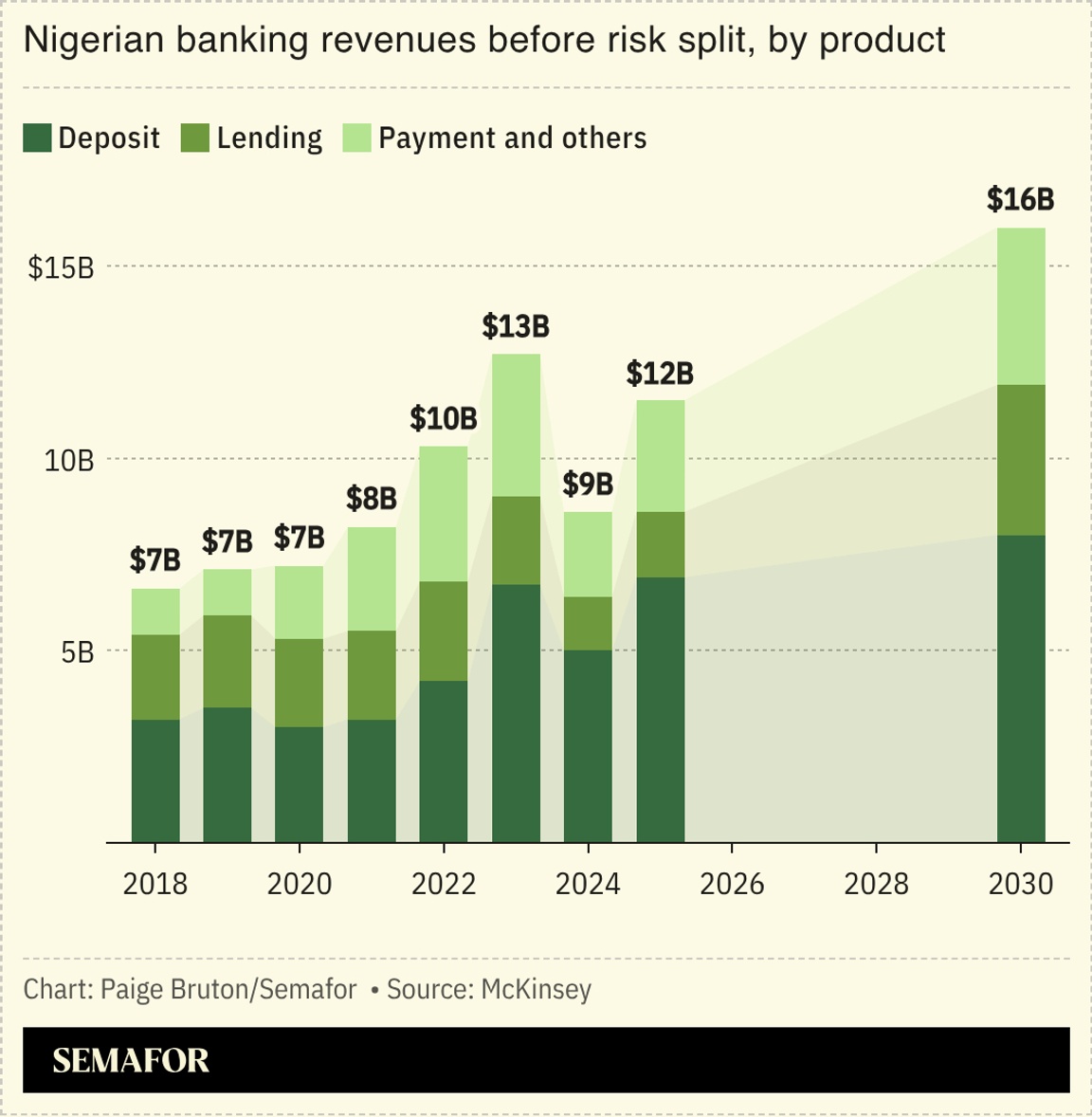 Nigerian digital payments company Flutterwave was granted its first banking license in the country, the latest sign of a push among Africa’s fintech leaders to diversify and capture more of the value in the continent’s growing digital economy. Flutterwave has mainly operated as a digital payments processor since it was founded in 2016, which meant that it had to depend on and share revenue with partner banks in Africa’s most populous nation. But owning a license gives the Lagos-headquartered company greater autonomy. The firm, which also offers cross-border remittance services and operates in 35 African countries, said it will now be able to hold customer deposits, offering savings and credit products. Competition in Nigeria’s banking scene has increased between legacy brick-and-mortar institutions and digital-first upstarts, driven by increased broadband penetration and smartphone affordability. Flutterwave is entering the scene after fintech players OPay, Palmpay, and Moniepoint have demonstrated consumer appetite for app-based banks that provide fast transaction settlements that commercial banks were slow to adopt. — Alexander Onukwue |
|
Novastar launches $147M climate fund |
 Tony Karumba/AFP via Getty Images Tony Karumba/AFP via Getty ImagesStartup investor Novastar Ventures launched one of the continent’s largest ever funds backing climate-focused tech businesses. The Kenya-based firm, which raised $147 million, has already made six investments from the fund, including in Mexican biodigester producer Sistema.bio that serves farmers in Kenya. African venture capital funds dedicated to climate solutions are rare. Existing African climate-tech funds include Equator’s $55 million fund raised last year and the Persistent Africa Climate Venture Fund that has raised about three-quarters of its $70 million target. Development financiers feature significantly in the investor base for African climate funds, since they tend to back projects that typically fail to attract funding from more risk averse venture capitalists. The drive for climate investments in Africa stem from the disproportionate burden the continent bears from a changing climate. The continent contributes less than 4% of carbon emissions, but annual adaptation costs will be at least $30 billion over the next decade, according to the World Meteorological Organization. — Alexander Onukwue |
|
S. Africa’s water crisis deepens |
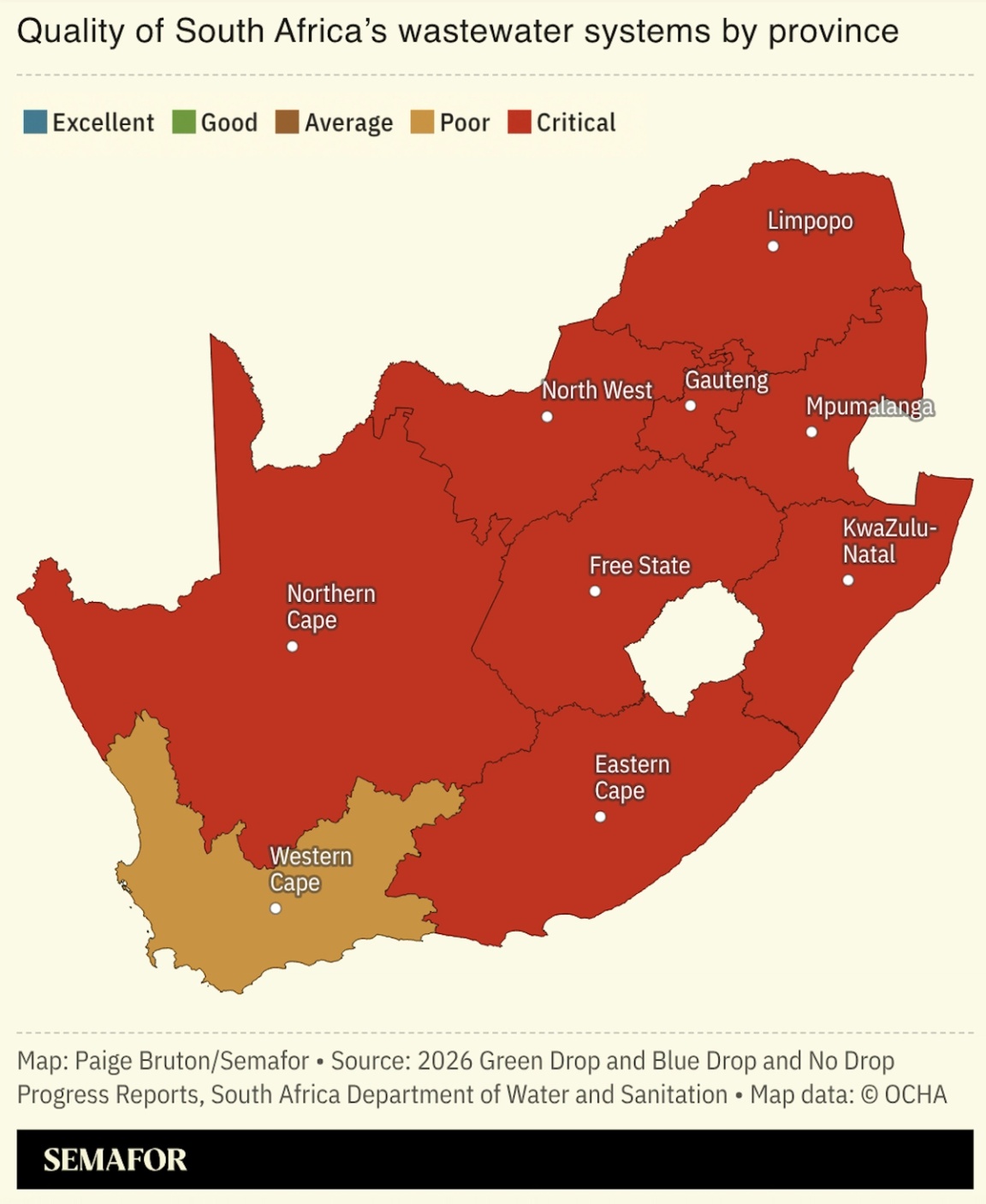 Nearly half of South Africa’s water infrastructure systems are failing, according to a new government report. The findings raise the stakes for President Cyril Ramaphosa’s policy overhaul aimed at tackling a crisis that resembles the early stages of the country’s national power grid collapse. A national assessment by the water and sanitation department showed that 47% of municipal water systems are now in a critical state, up from 39% just three years ago. At the same time, the share of systems rated good or excellent has shrunk to by almost half to just 8%. The scale of the decline has sparked protests, soured the mood in boardrooms, and eroded the dominant African National Congress’ electoral popularity. The problems have drawn comparisons with the crisis at state power utility Eskom, where years of deferred maintenance and weak governance led to rolling power cuts that crippled Africa’s most industrialized economy. Ramaphosa has responded to the water crisis by establishing and chairing a National Water Crisis Committee, elevating water to a presidential authority alongside electricity and logistics. — Tiisetso Motsoeneng |
|
 - “You can play games with quite a lot of things, but one of those should not be the leadership of a country,” former Congolese President Joseph Kabila tells the New York Times. In his first major interview in eight years, Kabila opens up about what he wishes he had done differently during his 18 years in power, why he chose to live in the city of Goma, which is currently run by the ruthless militant group M23, and whether or not he plans to run for president again.
- African countries are particularly vulnerable to the global surge in energy, fertilizer, and food prices sparked by the war in Iran. Local currencies have already fallen in value compared to the US dollar, and interest rates are likely to begin increasing again. University of Pretoria geoeconomics professor Danny Bradlow offers a roadmap, published in The Conversation, on how states can adjust their relationship with creditors to emerge unscathed from the Iran crisis.
- The Horn of Africa is a chessboard, and the port city of Berbera is “the square that controlled the board,” Abdullahi Mohamed Boru writes in Africa is a Country. The region has long been at the mercy of foreign powers, from the Soviets during the Cold War, to Emirati state-backed developers, and Israel, which recently recognized the independence of Somaliland, the breakaway state where Berbera is situated. Now the Iran war threatens to unravel a facade of security that had in fact been “sub-contracted” to foreign powers, Boru argues.
- The seizure of 5,000 giant harvester ant queens in Kenya raised questions about the market for the insects. UK-based retailer Ants R US describes the giant harvester ant as “many people’s dream species,” as many collectors enjoy watching the ants build a colony over time in giant transparent boxes. The BBC’s Wycliffe Muia explores why ant trafficking has become so lucrative, and the potentially devastating effect the species could have on natural environments outside of East Africa.
|
|
 Semafor is expanding its presence in the Gulf, accelerating investment in one of the world’s most consequential economic and geopolitical regions. Beginning this spring, Semafor Gulf will publish every weekday, alongside expanded reporting and a growing slate of live convenings for regional decision-makers. Since launching in 2024, Semafor Gulf has delivered essential, independent journalism in a region at the center of the global economy. This next phase will expand Semafor Gulf’s independent reporting and analysis as the region’s business and economic news platform of record. |
|
|


