I sincerely don’t remember the last time I saw a fax machine. But that’s, perhaps, because I don’t work in health care.
“Yes, in 2026, fax is
still probably the most common way of sending documents between primary care and specialty clinics,” said Jaimal Soni, cofounder and CEO of Insight Health.
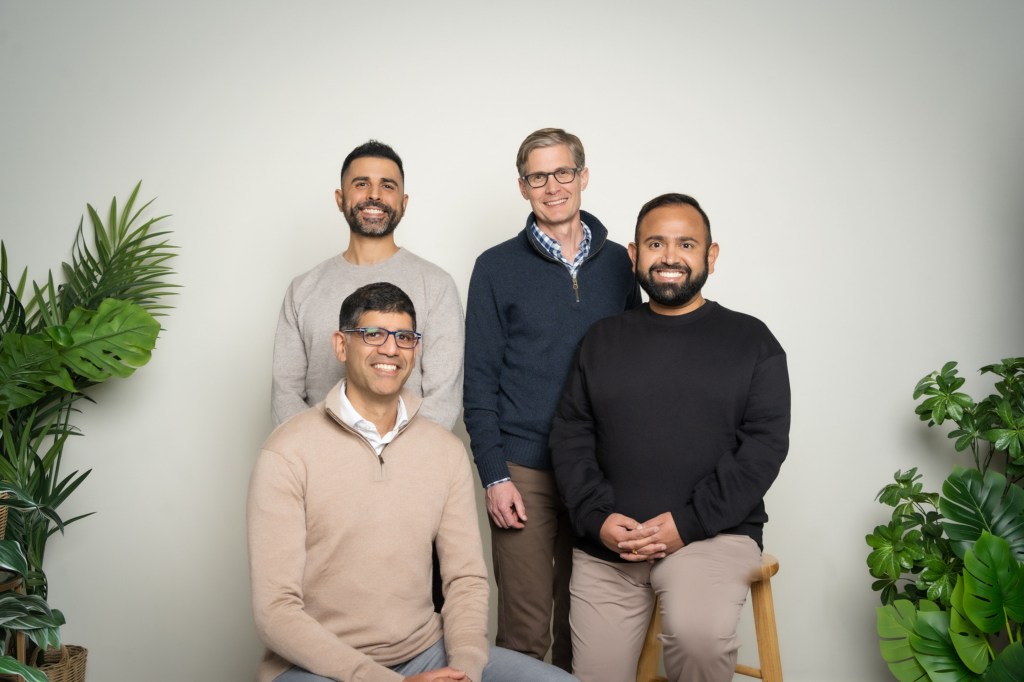
Soni—who was previously at Segment when it was acquired by Twilio for $3.2 billion—cofounded Insight in 2023 with Dr. Eric Stecker, Dr. Pankaj Gore, and Saran Siva. The idea was that tech could solve medicine’s fax problem.
“I spent twelve years in training during and after medical school to treat patients during some of the hardest moments of their lives and make complex clinical decisions,” said Stecker, who’s also a cardiologist and professor at Oregon Health & Science University, via email. “What I didn’t sign up for was spending a third of my time on prior authorizations, chart prep, and paperwork. Burnout’s a systems failure, and it has real consequences like more medical errors, less time with patients, and physicians leaving practice altogether.”
Insight’s been building patient-facing AI assistants that take in referrals, reach out to patients and collect clinical history, and schedule low-risk, routine procedures. The company is among a slew of venture-funded startups at the intersection of AI and health care looking to improve efficiency in an industry where administrative costs in the U.S. are estimated to be as
high as $1 trillion annually. To this end, Insight’s raised an $11 million Series A,
Fortune has exclusively learned. The round features an unexpected lead investor, the newly formed Standard Capital, run by former Y Combinator managing partner Dalton Caldwell. Pear VC, Kindred Ventures, Eudemian, ElevenLabs, and 43 also participated in the round.
“To the best of our knowledge, we did the first ever fully autonomous patient encounter run by an AI model,” said Soni. “[The patient was] in front of a computer in a consult room with a nurse practitioner chaperoning the whole thing, and Lumi, which is our virtual care assistant, was actually having the conversation with the patient…That intake basically shaved off 15 to 20 minutes from that first visit…Rather than replace care, you’re actually augmenting it.”
The backlogs are real for these clinics, Soni said, recalling one GI clinic that had a backlog of six months, and 4,000 procedures that were waiting to be scheduled, representing millions in revenue. This is, of course, a problem that compounds—the longer the backlog, the tougher it is to clear. But starting to clear it gives everyone time back.
“AI offices do not replace clinicians but rather help cut through the fog, allowing clinicians to spend their time more meaningfully with patients,” said Dr. Tammy De La Melena, a breast surgical oncologist and Insight customer, via email. “Frequently, doctors feel that we are a rubber stamp in a limited encounter, when we wish we had more time with the patient to tease out a better solution than the system in place allows. Any platform that allows us doctors to spend meaningful time with our patients paradoxically, is a step forward.”
See you Monday,
Allie Garfinkle
X: @agarfinksEmail: alexandra.garfinkle@fortune.comSubmit a deal for the Term Sheet newsletter
here.
Joey Abrams curated the deals section of today’s newsletter. Subscribe here.