| Forwarded this email? Subscribe for more |



 |
| By Aaron MacLean | PREVIEW |
This piece, originally published before the fate of the second missing American airman in Iran was known, has been updated to reflect the remarkable—indeed, near miraculous—facts of his rescue.
 |
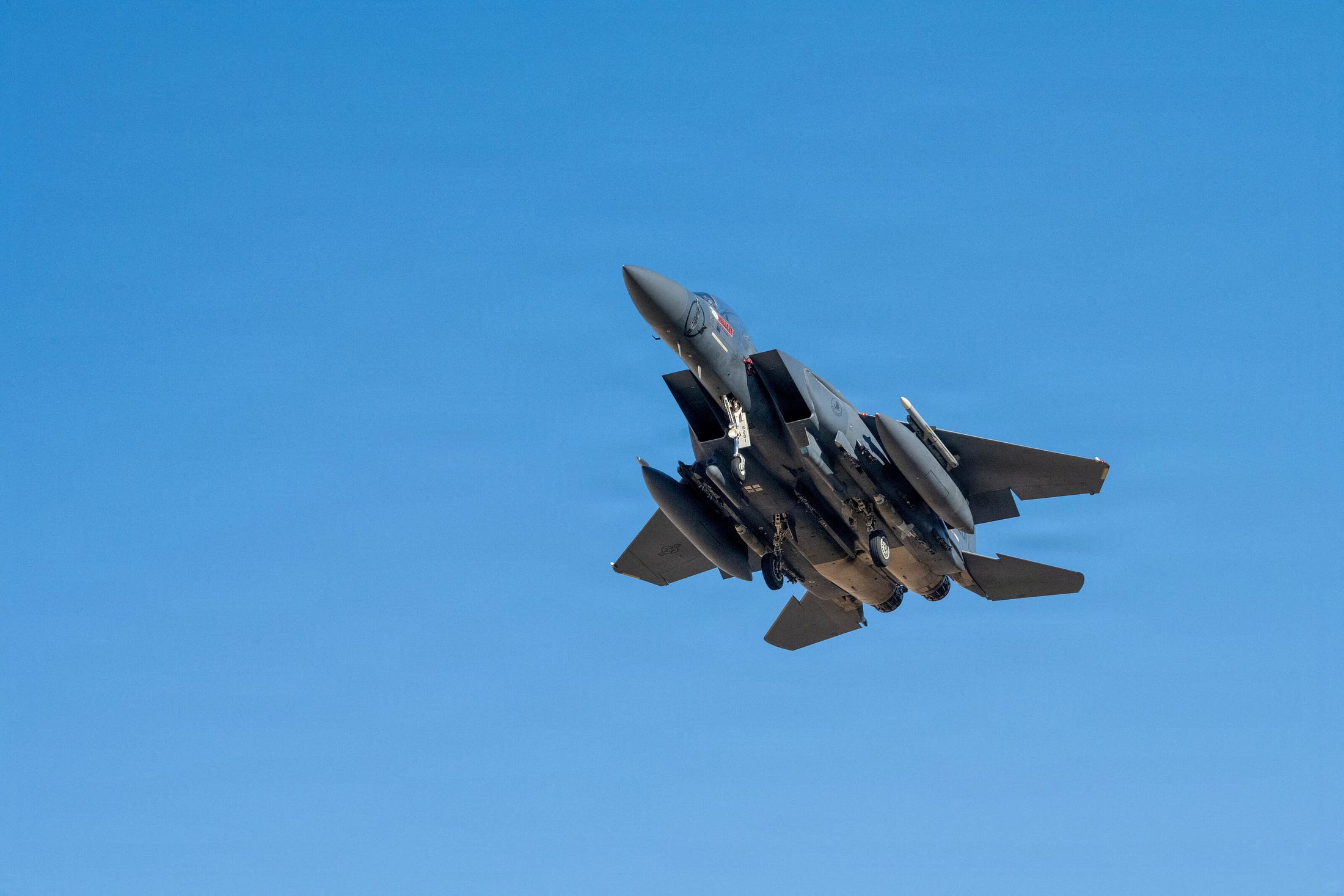
On Good Friday, two American airmen were lost in Iran, as Iranian air defenses shot an F-15E fighter jet out of the sky. The first was rescued swiftly on Friday, and early on Easter Sunday, we learned that the second airman was safe as well, saved in an extraordinary special operations mission. It is a kind of Easter miracle.
Videos that circulated widely on Friday capturing moments of a bold daylight rescue operation for the first crewmember were harrowing enough, showing American combat search-and-rescue aircraft flying behind enemy lines over Iran. Two of the helicopters involved reportedly were hit, injuring some of the crew aboard. A second American jet, a close-air-support A-10 Warthog, was shot down, though its pilot was able to fly clear of the immediate combat space before ejecting. The downing of this F-15E and of the A-10 are the first losses of American jets to enemy fire in decades.
But the second rescue, which played out into early Sunday morning, appears to have been even more intense. The second downed airman reportedly hid from Iranians searching for him in mountainous terrain, his location unknown even to Americans for some time. His efforts to evade the enemy reportedly took him up a 7,000-foot ridge, with American aircraft bombing Iranians who were in pursuit. As darkness fell for a second night, American special operations forces hastily constructed a forward air base inside Iran itself, and then rescued the airman by plane. Before leaving, American forces had to destroy several of their own aircraft on the ground that had become stuck and could not take off. Incredibly, no American lives were lost.
What kind of person flies these kinds of missions—and what kind of person assumes the burden of rescuing downed airmen from behind enemy lines?
My mind turns to a night in Cambridge, England, some years ago, spent drinking with American airmen from the nearby bases from which our Air Force has flown since the 1940s. The downed American jet, lost somewhere in the hills of western Iran, reportedly came from a squadron based in Royal Air Force Lakenheath. On weekends, the men and women of Lakenheath sometimes make the trip to Cambridge, to a pub called The Eagle.
The Eagle is much like any other such establishment you might find in Cambridge—the same kind of quaint old building; the same clientele, a mix of students and faculty and tourists. But since the middle of the last century, it has also been a gathering spot for British airmen and their American comrades—the forces that battled for, and have since policed, the skies over Europe and beyond. Its walls are covered with the unit insignias of squadrons from around the world. Its ceiling is graffitied with signatures of airmen from World War II. As the Nazis swept through Europe, the flat, marshy land of East Anglia, so close to the coast of the continent, was destined to become in effect the world’s largest aircraft carrier. Famous fighting organizations like the Eighth Air Force—the “masters of the air”—left from this part of England each day to attack Adolf Hitler’s factories...
Continue reading 'An Easter Miracle in Iran' | |||||||||||||||||||||||||||
Or | |||||||||||||||||||||||||||
|


