Hi! Now we’ve heard it all... Audible, the Amazon-owned audiobook giant, is opening a “bookless bookstore” pop-up in New York next month, equipped with story “tiles” and seven “listening spaces.” Today we’re exploring: |
-
Cryptic: Might the NYT have uncovered one of the crypto world’s biggest mysteries?
- Claude nine: Anthropic just overtook OpenAI in the revenue race, at least on paper.
- Space race: America returns to the moon after 50+ years amid rivalry with China.
|
Has the identity of bitcoin’s mystery creator been unchained? |
From Agatha Christie’s enduring detective novels to unmasking modern enigmas like Banksy, there’s no doubt that people love mulling over a whodunit.
For the crypto community, the question mark that’s loomed since a nine-page proposal for an electronic cash system called “bitcoin” appeared on the internet in 2008 has been the identity of its creator.
Working under the pseudonym “Satoshi Nakamoto,” bitcoin’s creator has left virtually no digital footprint, with countless forums trying to pinpoint their identity over the last 17 years. Now, an investigation from The New York Times claims to have an answer. |
Published early Wednesday, the piece sees author John Carreyrou put forward several striking similarities, based on a body of evidence amassed over a yearlong inquiry, between the so-called Satoshi and 55-year-old British cryptographer Adam Back, who currently leads the Bitcoin Standard Treasury Company, which plans to go public via a SPAC merger this year.
|
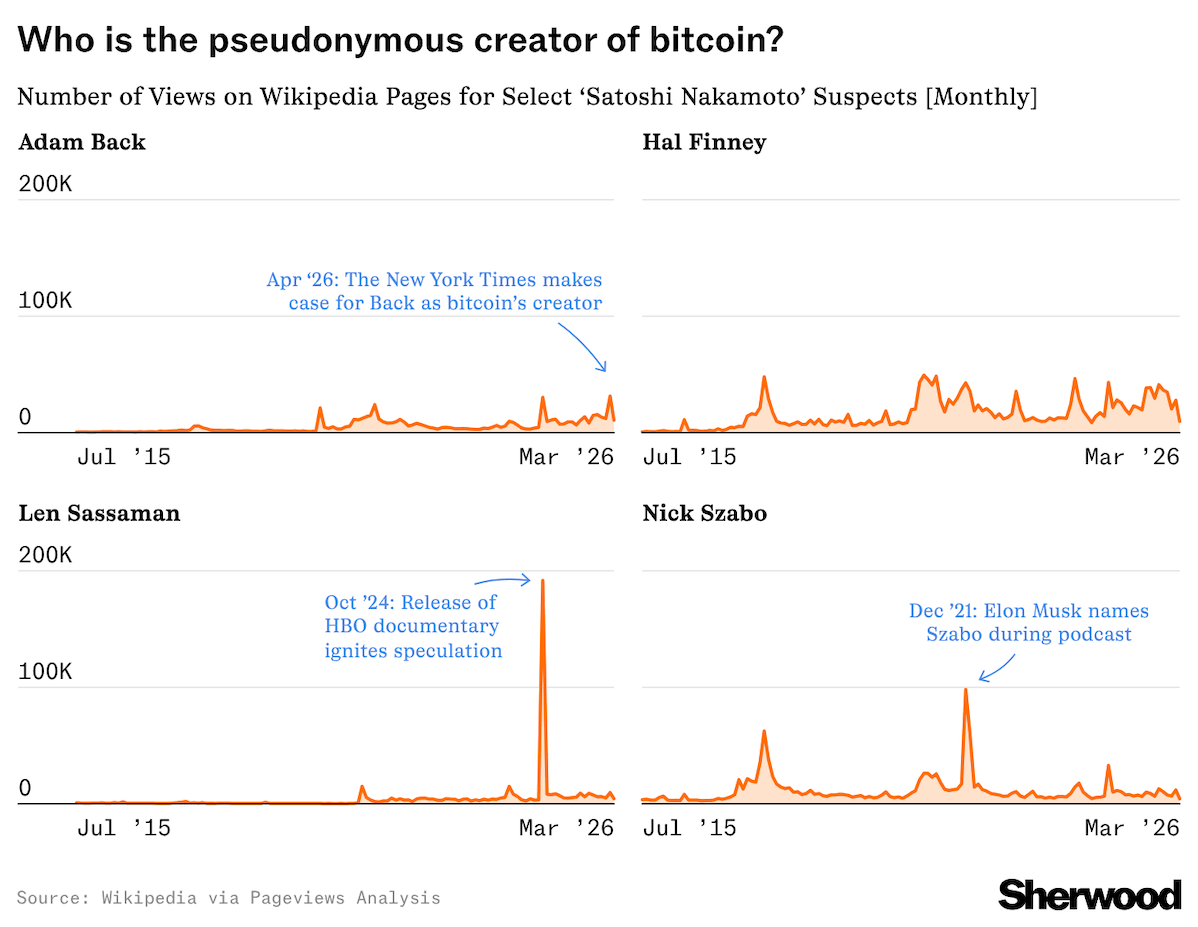
Back’s Wikipedia page has gained traction over the last decade, and his name has repeatedly cropped up in previous theories alongside a handful of other computer scientists: Hal Finney, who received the first-ever bitcoin transaction from Satoshi; Len Sessaman, a cryptographer named in a 2024 HBO documentary; and Nick Szabo, the creator of Bit Gold, who’s been the subject of even Elon Musk’s speculation.
Carreyrou’s argument for Back cites a series of inventions, matching credentials, similar grammar habits, and a period of Satoshi inaction that all but says, “Have you ever seen them in the same place?” While Back has already denied the report, one thing is certain: efforts to unmask bitcoin’s creator will continue, even if there are some who believe it’s better if the world never knows for sure.
|
Anthropic’s revenue run rate just topped $30 billion — that's ahead of OpenAI, depending on how you count |
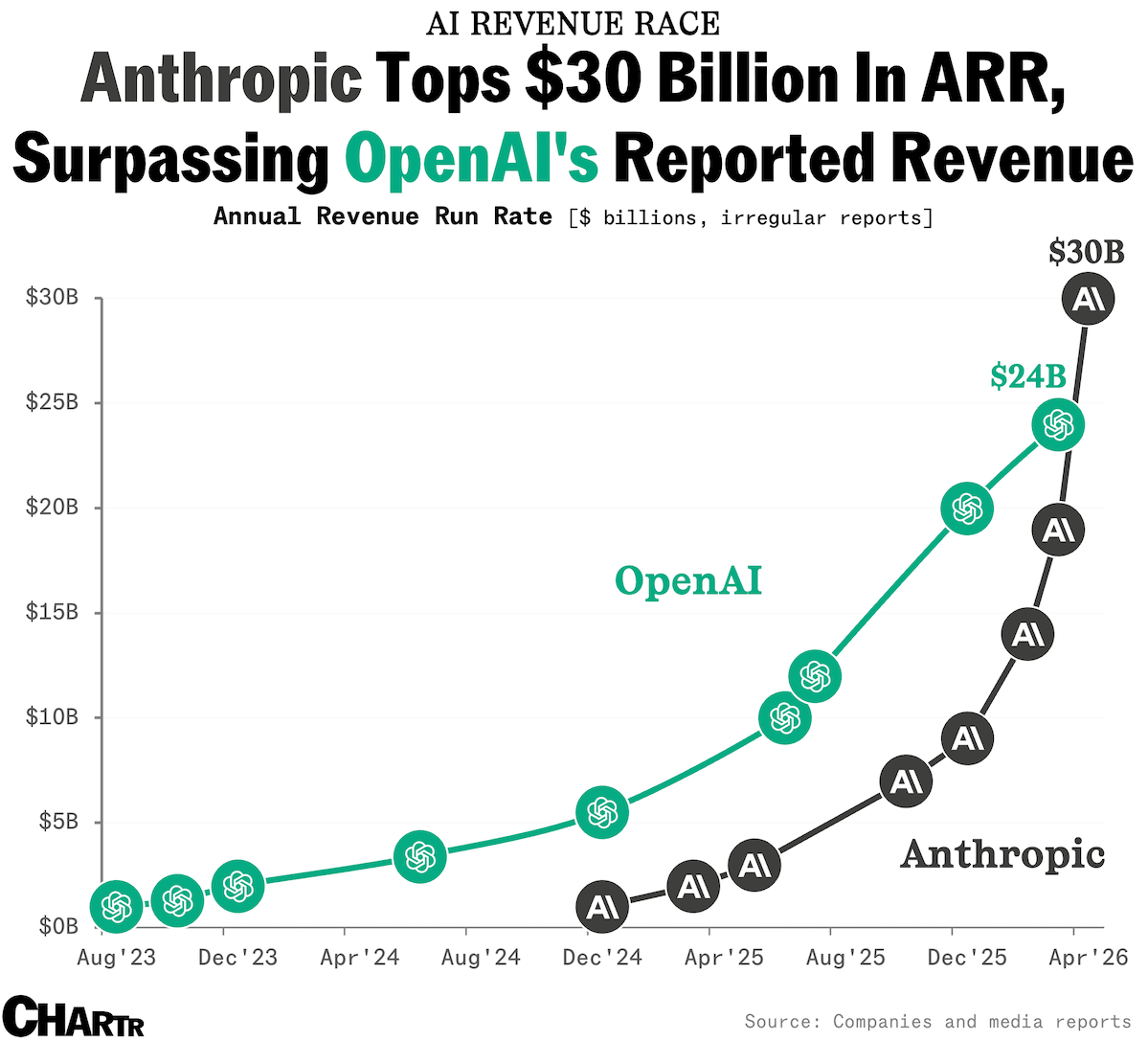
Anthropic said Monday that its annual revenue run rate has topped $30 billion, more than triple the ~$9 billion rate reported at the end of 2025. At least on paper, that places the Claude maker ahead of OpenAI, which disclosed roughly $24 billion in ARR on March 31— a remarkable leapfrogging that would have seemed unthinkable just six months ago.
The jump came alongside the announcement of an expanded partnership with Google and Broadcom, which will give Anthropic access to 3.5 gigawatts of AI compute capacity starting in 2027 to help meet surging demand for its Claude products. The company's latest model, Mythos, is already turning heads, with more than 1,000 enterprise customers now spending over $1 million annually, double the 500 or so it posted in February.
|
Still, as remarkable as Anthropic’s near-vertical growth looks, it may not have actually surged past its rival in the AI revenue race, since the comparison isn’t apples-to-apples.
Both OpenAI and Anthropic sell their AI models through cloud partners such as AWS, Google Cloud, and Microsoft Azure, which take a slice of revenues generated through their platforms. But the two account for those sales differently. According to The Information, Anthropic records the full amount a cloud customer pays as revenue, later counting the partners’ cut as an expense. OpenAI, by contrast, records what it actually receives after the cloud provider takes its share — at least in the case of Azure, its primary cloud partner.
In fact, The Information estimates Anthropic could pay roughly $1.9 billion to cloud providers this year and as much as $6.4 billion in 2027 based on the startup's most optimistic forecasts, meaning the revenue gap with OpenAI could be narrower than it appears. |
|
|
Real Assets Are Rallying. Is Your Portfolio Ready? |
If you’re asking about gold hitting new highs, the real question isn’t about how to own gold. It’s about how to position for a broader real assets cycle.
Gold’s record-breaking run is a signal that the investment regime is shifting. The AI buildout, reshoring, and massive infrastructure spending are fueling a decade-long capex cycle. Data centers need energy; AI needs copper; reshoring needs steel; and the future needs real assets.
RAAX, the VanEck Real Assets ETF, is a one-stop shop that actively rotates across gold, commodities, energy, infrastructure, and natural resources, adapting as the macro environment shifts.
With 70 years of expertise in real assets, VanEck built RAAX to help investors move beyond the traditional 60/40 portfolio and gain active, diversified exposure in a single allocation. Check out RAAX. |
|
|
Over 50 years since it last sent astronauts to the moon, the US is now reentering a very different space race |
Last Wednesday, a group of NASA astronauts set off on the first crewed lunar flyby since 1972. The world of space travel, much like life on Earth itself, captured in new hi-res images over the weekend, has changed a lot in those 54 years.
The Space Launch System, for example, is considerably more advanced technology than Apollo’s Saturn V rocket; the crew is one person bigger than its predecessor; and the mission comes amid a rivalry with an Eastern nation that isn’t Russia. |
NASA Administrator Jared Isaacman recently commented that one of the main motives for the US to reinitiate its lunar exploration programs is the progress that China has been making in space.
As outlined by The New York Times, China is the only country to have landed on and retrieved samples from the far side of the moon — the same side that the US aims to land human astronauts on by 2028 — with its seventh robotic mission exploring the lunar south pole slated for later this year. For its part, China aims to place its own astronauts on the nearer, Neil Armstrong-trodden side of the moon by 2030.
Right now, China’s astronomical ambitions appear to be leaner than America’s. But that hasn’t stopped the US from ramping up its moon missions. |
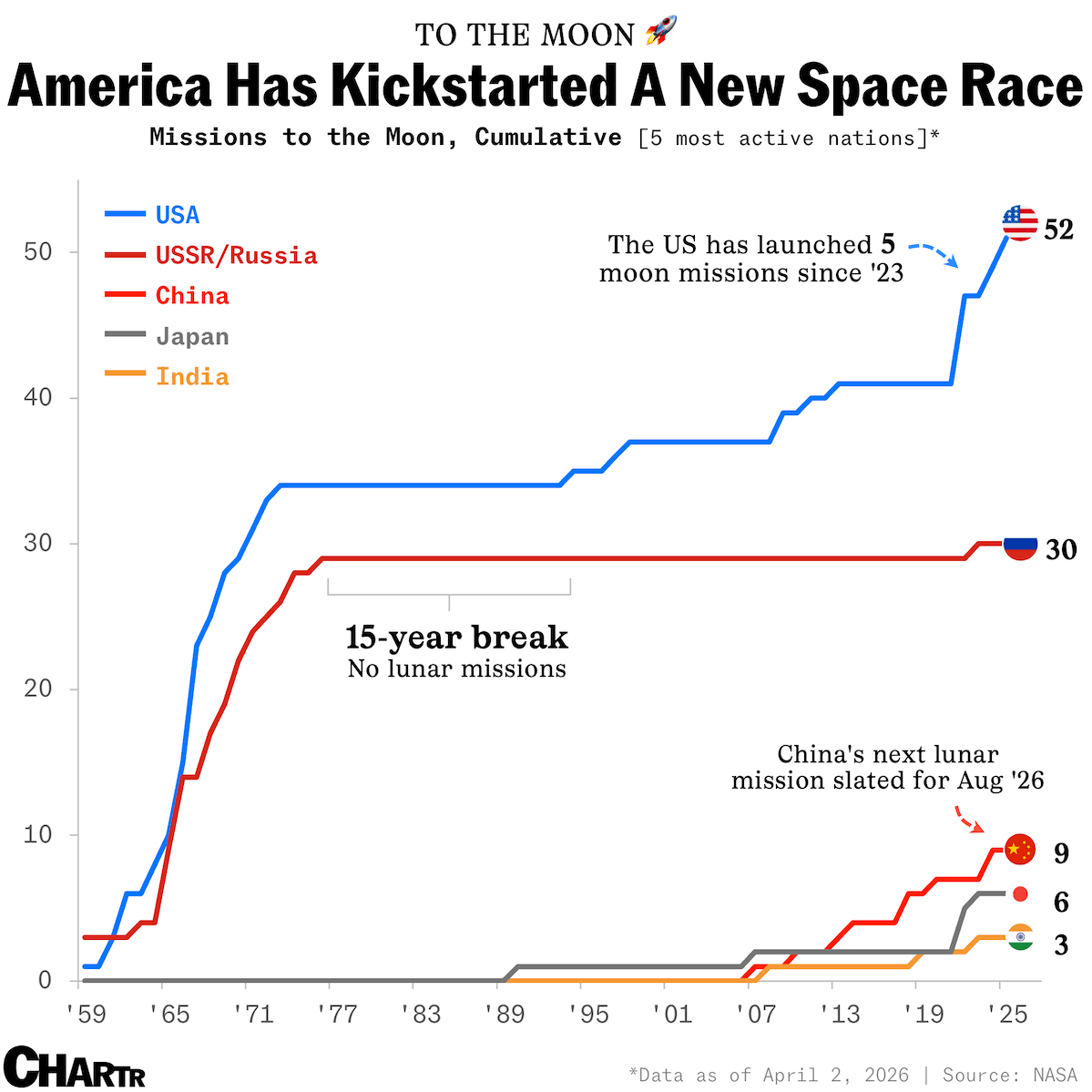
Data from the NASA archive shows that the US kicked its lunar program back into motion in 2022, when the agency launched six missions in a single year and five further missions over the next three years. Russia’s efforts have all but plateaued following the mid-20th-century space race, while China’s have accelerated significantly since first launching its lunar initiative in 2004.
Regardless of speed, both nations have similar plans once they get to the moon’s surface, including establishing outposts to tap rare earth elements and building nuclear reactors to power deep space missions. |
|
|
-
Oil prices saw their steepest single-day drop in six years today after the US-Iran ceasefire announcement, sending a broad swath of energy stocks sharply lower this morning.
- Secure the bag: Delta is raising domestic flight baggage fees by $10 to offset rising jet fuel prices, following similar hikes by JetBlue and United last week.
-
Greece today confirmed that it will ban under-15s from accessing social media starting in 2027, roughly a year after Australia’s world-first ban last December.
- New analysis from the NYT and AI start-up Oumi suggests that Google’s divisive AI overviews were accurate on 91% of queries in February, up from 85% in October.
-
Shellshocked: Despite rumors circulating last week, it’s been confirmed that the world’s oldest living animal — a 193-year-old tortoise called Jonathan — is, in fact, still alive.
|
|
|
VanEck has been in real assets for 70 years. If you’re aiming to add inflation protection and real-world diversification to your portfolio, RAAX VanEck Real Assets ETF could be what you’re looking for. |
|
|
-
Drawn out: Take your best guess for the one-year impact of President Trump’s tariffs on US trade with this interactive Reuters piece.
-
The stunning winners from Rest of World’s 2026 Photo Contest.
|
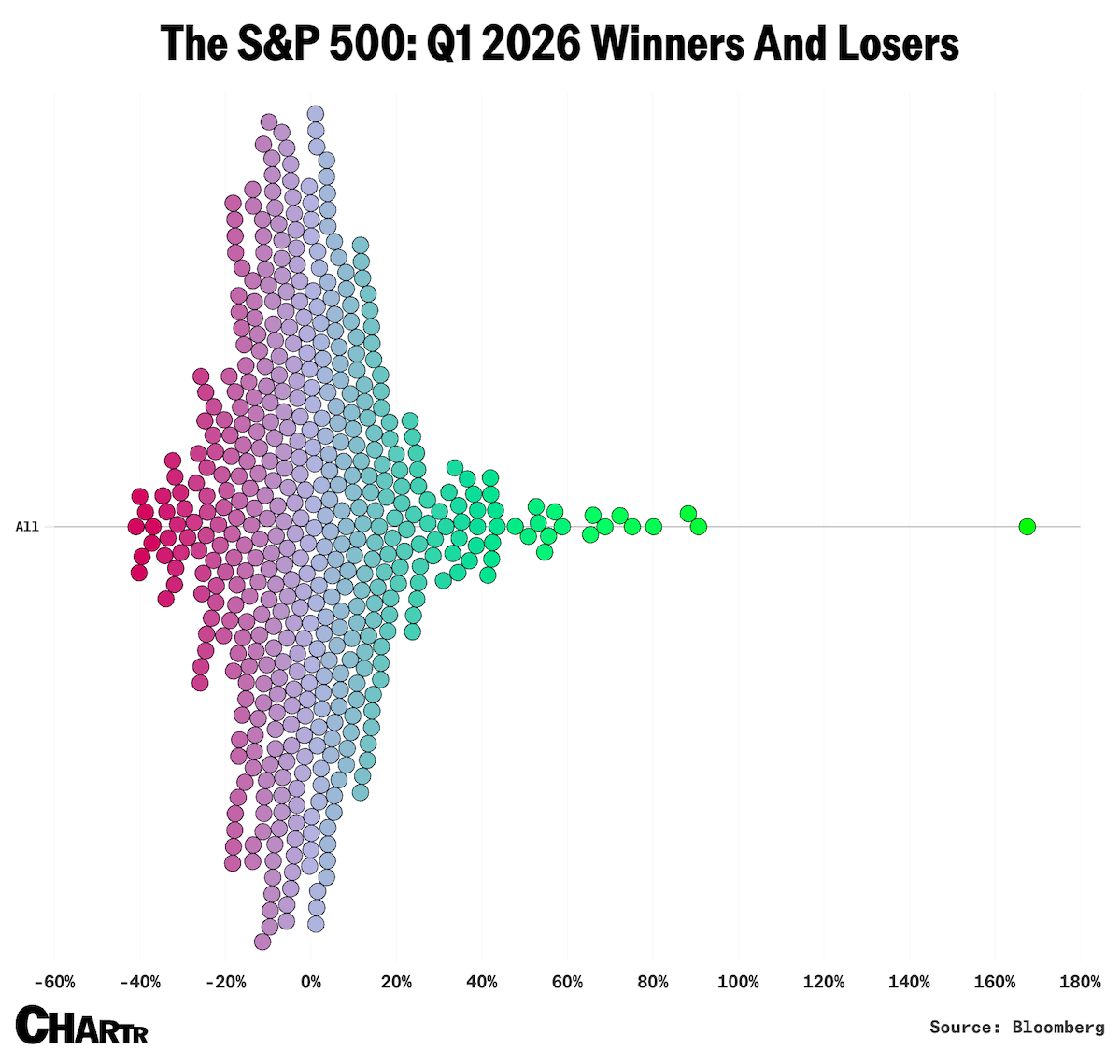
Off the charts: Which company became the S&P 500’s top performer in Q1 with a staggering 168% gain? [Answer below]. |
Not a subscriber? Sign up for free& |
|
|
|