| | The US-Israel-Iran ceasefire proves tenuous in its first 24 hours, Israel says its war goals are inc͏ ͏ ͏ ͏ ͏ ͏ |
| |  | Flagship |  |
| |
|
The World Today | 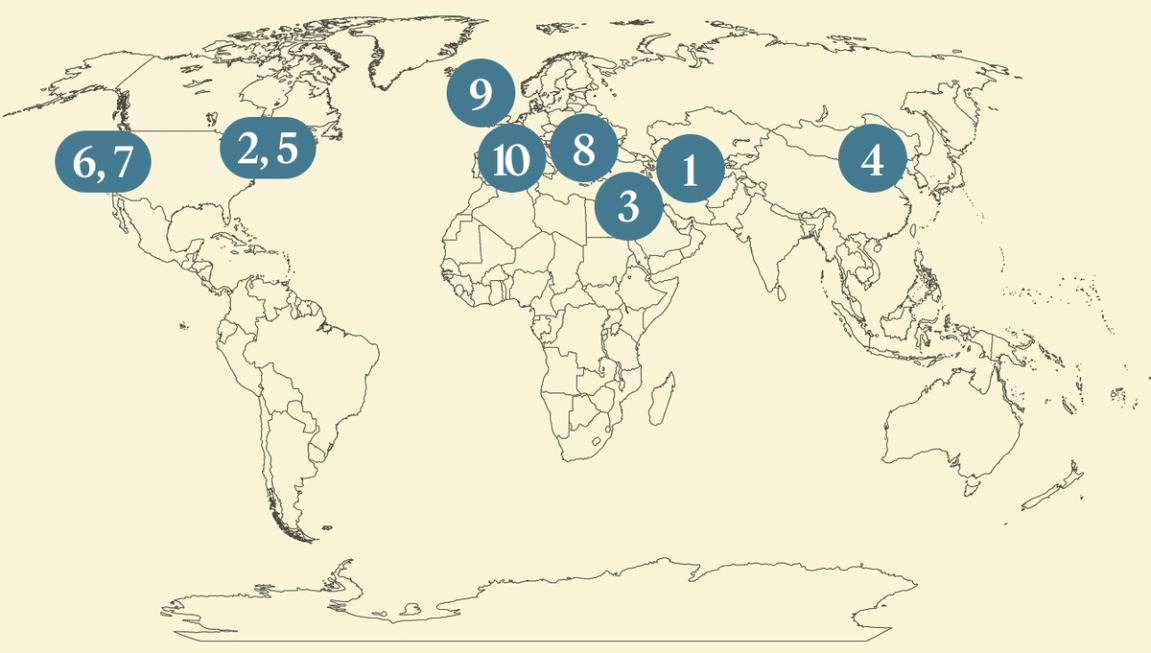 - Iran ceasefire is teetering
- Markets rally on truce
- Israel’s unresolved war aims
- China’s diplomatic role
- US Army builds chatbot
- Anthropic’s unreleased model
- Testing for true AGI
- Greece’s social media ban
- More ADHD diagnoses
- Turning wine into ethanol
 A political exploration in a coming-of-age drama. |
|
Iran truce already in doubt |
 Aftermath of an Israeli strike in Beirut. Yara Nardi/Reuters Aftermath of an Israeli strike in Beirut. Yara Nardi/ReutersThe ceasefire between the US, Iran, and Israel teetered on Wednesday, even as Washington voiced confidence that it would hold. Iran targeted a Saudi oil pipeline hours after the two-week truce took effect; Tehran accused the US of violating the agreement, and reportedly closed the Strait of Hormuz in response to Israeli attacks on Lebanon that killed more than 250 people. Washington said Lebanon is not included in the ceasefire, and US Vice President JD Vance chalked up the hostilities to a misunderstanding. “Ceasefires are always messy,” he said. The agreement is a “ceasefire in name only,” World Politics Review argued, given that “not much has changed on the ground in the past 24 hours.” |
|
Stocks rally in familiar pattern |
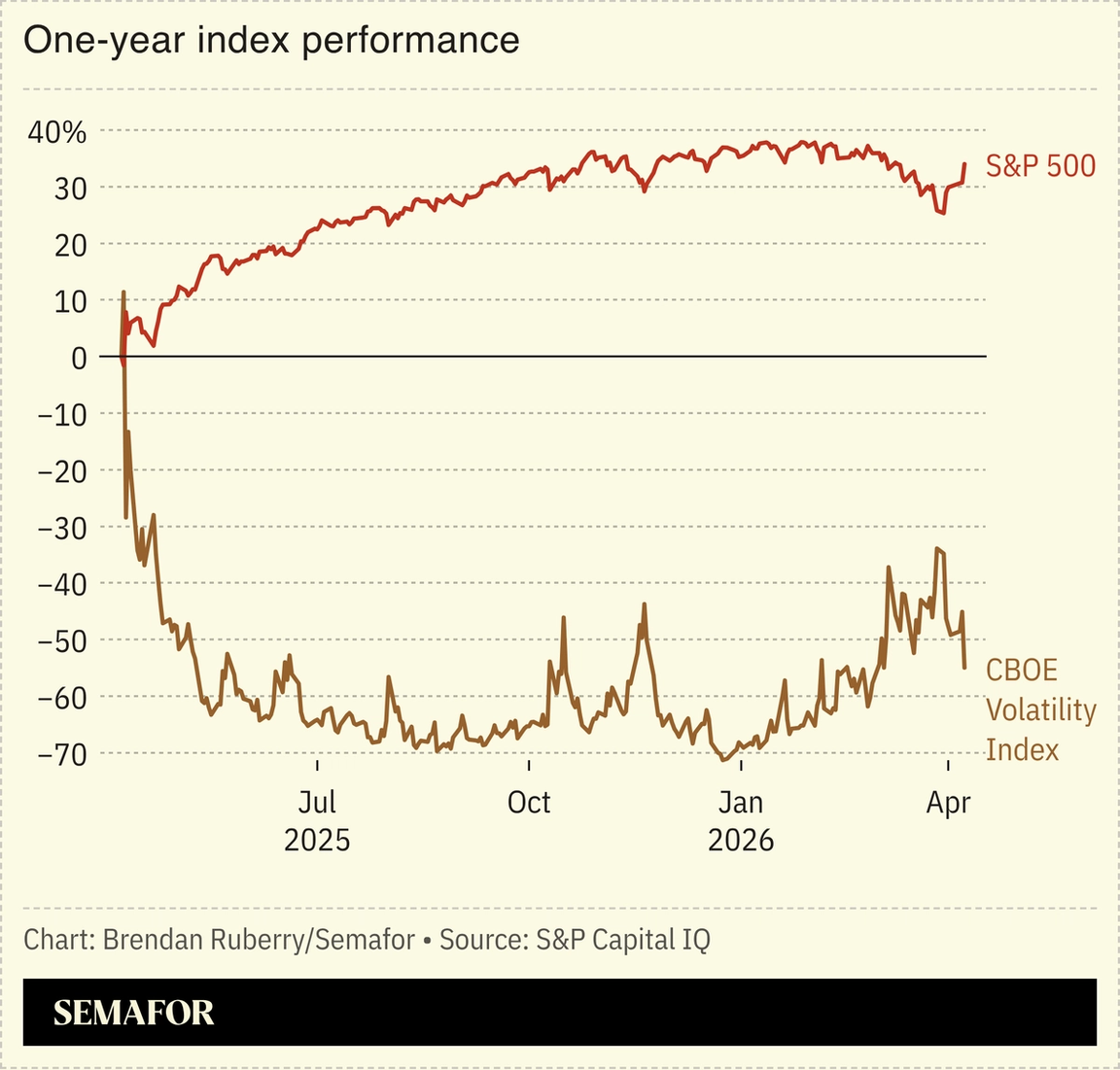 US stocks soared Wednesday on investors’ relief over a tenuous Iran ceasefire. The Dow had its best day since April 2025, while the US crude benchmark posted its largest drop since 2020. The pattern is now familiar to investors, CNBC wrote: Escalation drives market unease, pressure rises, and de-escalation causes stocks to rebound. With President Donald Trump, “the more extreme the position is, the more likely a compromise is going to occur,” one analyst said. US monetary policymakers were already expecting interest rate cuts before the ceasefire, Federal Reserve records show, and the truce makes trims more likely this year. Still, the ripple effects of the war, including energy shortages and price hikes, will “pinch the world for months,” Axios wrote. |
|
Israel’s unresolved war aims |
 Ronen Zvulun/Reuters Ronen Zvulun/ReutersIsrael believes its war aims are incomplete, potentially setting the stage for further hostilities amid a shaky truce with Iran. Israel continued its assault on Lebanon on Wednesday, reportedly causing Iran to close the Strait of Hormuz again in retaliation. Israeli Prime Minister Benjamin Netanyahu — who is under growing pressure for failing to resolve Israel’s core concerns, including toppling the Iranian regime and destroying Tehran’s nuclear program — said the ceasefire was “not the end of the war but a stop on the way to achieving all the goals.” Israel’s campaign against Hezbollah, meanwhile, “could undermine the ceasefire overall and keep the US trapped in a conflict it is now seeking to exit,” a Chatham House expert argued. |
|
China pressed Iran on truce |
 China’s Ministry of Foreign Affairs/Handout via Reuters China’s Ministry of Foreign Affairs/Handout via ReutersChina reportedly played a behind-the-scenes role in pushing for the US-Israel-Iran ceasefire. Beijing used its influence to press Tehran to accept the truce at the 11th hour, The New York Times reported. At the start of the war, analysts argued China would be happy to see the US drawn into a protracted, expensive Middle East conflict — but Beijing’s diplomatic effort reflected its need to prevent a global crisis that would disrupt its energy supplies and risk triggering an economic slowdown. While China has sought to portray itself as a peacemaker, experts said it lacks the leverage to enforce the truce, and is unlikely to be an effective security guarantor in the region. |
|
US Army developing its own chatbot |
 Joshua Roberts/Reuters Joshua Roberts/ReutersThe US Army is building its own chatbot for soldiers, the latest sign of the Pentagon’s embrace of AI. VictorBot can offer troops answers to questions like how to configure electromagnetic warfare systems for a mission, WIRED reported. The model is trained on internal information gleaned from ongoing conflicts in Ukraine and Iran. Some experts cautioned AI’s sycophantic tendencies could prove worrisome in a high-stakes combat situation. While the Pentagon has used AI tools like Anthropic’s Claude in recent operations, including the capture of Venezuela’s leader and the campaign against Iran, this marks a rare case of the military building AI tools for itself. The Pentagon’s use of the technology in warfare sparked a bitter feud with Anthropic. |
|
Anthropic model too powerful for release |
 Ludovic Marin/AFP via Getty Images Ludovic Marin/AFP via Getty ImagesAI startup Anthropic said it created a model that is too powerful to be released to the public. Mythos exposed thousands of software vulnerabilities in common applications for which no fix exists, according to Anthropic, which instead shared a version of the software with certain companies to bolster defenses against AI-powered hacking. The situation is “almost reminiscent of Y2K,” except that in this case, cyber defenses are already “abysmal” and AI coding makes them more vulnerable, Semafor’s tech editor wrote. “It would be great if Mythos were the wakeup call the world needed to finally do something about cybersecurity, but that seems unlikely.” Meanwhile, Meta released its latest AI model Wednesday, which lagged rivals on coding abilities. |
|
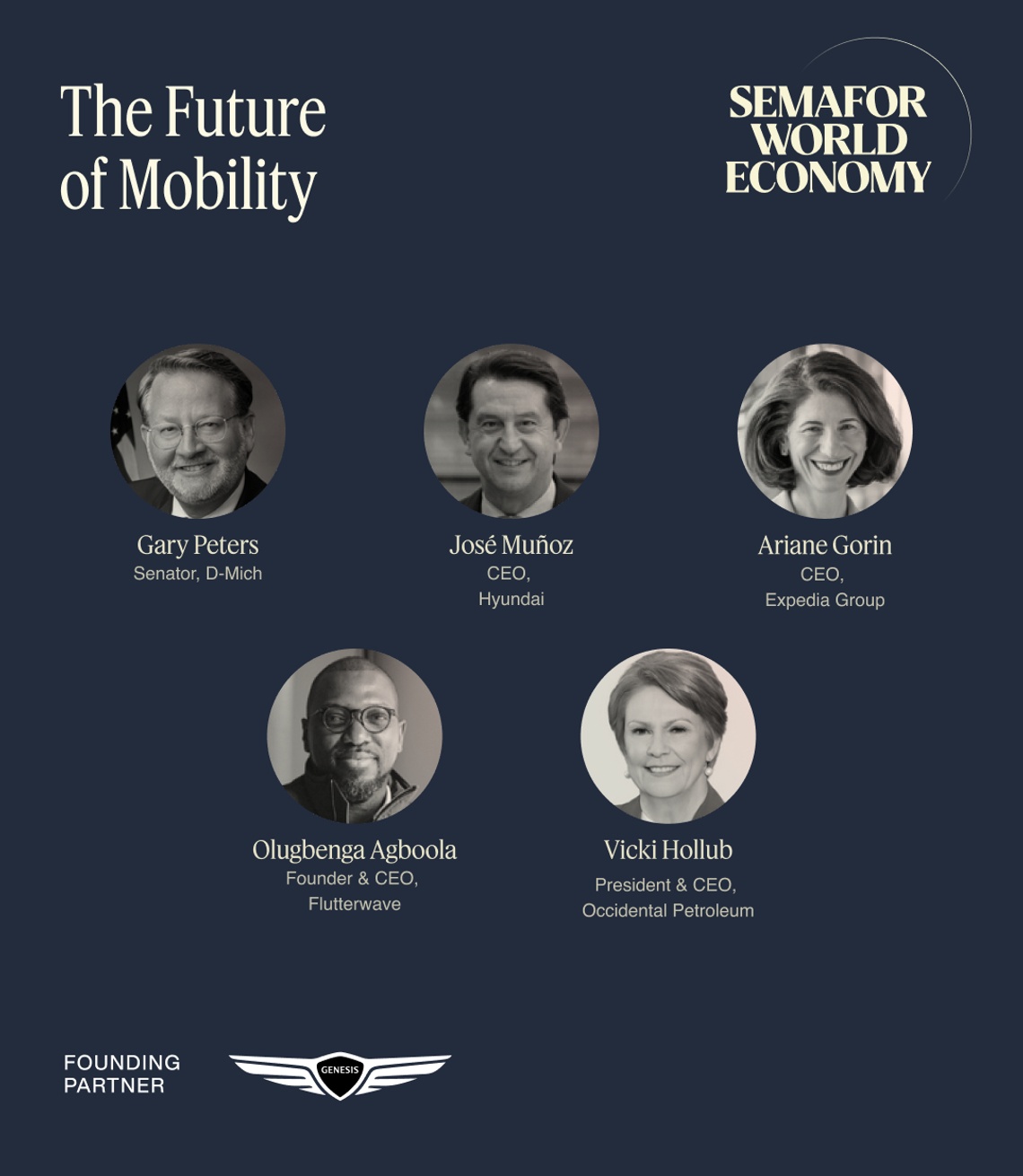 Gary Peters, Senator, D-Mich; José Muñoz, CEO, Hyundai; Ariane Gorin, CEO, Expedia Group; Olugbenga Agboola, Founder & CEO, Flutterwave; Vicki Hollub, President & CEO, Occidental Petroleum; and more will join The Future of Mobility session at Semafor World Economy. This session will examine how entire transportation ecosystems from supply chains to charging networks to city infrastructure must evolve to meet rising expectations for speed, sustainability, and accessibility.
|
|
A test to warn of true AGI |
 Go Nakamura/Reuters Go Nakamura/ReutersA respected AI research foundation released a new benchmarking test that, it said, will warn when true artificial general intelligence arrives. Frontier AIs pass existing benchmarks easily — but according to the influential researcher François Chollet, they test knowledge more than reasoning, a comparatively easy task for AIs trained on vast amounts of text. The ARC-AGI-3 test presents game-like puzzles the AI must work out on the fly, and Chollet said even top models score below 1%. He told Fast Company that any rapid improvement in scores would represent real progress toward AGI — which could be a useful canary in the coal mine, since the physicist who invented the term AGI and Nvidia’s CEO both recently said AGI was already here. |
|
Greece plans to ban social media for kids |
 Louiza Vradi/Reuters Louiza Vradi/ReutersGreece on Wednesday became the latest country to seek a ban on kids using social media. The prime minister cited rising anxiety and sleep problems as reasons for the under-15 ban. Australia became the first to restrict children and most teens from using social media; France, Malaysia, Indonesia, and Spain have since pursued similar measures. The new rules come amid wider scrutiny over social media’s impact on young people: A verdict in a recent US case found Instagram and YouTube were deliberately built to be addictive, and the EU is probing the impacts of social media on mental health. |
|
Rise in ADHD diagnoses in UK |
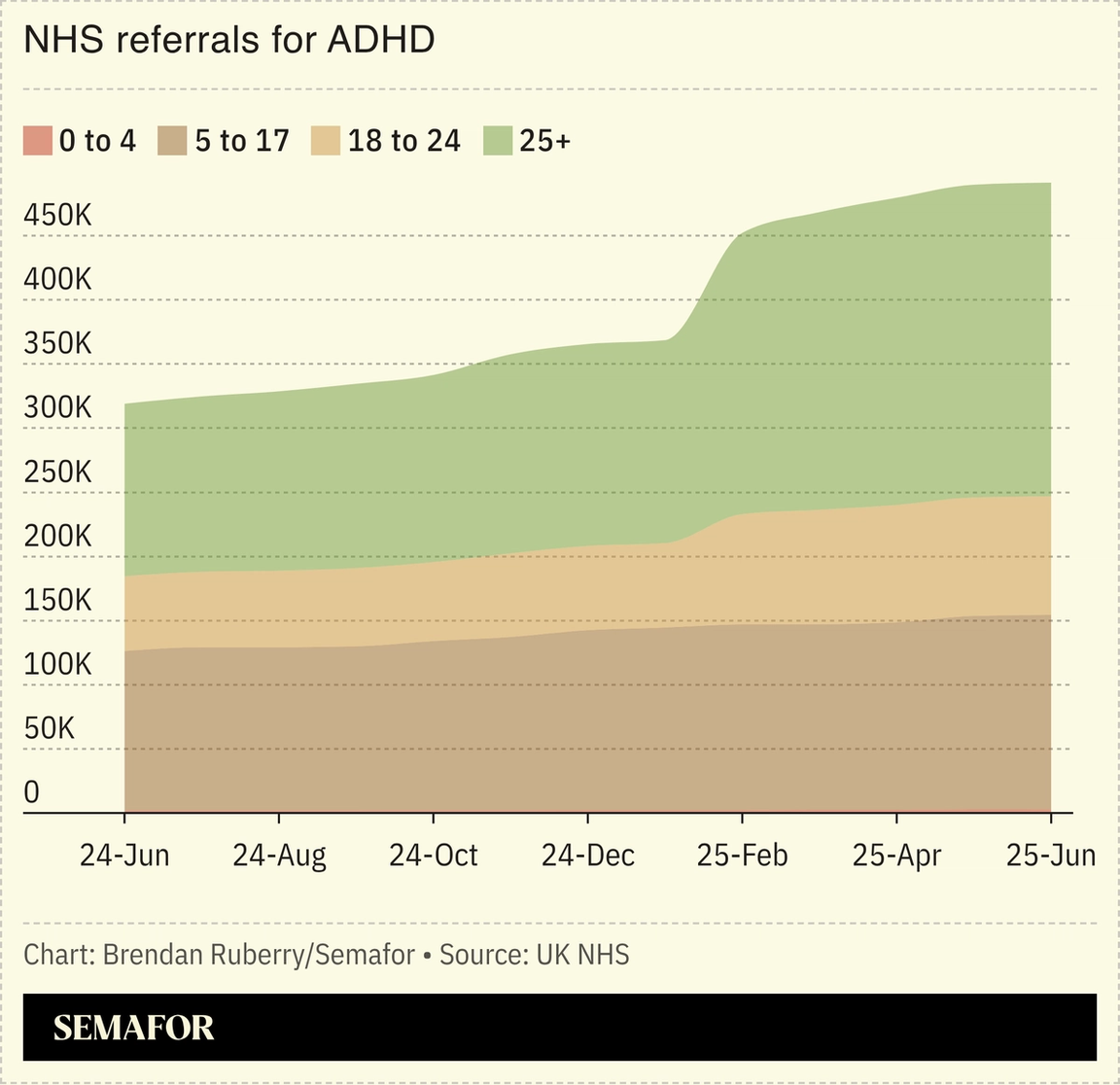 Children are incentivized to seek autism and ADHD diagnoses to unlock more support at school, a UK government inquiry found. ADHD diagnoses in the UK have doubled since 2021, and autism rates have risen similarly, with girls seeing a sevenfold increase between 2010 and 2022. The review by a clinical psychologist said there was evidence of a real increase in mental health conditions, but he wrote in The Times of London that tying support to diagnostic labels inevitably meant “demand for diagnosis will rise.” Local governments are required to fund special educational support, and the growth in diagnoses has left them in billions of pounds of debt, the BBC reported: Eight out of 10 have warned that they face potential bankruptcy as a result. |
|
|


