| | In today’s edition: The vice president prepares for his biggest role yet, and the US gets its last l͏ ͏ ͏ ͏ ͏ ͏ |
| |  | Washington, DC |  |
| |
|
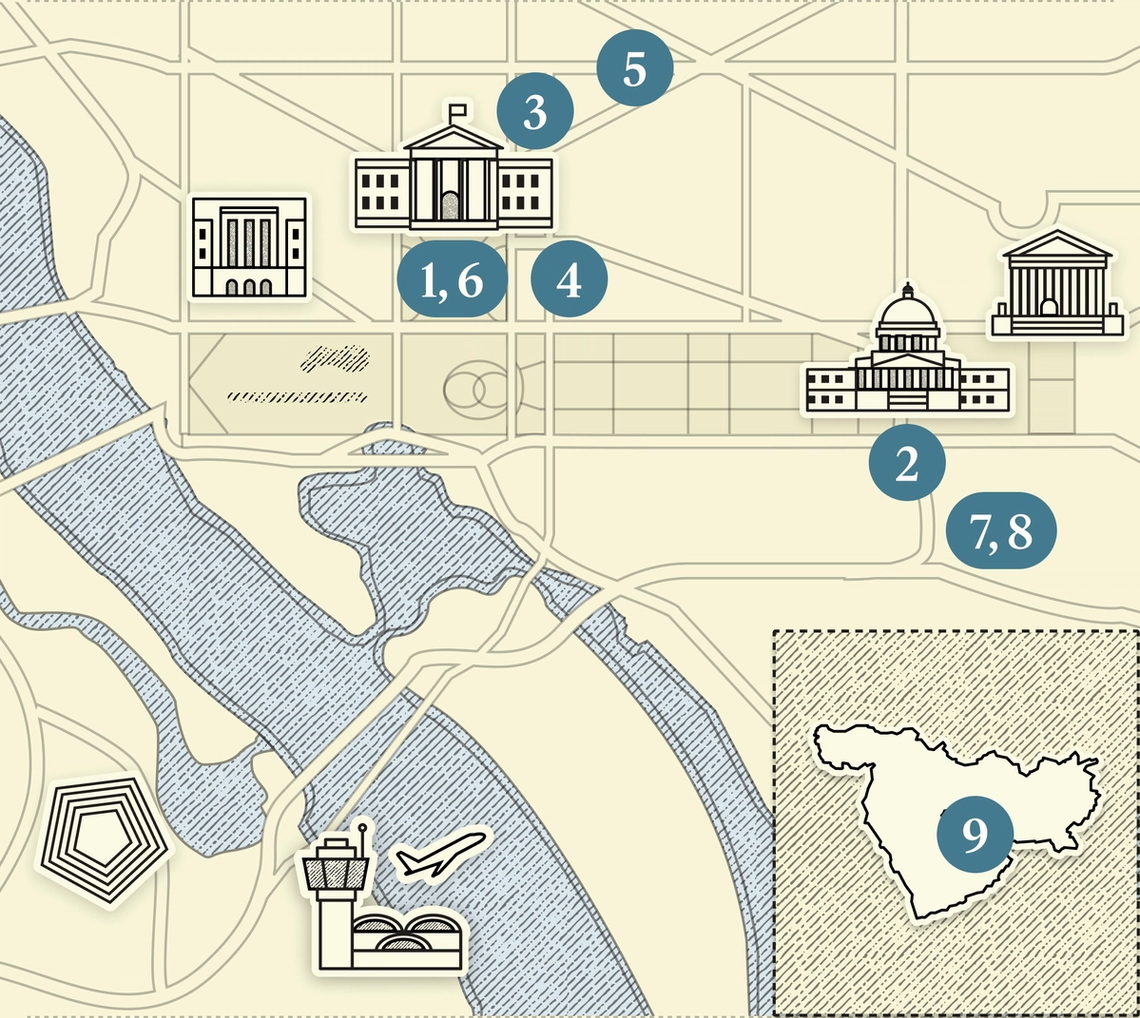 - Vance’s big test
- Iran deal review
- Russia sanctions waiver
- Prewar inflation report
- Semafor World Economy
- US-Europe tensions
- Shapiro’s pitch
- AI campaign gap
- Harm to Qatar-Iran ties
PDB: Miran’s replacement?  Trump attends MAHA roundtable … Melania Trump to make statement … Israeli strikes kill more than 250 in Lebanon |
|
Iran war hands Vance his biggest role yet |
 Jonathan Ernst/Reuters Jonathan Ernst/ReutersVice President JD Vance has been tapped for his highest-profile role yet: leading a delegation in talks with Iran this weekend in Islamabad. All eyes will be on that meeting, which will see Iran represented by its parliament speaker, Mohammad Bagher Ghalibaf — and on Vance, who publicly supported President Donald Trump’s decision to attack Iran while privately voicing concerns. Vance, who helped the current two-week ceasefire cross the finish line in the last hours of negotiation earlier this week, has framed the situation as “a fragile truce.” He’ll face plenty of challenges: Barely a day on from its agreement, the truce looks shaky and experts are skeptical that the meeting will result in measurable progress. Ghalibaf has accused the US of violating the ceasefire, the US’ Gulf allies intercepted a series of Iranian attacks, and the Strait of Hormuz appeared to still be closed. — Shelby Talcott |
|
Any Iran deal could get Congress vote |
 Ritzau Scanpix/Ida Marie Odgaard via Reuters Ritzau Scanpix/Ida Marie Odgaard via ReutersAny deal Trump reaches to end the Iran war could end up getting a congressional vote. Democrats believe the 2015 Iran Nuclear Agreement Review Act would apply to an agreement the president reaches with Iran that touches on its nuclear program, something any deal is likely to include. “Any agreement relating to Iran’s nuclear program must be submitted to Congress pursuant to the” nuclear review law, said a Democratic aide. “That law also imposes restrictions on the president’s ability to lift or waive sanctions while Congress reviews any such agreement.” Some senators who wrote that law say Congress should have a say. “Given the lack of meaningful engagement with Congress on how and why Trump launched this war, there has to be more review on how we may resolve it,” Sen. Chris Coons, D-Del., told Semafor. — Burgess Everett |
|
Waiver on Russian oil sanctions to continue |
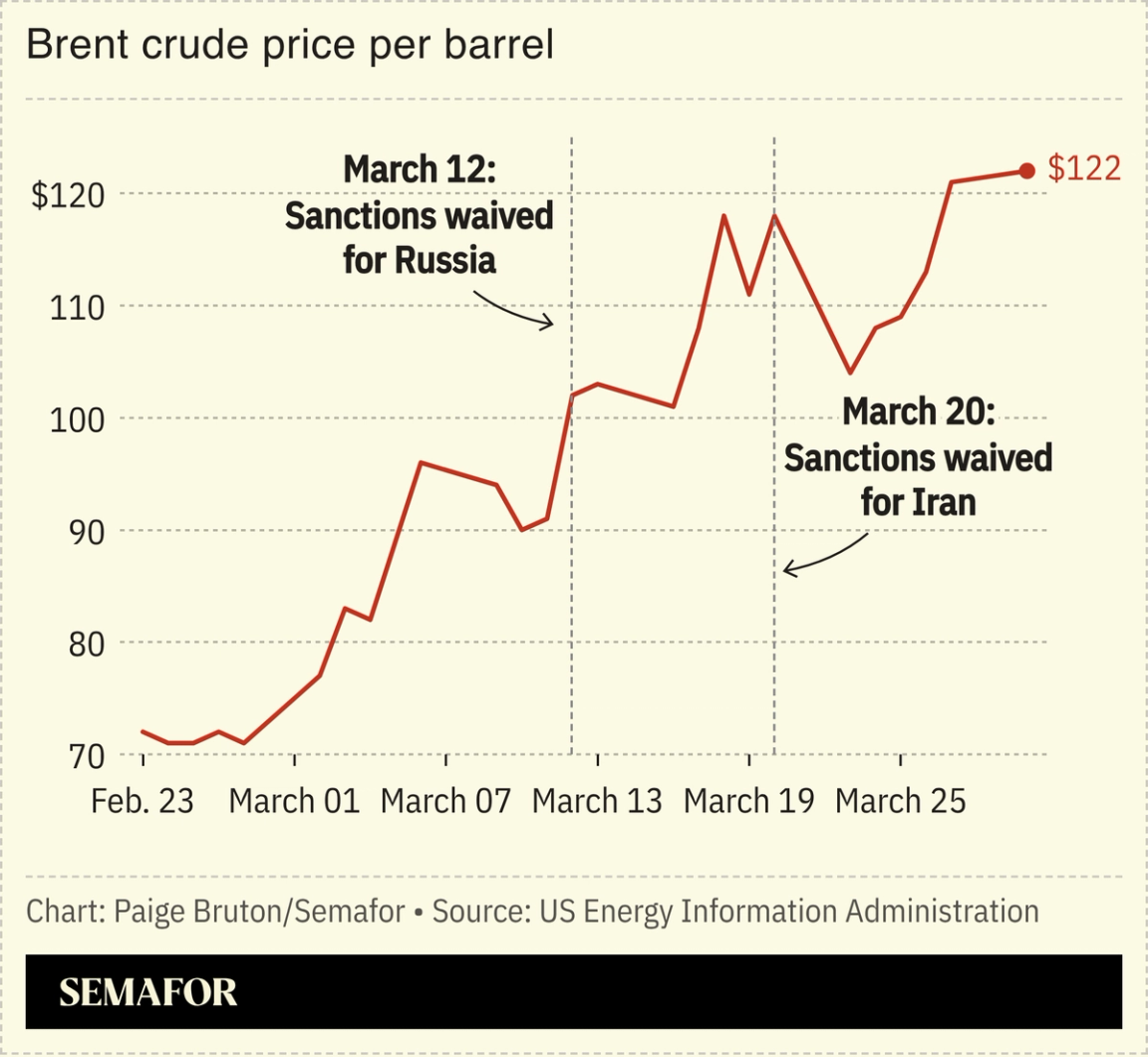 The Trump administration will likely extend its waiver of sanctions on Russian oil this week, former Treasury and State Department officials told Semafor’s Eleanor Mueller, as officials tee up a similar move on Iranian oil. The Treasury Department last month greenlit the sale of previously sanctioned Russian and Iranian oil already on the water through April 11 and April 19, respectively. Treasury Secretary Scott Bessent explained the latter move as “jiu-jitsu-ing” to minimize the economic fallout from the Iran war, predicting it would boost global supply and lower prices. Yet nearly a month later, experts say there’s little proof the moves have done much to bring down costs beyond temporarily soothing investors. “Tinkering with Iranian oil is not a sanctions question at the end of the day; it’s about the market’s general assessment of this conflict’s direction,” said one former Treasury official. |
|
US braces for first proof of war inflation |
 Evelyn Hockstein/Reuters Evelyn Hockstein/ReutersThe US gets its last look at inflation before the Iran war today — and its first look at inflation during the conflict tomorrow. Forecasters expect the Commerce Department to report this morning that inflation remained elevated in February, and the Labor Department to report tomorrow morning that “sharply higher” oil and gas prices dramatically accelerated that trend by spiking year-over-year inflation from 2.4% to 3.3%. Of course, this week’s ceasefire could mean it’s short-lived: “It’s going to be a one-time thing,” National Economic Council Director Kevin Hassett told Fox Business. “Things can get back to normal really relatively quickly.” Paradoxically, that might make it even harder for the Federal Reserve to justify cutting interest rates this year by taking the worst-case scenario off the table. Minutes from its last meeting revealed “most participants” believed a “protracted conflict” could “warrant additional rate cuts.” — Eleanor Mueller |
|
Semafor World Economy speakers announced |
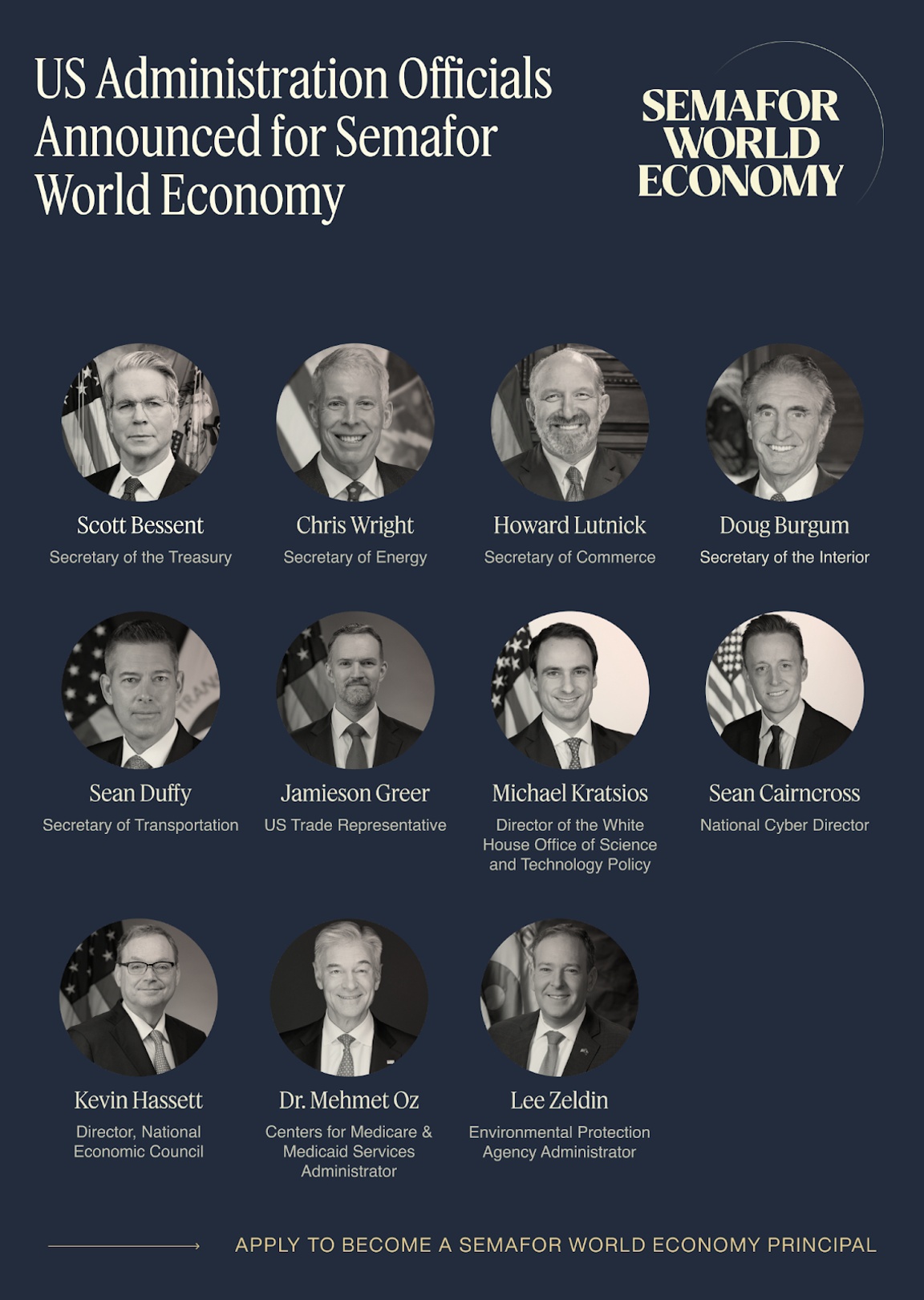 We’re so proud to be convening a new kind of gathering in Washington, DC next week with Semafor World Economy, the single most important convening of economic leadership in the United States. Semafor World Economy comes at a moment when Washington increasingly sets the direction of the global economy. We’ll bring together leaders making the key decisions, including US Cabinet Secretaries Scott Bessent, Chris Wright, Howard Lutnick, Doug Burgum, and Sean Duffy. And over five days, Semafor’s flagship live journalism platform will become a real-time stage for the conversations shaping markets, policy, and power, with a continuous run of high-level interviews and discussions featuring the world’s most influential policymakers and executives. We’ll be hosting leaders from more than 80 countries and more than 500 global CEOs, and this is your last chance to join as an inaugural member of our cohort of Semafor World Economy Principals — apply here to join us in-person next week. |
|
Ceasefire is latest test for US-Europe ties |
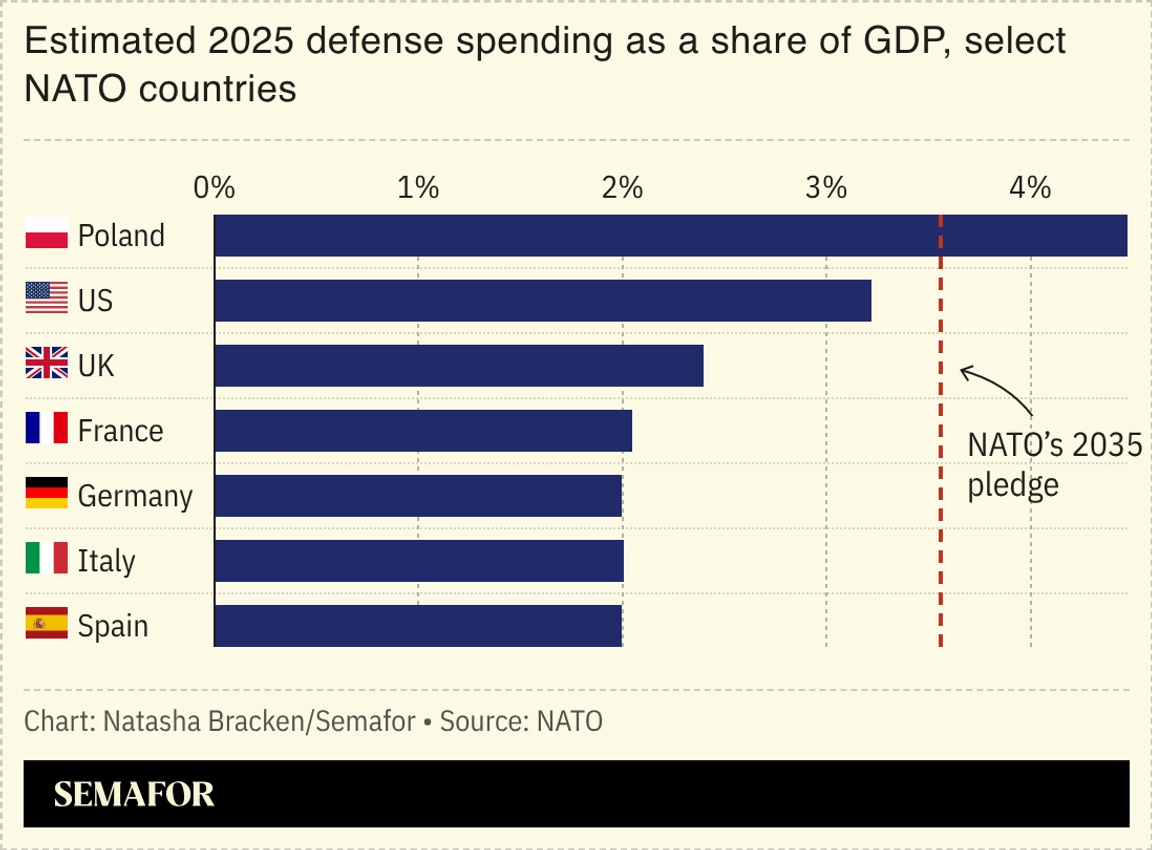 Trump’s Iran ceasefire has hardly eased his tensions with Europe. Despite European allies offering to help ensure “freedom of navigation in the Strait of Hormuz,” Trump thinks NATO members “were tested and they failed” during the Iran conflict, said White House press secretary Karoline Leavitt. Trump, who met with NATO Secretary-General Mark Rutte yesterday, is considering punishing NATO countries he deems unhelpful on Iran by moving US troops out of them, The Wall Street Journal reported. And Europe, battered by gas price spikes, now worries it will bear the financial responsibility of reopening the Strait of Hormuz, Politico reported. “It’s a pattern,” one Spanish socialist lawmaker told the publication, also citing Gaza reconstruction and Ukraine. “NATO is meant to be based on reciprocal loyalty. But this is not how it’s working.” Meanwhile, Europeans are questioning Rutte’s effectiveness in dealing with Trump, Bloomberg reported. |
|
Shapiro pitches faith, diversity initiatives |
 Brendan McDermid/Reuters Brendan McDermid/Reuters“Everybody from Pennsylvania, stand up!” said Pennsylvania Gov. Josh Shapiro during his fireside chat with Rev. Al Sharpton at the National Action Network’s annual conference in New York on Wednesday. “Scranton!” one woman yelled. “Salem Baptist!” shouted another. “That’s my church!” Shapiro replied. “What, you don’t think a Jew can go to a Baptist church?” If faith made up one component of Shapiro’s pitch to Black voters at the first major gathering of 2028 Democratic hopefuls, the other was tangible deliverables. After reminding the audience that Pennsylvania continued to operate its office for diversity, equity, and inclusion, Shapiro touted $60 million of investments for “small diverse businesses” and a 40% increase in government procurement from those businesses. This is proof of his “GSD agenda,” Shapiro said, which entails putting the state’s unmatched purchasing power to work on behalf of historically disadvantaged people. — Brendan Ruberry |
|
View: Parties divided over political AI |
| |  | David Weigel |
| |
 NRSC/YouTube NRSC/YouTubeA significant split is emerging when it comes to how the two parties use AI in politics — Republicans are very comfortable and happy to talk about that, while Democrats are the opposite. Republicans are optimistic that their approach will win out: “Professionally we have an advantage, because we’re willing to push the envelope on this stuff and take risks,” GOP strategist Eric Wilson said of his party’s AI embrace. In Democratic shops, the conversation about whether to use AI internally is quiet, with the Democratic National Committee approving the use of only Google’s Gemini LLM, and not its competitors, for official work like data analysis and coding. Underpinning Democrats’ dread about widespread AI use is a bet on a coming backlash: As data center construction and industry subsidies become unpopular, they’re letting Republicans take the mantle of the AI-imagery party. |
|
Ex-diplomat says war harmed Qatar-Iran ties |
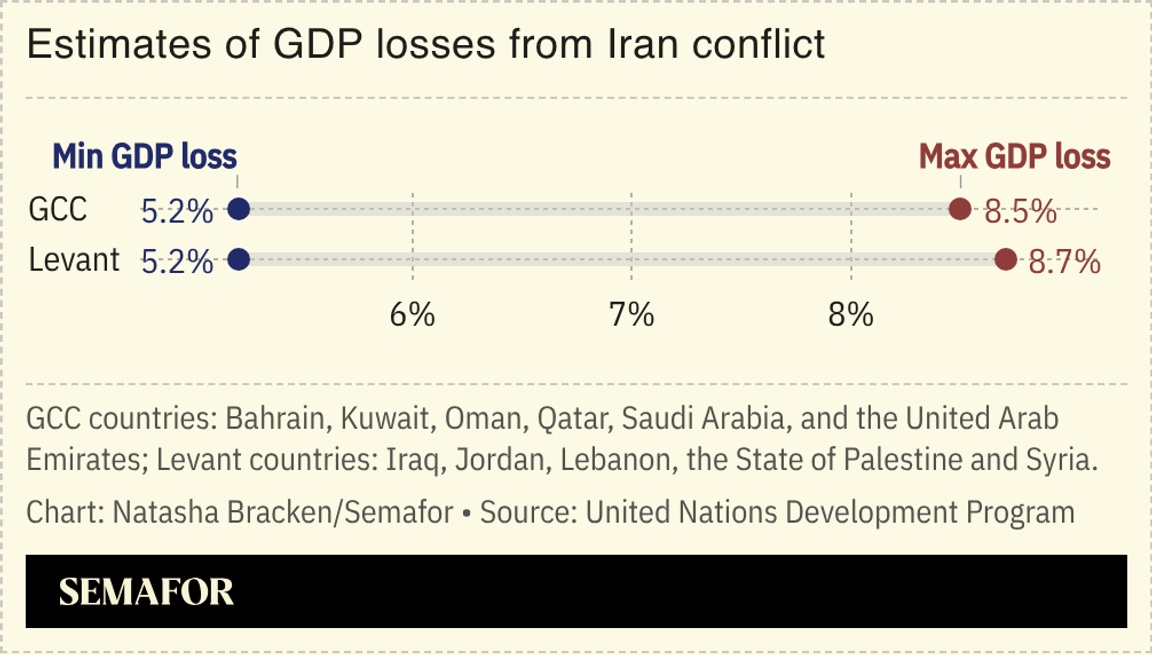 The US-Israel war with Iran has “forever” altered relations between Doha and Tehran, according to a prominent former Qatari diplomat. “Attacking civilian infrastructure, under the guise of ‘we’re attacking the Americans,’ is something that Qatar views as a just bold-faced lie,” Nawaf al-Thani, the former Qatari defense attaché to the US, said in an interview with Semafor, adding that Doha now “has to see a seriousness from Iran when it comes to Qatari security.” Last month, Iranian drone and missile strikes knocked out roughly 17% of Qatar’s LNG export capacity, while air defenses intercepted waves of missiles targeting civilian infrastructure like Hamad International Airport. The war has had the opposite effect for US-Qatar relations, according to al-Thani, who predicted that relationship would deepen following the conflict. — Lauren Morganbesser and Adrian Elimian |
|
Blindspot: Georgia and Harvard |
 Stories that are being largely ignored by either left-leaning or right-leaning outlets, curated with help from our partners at Ground News. What the Left isn’t reading: A Democrat running for Georgia’s House of Representatives floated banning President Trump’s voters from posting on the internet, the Daily Caller reported. What the Right isn’t reading: A federal judge ruled against the Trump administration for scrapping a visa for a Russian-born scientist at Harvard accused of smuggling frog embryos into the US. |
|
|


