|
|
|
|
Good morning. From pipelines and utilities to defence and housing, ATCO seems poised for the multitude of challenges ahead. Its CEO wants the rest of Canada to get at it, too. Nancy Southern’s fight against the non-believers is in focus today, along with Jeremy Hansen’s biggest fan. |
|
|
|
|
|
|
|
|
|
|
|
|
|
|
|
|
|
|
|
|
|
|
|
|
|
|
|
|
Labour: Rideshare drivers are second-guessing their line of work because of volatile fuel costs |
|
|
|
|
|
|
|
|
|
|
|
|
|
|
|
Nancy Southern with the product that started it all: ATCO’s iconic trailers. Heather Saitz/The Globe and Mail
|
|
|
|
|
|
|
|
|
|
|
|
|
|
|
|
|
Hi, I’m Emma Graney, the energy reporter with The Globe and Mail. I’m based in Calgary, the home of ATCO, a sprawling conglomerate operating in more than 100 countries, encompassing engineering, logistics, energy systems, construction and utilities. |
|
|
|
|
At its helm is Nancy Southern – one of the rare Canadian CEOs unafraid to speak her mind. The Calgarian and staunch patriot is dead set against Alberta separation, for example, and doesn’t mind who knows it. |
|
|
|
|
|
|
|
|
That’s not to say she doesn’t understand the roots of secessionist fervour. Years ago, she admits to feeling similarly frustrated with Ottawa. She theorizes that the urge to separate springs from years during which federal leaders failed to espouse a strong vision for the nation. |
|
|
|
|
But a once-coasting and complacent Canada has now been shaken awake by U.S. President Donald Trump’s upending of the established U.S.-Canada relationship, she says – and now is the time to build big and get the country moving again. |
|
|
|
|
When Southern took the reins of the family business in 2003, doubters questioned whether she could fill the shoes of her father, Ron, who co-founded the company with his dad in 1947. Some saw it as “nepotism at its worst,” she says. Today, far from its roots as a niche operation that provided housing during Alberta’s first oil boom, ATCO brings in roughly $5-billion in annual revenue. |
|
|
|
|
|
|
|
|
|
|
One was former Cenovus CEO Alex Pourbaix. He spent many years competing directly with ATCO during his time at TC Energy, and summed up Southern and the sway she holds in Canada’s business landscape this way: “You probably want to eat your Wheaties before you go up against Nancy. She’s one of the few people in the energy industry that can pick up a phone, and it doesn’t matter if it’s a politician or a CEO – they’re going to take that call.” |
|
|
|
|
|
|
|
|
|
Nancy Southern in her office in front of her father’s old desk at ATCO’s Calgary HQ. Heather Saitz/The Globe and Mail
|
|
|
|
|
Years ago, when I first floated a profile, Southern made one thing clear: It must not suggest she was retiring, because she most certainly wasn’t. That remains true today, though her eldest daughter, Kelly Koss-Brix – who calls her mother “a pistol” – joined the ATCO board at the start of 2025 and is working toward a senior governance role. |
|
|
|
|
In Southern’s office, a heavy wooden desk – once used by her dad – dominates one wall. On another hangs a photo of her mother seated beside Queen Elizabeth II. ATCO remains under family control, with the Southerns owning all voting shares. |
|
|
|
|
Despite ATCO’s size and global reach, Jason Kenney, a former Alberta premier and a cabinet minister under Stephen Harper, says it “still very much has the ethos of a family business,” with “a deep connection to Alberta and a sense of responsibility for the broader public good.” |
|
|
|
|
For now, Southern is focused on ensuring ATCO is part of every major infrastructure project it possibly can be, along with the push for more housing and the renewed focus on defence that are priorities for this federal government. |
|
|
|
|
In the midst of global geopolitical upheaval, threats from Trump and a growing separatist movement in Alberta, she remains loud and proud about her passion and optimism for Canada. |
|
|
|
|
|
|
|
|
|
|
|
|
|
|
|
|
|
|
|
|
|
|
|
|
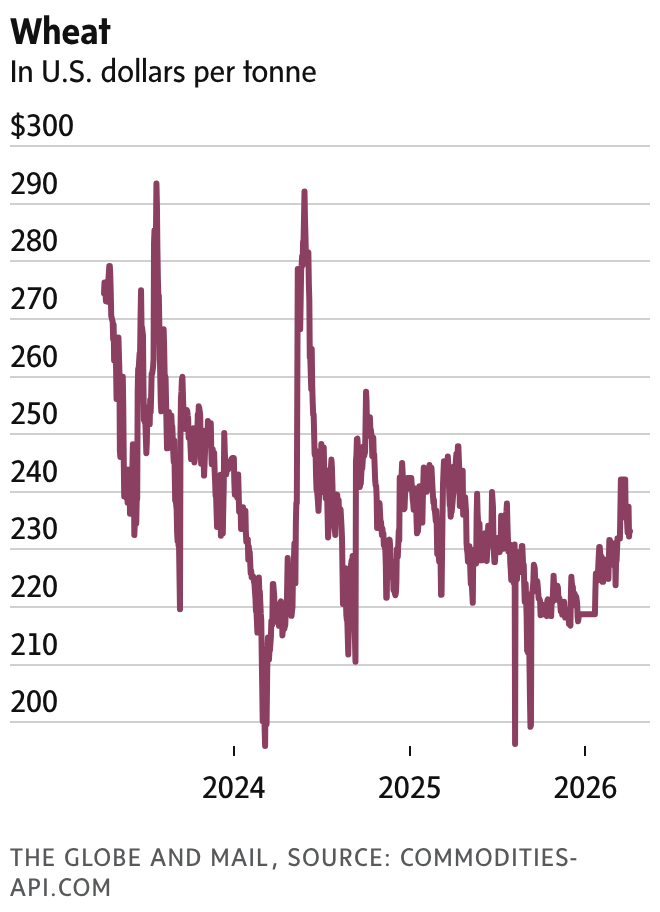
Wheat markets are shaped by three dominant forces: continued Russian export dominance, unpredictable weather in North America and Australia, and a tightening global stock-to-use balance. Now, geopolitical risks could reintroduce upward pressure. |
|
|
|
|
|
|
|
|
|
|
|
|