| | Tehran has learned how much pain it can exert on the US without even having nuclear weapons.͏ ͏ ͏ ͏ ͏ ͏ |
| |  | Energy |  |
| |
|
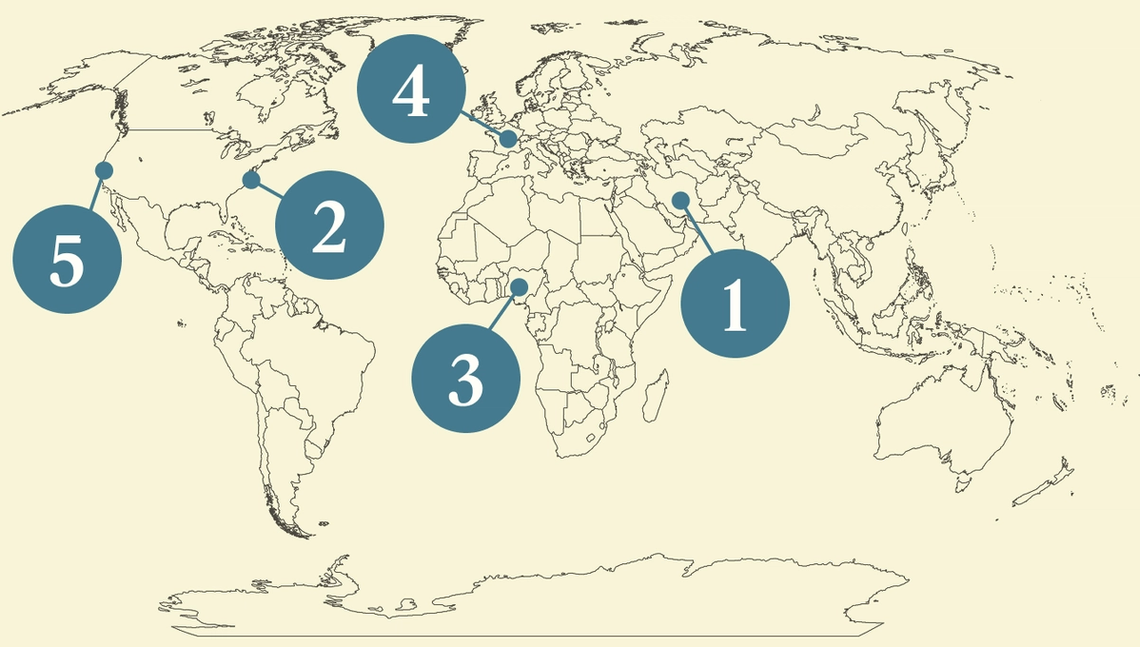 - Long road ahead
- US sanctions waiver re-upped
- Africa braces for shocks
- Wine into ethanol
- Renewables M&A pickup
 Exxon and Shell brace for financial hits, and China is ‘wasting’ too much renewable energy. |
|
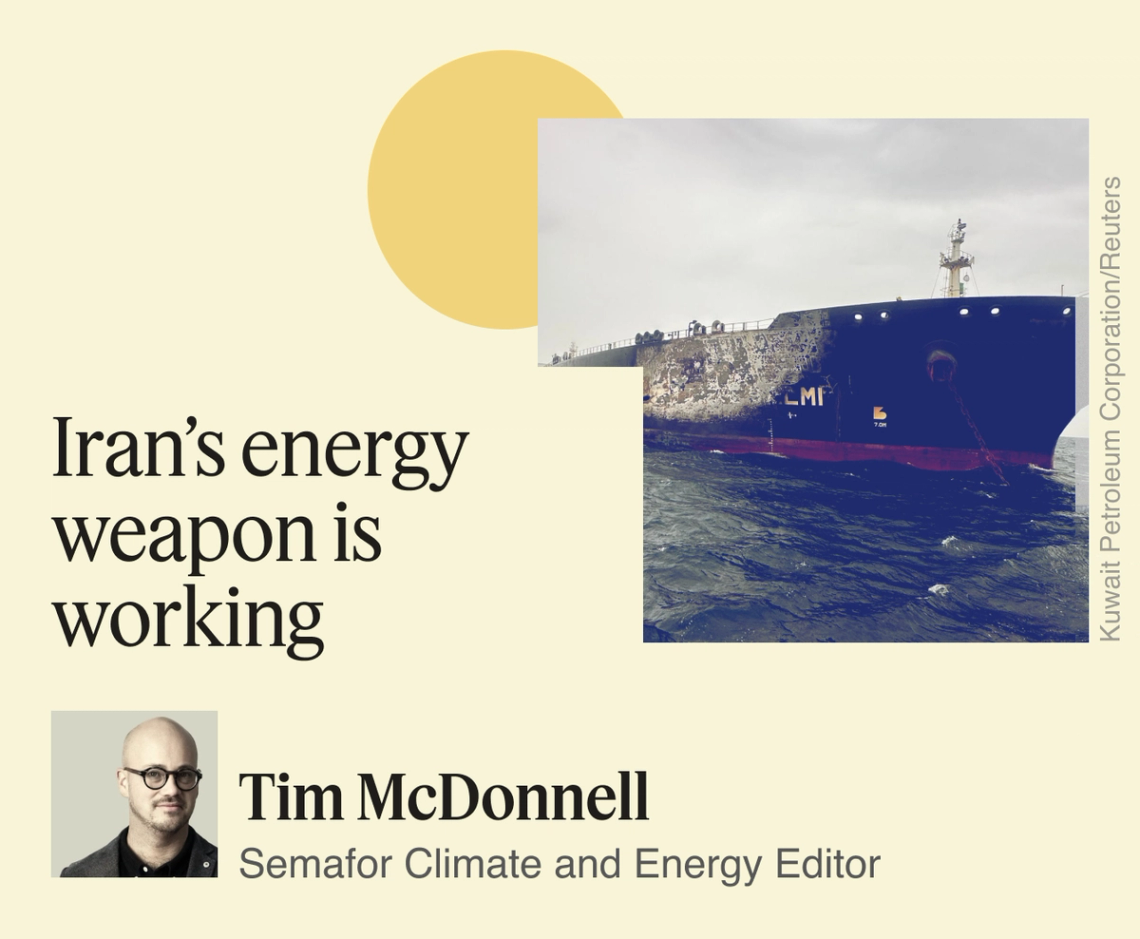 The ceasefire in Iran represents a victory of sorts for Tehran, which has gained a powerful insight into the potency of its energy weapon. Oil prices plummeted below $100 per barrel after US President Donald Trump agreed to a two-week truce in Iran. As has been the case throughout the last five-plus weeks of war, the rapid change in oil price reflects traders’ gut feelings more than a tangible change in physical flows; although some already-full tankers that have been idling outside the strait could quickly move to market, it will take weeks or even months for onshore production facilities to ramp up and for empty tankers around the world to actually reach ports in the Gulf — and that’s assuming the ceasefire holds, which already appears dubious. In the meantime, Tehran appears to be in a stronger position vis-a-vis the strait than it was before the war. In addition to roughly doubling its income from oil sales over the past few weeks, “the war is pausing with the Iranians effectively in control of the strait,” Gregory Brew, senior oil analyst at Eurasia Group, told me. No oil or gas tankers passed through on Wednesday, and Tehran has indicated it will charge tolls (in cryptocurrency or yuan) for passage, which historically had been barred under international law. “Let’s be clear: the Strait of Hormuz is not open,” Sultan al-Jaber, CEO of ADNOC, wrote in a post on Thursday. “That is not freedom of navigation. That is coercion.” And if Washington allows that level of control to persist, “then this will clearly indicate that the war has ended in something of an Iranian victory,” Brew said. While the conflict ostensibly started over Iran’s drive for nuclear weapons, among other things, a key lesson so far is that it may not even need them. Rather than a decades-long, expensive, and risky campaign to build a nuke — a weapon that, if ever used, would guarantee Iran’s own annihilation — Tehran has learned that by closing the strait, it can fairly easily exact massive pain on the US and the global economy in a way that actually benefits its own coffers. According to reporting this week in The New York Times, Trump and his aides greatly underestimated the risk to oil markets stemming from the war, believed the war would be over before Iran had a chance to close the strait, and didn’t include top energy officials in critical decision-making. Those are mistakes the US can’t afford to make again. A more sustainable victory for the US will require much more than propping up a more favorable regime. Instead, as Biden administration energy official Amos Hochstein argued in The Atlantic this week, the most important security measure moving forward will be to eliminate the strait as the energy bottleneck it has plainly been for decades, by working with allies across the region and globe to build new pipelines, ports, nonfossil energy sources, and other work-arounds. All of this and more will be up for discussion at Semafor World Economy in DC next week. I’m excited to grill some of the world’s most important players in energy security onstage, including TotalEnergies CEO Patrick Pouyanné, Baker Hughes CEO Lorenzo Simonelli, Iberdrola CEO Pedro Azagra, and former US climate envoy John Kerry. Hopefully I’ll see many of you there in person — and if not, stay tuned here for all the scoops and highlights. |
|
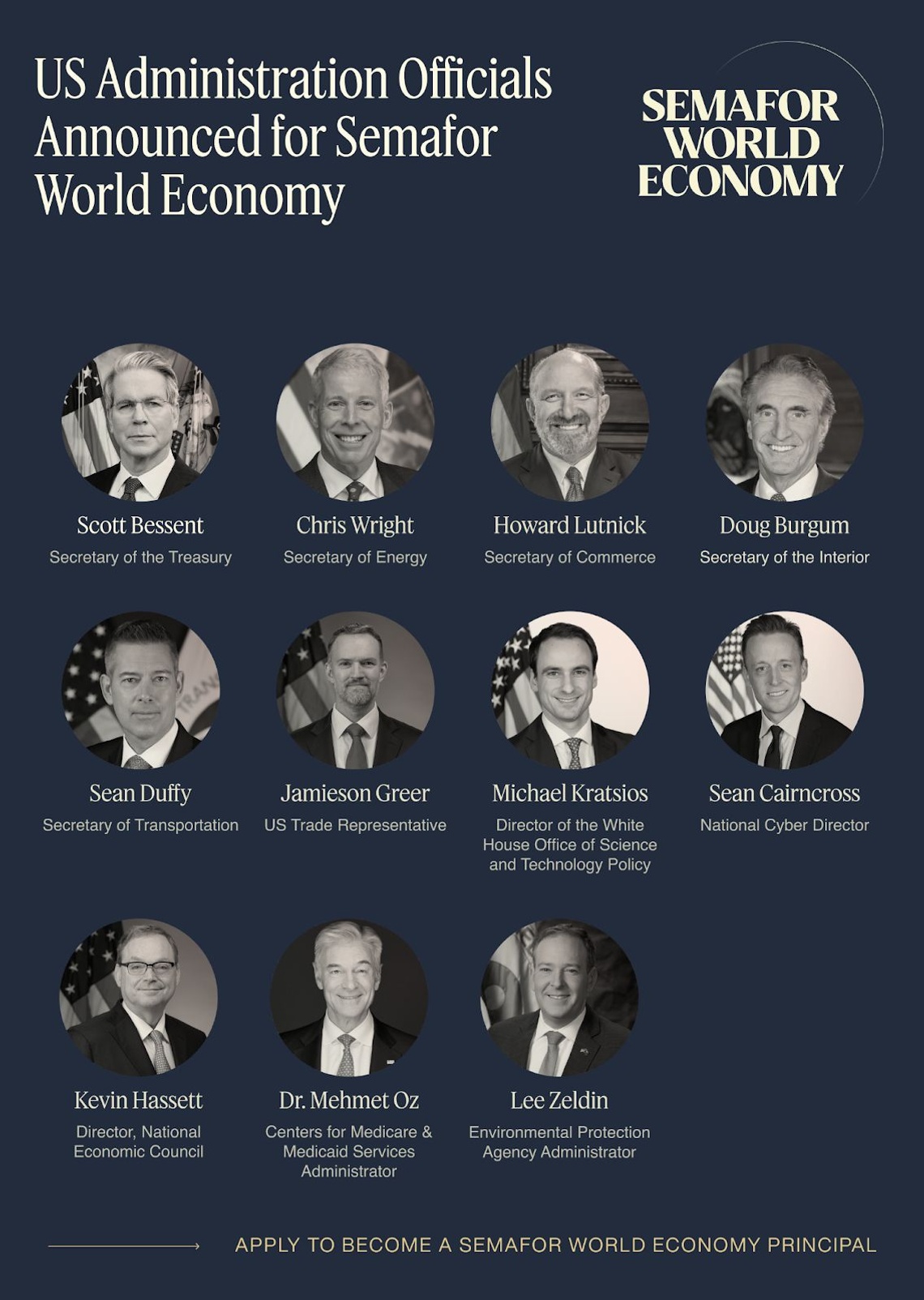 We’re so proud to be convening a new kind of gathering in Washington, DC next week with Semafor World Economy, the single most important convening of economic leadership in the United States. Semafor World Economy comes at a moment when Washington increasingly sets the direction of the global economy. We’ll bring together leaders making the key decisions, including US Cabinet Secretaries Scott Bessent, Chris Wright, Howard Lutnick, Doug Burgum, and Sean Duffy. And over five days, Semafor’s flagship live journalism platform will become a real-time stage for the conversations shaping markets, policy, and power, with a continuous run of high-level interviews and discussions featuring the world’s most influential policymakers and executives. We’ll be hosting leaders from more than 80 countries and more than 500 global CEOs, and this is your last chance to join as an inaugural member of our cohort of Semafor World Economy Principals — apply here to join us in-person next week. |
|
Oil prices remain high despite ceasefire |
 Eli Hartman/File Photo/Reuters Eli Hartman/File Photo/ReutersOil prices are still hovering just below $100 per barrel as a shaky ceasefire in Iran goes into effect, but there’s a long road ahead even if the war concludes. Some market players are bullish: Israel reopened a major offshore gas facility, an oil executive in Iraq said oil production could ramp up within a week, and according to BloombergNEF, there are a dozen already-loaded LNG tankers lined up outside the Strait of Hormuz that could cross quickly. Yet oil prices tipped up again Thursday, a sign traders are still skeptical that the strait will reopen for the free transit of more tankers anytime soon, especially as insurers and shipowners remain concerned that security conditions could collapse at any moment. In the meantime, the director of the International Air Transport Association warned it will take “a period of months” for jet fuel supply chains to even out. And Asia “is caught between a market it cannot afford to buy from and a supply line that will take weeks to restart — and a two-week ceasefire window does not change either of those conditions,” Janiv Shah, vice president of oil markets at Rystad Energy wrote in a note. |
|
US expected to extend pause on oil sanctions |
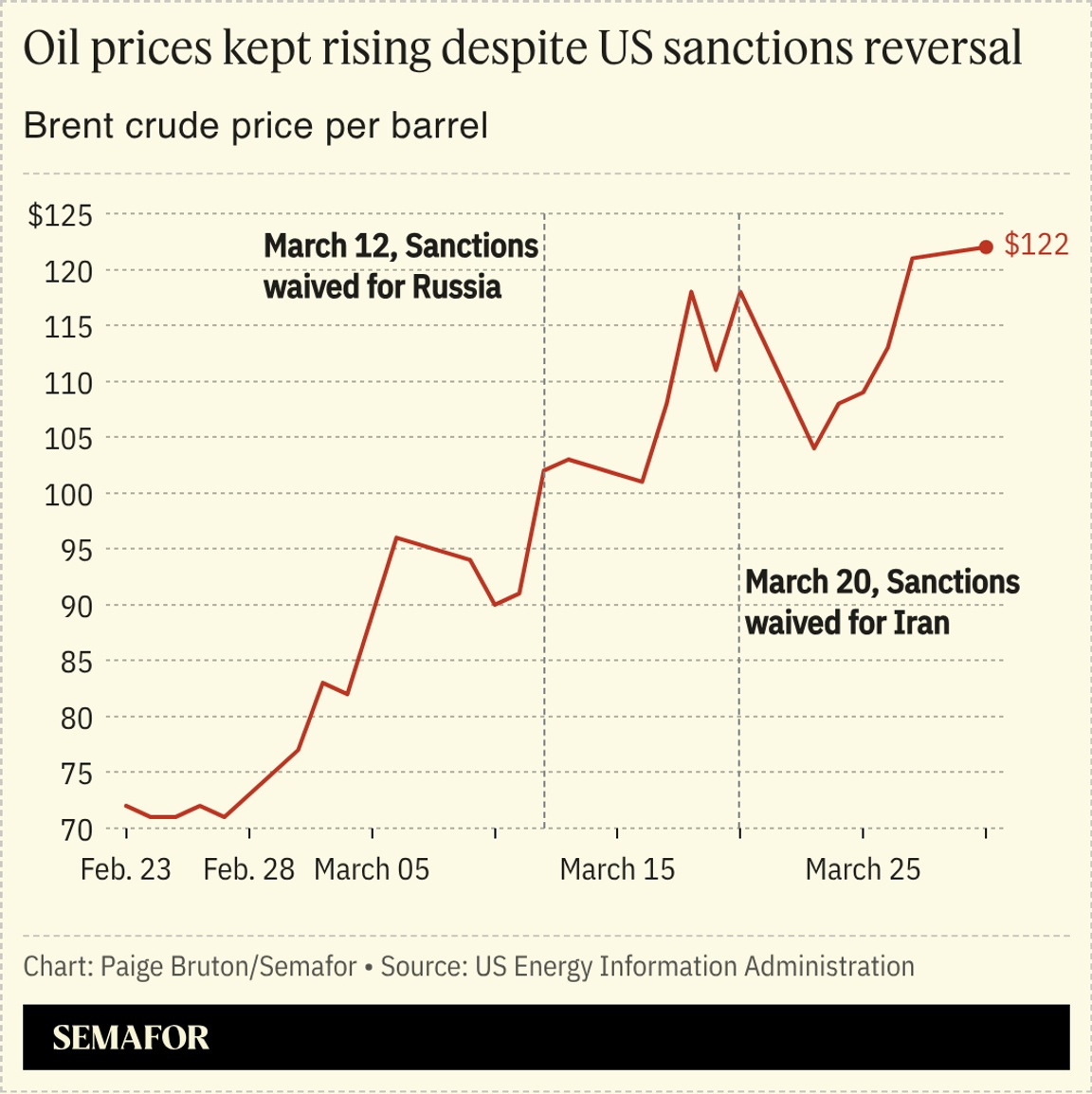 The Trump administration will likely extend its waiver of sanctions on Russian oil this week, former Treasury and State Department officials told Semafor’s Eleanor Mueller, as officials tee up a similar move on Iranian oil. The Treasury Department last month greenlit the sale of previously sanctioned Russian and Iranian oil already on the water through April 11 and April 19, respectively. Treasury Secretary Scott Bessent explained the latter move as “jiu-jitsu-ing” to minimize the economic fallout from the Iran war, predicting it would boost global supply and lower prices. Yet nearly a month later, experts say there’s little proof the moves have done much to bring down costs, and maybe only worked to temporarily sooth investors. In the meantime, Russia’s oil revenue is the highest it’s been since the start of the full-scale war in Ukraine. “Tinkering with Iranian oil is not a sanctions question at the end of the day; it’s about the market’s general assessment of this conflict’s direction,” said one former Treasury official. |
|
Africa prepares for energy shocks |
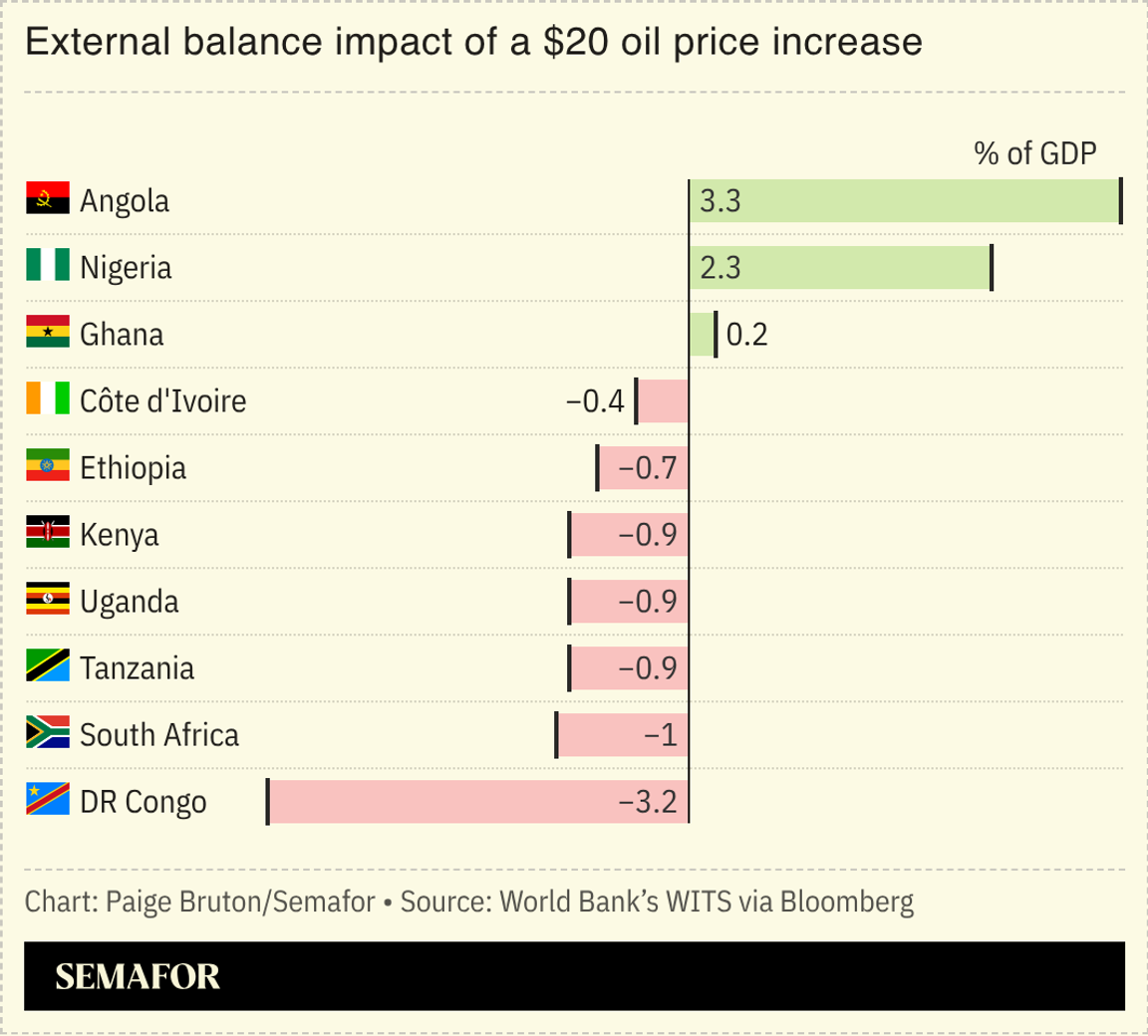 While some of Africa’s biggest energy players, such as Nigeria, are riding high on demand for alternative oil suppliers outside of the Gulf, multilateral trade-finance lenders are rolling out billions in emergency funding for the rest of the continent. The Dangote refinery, Africa’s largest, said that it had doubled its crude intake for gasoline exports last month, and production of urea fertilizer from the Dangote processing plant has also increased, with global supplies heavily impacted by the Iran war. At the same time, Afreximbank, Africa’s main multilateral trade-finance lender, rolled out a $10 billion emergency program for countries on the continent scrambling to pay for increasingly expensive fuel, fertilizer, and medicines. The lender’s package is designed to give governments enough foreign currency, and quickly enough, to keep essential purchases from stalling. Several African nations have already pushed through emergency interventions, ranging from direct subsidies to mandatory rationing, to blunt the impact of soaring global energy prices. South Africa has announced a temporary cut in fuel tax, Ethiopia has expanded fuel subsidies, and Senegal has cracked down on foreign travel for government ministers. — Tiisetso Motsoeneng and Alexis Akwagyiram |
|
Too much wine, not enough energy |
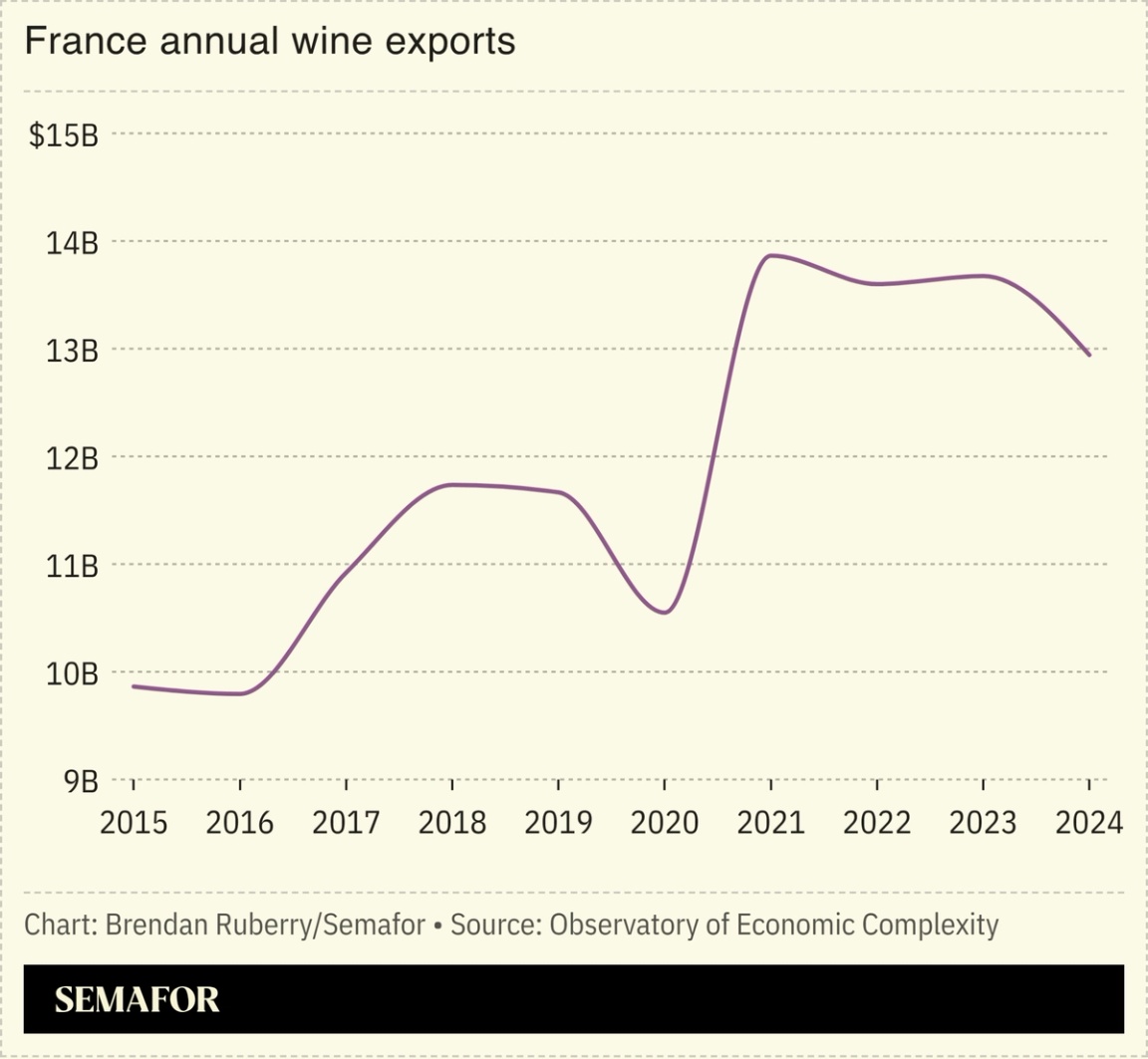 The EU will pay for millions of gallons of French wine to be turned into ethanol, as slumping demand and strong production create a vast wine glut. Global wine consumption is down — China, one of the biggest markets, has seen a particularly steep decline, but drinking patterns have changed worldwide, and economic slowdowns and tariffs have hit affordability. French exports saw their lowest volume in 20 years last year, Bloomberg reported; the country has about 11% of the world’s vineyards, and Paris has paid farmers to uproot vines. The resulting ethanol will be used in industrial processes, including for energy, which could be handy, since Europe now has too much wine but not enough fuel. |
|
US firms snap up renewables projects |
 The year-over-year increase in the number of corporate acquisitions of US renewable energy projects in the first quarter. According to transaction data from the investment bank Solomon Partners first shared with Semafor, there’s more demand for operating or under-construction renewables assets than anytime since 2023, a sign that there’s growing market interest in power generation projects that are ready to plug in. But buying already-built projects is one thing; acquisitions of whole project development companies — which face myriad obstacles, from permitting delays to disappearing tax credits — are slowing down. |
|
 New EnergyFossil FuelsFinance- BP shareholders were told by a major proxy advisor that they should vote against the new chair, Albert Manifold, after his decision to exclude a climate resolution from the company’s next annual meeting.
Tech- JPMorgan agreed to buy 60,000 tons of carbon credits from the removal startup Graphyte, through a project that the companies said will also help reduce wildfire risk.
Politics & PolicyEVs |
|
|


