| | In today’s edition: Riyadh drops its chip manufacturing ambitions, and Gulf funds increase their exp͏ ͏ ͏ ͏ ͏ ͏ |
| |  Abu Dhabi Abu Dhabi |  Riyadh Riyadh | Washington DC |
 | Gulf |  |
| |
|
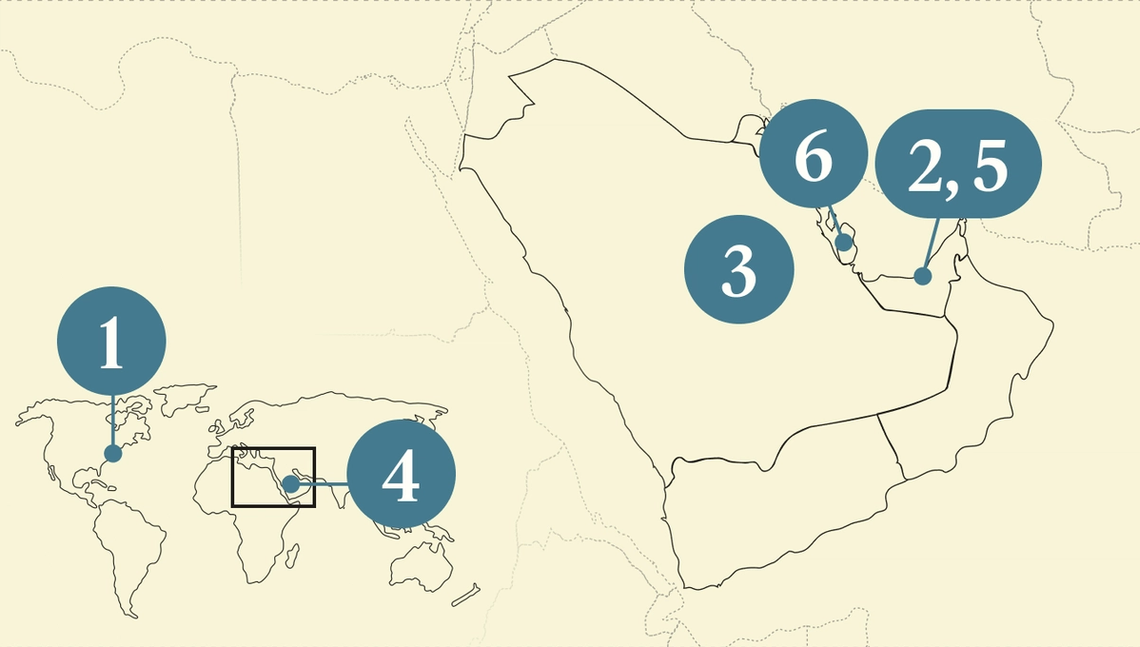 - Gulf heads to Washington
- Mubadala dealmaking spree
- Shakeup at PIF’s Alat
- Sovereign private credit exposure
- Abu Dhabi property holds
- Qatar-Iran ties stretched
 We all know about Aramco’s oil riches, but its magazine is a hidden treasure. |
|
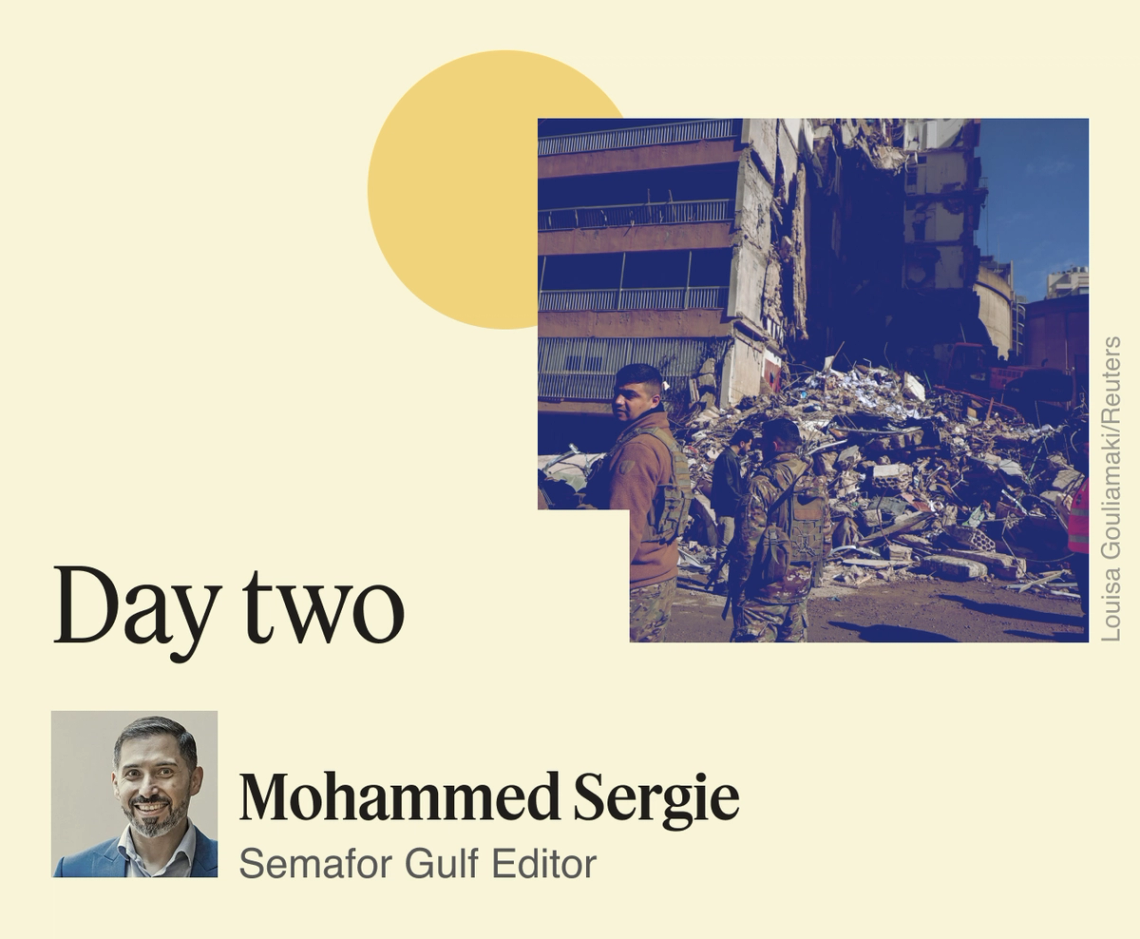 Yesterday’s ceasefire began with moments of relief in the Gulf, followed by another round of Iranian missile and drone strikes on the region, with the Strait of Hormuz still largely shut. In Lebanon, Wednesday was one of the deadliest days the country has seen, as Israel flattened buildings in Beirut and other cities, killing more than 250 people in strikes it said targeted Hezbollah militants. Ceasefires are rarely clean, but this one seems more fraught than most — a reminder that this war now involves almost a dozen countries, not just Iran, Israel, and the US. Observer Research Foundation-Middle East’s Mahdi Ghuloom writes that Gulf interests were barely considered in the agreement, and several governments in the region are pushing back against Iran’s proposal to maintain control over which ships can pass through Hormuz. Sultan Al Jaber, ADNOC’s Group CEO and the UAE’s minister of industry and advanced technology, said: “Conditional passage is not passage. It is control by another name.” He added that the strait can’t be weaponized because the consequences are global; this week, the reality of disrupted physical oil flows will begin to catch up with paper markets. 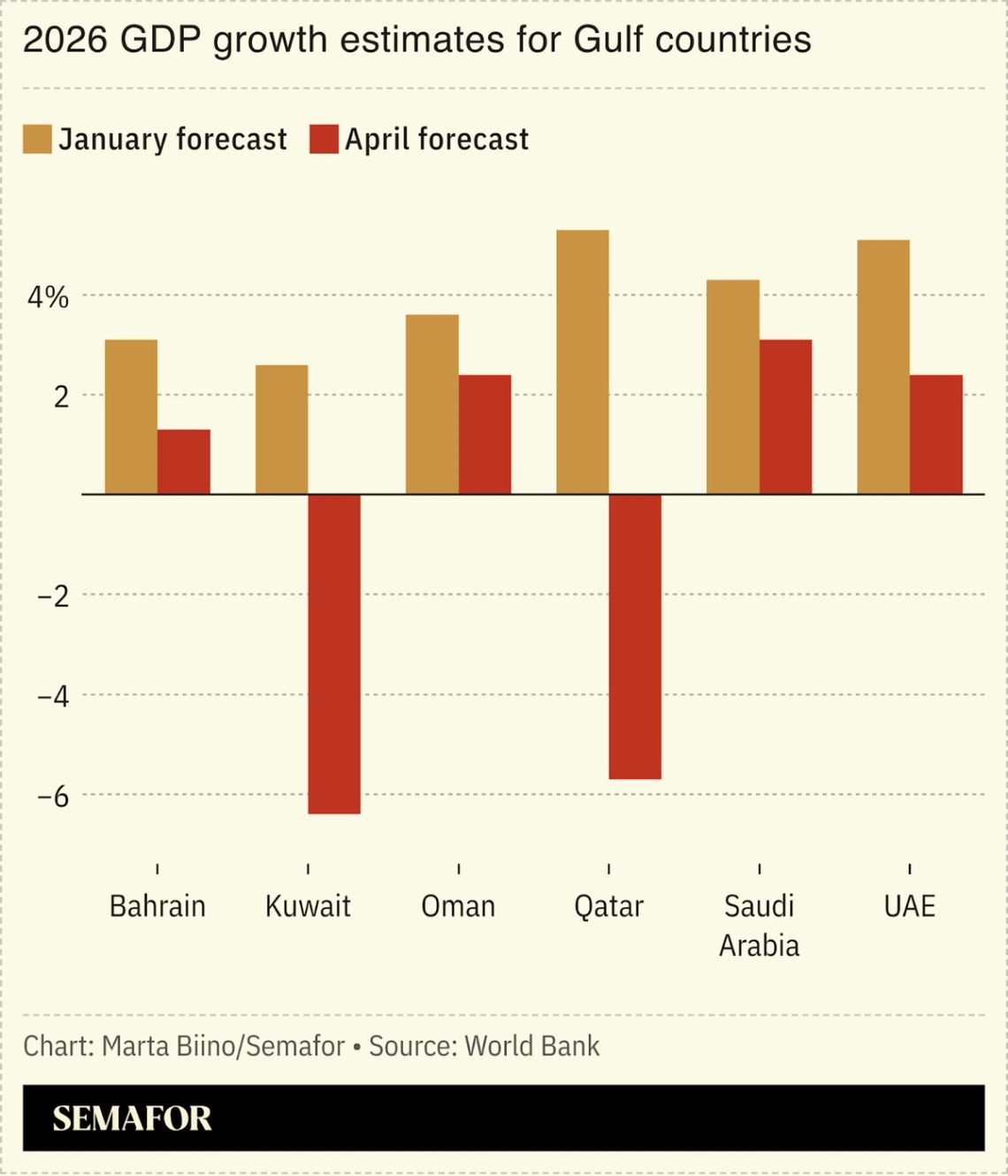 For Gulf economies, six weeks of war have reversed what was supposed to be a banner year. While Goldman Sachs expects oil to average more than $100 a barrel in 2026 if Hormuz stays closed for another month, not every Gulf state benefits. Oman’s exports are unrestricted and Saudi Arabia and the UAE can still move some of their crude, but others can’t, and all are suffering from slower growth and weaker tourism. The World Bank adjusted its forecasts and now expects Gulf growth to slow to 1.3% this year, from 4.4% in 2025, while Gulf officials estimate tourism losses of as much as $32 billion. All eyes are on the talks this weekend in Islamabad, with the rhetoric from both sides remaining sharp. US President Donald Trump said US forces will stay in place and more weapons and troops are being sent. “Our great Military is Loading Up and Resting, looking forward, actually, to its next Conquest,” he posted. |
|
Semafor brings the Gulf to Washington |
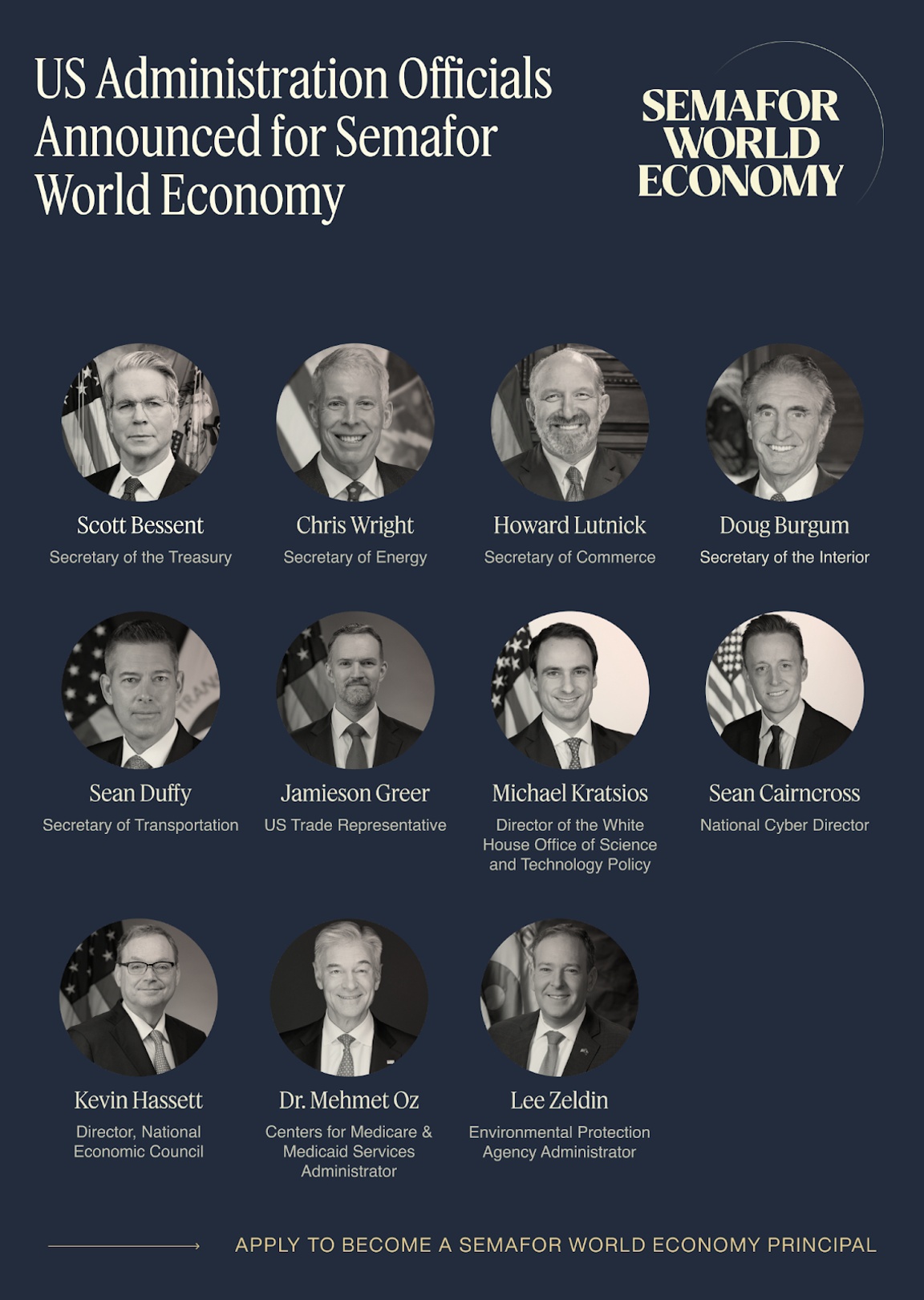 A raft of senior Gulf figures will be in Washington for Semafor World Economy, now in its fourth year and the most important gathering of economic leadership in the US. Among the speakers from the Gulf are Hadi Badri, CEO of the Dubai Economic Development Corporation, Nameer Siddiqui, chief investment officer at XRG, and Eric Xing, president of the Mohamed Bin Zayed University of Artificial Intelligence. Other leaders will include US Cabinet Secretaries Scott Bessent, Chris Wright, Howard Lutnick, Doug Burgum, and Sean Duffy. The five-day event runs April 13 to 17 in Washington, timed to coincide with the IMF and World Bank Spring Meetings, and brings together more than 450 Fortune 1000 CEOs and nearly a quarter of the US Senate, alongside thought leaders and academics. The agenda, built around themes from AI and geopolitics, to energy and the global south, is driven entirely by Semafor’s newsroom, with sessions designed as unscripted interviews rather than panel discussions. For “CEOs from all around the world, all of a sudden in the last number of years, Washington has become the destination of choice,” Semafor CEO Justin Smith told Sky News Arabia, pointing to the convergence of regulation, geopolitics, and technology as the forces pulling business leaders to the US capital. This is your last chance to join as an inaugural member of our cohort of Semafor World Economy Principals — apply here to join us in-person next week. |
|
Mubadala dealmaking soars |
 Lee Smith/Action Images via Reuters Lee Smith/Action Images via ReutersMubadala’s investment activities soared in 2025 to the highest level in at least eight years as it pushed further into technology, health care, and infrastructure. The Abu Dhabi sovereign fund said in its annual report that it invested nearly $40 billion in 2025, 20% more than a year earlier. It now controls $385 billion of assets, 17% higher than 12 months ago. Mubadala has recently become one of the most aggressive Gulf sovereign wealth funds, embarking on a dealmaking spree, tying up with some of the biggest names in global finance, and taking a more active role leading on investments rather than being a passive capital provider. As well as investing globally — about 44% of its assets are in North America — the fund also has a role in creating jobs in the UAE, attracting foreign investment, and diversifying the local economy. That may become more important as the Gulf emerges from the economic shock of the Iran war and looks to restore investor confidence. “We are confident we will emerge from these challenging times stronger than before,” Chief Executive Khaldoon Al Mubarak said. — Matthew Martin |
|
Alat removes CEO, ditches chips |
| |  | Matthew Martin |
| |
 Amit Midha. Courtesy of Future Investment Initiative. Amit Midha. Courtesy of Future Investment Initiative.Saudi Arabia’s sovereign wealth fund has dismissed Alat CEO Amit Midha — a former Dell executive hired three years ago to run the $100 billion play to make the kingdom an electronics manufacturing powerhouse. Alat has also dropped plans to invest in semiconductor production and will instead focus on data centers, according to people familiar with the matter. The move is part of a wider review of the kingdom’s spending plans that led it to cancel some of its most ambitious projects. Alat, launched in 2024, has had a mixed track record so far. The firm was intended to partner with foreign companies to encourage them to open plants across various sectors, and Alat signed a series of deals to bring manufacturing to Saudi Arabia. But it couldn’t succeed in building a semiconductor industry that would complement the country’s wider manufacturing ambitions. |
|
SWFs quadruple private credit bets |
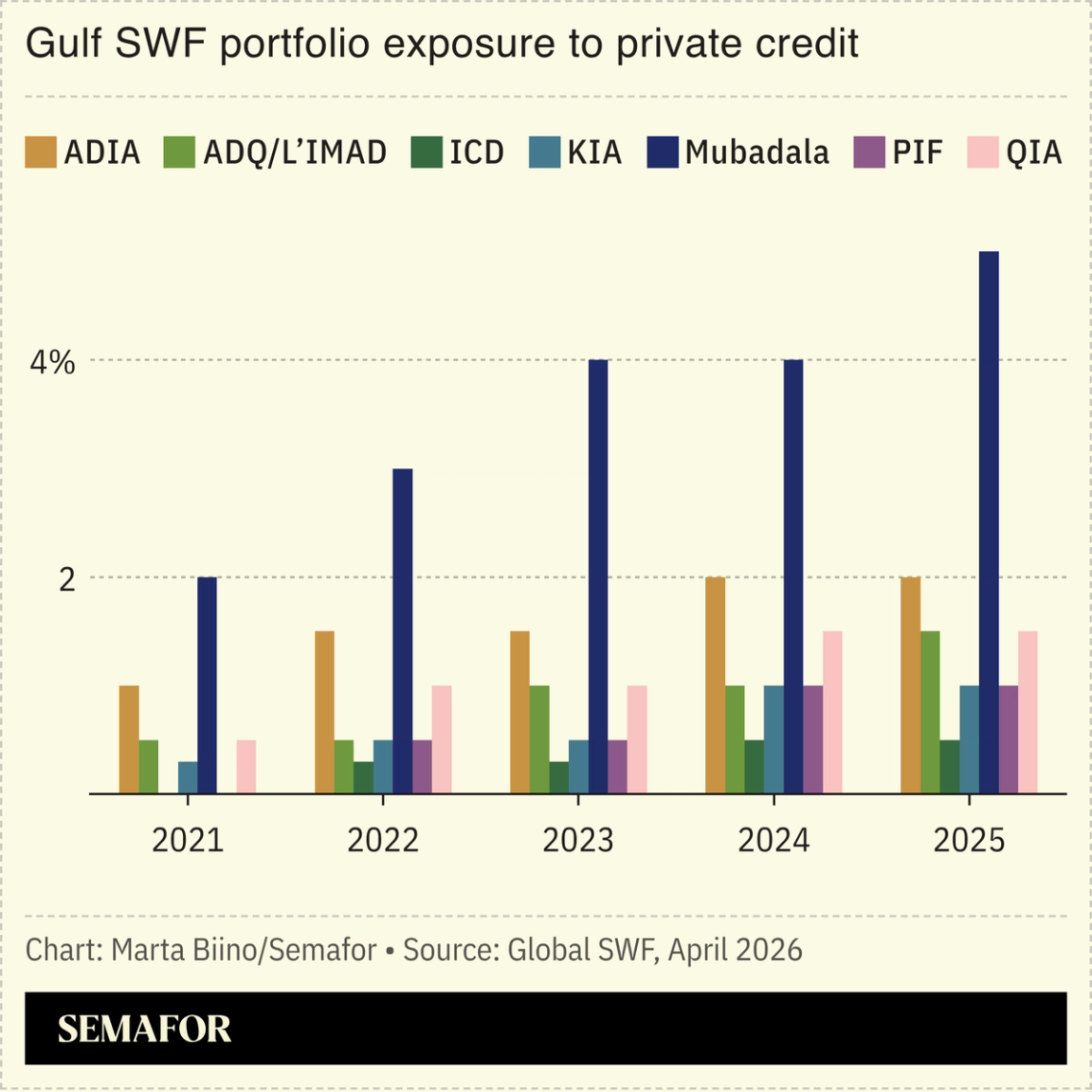 The Gulf’s largest sovereign wealth funds more than quadrupled their private credit exposure between 2021 and 2025 to $80 billion, with investment accelerating over the past two years, according to data from Global SWF. That puts them at the forefront of an asset class that is looking uncertain, although their overall exposure is still relatively small compared to their vast holdings. Abu Dhabi’s Mubadala is the most extended, with 5% of its portfolio invested through partnerships with Apollo, Ares, Carlyle, Goldman Sachs, and KKR; Abu Dhabi Investment Authority holds the largest purse with $24 billion invested. Kuwait, Qatar, and Saudi Arabia have also increased their allocations to the sector, albeit more cautiously. The regional build-up coincided with private credit’s boom years (and was Mubadala’s top performer for three years running). — Kelsey Warner |
|
Abu Dhabi real estate’s Q1 surge |
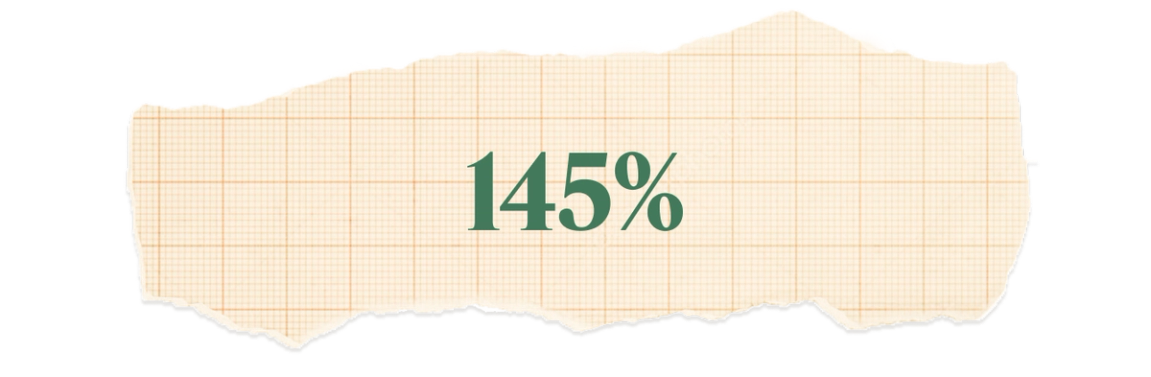 The year-on-year increase in the value of real estate deals in Abu Dhabi in the opening quarter of 2026, according to Abu Dhabi Real Estate Centre, which regulates the local property market. A record 66 billion dirhams ($18 billion) worth of deals were concluded from January to March, up from 27 billion dirhams in the same period last year. Foreign buyers accounted for 8.3 billion dirhams of the total. The value of deals hit a high point in February, but fell back in March amid the Iran war. However, deals tend to be agreed weeks before they make it into the official data, so the full impact of the conflict may only become apparent from April onward. |
|
The future of Qatar-Iran ties |
 Donald Trump shakes hands with Qatar’s Emir Sheikh Tamim bin Hamad Al Thani. Evelyn Hockstein/Reuters. Donald Trump shakes hands with Qatar’s Emir Sheikh Tamim bin Hamad Al Thani. Evelyn Hockstein/Reuters.The US-Israel war with Iran has “forever” altered relations between Doha and Tehran, according to a former Qatari diplomat. “Attacking civilian infrastructure, under the guise of ‘we’re attacking the Americans,’ is something that Qatar views as a just bold-faced lie,” Nawaf al-Thani, the former Qatari defense attaché to the US, said in an interview with Semafor. Doha now “has to see a seriousness from Iran when it comes to Qatari security,” he said. Last month, Iranian drone and missile strikes knocked out roughly 17% of Qatar’s LNG export capacity, while air defenses intercepted waves of missiles targeting civilian infrastructure like Hamad International Airport. The war has had the opposite effect for US-Qatar relations, according to al-Thani, who predicted that the relationship would deepen following the conflict. — Lauren Morganbesser and Adrian Elimian |
|
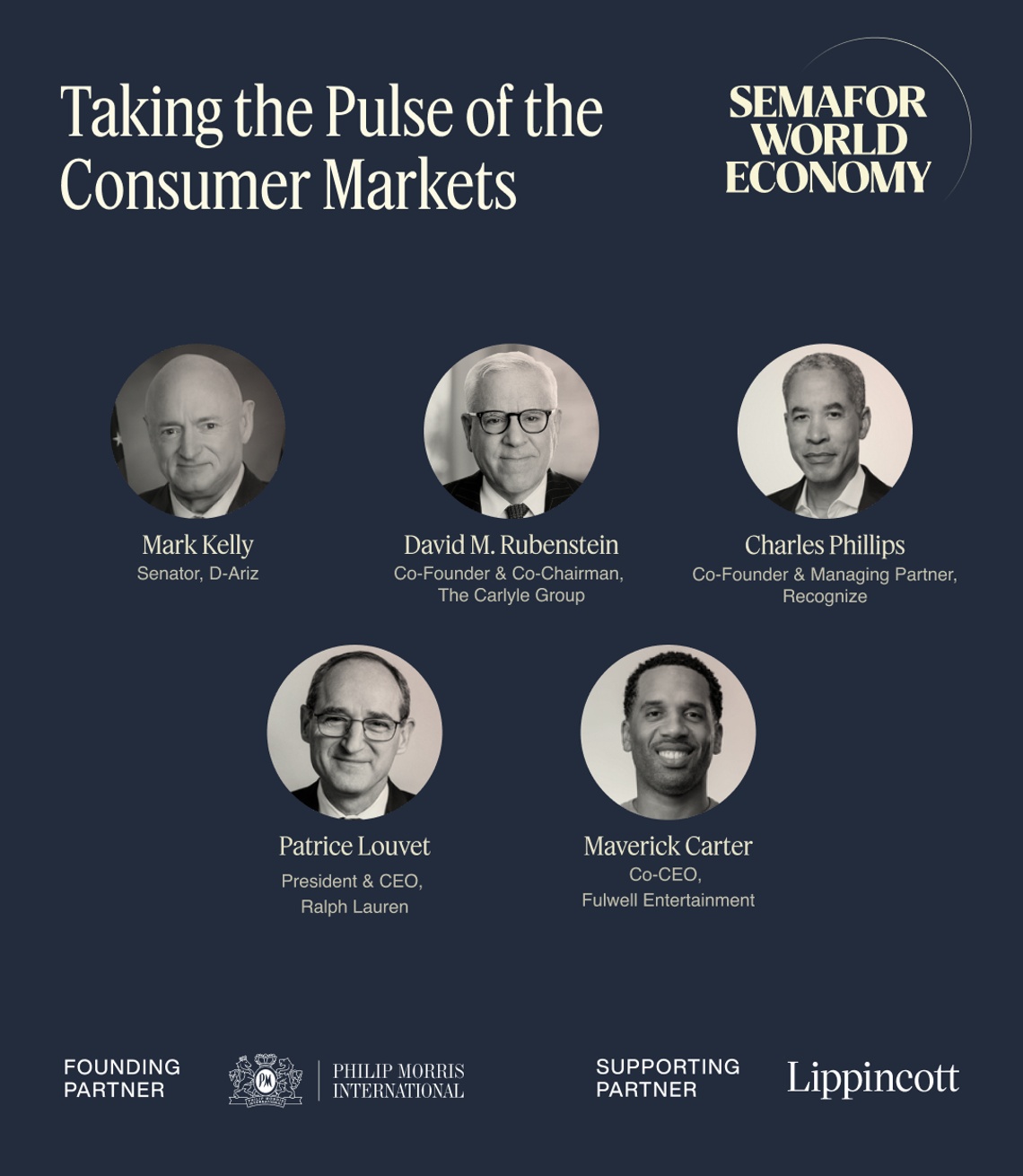 Mark Kelly, Senator, D-Ariz.; David Rubenstein, Co-Founder & Co-Chairman, The Carlyle Group; Charles Phillips, Co-Founder & Managing Partner, Recognize; Patrice Louvet, President & CEO, Ralph Lauren; Maverick Carter, Co-CEO, Fulwell Entertainment; and more will join the Taking the Pulse of the Consumer Markets session at Semafor World Economy. This session will examine how businesses are identifying what is strengthening or fracturing among consumers, and what early insights are indicating about future growth. April 15, 2026 | Washington, DC | Apply to attend |
|
|