| | Israel and Lebanon are set to hold talks in Washington, Amazon’s CEO defends massive AI spending, an͏ ͏ ͏ ͏ ͏ ͏ |
| |  Beirut Beirut | Shenzhen |  McMurdo Station McMurdo Station |
 | Flagship |  |
| |
|
The World Today | 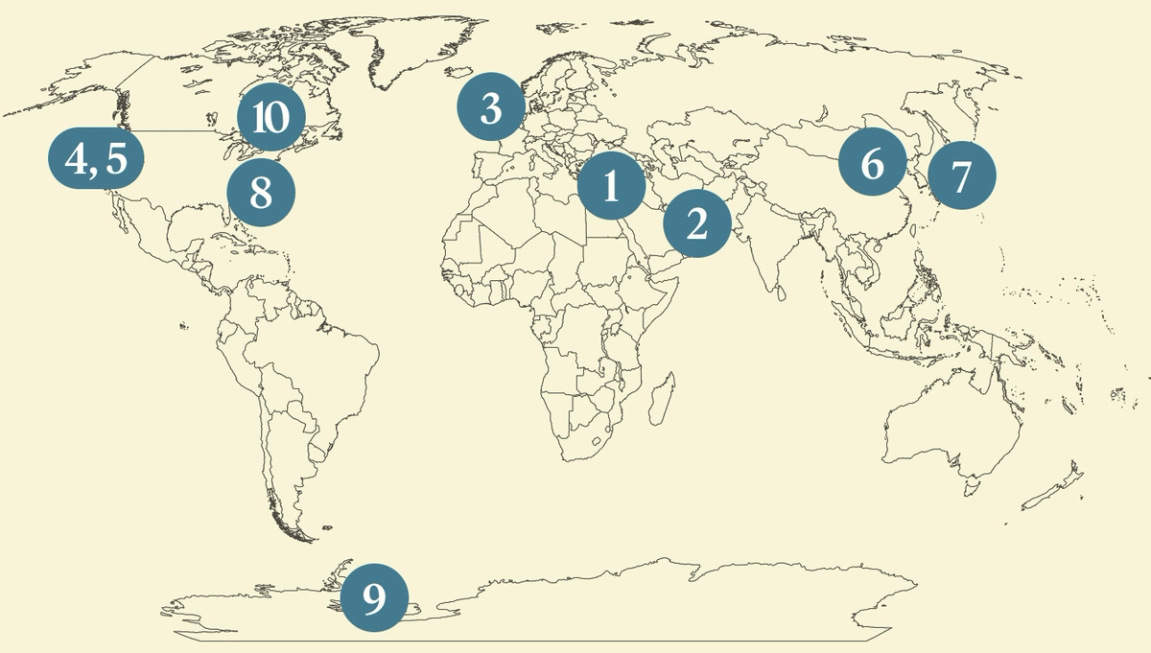 - Israel, Lebanon to hold talks
- UK rejects Iran Hormuz toll
- OpenAI pauses Stargate UK
- AI spending spree continues
- Gen Z grows wary of AI
- China’s AI microdrama boom
- Video game industry woes
- Science’s replication crisis
- Emperor penguins endangered
- Headlights are too bright
 Death and disillusionment in New Orleans. |
|
Israel, Lebanon to hold direct talks |
 Ayal Margolin/Reuters Ayal Margolin/ReutersIsrael and Lebanon are set to hold direct talks in Washington next week, as Israel’s campaign against Hezbollah threatens to derail the US-Iran ceasefire. Israeli Prime Minister Benjamin Netanyahu vowed to continue striking Lebanon in the meantime; Israeli attacks killed more than 250 people Wednesday. Iran’s president said planned negotiations in Pakistan on Friday between Tehran and Washington would be meaningless in light of Israel’s assault on Lebanon. US officials pressured Israel into holding the talks with Lebanon, Axios reported, as Washington looks to bolster the shaky truce with Iran. President Donald Trump said Thursday he asked Netanyahu to be “a little more low-key.” |
|
UK rejects Iran’s Hormuz toll plan |
 Benoit Tessier/Reuters Benoit Tessier/ReutersThe UK’s top diplomat on Thursday rejected Iran’s toll plan for the Strait of Hormuz, characterizing the effort as a “hijacking” of the crucial transit route. Iran is reportedly planning to charge firms in cryptocurrency to pass through the strait — $1 per barrel of oil — a move that reflects how the regime’s digital currency ecosystem has grown due to sanctions and the rial’s devaluation, The Wall Street Journal wrote. Global powers are watching closely: US President Donald Trump suggested a “joint venture” with Iran to charge tolls, while some Chinese experts proposed using digital yuan tokens for the payments. Any “toll booth” plan would “leave energy markets vulnerable and hardwire higher prices for years to come,” Reuters’ energy columnist argued. |
|
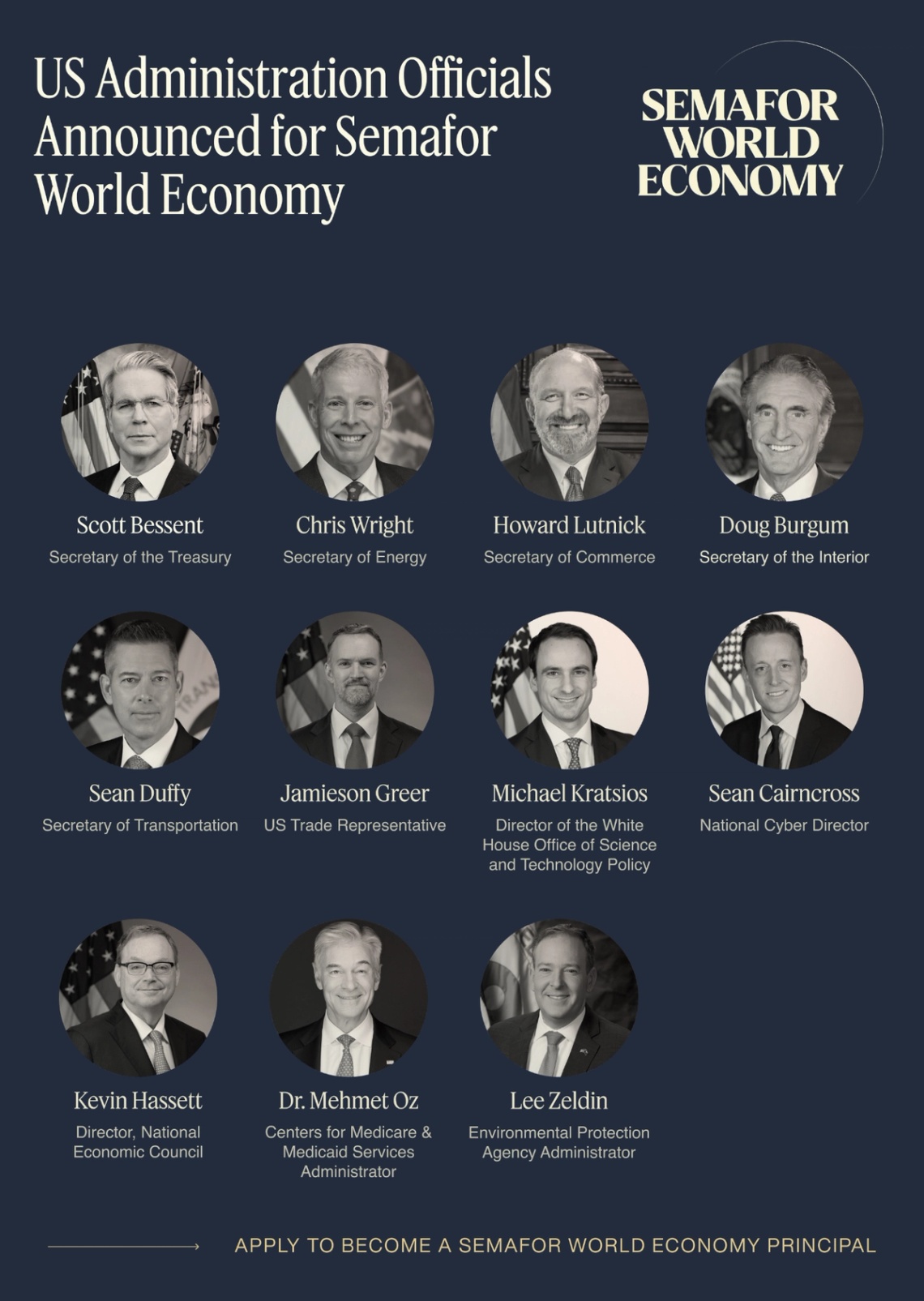 We’re so proud to be convening a new kind of gathering in Washington, DC next week with Semafor World Economy, the single most important convening of economic leadership in the United States. Semafor World Economy comes at a moment when Washington increasingly sets the direction of the global economy. We’ll bring together leaders making the key decisions, including US Cabinet Secretaries Scott Bessent, Chris Wright, Howard Lutnick, Doug Burgum, and Sean Duffy. And over five days, Semafor’s flagship live journalism platform will become a real-time stage for the conversations shaping markets, policy, and power, with a continuous run of high-level interviews and discussions featuring the world’s most influential policymakers and executives. We’ll be hosting leaders from more than 80 countries and over 500 global CEOs, and this is your last chance to join as an inaugural member of our cohort of Semafor World Economy Principals — apply here to join us in-person next week. |
|
OpenAI pauses UK Stargate project |
 Bhawika Chhabra/Reuters Bhawika Chhabra/ReutersOpenAI is pausing its UK data center project, citing high energy costs and regulatory conditions. The multibillion-dollar Stargate project is part of the ChatGPT maker’s expanding AI infrastructure buildout, but the pullback marks a blow to Prime Minister Keir Starmer’s efforts to make the UK a global AI hub. One opposition lawmaker called it a “wake-up call” for the government. The pause also reflects a shift in OpenAI’s investment strategy: The startup isn’t planning to expand its main Stargate data center in Texas, and recently shut down its AI video app as it looks to refocus around coding and business users, amid intensifying competition with rivals Anthropic, Google, and Meta. |
|
Amazon defends AI spending |
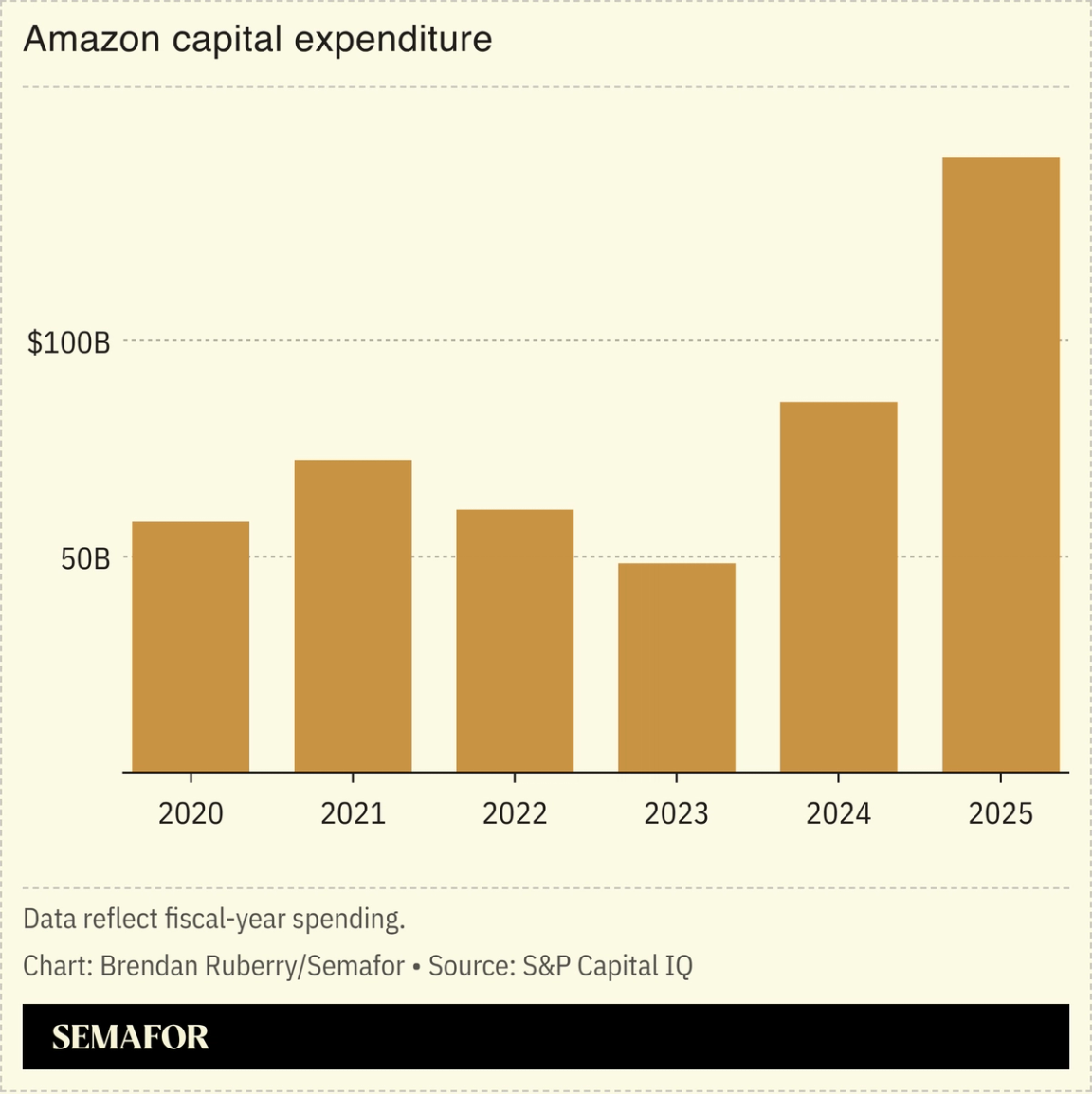 US tech giants are doubling down on massive AI spending despite lingering concerns of a bubble and energy shocks stemming from the Middle East conflict. Amazon CEO Andy Jassy dismissed concerns about the company’s projected $200 billion in capital expenditure this year — mostly on AI buildout — telling investors in his annual letter, “We’re not going to be conservative.” And Meta, a top AI infrastructure spender, struck a $21 billion cloud capacity deal with CoreWeave on Thursday; the company plans to put billions toward AI over the next few years. Big Tech’s spending bet is now being tested, S&P Global said, as the Iran conflict puts pressure on energy costs and global economic growth. |
|
Gen Zers grow more uneasy about AI |
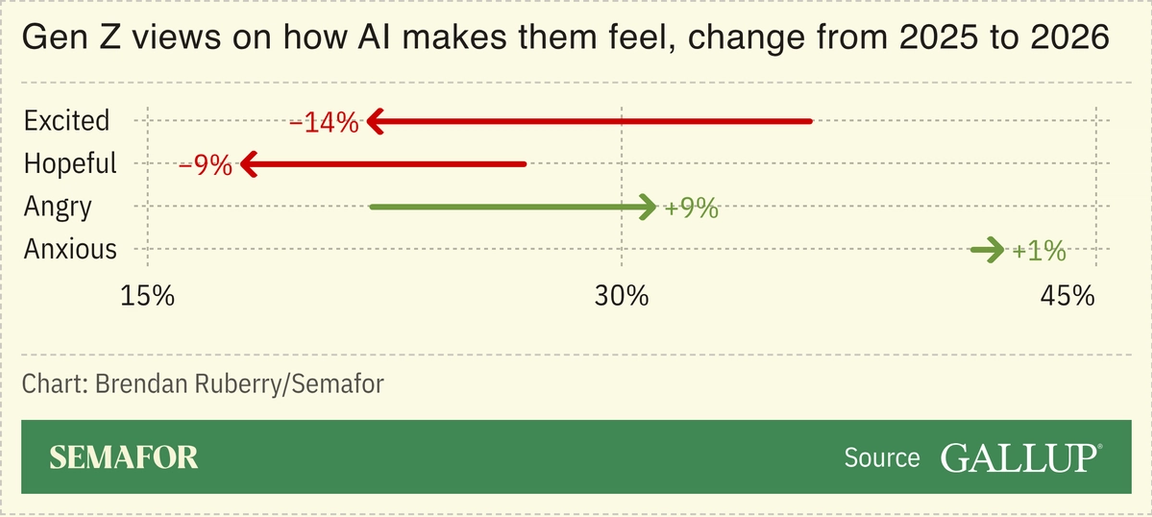 More American Gen Zers are using AI, but they’re also growing more uneasy about it, new data showed. According to a Gallup report, the percentage of respondents feeling hopeful or excited about AI has declined steeply over the past year, even as more than half of Gen Z now uses the tech regularly. “Gen Zers are unconvinced that artificial intelligence will help them search for accurate information, come up with new ideas and think carefully about information,” the report stated. The findings mirror broader concerns among Americans over AI, despite rising adoption rates. Some politicians are looking to drive a populist revolt against AI in this year’s midterm elections, citing rising energy costs as well as safety fears. |
|
AI turbocharges China microdramas |
 A (human) microdrama set. Ma Jian/VCG via Getty Images A (human) microdrama set. Ma Jian/VCG via Getty ImagesChina’s microdrama industry is booming thanks to AI. The short-form videos — essentially “soap operas rebuilt for smartphone attention spans” — started taking off in China in recent years, but AI has allowed the industry to launch about 470 new titles daily in January alone, the Hello China Tech newsletter wrote. AI-generated clips haven’t taken off in the US in the same way; OpenAI recently canned its video-focused offering. But Beijing cracked down on the industry after several dramas used the likenesses of prominent human actors, with regulations requiring new series to seek government approval before release. China will tolerate “rapid commercial experimentation” across technology, but is quick to step in “when the social costs become visible to ordinary citizens,” the newsletter argued. |
|
Video game industry faces headwinds |
|
Replication crisis plagues studies |
A yearslong project reviewing the results of social science studies found that barely half stood up to scrutiny. Since 2011, the “replication crisis” has devastated much of science, notably psychology; hundreds of high-profile findings turned out to be the result of poor statistical practice and bad incentives. Doubt has been cast over the reality of famous discoveries such as the Dunning-Kruger effect, growth mindset, and power posing. The latest research found that many papers failed to give enough information about their methods to replicate them, and that of those that did, 49% failed to reach the statistical threshold for discovery. An earlier project found barely a third of results could be repeated: Perhaps ironically, that finding apparently does replicate. |
|
Emperor penguins, fur seals now endangered |
 Martin Passingham/Reuters Martin Passingham/ReutersThe emperor penguin and Antarctic fur seal were officially declared endangered by a global conservation authority Thursday, as melting ice makes survival more difficult. The emperors, the largest of all penguins, are famously resilient in Antarctica, but global warming is causing a loss in coastal sea ice that is critical for raising chicks, putting young birds at danger of drowning. The conservation group also said rising ocean temperatures have pushed krill, the seals’ main prey, to greater ocean depths, making them harder to find. Antarctica’s environment is vital to the entire planet: Its ice reflects energy from the sun back into space, keeping the Earth cool, and its waters drive the global circulation systems that transport nutrients around the world. |
|
|


