| | In today’s edition: Energy execs warn of the long-term effects of war, Bahrain reports drone attacks͏ ͏ ͏ ͏ ͏ ͏ |
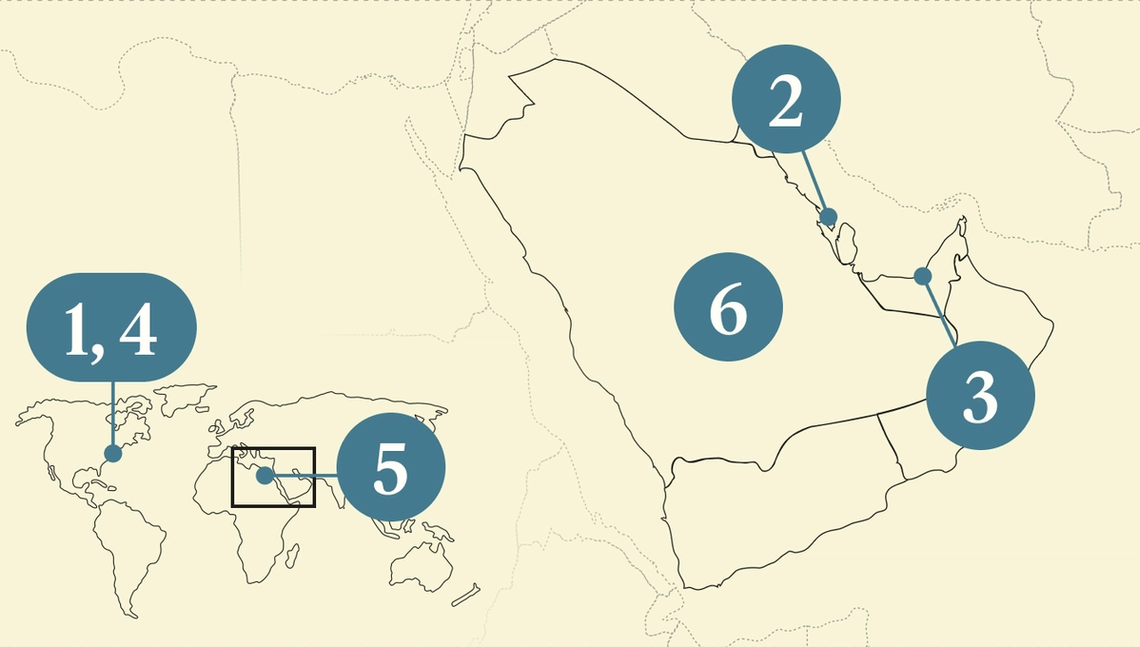
| |  Washington Washington | Abu Dhabi | Cairo |
 | Gulf |  |
| |
|
 - Energy’s war warnings
- Bahrain under fire
- A media blackout
- Anthropic’s scary AI model
- Chinese green gains
- A construction surprise
 Broasted or nothing. |
|
Energy execs warn of war’s lasting impacts |
  TotalEnergies CEO Patrick Pouyanné with Semafor Energy Editor Tim McDonnell. Tasos Katopodis/Getty for Semafor TotalEnergies CEO Patrick Pouyanné with Semafor Energy Editor Tim McDonnell. Tasos Katopodis/Getty for SemaforTop executives warned of the long-term damage the Iran war could inflict on global commodities markets as the US began its blockade of Iranian ports and the Strait of Hormuz. After weekend talks ended without a deal, Washington and Tehran threatened further escalation: US President Donald Trump moved to block all maritime traffic to and from Iranian ports, saying Iran could do “absolutely no business;” Tehran pledged a “decisive” response. Pakistan is reportedly trying to convene a second round of talks this week. Speaking at Semafor World Economy, TotalEnergies CEO Patrick Pouyanné said disruptions could become “a question of years” if the conflict escalates, and argued that any peace deal “must absolutely preserve the Strait of Hormuz opening … There is no way to have any agreement if there is still this threat.” Lazard’s CEO added that the macro impacts are “not fully manifested yet,” with jet fuel, aluminum, and helium markets set to face “much more pressure.” The Trump administration, by contrast, voiced cautious optimism. US Treasury Secretary Scott Bessent told Semafor’s editor-in-chief that it’s too early to assess what the impact will be on the US economy, but in the long term, benefits will accrue around the world: “We will look back and say — I don’t know the number of days, whether it’s 50 or 100 or more — for 50 years of stability.” And US Energy Secretary Chris Wright said that higher gas prices were a “short-term” shock that would subside in the next few weeks, but acknowledged that “the longer the conflict goes, the longer the rebound is.” |
|
Bahrain fends off Iraqi drones |
 UAE President Sheikh Mohamed bin Zayed (left) with Bahrain’s King Hamad. Abdulla Al Neyadi/UAE Presidential Court/Handout via Reuters. UAE President Sheikh Mohamed bin Zayed (left) with Bahrain’s King Hamad. Abdulla Al Neyadi/UAE Presidential Court/Handout via Reuters.Bahrain has reported further drone attacks, but from Tehran-backed militia groups in Iraq rather than from Iran itself. The incidents highlight the potential for the war to expand, even as the fragile Iran-US ceasefire appears to be holding. Iraq — which named a new president at the weekend but has yet to form a new government following elections in November — has numerous armed militias with strong ties to Iran. Bahrain is the smallest and weakest Gulf economy, but it has been receiving support from allies. A few days after his country offered Bahrain a $5.4 billion currency swap agreement, UAE President Sheikh Mohamed bin Zayed flew into Manama on Monday for talks with King Hamad bin Isa Al Khalifa. UK Prime Minister Keir Starmer was in town last week. The island’s economy grew by 3.5% last year, according to new data, but is struggling amid the war. One sign of the pressure: The Central Bank of Bahrain has launched a program to allow individuals and companies to defer loan repayments for three months, and lowered the reserve requirement for local banks. — Dominic Dudley |
|
Why you’re not seeing more war images |
 AFP via Getty Images AFP via Getty ImagesSome international newswires stopped publishing new images showing damage from Iranian missile and drone strikes in the UAE after several photojournalists were arrested last month. The disappearance of conflict photography is just one example of a media crackdown that has swept the Gulf, as well as Israel and Iran, since the start of the war. The blackout coincided with increasing pressure from UAE authorities — initially seen as targeting social media users — to control the news coming out of the country, and mirrors other countries’ restrictions and crackdowns on visual media around Iranian attacks. In a statement to Semafor, an official from the UAE Ministry of Foreign Affairs said “journalists work and publish freely in accordance with applicable laws and regulations,” but they must secure “official permits before undertaking any filming activities, particularly in sensitive or restricted locations, in order to preserve public safety and maintain security and public order.” |
|
| More from Semafor World Economy |
|
| Gulf connections today at Semafor World Economy |
  - Dr. Fatih Birol, Executive Director, International Energy Agency
- Dina Powell McCormick, President and Vice Chairman, Meta, and Former Deputy National Security Adviser of the United States
- H.E. Hadi Badri, CEO, Dubai Economic Development Corporation
- Kurt Björklund, Executive Chairman, Permira
- Harvey Schwartz, CEO, Carlyle
 - Vicki Hollub, CEO, Occidental
- Jacob Helberg, US Under Secretary of State for Economic Growth, Energy, and the Environment
- José Andrés, Chef, Founder and Chief Feeding Officer, World Central Kitchen
|
|
Anthropic-OpenAI battle heats up |
 Anthropic co-founder Jack Clark. Tasos Katopodis/Getty Images for Semafor Anthropic co-founder Jack Clark. Tasos Katopodis/Getty Images for SemaforAnthropic’s Mythos AI model is so powerful the company isn’t sure if it will sell it to the public, the company’s co-founder said at Semafor World Economy, as competition between two of the Gulf’s largest AI bets heats up. Anthropic’s rapid ascent has prompted a strategic shift at its rival OpenAI, leading some investors to question the latter’s $852 billion valuation ahead of a potential initial public offering, the Financial Times reported. Mythos sparked alarm at Anthropic when the model discovered previously unknown security flaws in every major web browser and operating system, unnerving global financial authorities. Mythos is “not a special model,” Jack Clark said at Semafor’s event on Monday; within a year and a half, “there will be open-source models from China that have these capabilities.” Either way, Gulf sovereign wealth is tied up: Qatar Investment Authority increased its stake in Anthropic in its latest fundraising round, and Abu Dhabi’s MGX has backed both. Abu Dhabi’s own AI champion G42 insists its domestic investment and international expansion plans are on track, despite the impact of the Iran war on the sector, which has seen data centers in the UAE and Bahrain hit by Iran. — Kelsey Warner |
|
China gains from global energy turmoil |
| |  | Tim McDonnell |
| |
 Tim McDonnell/Joey Pfeifer/Semafor Tim McDonnell/Joey Pfeifer/SemaforWith oil and gas shipments blocked from leaving the Gulf, the Iran war is accelerating China’s influence in global energy markets, and in particular renewable energy. One example is taking shape on Egypt’s Gulf of Suez coast, where Beijing-based PowerChina is building a large wind power plant using Chinese equipment for Infinity Power, Africa’s largest renewable energy company and co-owned by Abu Dhabi’s Masdar. The 200-megawatt facility will be a lifeline for Egypt, which is heavily exposed to the soaring natural gas prices sparked by the war in Iran. With its usual supplies from Israel cut off, Egypt’s energy import bill doubled from January to March as it was forced to compete for scarce LNG shipments. The country aims to get 45% of its power from renewables within two years, which will reduce its vulnerability but, as Semafor’s Tim McDonnell reported from a visit there this month, it can’t get there without Chinese engineering services and hardware. |
|
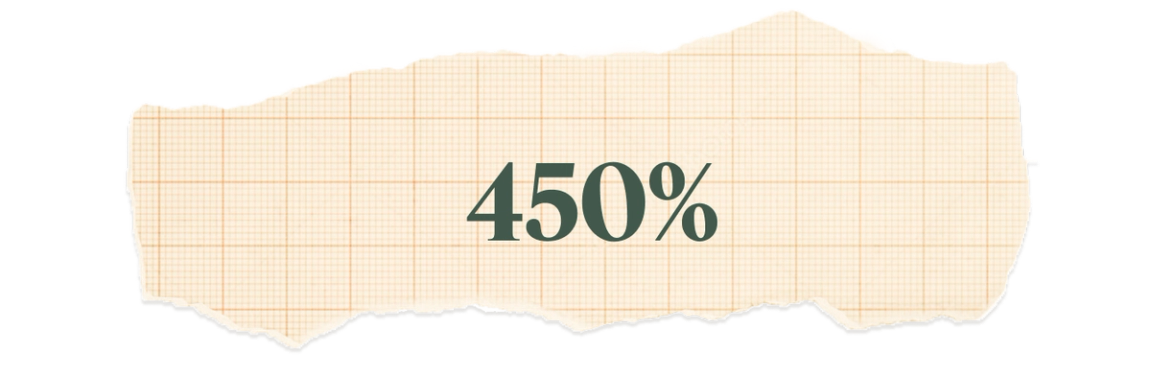 How much Saudi construction contract awards surged in value month-on-month in March. The kingdom’s developers awarded SR15.6 billion ($4.2 billion) in deals, the strongest activity of 2026 so far, despite uncertainty driven by the Iran war. Instead, after the scaling back of government spending on gigaprojects, a pipeline of more practical possibilities is in the works. Building and construction projects accounted for nine of the 11 awards in March, alongside two power and water ones. Educational facilities and commercial developments led by value, and Riyadh captured 82% of total investment. Most of the awarded contracts are scheduled for completion by 2032, suggesting some in the kingdom retain a long-term horizon regardless of the near-term turbulence. — Manal Albarakati |
|
|


