| | Business leaders warn over global growth prospects, executives are optimistic about the Gulf’s futur͏ ͏ ͏ ͏ ͏ ͏ |
| |  | Flagship |  |
| |
|
The World Today | 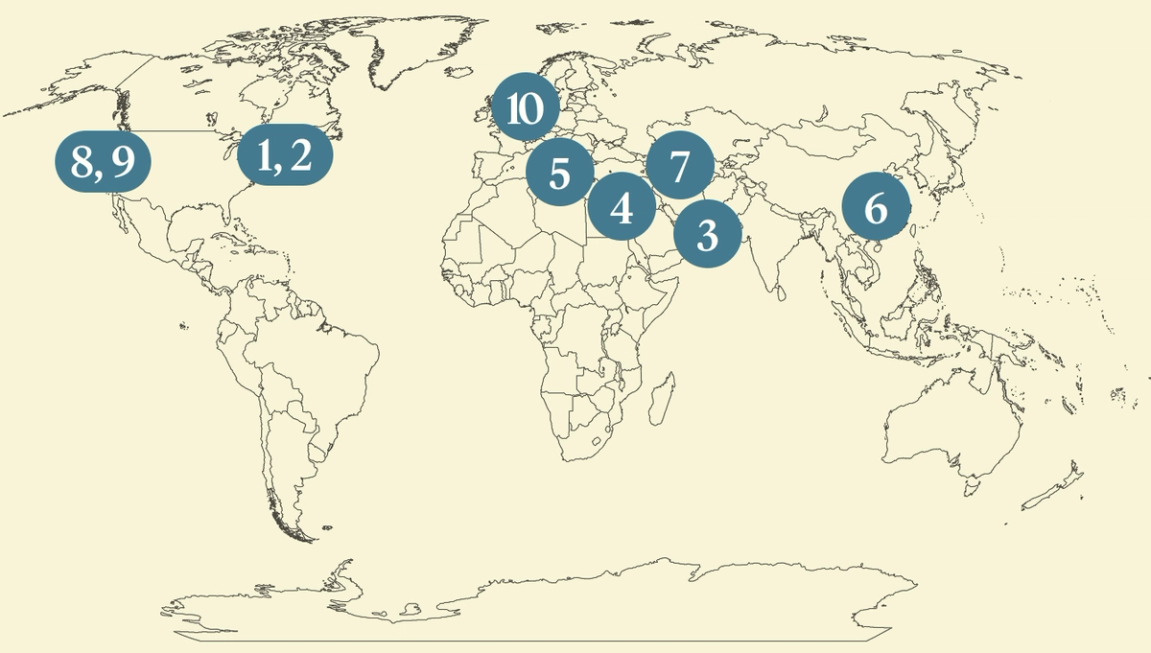 - Global growth warnings
- Debate over gas’ future
- Gulf economy optimism
- Israel, Lebanon hold talks
- Trump attacks Italy’s PM
- Carmakers ‘speed up’ in China
- Iran’s long internet blackout
- US Treasury wants Mythos
- Vibe-coded app boom
- Studies on firstborn children
 The geostrategic case for alternative meats. |
|
Alarm bells over global economy |
  Citadel CEO Ken Griffin. Kris Tripplaar/Semafor Citadel CEO Ken Griffin. Kris Tripplaar/SemaforLeading executives raised alarm bells over the prospects for the world economy, as the International Monetary Fund cut its growth outlook for 2026 on the back of the Iran war. The conflict has driven fears of stagflation worldwide as energy supplies have been choked off. “The world’s going to end up in a recession” if the Strait of Hormuz is closed for six to 12 months, Citadel’s CEO said at Semafor World Economy, while Neuberger Berman’s chief warned of several “fat left-tail risks” — including other transit points in the Middle East that could emerge as future Hormuz-like chokepoints. Carlyle’s CEO voiced optimism over the “core economic engine globally,” but acknowledged there were “real issues for us to be concerned about.” |
|
Experts split on case for gas |
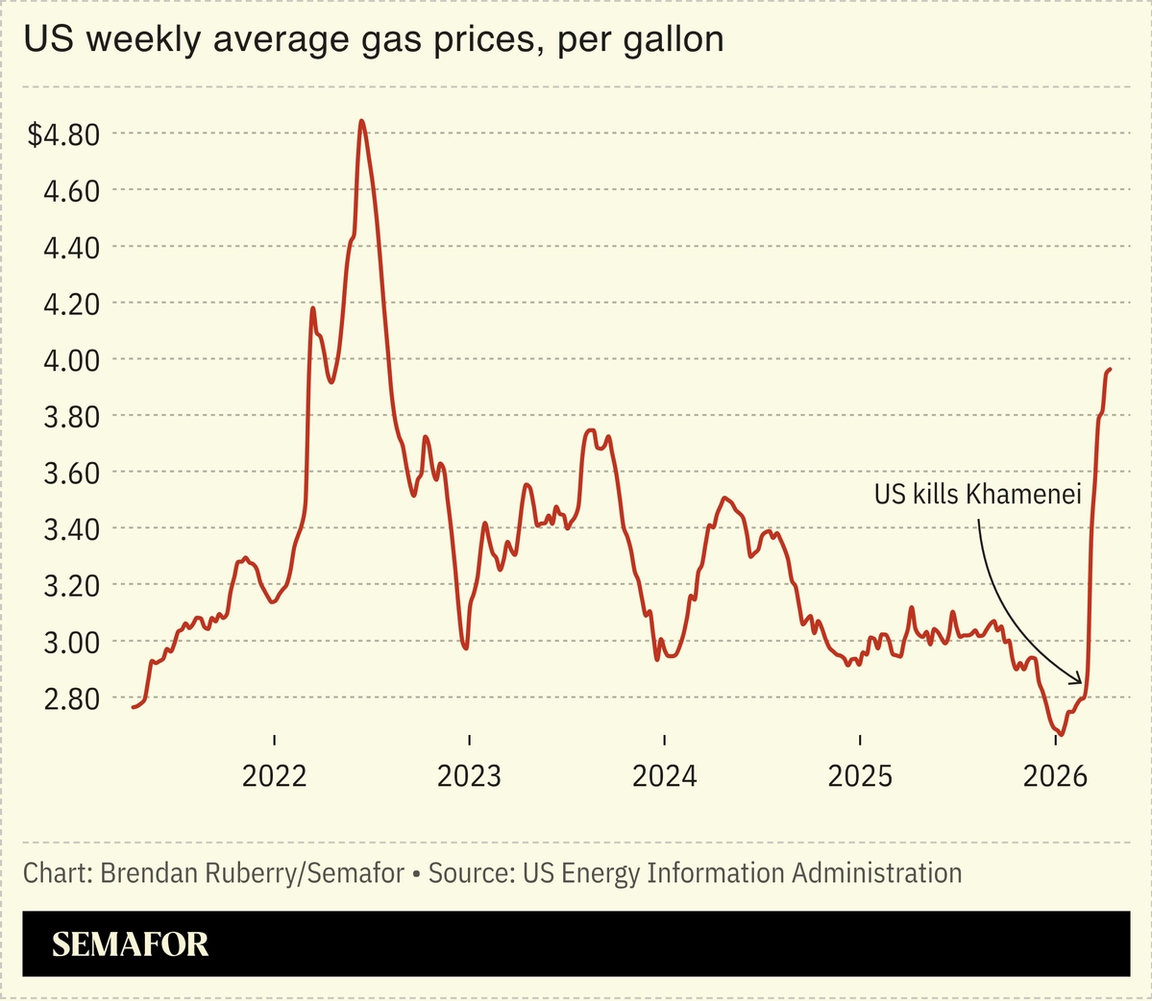 The oil and gas crisis stemming from the Iran war has made energy security a central factor globally, officials and executives at Semafor World Economy said, though they diverged on whether that shift would benefit gas. Fossil fuel prices have surged since the war began, driving debate over the instability associated with importing oil and gas against expanding renewables use. The head of the International Energy Agency said recent crises undermined the idea of gas as affordable and reliable, adding that several fossil fuel importers would likely pause before adding new gas infrastructure. The CEO of Baker Hughes, though, argued the crisis actually strengthened the case for a building of liquefied natural gas capacity globally, calling it a “destination fuel.” |
|
Execs optimistic on Gulf future |
 Meta’s Dina Powell McCormick. Annabelle Gordon/Semafor Meta’s Dina Powell McCormick. Annabelle Gordon/SemaforThe Gulf region can bounce back from the Iran war, and possibly emerge stronger, business leaders said Tuesday. Carlyle’s CEO said the Middle East was experiencing an “unsettled period,” but said the region still has a “vibrant” future, while Meta’s president said Gulf partnerships were continuing and that she hadn’t seen evidence of “waiting” on deals because of the war; Dubai’s development chief called the war “a speed bump.” The International Monetary Fund on Tuesday slashed the Middle East’s growth forecast for 2026, however, and said its economic prospects will largely depend on damage to regional infrastructure and the availability of alternative export routes. Saudi Arabia, which can ship oil via the Red Sea, isn’t as affected as Kuwait and Qatar. |
|
| More from Semafor World Economy |
 - The upcoming SpaceX IPO will trigger a “Cambrian explosion” of funding for space startups, nonprofit R&D lab Aurelia Institute CEO says.
- Democrat US Sen. Gary Peters says tariffs can be a “tool” if used thoughtfully.
- World Cup travelers could become “political footballs” over the US TSA shutdown, the CEO of Clear warns.
|
|
No breakthrough in Israel-Lebanon talks |
 Louisa Gouliamaki/Reuters Louisa Gouliamaki/ReutersIsrael and Lebanon held their first direct diplomatic talks since 1993, though the meeting didn’t result in a major breakthrough to end a brutal war between Israel and Hezbollah. The Iran-backed group wasn’t represented at the Washington meeting and said it wouldn’t abide by any deal the two sides reached, complicating the path to peace even as the countries agreed to further negotiations. US President Donald Trump, meanwhile, said Washington and Tehran could hold additional talks in the coming days after marathon weekend negotiations stalled. The US hopes to pressure Iran to make concessions with its blockade that came into effect Monday: More than a dozen American warships have confronted six vessels departing an Iranian port, forcing them to turn back. |
|
Trump slams Meloni over pope, Iran |
 Trump and Meloni last year. Al Drago/Reuters Trump and Meloni last year. Al Drago/ReutersUS President Donald Trump criticized Italy’s prime minister — ostensibly one of his stronger European allies — after she condemned his attack on the pope. The US leader said Giorgia Meloni lacked “courage” for failing to join his war against Iran; Italy is among several European nations that have sat out the conflict, and on Tuesday declined to renew a defense pact with Israel. Trump’s latest remarks point to a widening transatlantic rift: He has threatened to withdraw from NATO, and some European leaders have sought support elsewhere; Spain this week called on China to help end the war. But others want to keep ties strong. “Our message is that of continued transatlantic engagement,” the EU’s economy commissioner said at Semafor World Economy. |
|
Foreign carmakers seek ‘China speed’ |
 Maxim Shemetov/Reuters Maxim Shemetov/ReutersNissan’s development process has drastically sped up thanks to its partnership with a Chinese manufacturer, the Japanese carmaker’s CEO told Semafor. Ivan Espinosa’s remarks underscore the growing trend of previously dominant carmakers from Japan and the West turning to Chinese firms to improve their production; Nissan is investing $1.4 billion to pivot its China operations toward EVs and plug-in hybrids, following seven successive years of falling sales in the country where it faces brutal competition. Audi on Tuesday announced a new model in collaboration with its Chinese partner, in an effort to regain market share. Western automakers have looked to adopt so-called “China speed” — hyper-fast development cycles — to catch up to domestic competitors. |
|
 What happens when one of America’s sharpest energy traders takes on higher education — and the rise of sports betting? On this week’s Compound Interest, presented by Amazon Business, Liz and Rohan talk with John Arnold, the billionaire investor-turned-philanthropist who’s applying a data-driven, ROI mindset to reforming higher education, rethinking America’s sports betting boom, and making sense of the Trump-era turbulence shaking the energy markets. |
|
Iran suffers under internet blackout |
 Majid Asgaripour/WANA via Reuters Majid Asgaripour/WANA via ReutersIran’s internet blackout is 46 days old, and is now among the longest ever recorded. Web traffic in the country is around 1% of prewar levels; Starlink is blocked using military-grade jamming, Tom’s Hardware reported, and possession of a terminal is a crime anyway. The impact on Iran’s economy is significant: Online businesses are hamstrung, with one bookseller telling the Financial Times that his sales had fallen more than 95%; a fashion retailer gave comparable numbers. The government-sanctioned National Information Network, consisting of whitelisted sites such as banking applications and domestic messaging platforms, is overwhelmed by demand, and does not offer the tools businesses need, while many users are wary of it for privacy reasons. |
|
|


