| | Stocks surge on optimism over peace in Iran and Lebanon, CEOs embrace AI agents, and executives down͏ ͏ ͏ ͏ ͏ ͏ |
| |  | Flagship |  |
| |
|
The World Today | 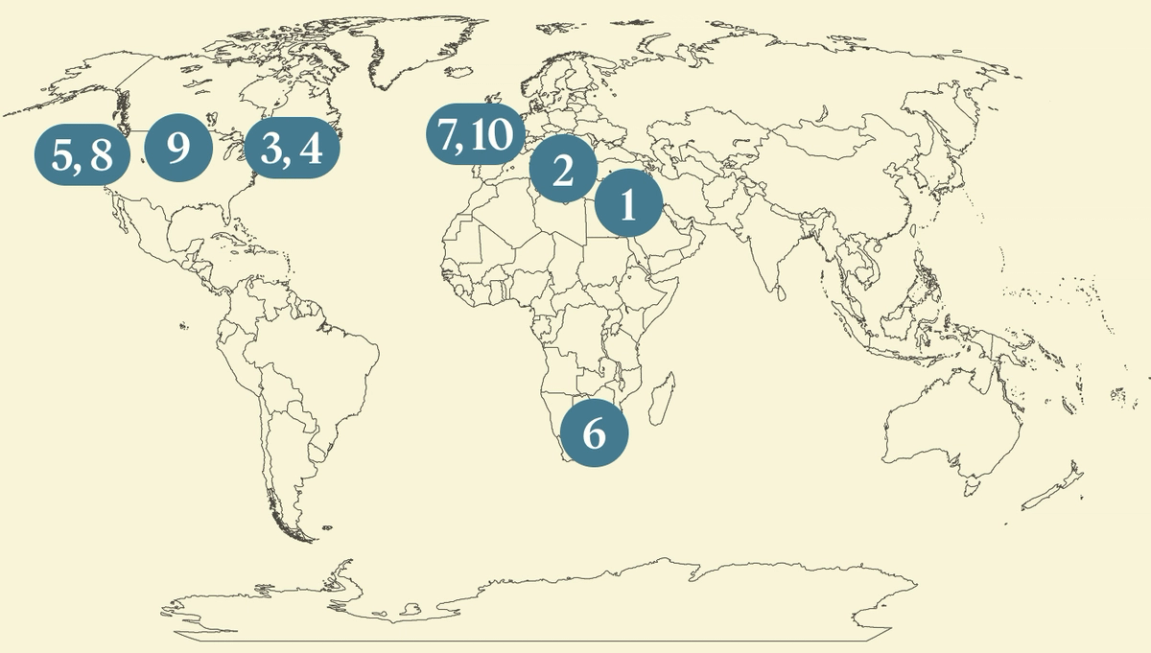 - Mideast peace optimism
- Plans for ‘European NATO’
- Trump renews Fed threats
- Fewer private credit fears
- CEOs embrace AI agents
- Global EV adoption rises
- Delays at European airports
- AI designs moving proteins
- New pancreatic cancer drug
- Counting bug splatters
 A ‘fresh’ new novel about romantic longing. |
|
Optimism rises on Mideast diplomacy |
 Lucas Jackson/Reuters Lucas Jackson/ReutersStocks surged on Wednesday as prospects rose for peace in two Middle East conflicts. Pakistani mediators visited Tehran, pushing the US and Iran to hold a second round of peace talks and extend their ceasefire, which expires in less than a week. Israel’s security cabinet, meanwhile, discussed a possible Lebanon truce, following six weeks of war against Hezbollah. Investors are hopeful: The S&P 500 and Nasdaq Composite both closed at all-time highs Wednesday, despite the Strait of Hormuz remaining effectively closed. The US’ small business czar told Semafor World Economy that high oil prices are a “short-term necessary exercise to achieve the objective of long-term stability.” |
|
Europe accelerates NATO ‘fallback plan’ |
 Remo Casilli/Reuters Remo Casilli/ReutersEurope is reportedly accelerating a NATO “fallback plan” as US President Donald Trump ramps up threats to quit the military alliance. Plans for a so-called European NATO have gained ground, according to the Wall Street Journal, to ensure the continent can defend itself without the US. NATO’s former chief, Jens Stoltenberg, told Semafor World Economy on Wednesday that the coalition faces “severe problems and challenges,” but he doesn’t think Washington will pull out. The Iran war has put a fresh focus on countries’ defense capacity buildup: Japan this week eased arms export rules, spurring global interest, while Italy wants to explore joint drone production with Ukraine. |
|
Trump renews threat to fire Powell |
 Trump and Powell last year. Kent Nishimura/Reuters Trump and Powell last year. Kent Nishimura/ReutersUS President Donald Trump said he would fire Federal Reserve Chair Jerome Powell if he doesn’t step aside when his term expires next month, a move critics say would undermine the central bank’s independence. During his second term, Trump has repeatedly clashed with Powell, urging him to cut rates. Powell and the rate-setting committee have resisted those calls, and are likely to continue doing so as tariffs and the Iran war push prices up. Critics fear that Trump is not likely to back off efforts to make the Fed more pliant, prompting calls for autonomy. “What we care most about is the independence of the Federal Reserve,” the president of Goldman Sachs said at Semafor World Economy. |
|
Executives downplay private credit fears |
  Goldman Sachs’ John Waldron. Kris Tripplaar/Semafor Goldman Sachs’ John Waldron. Kris Tripplaar/SemaforExecutives dismissed fears that private credit market jitters are a sign of a systemic crisis. The market got a spook earlier this year because private credit funds have lent heavily to the software industry — under threat from AI — and many investors sought to cash out funds. Goldman Sachs’ president said at Semafor World Economy that there won’t be a major private credit problem without serious degradation in the economy, which is “much stronger than the narrative suggests,” while the head of Franklin Templeton said investors had overreacted to the risks. The sentiment echoed that of Wall Street CEOs who, in earnings calls this week, said they’re “really not that worried” about private credit, Bloomberg wrote. |
|
 Kraken’s Arjun Sethi. Annabelle Gordon/Semafor Kraken’s Arjun Sethi. Annabelle Gordon/SemaforCEOs are increasingly embracing AI agents, which promise to boost productivity — but have also sparked widespread cybersecurity fears. Speaking at Semafor World Economy, the head of IT provider Kyndryl said employees have created about 30,000 agents to make their work more efficient. Crypto exchange Kraken, meanwhile, is building tech to allow AI agents to trade on behalf of users, its CEO said, and Allstate is creating a system in which agents “talk to each other” to make decisions. But swarms of such agents could create “an enormous mess” for cybersecurity, ultimately hindering AI adoption, tech-focused private-equity executive Orlando Bravo said Wednesday, while SAP’s CEO stressed that firms must adopt strong governance layers to regulate agents. |
|
| More from Semafor World Economy |
|
EV makers seek to expand amid war |
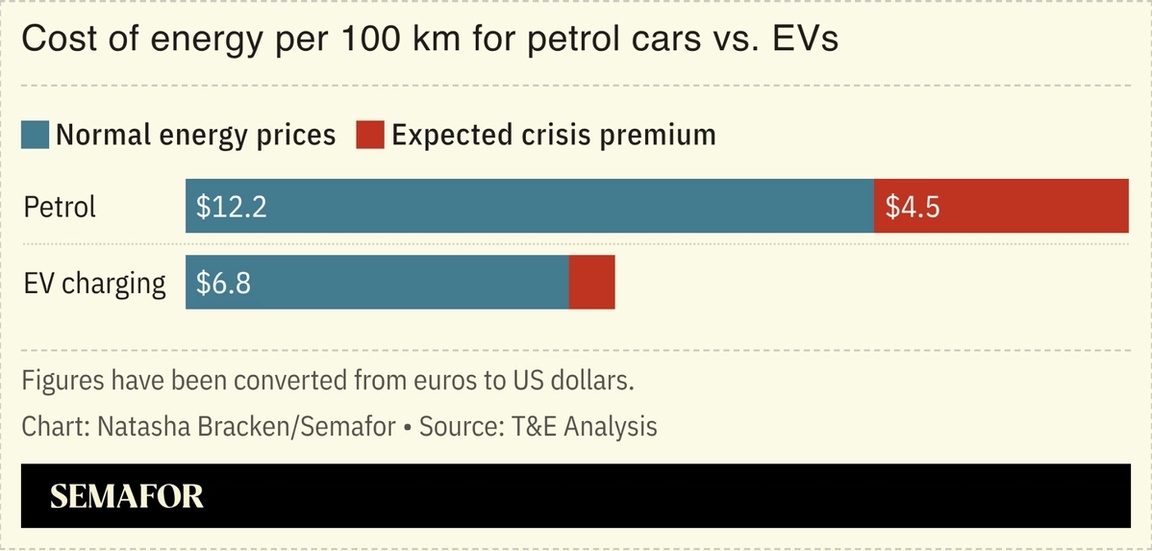 Chinese EV giant BYD is expanding its business in South Africa, as the war in Iran triggers renewed global interest in non-combustion cars. The company on Wednesday debuted a new model in the country, choosing to forego steep discounts in the hopes of avoiding a brutal price war, Reuters reported. The launch comes as the conflict in the Middle East has disrupted fossil fuel supplies, creating new openings for clean tech companies. Hyundai’s EV sales in the US increased by 40% from February to March, as fuel prices rose due to shortages, the South Korean automaker’s CEO told Semafor. The situation has highlighted the back-and-forth nature of EV demand that has plagued car companies in recent years. |
|
New EU rules spark airport delays |
 Frank Simon/Reuters Frank Simon/ReutersEuropean airports are reporting hourslong delays after a new EU-wide border regime was introduced. The Entry/Exit System came into full effect Friday: Travelers from non-EU countries must register their personal information and biometrics the first time they enter the bloc. But it has been hampered by technical and staffing issues, the Financial Times reported, with passengers in 15 countries waiting up to three hours at security. It comes at a bad time for the global air industry. US airports are still struggling with security delays due to the ongoing partial government shutdown, and European carriers are bracing for jet fuel shortages as a result of the Iran war. |
|
|