
|
 |
This is a public post so please share it widely. If you enjoy this newsletter, I hope you’ll consider upgrading to a paid subscription.
For those who don’t want a Substack account, you can keep Off Message going with a donation. All support is appreciated, and donations of $75 or larger come with a comped annual subscription—all content unlocked and emailed to the address provided.
They're Only As Repressive As Their Constraints Allow
Dictatorial ambition resides in their hearts, not just their deeds. The difference is what stops them—and no one from outside is coming to stop Donald Trump.
|

| |||||||||||||||


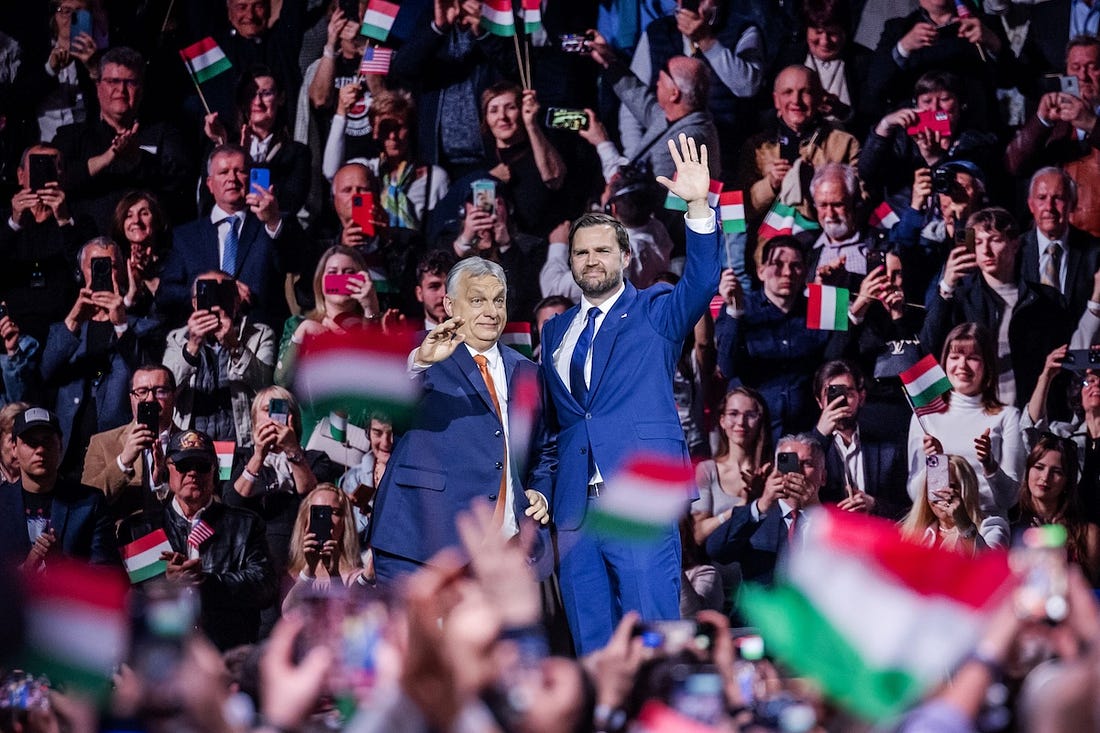 |
Everyone’s looking to Hungary for lessons. What does it mean that Viktor Orban conceded defeat? What does it mean that Hungarians ousted him in the first place? What does either fact mean for the United States, insofar as Orban was an inspiration figure for the MAGA elite? These are fair questions, so long as we resist the temptation to reason backward from the premises—to observe the many vestiges of freedom in Hungary and the U.S., and mistake them for the character of their heads of state.
Hungary held an election, and Orban conceded defeat, ergo, how bad could he be? How endangered was Hungary’s democracy, really?
This is an analytic error we’d recognize in almost any other context. Outside of truly totalitarian societies, when would we ever view governing outcomes as perfect proxies for the ideologies, personalities, or methods of political leaders?
The similarities between civic life in America and Hungary; the fact that Trump and his movement looked to Orban rather than some other autocrat for inspiration—these things matter less than we think. What we need more than anything is a clear sense of how repressive they’d be if left to their own devices.
Dictators tend to possess similar personality traits, but they are not interchangeable. Some are insane and some are rational, some are genocidal maniacs, and some are not. But they don’t typically disclaim power when an opportunity to grab it arises. Indeed, most dictators don’t govern quite as tyrannically as they’d like, because they face real external and psychological constraints.
Trump’s motives and his lust for power are unusually vain. He suffers from mental illness. He’s a self-aggrandizer who’s desperate for glory, but also to avoid ego injury. It is this quality, more than anything real, that impels him to deny the results of the 2020 election, even though he knows he lost. Or to incite an insurrection, then call it off when the risk of permanent disgrace becomes intolerable.
This stands in contrast to Orban or Vladimir Putin, who are both greedy crooks like Trump, but were each, in their own ways, forged in ideological and nationalist crucibles.
There’s small comfort here, in that Trump’s ineligible for another term, diminishing the stakes of future elections in his mind. If that piece of the Constitution holds, it’ll remove a crucial ingredient from the stew that produced the January 6 insurrection. Trump surely wants Republicans to remain in power and build monuments to him across the country; but if they lose coming elections, he won’t feel personal shame; indeed, he’ll happily blame them for their own defeats.
This may spare us another insurrection. But it won’t spare us efforts to rig elections in the manner of Orban or worse. None of these guys want to lose elections. They go to great lengths not to. And here is where the differences between them start to matter less than the forces that constrain them.
I got a small amount of unconvincing pushback this week for making a correct observation: Orban’s decision to concede defeat proves nothing about the regime he oversaw. Many dictatorships have fallen in response to election results, including ones much more repressive than his.
