| | In this edition, we recap some of the key moments from Semafor World Economy.͏ ͏ ͏ ͏ ͏ ͏ |
| |  | Business |  |
| |
|
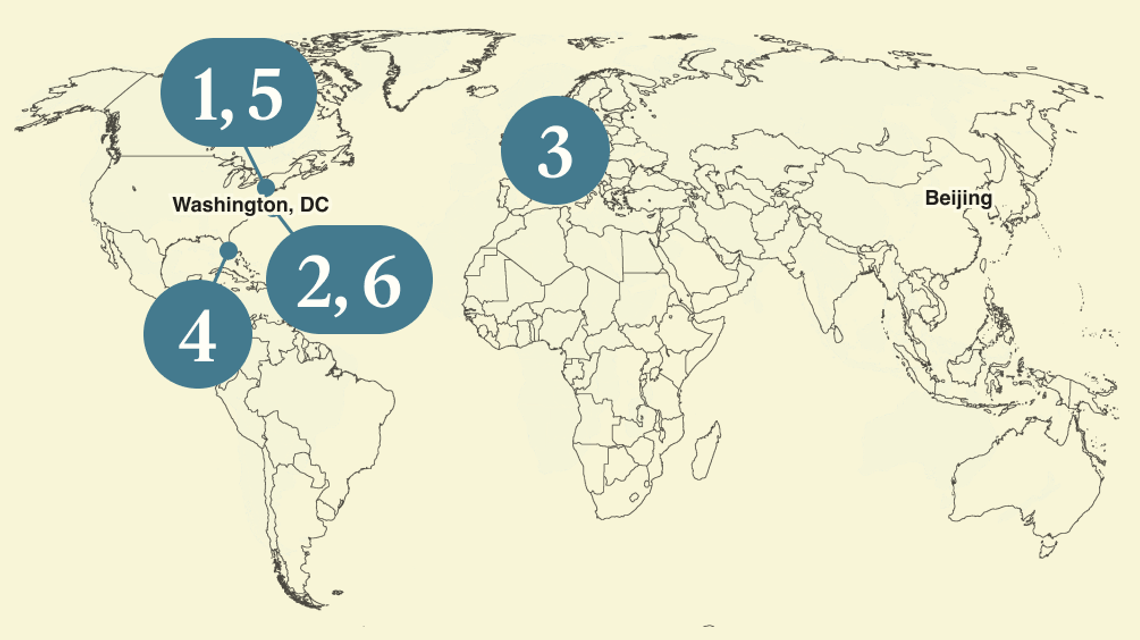 - Buy the dip
- Lutnick blasts Canada
- Is Europe cooked?
- Citadel’s next market
- Private credit’s reckoning
- China summit stakes
|
|
 Hi from the final day of Semafor World Economy in Washington, DC. My brain is full, and my feet hurt. Our job this week was, as I told Thoma Bravo founder Orlando Bravo before we went on stage to talk about whether his business model of buying software companies is cooked, to commit acts of journalism. And we did that. Semafor World Economy brought more than 500 global CEOs, policymakers, and investors, and nearly all of them — our 381st is on stage as I write this — went on the record with me and my colleagues to answer big questions hanging over the global economy. It was “Davos with follow-ups,” as our CEO Justin Smith called it. Among the takeaways: Treasury Secretary Scott Bessent thinks the Federal Reserve is right to “wait and see” before cutting interest rates. USTR Jamieson Greer set out explicitly what a tariff win looks like. Commerce Secretary Howard Lutnick said there wouldn’t be any BYDs in America and winked at a run for New York governor. Anthropic co-founder Jack Clark said Mythos is a scary model but “not a special” one and that we should all get ready for AI warfare. National Economic Council Director Kevin Hassett stuck to his 4% US GDP growth target. (His Trump first-term predecessor, Gary Cohn, doesn’t think we’ll get there.) MetLife’s Lebanon-born CEO said the mirage of safety that drew Wall Street to the Middle East has cracked. Kalshi CEO Tarek Mansour expects the Justice Department to criminally prosecute insider trading in prediction markets. Hyundai is reopening the Georgia factory that was shut down by an immigration raid, a strong Buy America signal. When I asked a group of 30 CEOs at lunch how many could replace 20% of their workforce with AI in the next two years, all but two raised their hands. I came away with, naturally, more questions. I’ll be calling over the next few weeks to dig into them; please pick up! And one other note: Semafor’s newsroom is growing. If this kind of journalism sounds fun, call me. |
|
Markets shrug, market watchers worry |
 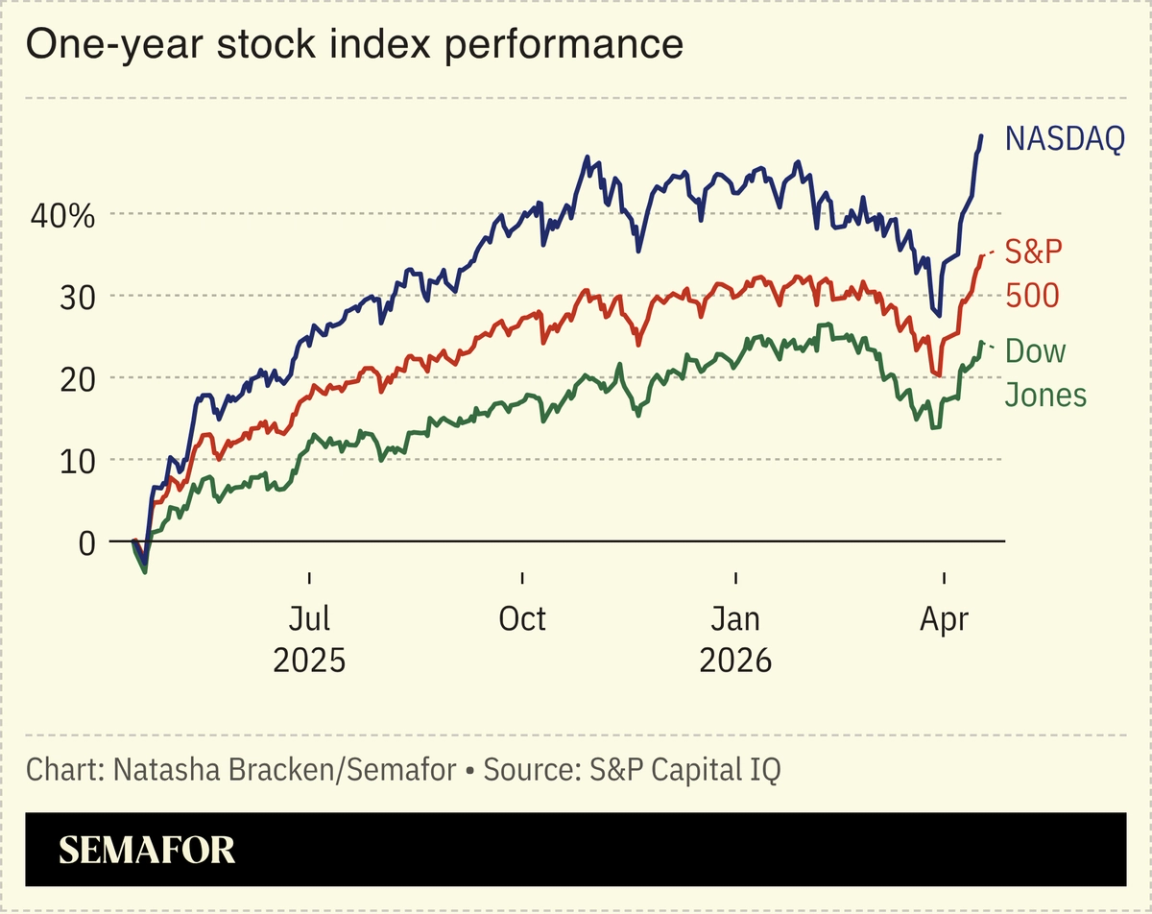 Investors are seriously underestimating the global economic impacts of the Iran war, executives warned this week. US stocks have recovered their initial wartime losses and surged to record highs this week on hopes for a lasting peace in the Middle East. London Stock Exchange Group CEO David Schwimmer said markets have adopted a sense of “rational complacency” that threatens to “tip over into irrational complacency.” Citadel Securities’ President Jim Esposito is worried about a “breakdown in discipline,” saying we’ve raised “a generation of investors that really never learned the price of being wrong.” Amos Hochstein, a top energy and national security adviser to former President Joe Biden, argued that the market is underestimating the economic impact of the war “at its own peril,” citing the gap between the spot and futures prices for oil, which shows investors expect a quick end to the conflict. This complacency, rational or not, is learned behavior. The “Greenspan put” of the 1980s and 1990s, when the Federal Reserve bailed investors out of speculative frenzies, has turned into the “Trump put,” with the market betting on a president who hates to see markets go down. For 40 years, investors “buy the dip and they’ve been proved right.” Esposito said. Room for disagreement: “Corporate earnings remain really strong. They’re driven by consumer expenditures. Consumers are employed,” said PNC CEO Bill Demchak, whose role atop the sixth-largest US bank by deposits gives him a window into household finances. “The whole notion, gas prices have gone up, but gas expenditures are 3% of the consumer wallet.” |
|
 Daniel Heuer/Semafor Daniel Heuer/SemaforUS Commerce Secretary Howard Lutnick on Friday slammed Canada as trade negotiators prepare to review the US-Mexico-Canada Agreement this year. Asked about Canada’s former trade chief suggesting time is on Canada’s side in talks with the US, Lutnick responded: “That is like the worst strategy I’ve ever heard. They suck. They — look, we are a $30 trillion economy, right?” A Commerce spokesman said Lutnick was explaining “how Canada sucks off of our $30 trillion economy.” Canadian Prime Minister Mark “Carney has a problem with us; he gets on a plane and he goes to China,” Lutnick continued. “Does he think China’s… going to buy his stuff? China is an entirely export-driven economy. So what did he do? He came back and said, ‘Oh, we’ll take their electric cars.’ I mean, is this nuts?” President Donald Trump thinks USMCA, which he signed during his first administration but which is up for review by this summer, is “a bad deal,” Lutnick said. “It needs to be reconsidered and reimagined correctly.” “There are parts of Mexico that are fundamental to us; there are parts of Canada, energy and other things, that are important to us,” Lutnick continued. “But the concept of taking an auto plant out of Ohio and Michigan and putting it in Mexico to break the union and to break our people is nuts.” Lutnick also said the idea of Chinese automakers like BYD building factories in the US would not be on the table when Trump visits Beijing later this year. |
|
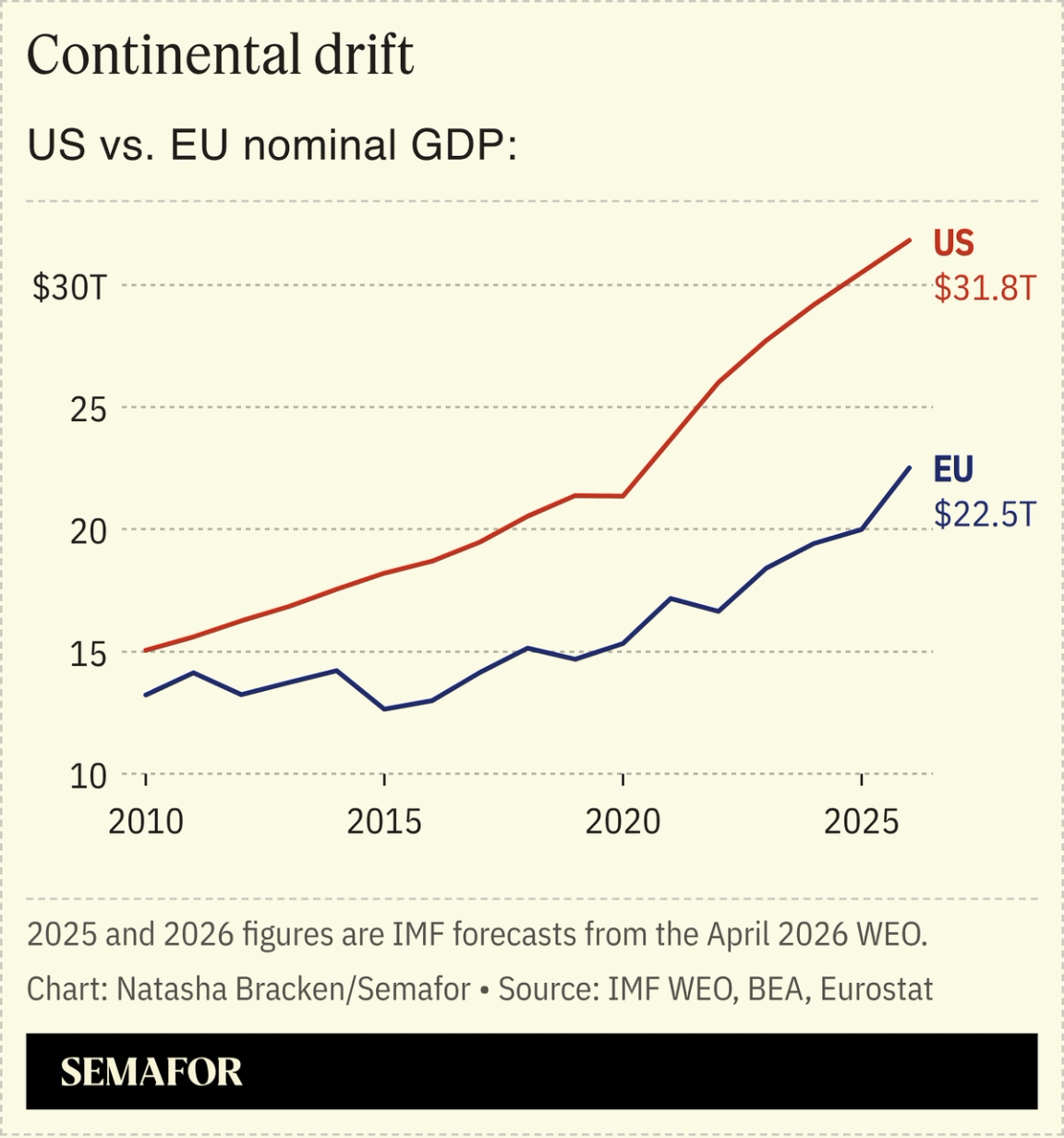 Europe, briefly in vogue in the early days of Trump 2.0, is struggling to find its footing. Alexander Wynaendts, chairman of Deutsche Bank’s supervisory board, gave Europe a “one out of 10” in implementing the changes recommended by 2024’s Draghi report, which laid out staggering problems in its global competitiveness. “We have to work longer hours, we have to be more productive, and we have to work longer years,” he said. “One of the best things that’s happening for Europe is the fact that the US is becoming a significant source of geopolitical risk in the world,” LSEG’s Schwimmer said. “The US market is much more attractive because it’s much more united,” said François Villeroy de Galhau, governor of France’s central bank. “We still have too many internal walls.” Room for disagreement: “For the first time in my 30-year career of doing private equity, we don’t have to defend why Europe is a good place to invest,” said Kurt Björklund, executive chairman of private-equity firm Permira. “Global investors are seeing what is happening and are sensing that opportunity.” |
|
Citadel eyes prediction markets |
 Citadel’s Jim Esposito and Liz Hoffman. Kris Tripplaar/Semafor. Citadel’s Jim Esposito and Liz Hoffman. Kris Tripplaar/Semafor.Citadel Securities’ Jim Esposito said prediction markets are “interesting to us” and that it’s “certainly possible” his firm could start providing the liquidity needed to turn thinly traded online bets into a serious Wall Street business. “I think there’s a sound industrial logic, real reasons institutional clients would want to use these contracts to hedge various risks,” Esposito said Thursday, adding that he’d met there with his “good friend” and Kalshi co-founder Tarek Mansour. Esposito said Citadel Securities isn’t interested in sports betting, which makes up a large chunk of the activity on online prediction sites. But as geopolitical events become more important for investors and companies, they’ll need deep pockets of firms like Citadel to facilitate larger bets. The US midterm elections will present “some of the biggest risks to investors’ portfolios that they’re going to have to grapple with,” Esposito said. “There’s a good use case” for clean ways to hedge risks, he added. |
|
Private credit has problems. Are they systemic? |
 Bain Capital’s David Gross. Tasos Katopodis/Getty Images for Semafor. Bain Capital’s David Gross. Tasos Katopodis/Getty Images for Semafor.The shakeout in private credit will be painful but not systemic, financial executives said. “Competitive pressures may have resulted in more lax underwriting terms,” said MetLife CEO Michel Khalaf, whose insurer owns about $100 billion of private credit. “You might see some cracks there, but that’s not the sign of a bubble that’s about to burst.” Bain Capital’s managing partner, David Gross, said defaults in its private-credit portfolio are 1% to 2% and that there isn’t an “amplifying mechanism” to turn any wider problems in private credit into a system-wide wipeout, akin to the way that repackaged mortgage bonds turned a housing downturn into a recession in 2008. Private market funds — marketed as semi-liquid to retail investors — are “really illiquid,” Goldman Sachs’ John Waldron said, but that “doesn’t mean it’s a bad product.” Room for disagreement: If there’s a broader economic slowdown, losses “will be greater than what we expected in prior cycles because collateral has been inflated,” PNC’s Demchak said. |
|
Greer ‘pragmatic’ on China |
 Jamieson Greer and Liz Hoffman. Kris Tripplaar/Semafor. Jamieson Greer and Liz Hoffman. Kris Tripplaar/Semafor.US Trade Representative Jamieson Greer pushed for a “pragmatic” approach to China, a warmer stance than many analysts have expected ahead of a visit by President Donald Trump. Tensions have been mounting between the US and China ahead of a Beijing summit expected next month, though Greer voiced confidence the two superpowers will land on a deal that would set up two boards, with representatives from both governments, managing trade and investment between the world’s two largest economies. “There’s not going to be a situation where there’s just no trade between the United States and China,” Greer said. “Our job is to manage that relationship in a way that protects our national and economic security but also acknowledges reality. “There are things we need to import from China; there are things China should be buying from us,” he continued. “And China agrees with us on that.” |
|
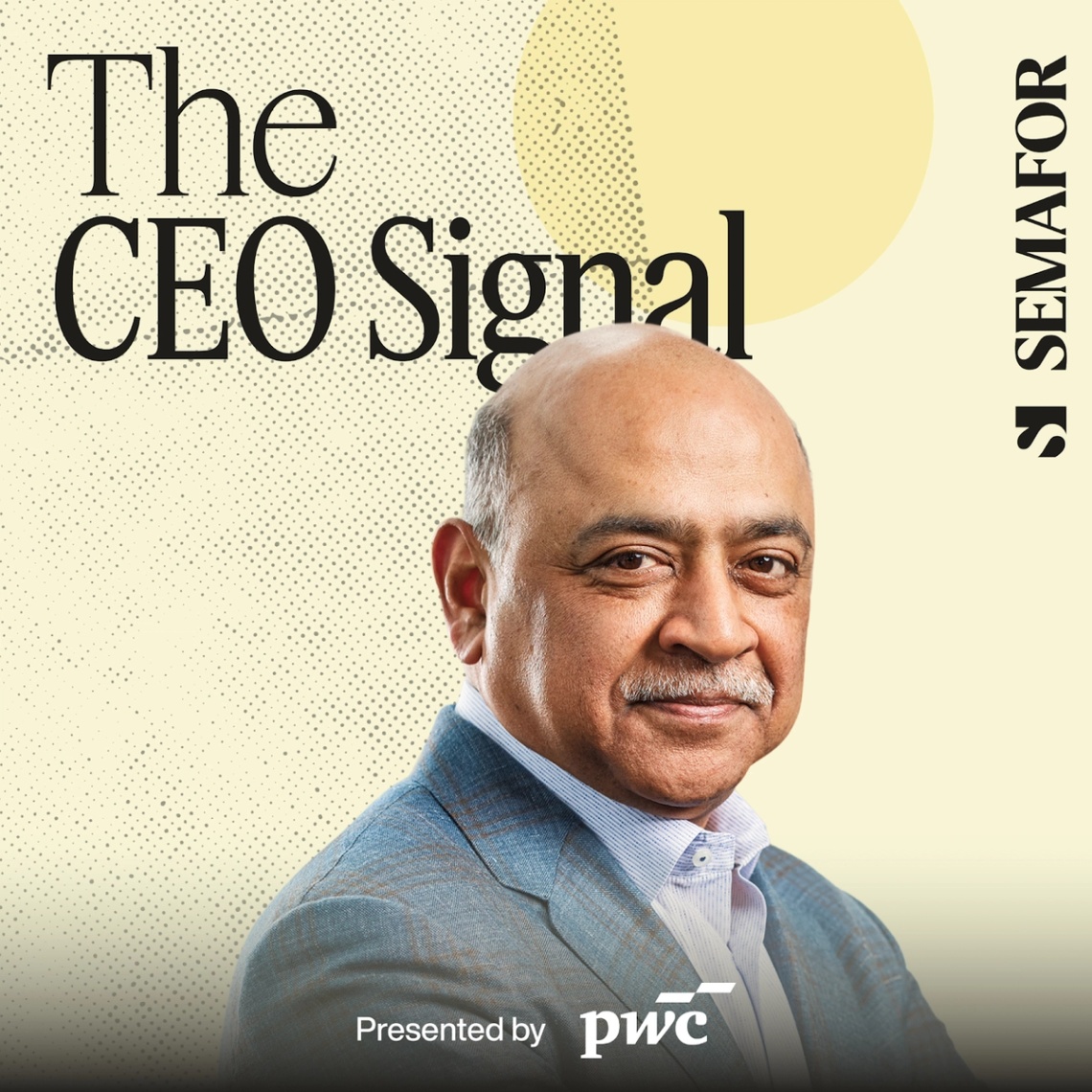 Most CEOs have not woken up to the fact that technology is as important as their balance sheet, IBM Chairman and CEO Arvind Krishna says in the latest episode of The CEO Signal. The first technologist to lead the company in its 115-year history unpacks how he approaches high-stakes decision-making in moments of rapid technological change — including the initially controversial acquisition of Red Hat that he thinks landed him his current role.
Krishna makes the case for why CEOs need to place bold bets, even when the payoff won’t be quick. And he cautions his fellow CEOs not to wait to start working what quantum computing will mean for their companies. “You’d better start thinking about it now,” he says. |
|
|


