|
Home batteries are an increasingly popular way to store energy and reduce electricity bills. But are they being installed safely?
More than 266,000 batteries have been installed since the federal government launched its Cheaper Home Batteries program last July.
In that time, more than 1,000 battery installations were inspected by Clean Energy Regulator, with more than 60% found to be “substandard” and about 1.2% “unsafe”.
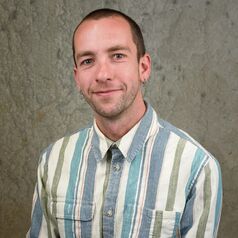
As renewable energy expert Rusty Langdon writes, these findings represent a serious risk to consumer confidence and safety.
|
|
Drew Rooke
Deputy Science + Technology Editor
|
|
| |

Rusty Langdon, University of Technology Sydney
A recent report into the federal government’s Cheaper Home Batteries Program found major problems with safety and compliance.
|
Best reads this week
|

Sanjoy Paul, University of Technology Sydney
China stands to be impacted first, as the main buyer of Iran’s crude oil. But if the blockade drags on, its knock-on effects could impact the whole world.
|

Meighen McCrae, Australian National University
Gallipoli was a hastily launched military campaign over a maritime choke point – and has parallels with the Strait of Hormuz.
|

Robert Horvath, La Trobe University
Viktor Orbán had consolidated his power and taken over state institutions, but Magyar found his Achilles’ heel – growing public anger over corrupt elites.
|

Darius von Guttner Sporzynski, Australian Catholic University
Pope Leo XIV does not claim to direct political outcomes. He claims the right, and the duty, to judge them.
|

Tim Kelly, University of Technology Sydney
New research sheds light on a crisis facing new and emerging Australian artists.
|

Samarth Kulshrestha, University of Canterbury
Plants can tune into the sound of water to direct their roots towards it, or release toxins to make themselves less palatable to browsing animals.
|
TC Weekly podcast
|

Ashlynne McGhee, The Conversation; Isabella Podwinski, The Conversation
Most political parties fear a scandal, but not One Nation. The defections, punch-ups, chaos and controversies mount, and yet it survives.
|

Michelle Grattan, University of Canberra
We speak to independent economist Chris Richardson on the fuel crisis and the Australian economy.
|

Gemma Ware, The Conversation
Hungarian political scientist Zsolt Enyedi speaks to The Conversation Weekly podcast about how Viktor Orbán lost power to Péter Magyar and what the result means for the European Union.
|
Our most-read article this week
|

Giuseppe Carabetta, University of Technology Sydney
If you live in these parts of Australia, you’ll get an extra public holiday for it this year. But millions of others aren’t so lucky.
|
In case you missed this week's big stories
|
-
Marika Sosnowski, The University of Melbourne
Israel and Lebanon have agreed to a ten-day ceasefire. This may end one phase of the conflict, but it’s unlikely the violence will end.
-
Melanie O'Brien, The University of Western Australia
A bail judge has ruled there are ‘exceptional circumstances’ in the Ben Roberts-Smith case and granted the accused war criminal bail.
-
Tony Wood, Grattan Institute
This fire should prompt us - again - to consider the future role of liquid fuels in Australia.
-
Peter Layton, Griffith University
In a time of global crisis, the strategy fails to tackle the thorniest of issues – including Trump’s America – with much clarity.
-
Michelle Grattan, University of Canberra
An effective opposition is good at policy. At present the Liberals new immigration policy leaves the public in the dark on detail.
-
Ali Mamouri, Deakin University
Iran’s leaders are demanding sovereignty over the strait for a reason: it protects them from future attacks and can be a very effective bargaining chip.
-
Flavio Macau, Edith Cowan University
Even if the Iran war ends, the fallout from this oil shock is likely to persist for a long time. Here’s what the end of ‘cheap’ oil could mean for the world.
-
John Quiggin, The University of Queensland
You don’t have to be born rich to make big money in Australia, but it certainly helps.
-
Milad Haghani, The University of Melbourne; Iman Taheri Sarteshnizi, The University of Melbourne; Neema Nassir, The University of Melbourne
Public transport access, travel time and familiarity with the network all play a role in how many people switch away from driving.
-
Mike Callander, RMIT University
The Doors, Kraftwerk and now Justin Bieber: artists have a long history of playing around with the meaning of ‘live’ performance.
|
|
|
|
|
The toll of war
“Beyond the human tragedy, the environmental damage of the war in the Middle East is equally alarming. The destruction of oil refineries and industrial infrastructure is releasing vast amounts of pollution into the atmosphere, endangering public health, damaging ecosystems, and intensifying the global climate crisis. At a time when our planet is already under immense strain, this additional harm is something humanity simply cannot afford.”
Karen Hopkins
Australia’s defence priorities
“The thing that matters most right now in terms of our national defence is our drone capabilities. It was the reason we couldn't send a ship to the Red Sea and it is still the reason we shouldn't send a ship to the Strait of Hormuz. Drone warfare has been happening for quite some time now, but our ships aren’t equipped to deal with it. Australia is too slow for this fast-changing world and we need to speed up.”
Victoria Moore 
We'd love to hear from you. You can email us with your thoughts on our stories and each day we'll publish an edited selection.
|
| |
|
|
|
Australia-Korea Foundation (in conjunction with InASA and Seoul National University)
Gwanak-gu, Seoul, South Korea
•
Contract
|

|
|
|
|
| |
| |

|
| |
| |
|


